Of all the things Nick Grime could have promised his ten-year-old son on Halloween, "your dreams will come true" might be the cruelest. Nick knows about the man in the castle. He knows Michael has spent hours in therapy trying to explain what happens there. He just never thought of those dreams when he tucked a handful of good fortunes into the barmbrack he was baking for his family. At 1:35 in the morning, Nick sits on the edge of Michael’s bed. His son is wide awake, staring at the ceiling. He knows something comes to the window at 1:36. He also knows that every time he dreams this part, he ends up looking, no matter how hard he tries to keep his eyes on the plaster. Nick puts an arm around him. For once, when the thing his son fears comes to the glass, his dad will be there. It hasn’t occurred to Nick to ask what happens to the parents in Michael’s dream. Listen on YouTube: https://www.youtube.com/@chillingtalesfordarknights/ FEATURED STORY: "A Fine Barmbrack" by Seth Paul Performed
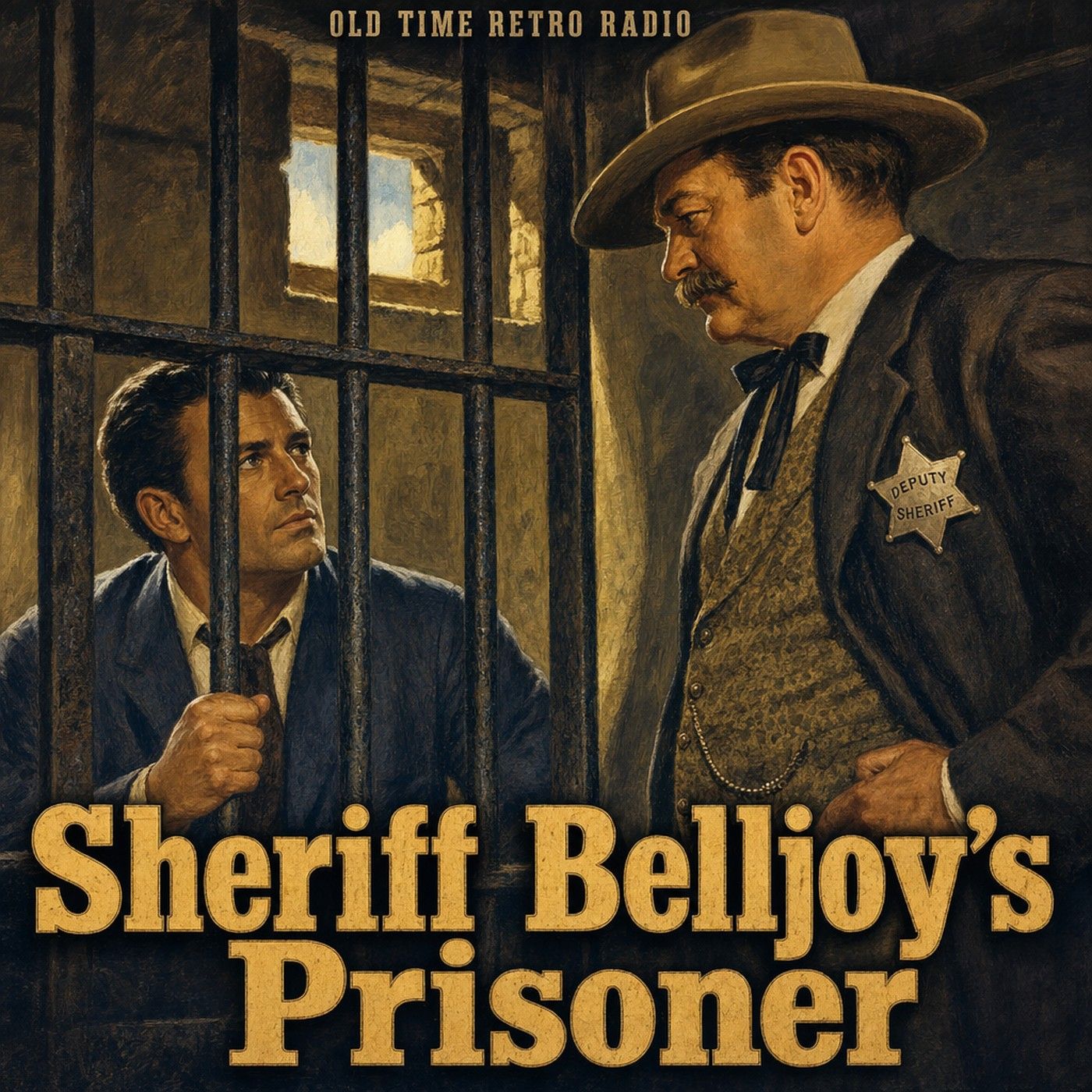
Frontier Gentleman, “Sheriff Belljoy’s Prisoner” (episode 19), originally broadcast on CBS Radio on June 8, 1958. John Dehner stars as London Times correspondent J. B. Kendall in this Charles B. Smith story, produced and directed by Antony Ellis. Traveling by Yellowstone stagecoach, Kendall and his fellow passengers are detained in Shoshone, Wyoming Territory, when Deputy Sheriff C. B. Belljoy suspects that a Bearclaw saloon thief has escaped aboard the coach. With Belljoy serving as the town’s self-appointed authority, Kendall finds himself facing a particularly unusual brand of frontier justice. Chapters: 00:00 Victor Sterling Introduction 00:50 Original Broadcast 25:42 Closing
Of all the things Nick Grime could have promised his ten-year-old son on Halloween, "your dreams will come true" might be the cruelest. Nick knows about the man in the castle. He knows Michael has spent hours in therapy trying to explain what happens there. He just never thought of those dreams when he tucked a handful of good fortunes into the barmbrack he was baking for his family. At 1:35 in the morning, Nick sits on the edge of Michael’s bed. His son is wide awake, staring at the ceiling. He knows something comes to the window at 1:36. He also knows that every time he dreams this part, he ends up looking, no matter how hard he tries to keep his eyes on the plaster. Nick puts an arm around him. For once, when the thing his son fears comes to the glass, his dad will be there. It hasn’t occurred to Nick to ask what happens to the parents in Michael’s dream. FEATURED STORY: "A Fine Barmbrack" by Seth Paul Performed by Otis Jiry Produced by Seth Paul Support Us and Listen Ad-Free (Becom
Merchant Ivory was the most enduring partnership in cinema: Ismail Merchant, the producer who could charm money out of thin air; James Ivory, the American director of A Room with a View and Howards End, who became an Oscar winner for Call Me by Your Name; and Ruth Prawer Jhabvala, the only writer to have won both the Booker Prize and an Oscar. Our story starts in the early 1980s, when Merchant Ivory’s golden age was still to come. With two decades of film-making behind them, they turned to their most ambitious project to date: an adaptation of Ruth’s prizewinning novel Heat and Dust, weaving a scandal in 1920s colonial India with a present-day story, to be shot on location with Julie Christie and Shashi Kapoor. Ismail is irrepressible. He has no office, so he borrows a corner of a publisher’s post room. He has no money either, so he works the Soho phone boxes with a pocketful of coins, assuring investors the stars are signed and the stars that the money is in place. By the time the cre
Merriam-Webster's Word of the Day for November 21, 2026 is: meet-cute • \MEET-kyoot\ • noun Meet-cute refers to a cute, charming, or amusing first encounter between romantic partners. A meet-cute can be such an encounter as shown in a movie or television show, or one that happens in real life. // Their meet-cute felt as if it came straight out of a romantic comedy. See the entry > (https://www.merriam-webster.com/dictionary/meet-cute) Examples: “Two women, Dylan and Melanie, cross paths on an artificial beach in a near-apocalyptic meet-cute: one has emerged from the underwater pod in which she was raised, the other works at a luxury resort as a bartender… and may also be a robot.” — Natalie Zutter, Literary Hub, 2 Jan. 2026 Did you know? Isn’t it cute how two words can be introduced to each other and become an inseparable pair soon after? Well, that’s exactly what happened when meet and cute got together in the early 1950s. The duo was spotted in The New York Times Book Review in 1952
Horror Story Collection 001. We aim to unsettle you a little, to cut through the pink cushion of illusion that shields you from the horrible realities of life. Here are the walking dead, the fetid pools of slime, the howls in the night that you thought you had confined to your more unpleasant dreams. Featured on H.P. Lovecraft Short Horror Stories. Public-domain recording courtesy of LibriVox (librivox.org).
"The Metropolitan Touch" is a short story by English writer P. G. The story was published in The Strand Magazine (https://en.wikipedia.org/wiki/The_Strand_Magazine) in London in September 1922, and then in Cosmopolitan (https://en.wikipedia.org/wiki/Cosmopolitan_(magazine)) in New York that same month. The story was also included in the 1923 collection The Inimitable Jeeves (https://en.wikipedia.org/wiki/The_Inimitable_Jeeves).[1] (https://en.wikipedia.org/wiki/The_Metropolitan_Touch) In the story, Bingo Little (https://en.wikipedia.org/wiki/Bingo_Little) tries to impress his latest love interest, Mary Burgess, by producing a series of performances at a school Christmas show.
"The Purity of the Turf" is a short story by P. G. The story was published in The Strand Magazine (https://en.wikipedia.org/wiki/The_Strand_Magazine) in London in July 1922, and in Cosmopolitan (https://en.wikipedia.org/wiki/Cosmopolitan_(magazine)) in New York that same month. The story was also included in the 1923 collection The Inimitable Jeeves (https://en.wikipedia.org/wiki/The_Inimitable_Jeeves).[1] (https://en.wikipedia.org/wiki/The_Purity_of_the_Turf_(short_story)) The story features a school fair, where Bertie, Bertie's friend Bingo Little (https://en.wikipedia.org/wiki/Bingo_Little), and Jeeves form a syndicate to place bets on the contests. The underhanded bookmaker Steggles (https://en.wikipedia.org/wiki/List_of_Jeeves_characters) tries to rig the contests against them.
"The Great Sermon Handicap" is a short story by P. G. The story was published in The Strand Magazine (https://en.wikipedia.org/wiki/The_Strand_Magazine) in London in June 1922, and then in Cosmopolitan (https://en.wikipedia.org/wiki/Cosmopolitan_(magazine)) in New York that same month. The story was also included in the collection The Inimitable Jeeves (https://en.wikipedia.org/wiki/The_Inimitable_Jeeves) as two separate stories.[1] (https://en.wikipedia.org/wiki/The_Great_Sermon_Handicap) In the story, Bertie and others make bets on an event called the Great Sermon Handicap. This story's plot continues into that of "The Purity of the Turf (https://en.wikipedia.org/wiki/The_Purity_of_the_Turf_(short_story))", though the two may be read as independent stories.
Students should help shape decisions about what and how they learn.
Share your view, then see how readers voted. No sign-in required. This poll is shared across stories.
Do you agree or disagree?
Common Quandary
A Common Quandary to discuss
Another conversation to explore, separate from this news story.
A disgraced billionaire's name is on the beloved campus library. Does it come down?
A major donor funded a beloved public building decades ago. New evidence shows they also caused serious harm that was legal and accepted by many peers at the time. Removing the name may jeopardize future donations.
What does an institution owe the truth when its history funded the present?