Listen through the publisher, then discuss the episode here or arrange an in-person Roundtable. Your city determines where to meet.
Roundtables are designed for groups of four, with a shared subject and room for everyone to speak. Come for discussion, with no dating expectation.
Merriam-Webster's Word of the Day for November 21, 2026 is: meet-cute • \MEET-kyoot\ • noun Meet-cute refers to a cute, charming, or amusing first encounter between romantic partners. A meet-cute can be such an encounter as shown in a movie or television show, or one that happens in real life. // Their meet-cute felt as if it came straight out of a romantic comedy. See the entry > (https://www.merriam-webster.com/dictionary/meet-cute) Examples: “Two women, Dylan and Melanie, cross paths on an artificial beach in a near-apocalyptic meet-cute: one has emerged from the underwater pod in which she was raised, the other works at a luxury resort as a bartender… and may also be a robot.” — Natalie Zutter, Literary Hub, 2 Jan. 2026 Did you know? Isn’t it cute how two words can be introduced to each other and become an inseparable pair soon after? Well, that’s exactly what happened when meet and cute got together in the early 1950s. The duo was spotted in The New York Times Book Review in 1952 in reference to an unexpected rendezvous: “This may well be, in magazine parlance, the neatest meet-cute of the week—the story of a ghost-writer who falls in love with a ghost.” Today the word is used often to refer to such encounters in films and television series (especially rom-coms and sitcoms). Writers of meet-cutes often develop plots by creating situations in which characters clash in personality, or by creating embarrassing situations in which two eventual romantic partners will meet, or by creating a misunderstanding between characters who will separate but become friends in the end.
Episode information is provided by the publisher. Listening takes place on the publisher’s service.
Ever wondered why your energy, mood, and body feel different than they used to? In this powerful and eye-opening session, Sage Robbins hosts an honest conversation with bestselling author Tamsen Fadal (How to Menopause) and renowned nutrition and fitness expert JJ Virgin to uncover the truth about women’s energy, hormones, and vitality at every stage of life. Uploaded 01-03-26 Watch more videos like this Creating Moments of Stillness in the Chaos | Sage Robbins: https://youtu.be/eR6e50AmeRY A Kinder Way to Meet the Darkness | Sage Robbins on Jillian on Love: https://youtu.be/PlvtL11Q3Bg Do This When You Feel Triggered and Your Life Will Transform: https://youtu.be/h7YylJ3nuok How To End Self Sabotage with 1 Simple Choice: https://youtu.be/-0Ln4-h4LQQ Join my weekly newsletter 'The Mirror' to receive these exclusive videos each week: https://www.sagerobbins.com (https://www.sagerobbins.com/) Follow Sage Robbins: Instagram: https://www.instagram.com/sagerobbins Facebook: https://www.face
This new tech is changing how movies get made. So @mkbhd and I tested it out... Watch MKBHD's video: https://youtu.be/RM7SobH8ZO0 I’ve been obsessed with sci-fi movies since I was a kid. I love being transported to another world. But lately, I’ve been wondering: How do those worlds look so… REAL? The tech behind movies has exploded in complexity and realism, changing how stories come to life on screen. Luckily, at the same time, those tools are becoming more and more available to more people telling stories. It’s not just blockbusters like Avatar 2 or Avengers or Dune. It’s also smaller budget films like Everything Everywhere All at Once or even… YouTube creators? In this video, Marques Brownlee and I test out 3 movie-making tools that are changing how movies, shows, and maybe even YouTube videos (??) get made. We’re at ZeroSpace Studios in New York to show you how each of these crazy technologies work - and how you might be able to use them. Along the way, we hit big questions like: W
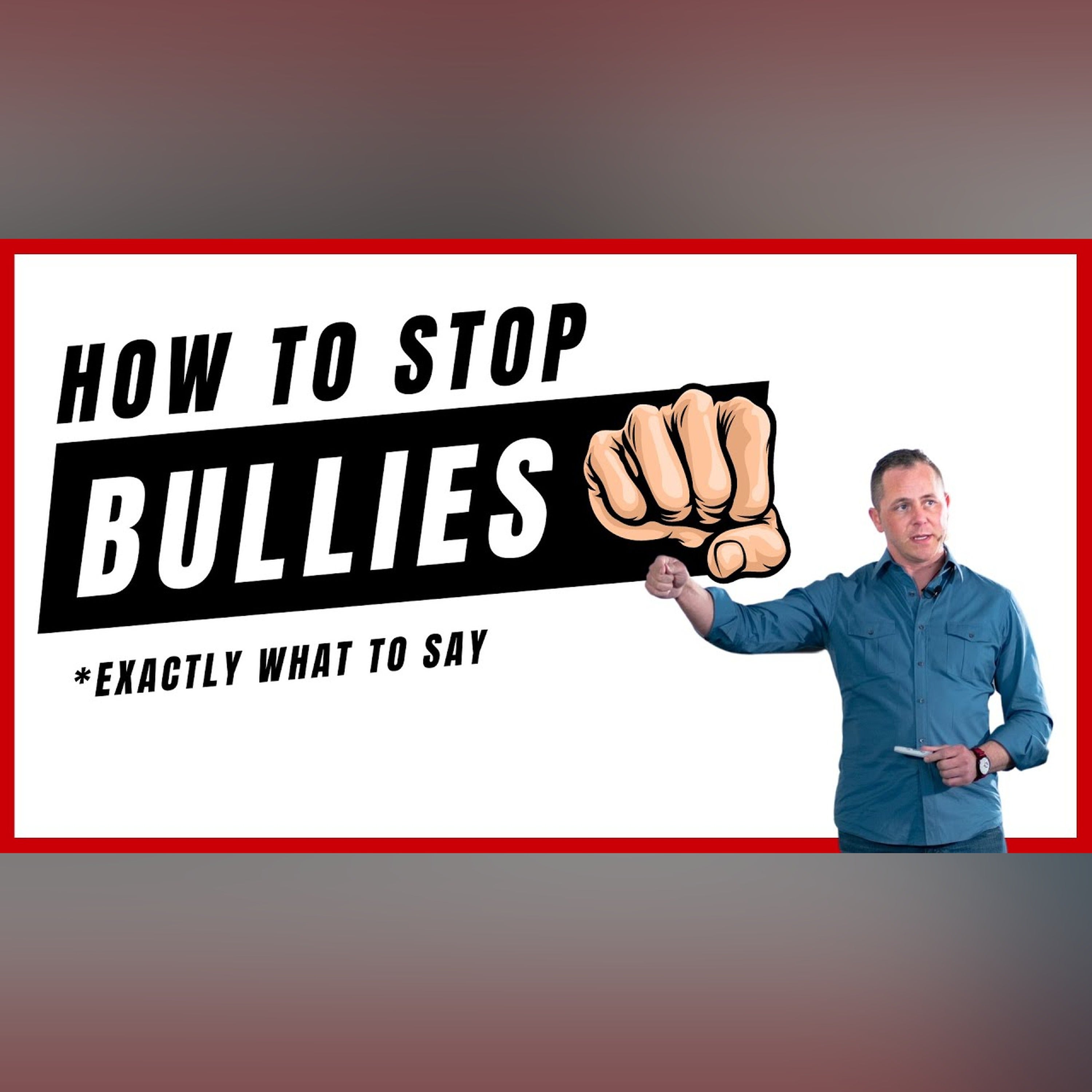
Join NCI University today to master human behavior and influence: Uploaded 03-09-22 Bullies come in all shapes and sizes. In this video, I'll walk you through what bullying is, the types of bullies, how to identify them, and how to deal with them, with direct word-for-word examples. Bullying is unwanted, aggressive behavior among school aged children that involves a real or perceived power imbalance. The behavior is repeated, or has the potential to be repeated, over time. Both kids who are bullied and who bully others may have serious, lasting problems. In order to be considered bullying, the behavior must be aggressive and include: An Imbalance of Power: Kids who bully use their power—such as physical strength, access to embarrassing information, or popularity—to control or harm others. Power imbalances can change over time and in different situations, even if they involve the same people. Repetition: Bullying behaviors happen more than once or have the potential to happen more than
Giouli thought alcohol was the one thing that let her stop being perfect. Hear how a 30-day break she expected to end in January led her to write the first quit lit book in Greece and help change how her country talks about drinking. What happens when a question you ask yourself one January refuses to go away? For Giouli, alcohol started as freedom from perfectionism at university. It followed her through a demanding events career and into motherhood, when wine came home every night and blackouts began to scare her. Rules and moderation only left her feeling guilty. Then, holding a glass of red wine on her balcony, she asked herself who she was without it. That question led her to write two books, become a coach, and help shift the drinking culture in Greece. Why alcohol felt like freedom from perfectionism, not a way to numb The common belief about drinking at home that kept her from questioning alcohol What moderation rules did to her guilt and her sense of control The balcony moment
It is not your job to heal what you didn’t break, or to wait around for someone to fill their empty promises. In today’s episode of Hot and Unbothered, your host Brianna Gomez is having an honest conversation about setting boundaries, protecting your peace, and finally walking away from what doesn’t appreciate you. We often stay in situations, friendships, and relationships that drain us simply because we love the person or have invested so much time into them. But just because something feels familiar or comfortable doesn’t mean it is good for you. What you tolerate is what you teach, and it should never take you walking away for someone to realize what you bring to the table. If you’ve been feeling exhausted from carrying a one-sided connection or stuck in the habit of trying to fix people who don’t want to grow, take this as your reminder: you are allowed to outgrow people, choose yourself, and let go with love. In this episode, we talk about: Why love isn't enough to stay in an unf
To check the transcript: https://www.buzzsprout.com/2379282 Imagine someone who has lived abroad for many years. One evening, they're talking to a friend about their hometown. They mention the streets they used to walk down, the familiar voices, and the little things they never thought they'd miss. Their friend asks: “Why do you get so emotional whenever you talk about your hometown? Do you want to move back?” They reply: “It's not that simple. It goes deeper than that. I miss a version of my life that doesn't exist there anymore.” Hello everyone, and welcome to Daily English. Today's expression is “It goes deeper than that.” We use this expression when something is more complicated, meaningful, or emotionally significant than it first appears. In other words, there's something beneath the surface that people might not immediately recognize. In our opening example, the person isn't necessarily longing to return to their hometown. What they miss might be their childhood, the people they
Merriam-Webster's Word of the Day for November 20, 2026 is: ruthless • \ROOTH-lus\ • adjective Ruthless means "having no pity." It describes people, behaviors, circumstances, etc. regarded as cruel or merciless. // Wolves and other large carnivores are often portrayed (and feared) as ruthless predators even as they play vital roles in their ecosystems. See the entry > (https://www.merriam-webster.com/dictionary/ruthless) Examples: "One of Shakespeare's most powerful and enduring tragedies, 'Macbeth' remains an urgent and gripping story. Ambition and prophecy collide as a fateful prediction drives Macbeth into a ruthless pursuit of power, destroying everything in his path." — The Daily Gazette (Schenectady, New York), 25 Sept. 2026 Did you know? Ruthless can be defined as "without ruth" or "having no ruth." So what, then, is ruth? The noun ruth (https://www.merriam-webster.com/dictionary/ruth), which is now considerably less common than ruthless, means "compassion for the misery of anot
Merriam-Webster's Word of the Day for November 19, 2026 is: upbraid • \up-BRAYD\ • verb To upbraid someone is to speak to them in an angry or critical way in response to something they have done wrong—in other words, to scold them. // The teacher upbraided the class after discovering the chalkboard erasers had been clapped all over the walls. See the entry > (https://www.merriam-webster.com/dictionary/upbraid) Examples: “An industrious ant spends all summer gathering food for the cold months, while a lazy grasshopper dances and sings. Once winter hits, the grasshopper is cold and hungry, and goes begging for food from the ant, who refuses to share any of its bounty, upbraiding the grasshopper for failing to plan.” — David A. Graham, The Atlantic, 17 Apr. 2026 Did you know? First things first: do not confuse upbraid with topknot lest you be upbraided for it. Topknot is a noun referring to a hairstyle, while upbraid is a verb (and an ancient one at that) meaning “to criticize or scold se
Merriam-Webster's Word of the Day for November 18, 2026 is: hobbyhorse • \HAH-bee-horss\ • noun Hobbyhorse refers to a topic that someone dwells on, returning to again and again, especially in conversation. // Once he gets on his hobbyhorse and starts talking about taxes, you can't get him to discuss anything else. See the entry > (https://www.merriam-webster.com/dictionary/hobbyhorse) Examples: “This has been a hobbyhorse of mine for a while. Boston should rechristen Logan Airport to honor the unparalleled [Bill] Russell (https://www.britannica.com/biography/Bill-Russell). He was Boston’s greatest sports champion, and as a brave and steadfast civil-rights leader across half a century, an even greater man.” — Mark Leibovich, The Atlantic, 14 June 2024 Did you know? Does your favorite hobby involve a horse? Whether it does or not, the word hobby is undeniably equine: it’s a shortening of the older term hobbyhorse. And in a strange etymological twist, the word hobbyhorse is itself a prod
Publicly rescued businesses should share future gains with taxpayers.
Share your view, then see how readers voted. No sign-in required. This poll is shared across stories.
Do you agree or disagree?
Common Quandary
A Common Quandary to discuss
Another conversation to explore, separate from this news story.
You both hate the invitation. Which partner has to become the excuse?
A couple receives an invitation neither wants to accept. One suggests claiming the other is ill, reasoning that friends will question a vague excuse but respect sickness. The proposed patient dislikes lying but also wants to stay home.
Is a shared lie fair when only one person's reputation carries it?