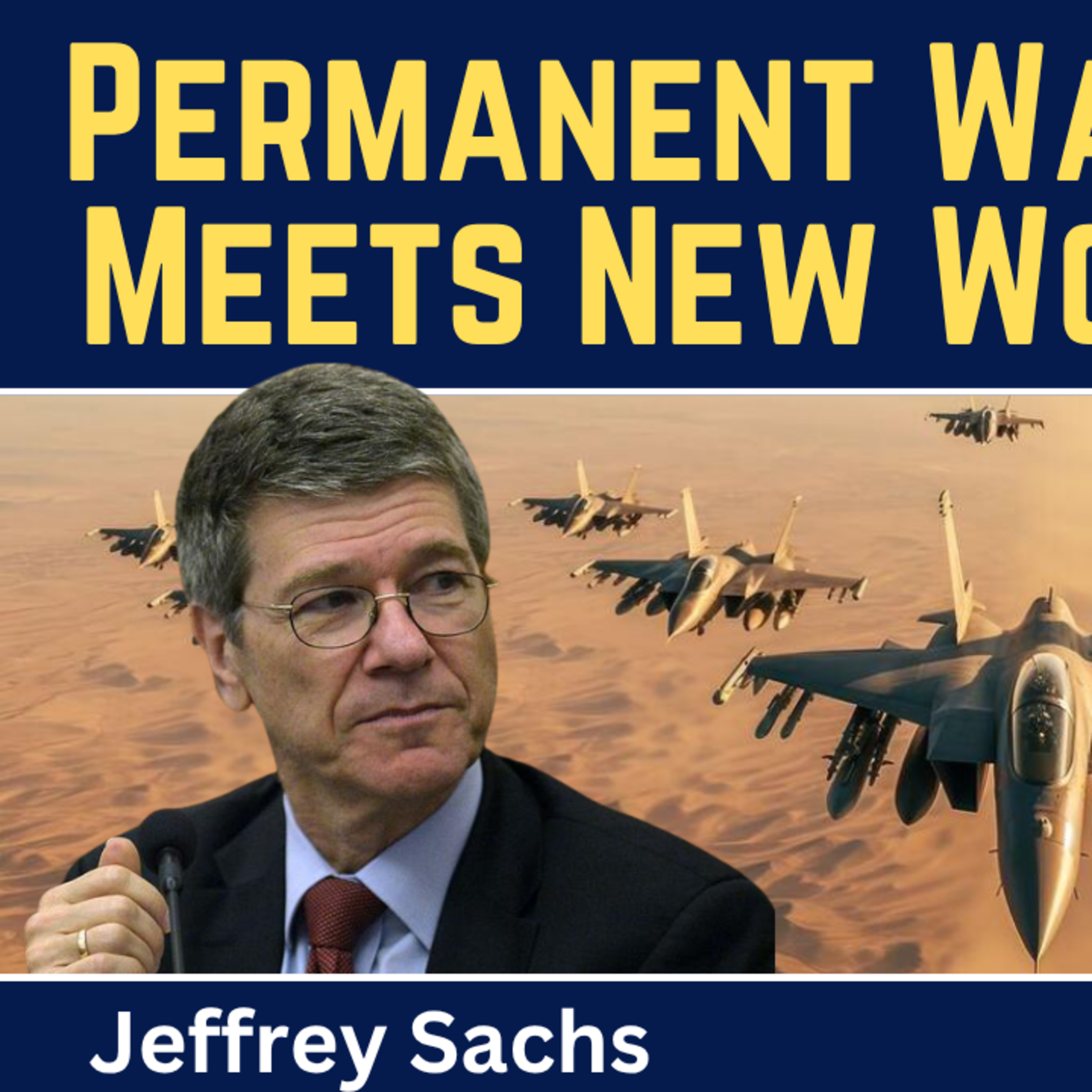
Jeffrey Sachs: Permanent War Machine Meets New World Order
38 min
Listen through the publisher, then discuss the episode here or arrange an in-person Roundtable. Your city determines where to meet.
Roundtables are designed for groups of four, with a shared subject and room for everyone to speak. Come for discussion, with no dating expectation.
Professor Jeffrey Sachs is a world-renowned economics professor, bestselling author, innovative educator, and global leader in sustainable development.Follow Jeffrey Sachs' YouTube channel: https://www.youtube.com/@JeffreyDSachsOfficial Follow Prof. Glenn Diesen: PayPal: https://www.paypal.com/paypalme/glenndiesenBuy me a Coffee: buymeacoffee.com/gdiesengGo Fund Me: https://gofund.me/09ea012fBuy Diesen merchandise: https://diesen-shop.fourthwall.com/en-nokBooks by Prof. Glenn Diesen: https://www.amazon.com/stores/author/B09FPQ4MDL00:00 Why voters reject wars but wars continue03:01 Eisenhower’s warning and the military-industrial complex05:24 The political cost of the Iran war07:20 Can Democrats become the party of peace?10:40 New lawmakers and an opening for anti-war politics13:07 Overreach, living costs, and U.S. support for Israel16:27 Sachs’s proposed diplomatic basis for ending the Ukraine war18:35 Diesen’s question: can U.S. foreign policy break its pattern?21:36 From the Cold War to the post-1991 drive for hegemony24:21 How successive administrations sustained intervention26:48 Why wars end, and why China changes the equation30:37 CIA autonomy and the limits of oversight33:01 Reasons for cautious optimism about a policy shift35:26 Sachs’s call to press politicians for diplomacy37:00 Diesen’s closing reminder about where power resides
Episode information is provided by the publisher. Listening takes place on the publisher’s service.
Steve Hsu is an AI founder, and physics professor at Michigan State University. He talks his upcoming documentary Machine God, interviewing both dreamers/doomers of AI, China blocking Nvidia chips, future of warfare, and much more. PLEASE SUBSCRIBE LIKE AND SHARE THIS PODCAST!!! Follow Me X- https://x.com/CoffeeandaMike IG- https://www.instagram.com/coffeeandamike/ Facebook- https://www.facebook.com/CoffeeandaMike/ YouTube- https://www.youtube.com/@Coffeeandamike Substack- https://coffeeandamike.substack.com/ Gab- https://gab.com/CoffeeandaMike Locals- https://coffeeandamike.locals.com/ Website- www.coffeeandamike.com (http://www.coffeeandamike.com/) Email- [email protected] Support My Work Venmo- https://www.venmo.com/u/coffeeandamike Paypal- https://www.paypal.com/biz/profile/Coffeeandamike Substack- https://coffeeandamike.substack.com/ Patreon- http://patreon.com/coffeeandamike Locals- https://coffeeandamike.locals.com/ Cash App- https://cash.app/$coffeeandamike Buy Me a Coffe
Hey everybody, Tom Bilyeu here. On today’s episode of Impact Theory, we’re taking on a topic that’s got the whole world holding its breath: the escalating crisis between the United States and Iran. As tensions ratchet up, we’re asking the tough questions—how did we get stuck in this “escalation trap,” and what does it mean for America’s global leverage, our economy, and our very sense of security? The conversation focused on why the traditional idea of “strategy” might be failing policymakers, using powerful analogies—like chess versus roulette—to show how doubling down in conflict can spiral out of control. We’ll break down the risks of tactical “wins” that create even bigger crises, the real leverage Iran holds with control of the Strait of Hormuz, and the mounting pressure on President Trump as political support erodes and legacy hangs in the balance. A key theme that emerged is what happens when military might runs into decentralized opposition, and why high-stakes gambles—like the
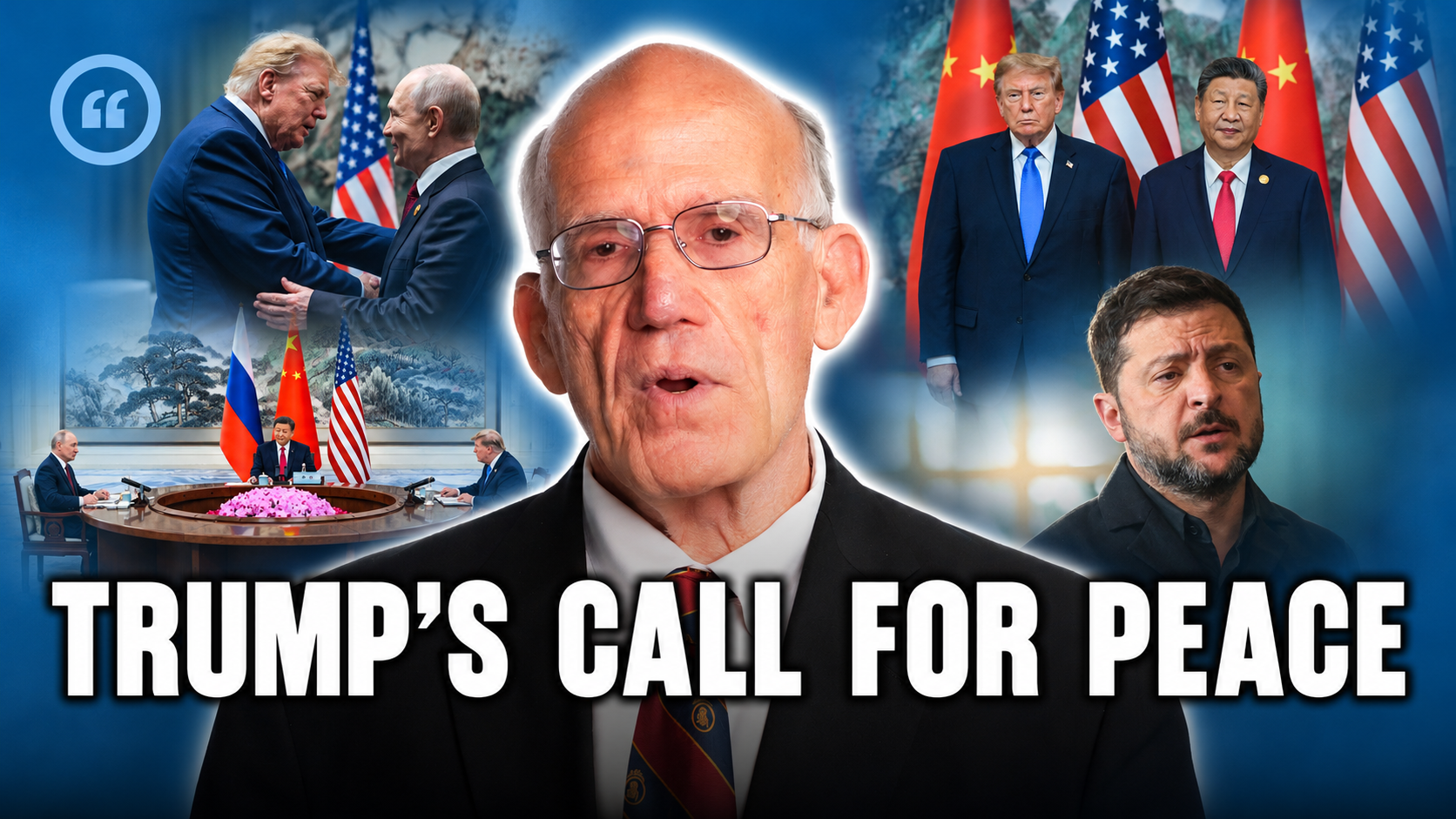
President Donald Trump's first ever trilateral summit with Vladimir Putin and Xi Jinping raises questions about the future of the war in Ukraine and whether a peace agreement could finally be within reach. Victor Davis Hanson and Sami Winc examine the summit on today’s edition of “Victor Davis Hanson: In His Own Words,” discussing Russia's declining influence, potential territorial concessions in Ukraine, and Europe's frustration over Trump's peace negotiations. Hanson criticizes Hillary Clinton's attacks on Trump's diplomacy; he also argues that European leaders have weakened their influence by neglecting defense spending and relying on American military protection. They discuss Elon Musk's shifting political allegiances, and Hanson warns that distancing himself from MAGA may not protect him from Democrat investigations. They also discuss the potential economic benefits of artificial intelligence and the challenges facing Hakeem Jeffries as Democrats prepare to take control of the Hou
Project Synapse: Markets in Freefall, Fragile Infrastructure, and AI's Perfect Storm The hosts banter through the show's intro before focusing on a sense that "things are out of control," citing a WallStreetBets suicide-hotline post amid a market crash and discussing cascading system failures involving Microsoft, the FAA, and a reported NSA internal communications outage. They argue politicians and leadership lack technical competence and clear messaging, increasing panic, while emphasizing that many problems stem from aging, underfunded infrastructure and complex, brittle software (PHP, NGINX, Java), not proven AI attacks—more a "perfect storm" of crises. They debate whether AI should help fix complexity, stressing critical thinking, accountability, and using multiple AIs to verify each other. In a lightning round they cover Anthropic's IPO performance, mixed reactions and token limits with ChatGPT 6.2 (favoring "Sol" over "Astra"), Google's cheaper Neon model and confusing UX, Loblaw
The world appears to be falling apart, and the Trawl ladies are beginning to wonder whether anyone is actually in charge. From America's air traffic control system grinding to a halt, banking glitches and our ever-growing dependence on technology, Jemma and Marina are asking what happens when the infrastructure we rely on is run by systems, and people, we can't trust. Trump's America is proving quite the masterclass in chaos. There's Transportation Secretary Sean Duffy, whose career has taken him from reality TV to running America's transport network; questions over the new AI technology, the FAA's failures and the government's handling of the crisis; and another extraordinary display of Trump's blame-shifting when things go wrong. We also look at Markwayne Mullin's rather unfortunate timing when it comes to a trip to a college football game, the questions surrounding donations to Trump's enormous new ballroom and the companies subsequently winning government contracts. Are these isola
President Trump meets with Xi Jinping and Vladimir Putin in an unprecedented show of three leaders who understand the power of grand diplomatic gestures. On a special edition of Compass Points, Nick Schifrin is in Shenzhen, China, and has details on the historic meeting and the message it's sending. Plus, Stephanie Sy analyzes the summit with Heather Conley, Patricia Kim and Charles Kupchan. Hosted on Acast. See acast.com/privacy
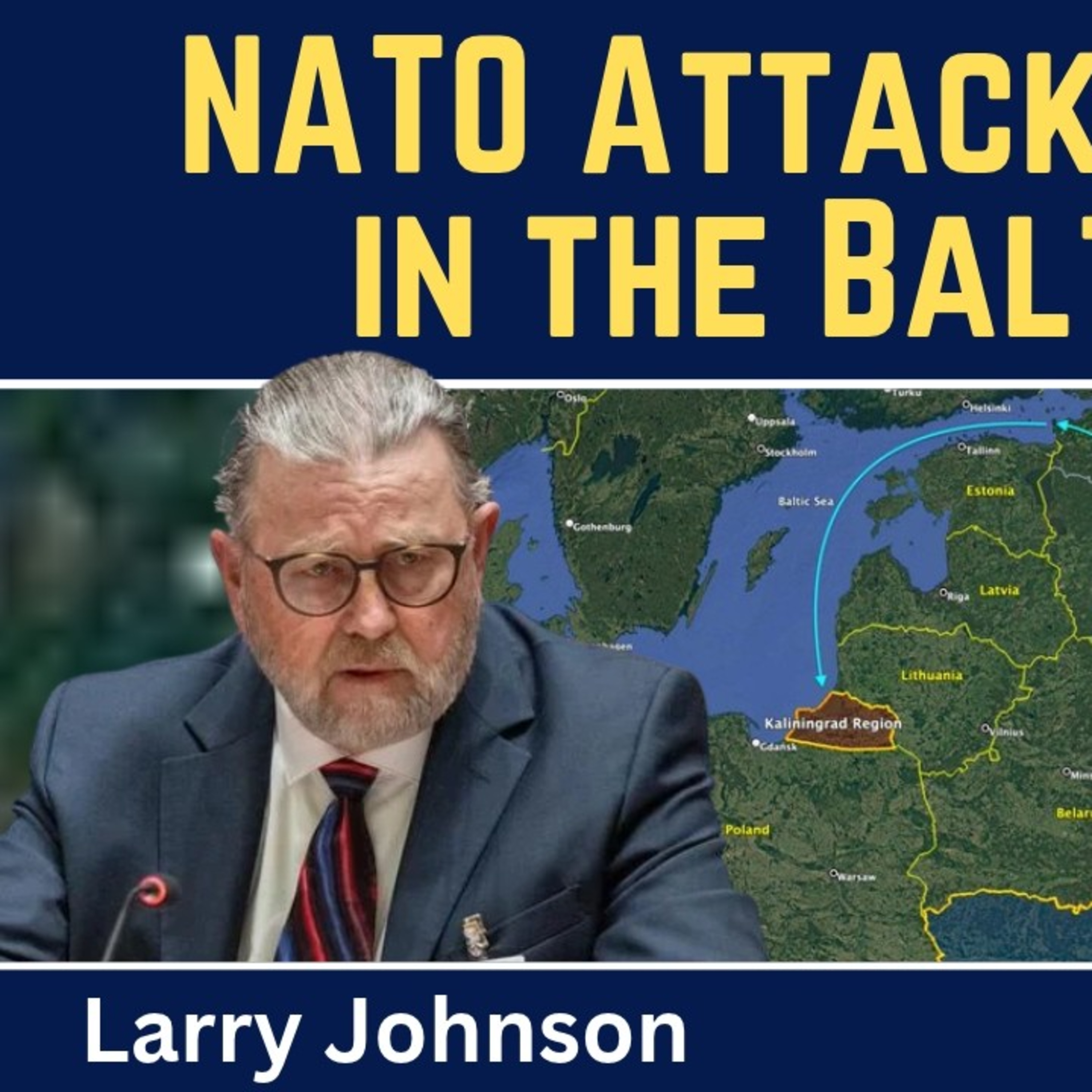
Larry Johnson is a former CIA intelligence analyst who also worked at the U.S. State Department's Office of Counterterrorism. Johnson discusses the attack on a Russian cargo ship in the Baltic Sea, and the air alarms going off in Kaliningrad. Read Larry Johnson's Sonar21: https://sonar21.com/Follow Prof. Glenn Diesen: PayPal: https://www.paypal.com/paypalme/glenndiesenBuy me a Coffee: buymeacoffee.com/gdiesengGo Fund Me: https://gofund.me/09ea012fBuy Diesen merchandise: https://diesen-shop.fourthwall.com/en-nokBooks by Prof. Glenn Diesen: https://www.amazon.com/stores/author/B09FPQ4MDL 00:00 Escalating Tensions in the Baltic Sea02:45 NATO's Role and Russia's Response05:52 The Shift in European Attitudes Towards Russia09:11 Cultural Influences on Perceptions of Russia11:44 The Consequences of Military Escalation15:06 The Irrelevance of Europe in Global Politics25:49 Reassessing Global Power Dynamics32:44 The Role of Europe in a Changing World39:19 The Impact of Economic Interests on Pol
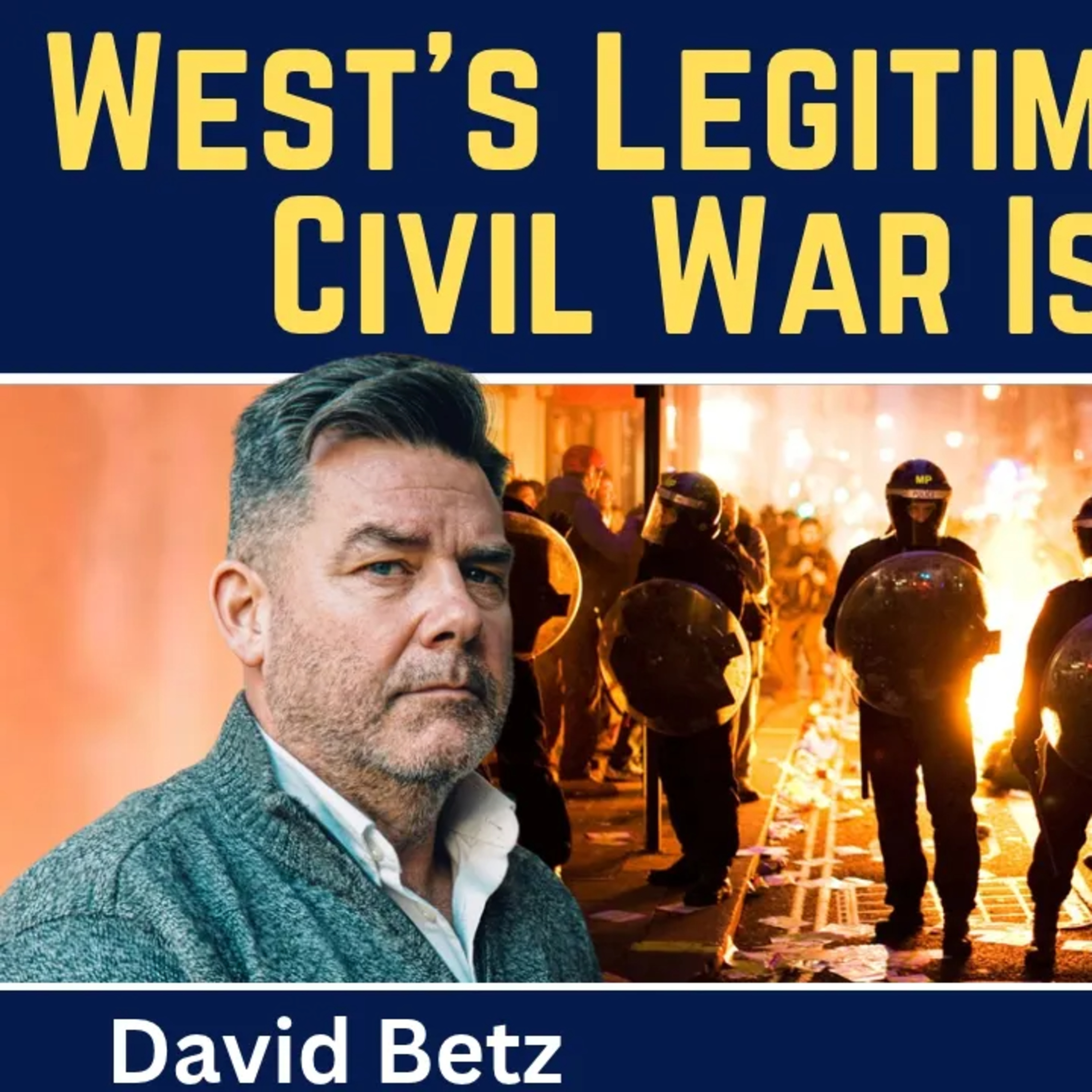
Davis Betz is a Professor of War in the Modern World at King's College London. Prof. Betz discusses how the West is accelerating on its path to civil war.Follow Prof. Glenn Diesen: PayPal: https://www.paypal.com/paypalme/glenndiesenBuy me a Coffee: buymeacoffee.com/gdiesengGo Fund Me: https://gofund.me/09ea012fBuy Diesen merchandise: https://diesen-shop.fourthwall.com/en-nok Books by Prof. Glenn Diesen: https://www.amazon.com/stores/author/B09FPQ4MDL
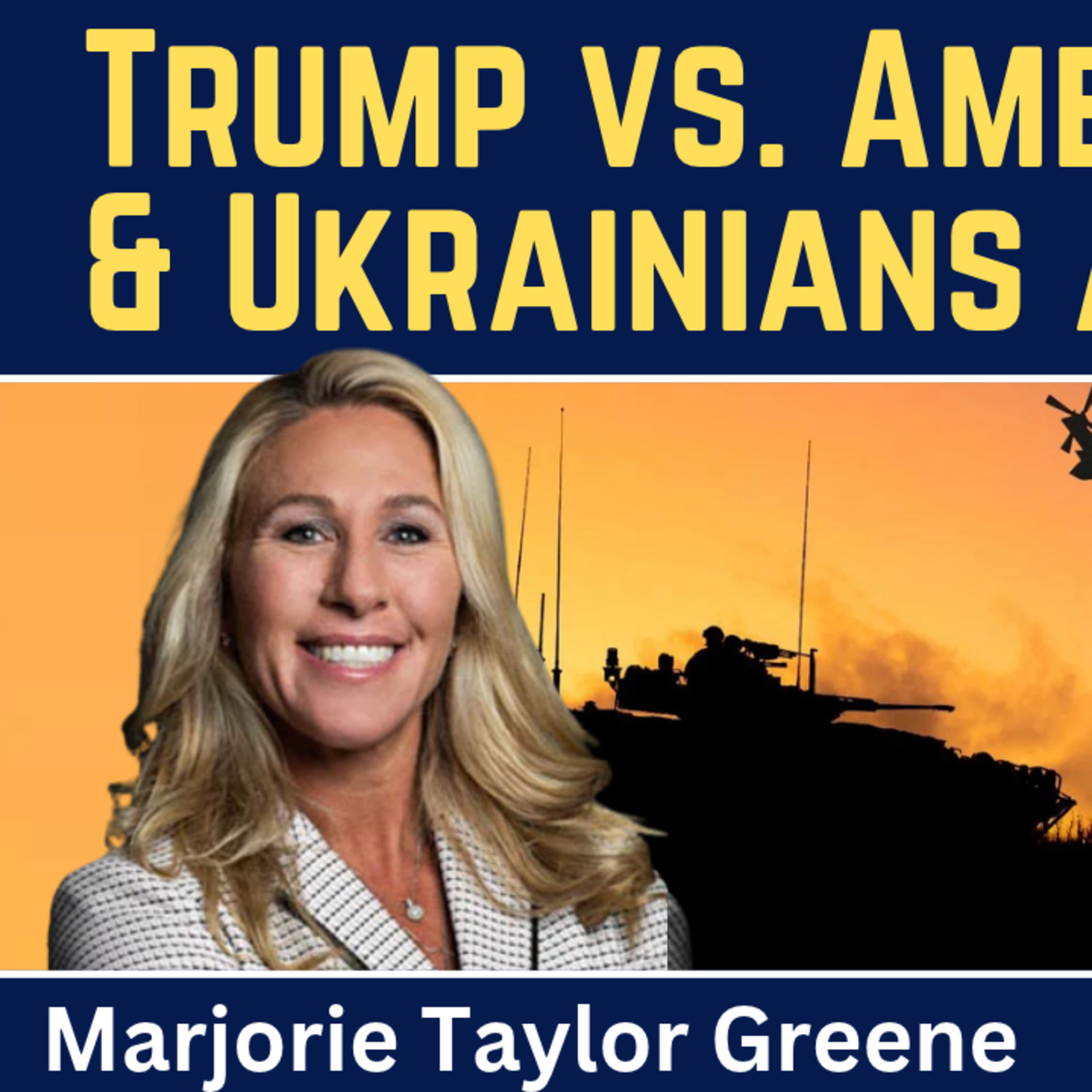
Marjorie Taylor Greene is an American Republican politician who served as a member of the U.S. House of Representatives representing Georgia from 2021 to 2026. She was a close partner of Trump during the election campaign in support of 'America First', and then became a leading critic of Trump after he betrayed America First.Follow Prof. Glenn Diesen: PayPal: https://www.paypal.com/paypalme/glenndiesenBuy me a Coffee: buymeacoffee.com/gdiesengGo Fund Me: https://gofund.me/09ea012fBuy Diesen merchandise: https://diesen-shop.fourthwall.com/en-nok Books by Prof. Glenn Diesen: https://www.amazon.com/stores/author/B09FPQ4MDL00:00 Introduction to America First01:13 Defining America First03:15 The Discrepancy in American Voting Patterns04:18 Trump's Shift on Foreign Policy06:42 Concerns Over Nuclear Escalation09:21 The Israel-U.S. Relationship12:03 The Ukraine Proxy War15:58 Lobbying and Military Industrial Complex18:58 The Role of Intelligence Agencies25:29 The Future of America First
Advertised prices should include all unavoidable charges.
Share your view, then see how readers voted. No sign-in required. This poll is shared across stories.
Do you agree or disagree?
Common Quandary
A Common Quandary to discuss
Another conversation to explore, separate from this news story.
Your family connection could get your child into their dream school. Do you use it?
A university argues that considering family ties builds loyalty and encourages donations that fund scholarships. Critics say the preference preserves inherited advantage and takes places from stronger applicants.
Can benefits to the whole institution justify an unequal admissions advantage?