Jensen Huang stepped down as Nvidia CEO on November 12, 2026, after reports about an extramarital relationship with Alice Huang, a former senior executive at Megaspeed. U.S. intelligence reportedly viewed her as an asset working for Beijing. That allegation is not a conviction, and it is not the same thing as proof Nvidia secrets changed hands. Tony Brueski brings in retired FBI Special Agent Robin Dreeke, former leader of the bureau’s Counterintelligence Behavioral Analysis Program, for the question behind the headlines: how does somebody who helped build one of the world’s most important technology companies fail to recognize a possible intelligence threat in his personal life? Huang apologized to his family and Nvidia employees for infidelity. The board announced an outside investigation, while saying it knew of no reason to believe national security or proprietary information was compromised. Reuters subsequently reported that Huang had previously told Nvidia leaders his encounters
This episode is brought to you by Sarmaya Partners. Learn more about Sarmaya’s LENS ETF, their full data and comparison, including performance here: https://sarmayaetf.com/ In this episode of Other People's Money, Max Wiethe sits down with Muddy Waters Capital founder Carson Block to discuss his firm's explosive new short thesis on Nvidia. Block breaks down the alarming connections between a former Nvidia executive and a former SMCI executive recently implicated in a major chip smuggling scandal. The conversation dives deep into the national security implications of dual-use technology and how the ongoing geopolitical tug-of-war between the US and China is reshaping the semiconductor sector. Tune in to hear why Block believes this scandal goes far beyond CEO indiscretions and could trigger a massive regulatory reckoning for Silicon Valley's biggest players. Follow Muddy Waters on X: https://x.com/muddywatersre Follow Max on X: https://x.com/maxwiethe Follow Other People’s Money on: App
Michael Wolff and Joanna Coles break down Donald Trump’s latest press conference, from his startling answer about Vladimir Putin to the awkward spectacle of JD Vance and Marco Rubio standing behind him. Michael reveals what he’s heard about a private conversation in which Trump admitted his options in Iran “all stink” and appeared momentarily confused about who Pete Hegseth was. They discuss how the war and the midterm results have weakened Trump’s grip on the Republican Party, why Vance and Rubio are calculating their next moves and what comes next for Ukraine. Plus, Michael and Joanna review Melania Trump’s new series, debate Elon Musk’s political influence and business achievements and explain why the AI boom could be vulnerable as Trump’s power fades. #ad Ready to reach your goals? Visit https://hims.com/ith #ad Unlock your best hair & skin with @iRestorelaser and HUGE savings on iRESTORE with code BEAST at https://irestore.com/BEAST! #irestorepod
A wave of major technology outages is raising troubling questions about America's cybersecurity, aging infrastructure, and readiness for a new era of artificial intelligence. Are these isolated technical failures, or warning signs of a much larger national security problem? John Solomon and Amanda Head welcome Ohio Congressman and former Army Ranger Warren Davidson, who discusses recent disruptions involving the FAA, Microsoft, and other critical systems. Davidson calls for greater transparency from government agencies and technology companies, questions whether America's infrastructure is adequately protected against emerging cyber threats, and examines how artificial intelligence could be used both to strengthen defenses and exploit vulnerabilities. The conversation also turns to immigration and national security, with Davidson raising concerns about individuals who entered the country illegally, potential gaps in government screening systems, and the surveillance powers used to moni
This week on The Necessary Conversation, it's Chad, Haley, and Mary Lou. Bob is still recovering but sent in a video message about Trump calling Putin his friend that we watch together. 🇷🇺 Trump held the first-ever three-way talks with Putin and Xi, called it a "12 out of 10," and produced nothing. Then at a press conference he called Putin his friend — and when asked if Putin is a friend to America, the president of the United States said, "I can't speak to America." That same day, Trump's friend Putin launched massive strikes into Ukraine, hit Poland with two missiles — an act of war against a NATO ally — then struck near a Ukrainian restaurant and drone-bombed the first responders, killing a 7-year-old child and a 20-year-old paramedic. We watch Bob's video and ask Mary Lou: is Russia our friend? 🇨🇳 The House Foreign Affairs Committee revealed Trump's Commerce Department approved nearly 880,000 advanced AI chips for Chinese military-linked companies including Alibaba, Tencent, a
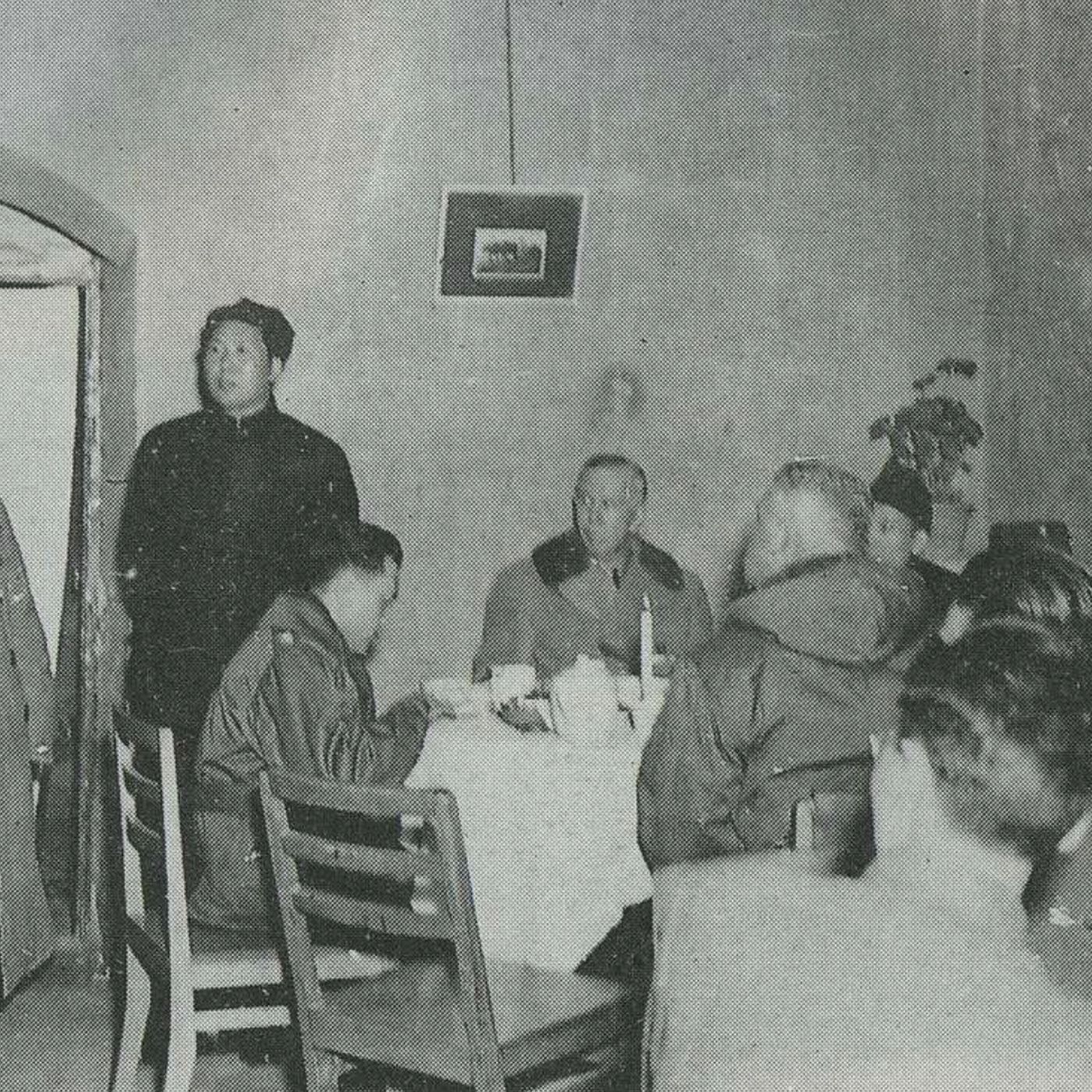
1946 MAO AND GENERAL MARSHALL Psychological Trauma, Intergenerational Silence, and National Amnesia in Modern China — Part Two Tania Branigan, author of Red Memory: The Afterlives of China’s Cultural Revolution, visits mental health professionals in Shanghai to examine the psychological legacy of “eating bitterness” and Maoist delusion. She concludes that official censorship and deep personal trauma together perpetuate a lingering national amnesia across Chinese generations. (8)
The morning after Anthropic’s historic IPO (https://www.cnbc.com/2026/11/19/anthropic-ipo-ant-live-updates.html), shares of the AI company traded down in the pre-market. CNBC’s Leslie Picker reports on the giant Nasdaq listing, the money made, and the Anthropic stock’s drop from the IPO pop (https://www.cnbc.com/2026/11/20/anthropic-stock-ai-amd-nvidia.html). Becky Quick traveled to Bentonville, Arkansas for a look at Walmart’s earnings (https://www.cnbc.com/2026/11/19/walmart-wmt-q3-2026-earnings.html) at the company’s new corporate campus with CEO John Furner, only the 6th CEO in the company’s 64 year history. Plus, Andrew Ross Sorkin recaps some of Elon Musk’s most newsworthy comments from the New York Times DealBook Summit this week. Leslie Picker - 28:14 John Furner - 33:19 In this episode: Joe Kernen, @JoeSquawk (https://x.com/JoeSquawk) Becky Quick, @BeckyQuick (https://x.com/BeckyQuick) Leslie Picker, @LesliePicker (https://x.com/LesliePicker/status/1813934266918809824) Katie K
Priscilla Chan joins Becky Quick to discuss rare disease research, personalized medicine and how AI could help advance biomedicine and science. Chan and her husband, Mark Zuckerberg, the founder of Meta, co-founded the Chan Zuckerberg Initiative (CZI) and Biohub, both with a core mission of curing, preventing, or managing all disease. Drawing on her background as a pediatrician, Chan explains how rare disease groups are building research programs, patient registries and clinical trials, and how this work could point to new approaches for treating diseases more broadly. Join us in advancing awareness and understanding of rare diseases. Visit CNBC.com/Cures (http://cnbc.com/Cures) to access more clips, resources, or to sign up for our weekly newsletter. Follow Becky Quick: X: @BeckyQuick Instagram: @BeckyQuickCNBC Facebook: @BeckyQuickCNBC LinkedIn: @BeckyQuick Please share your thoughts or rare disease story with us, and join us on The Path. Hosted by Simplecast, an AdsWizz company.
Ahead of Anthropic’s first trade on the Nasdaq (https://www.cnbc.com/2026/11/19/anthropic-ipo-ant-live-updates.html), investor Brad Gerstner explains his ongoing bet on the company (https://www.cnbc.com/2026/11/16/altimeters-brad-gerstner-investing-5-billion-in-anthropic-ipo.html) and its role in the future of artificial intelligence. CNBC’s Leslie Picker and David Faber break down Anthropic’s IPO pricing, the windfall for employees (https://www.cnbc.com/2026/11/19/anthropic-ipo-could-create-thousands-of-multimillionaire-employees.html), and the timeline for Anthropic’s entry into the Nasdaq 100 and the Russell 1000. Plus, Andrew Ross Sorkin’s big takeaways from the 25th annual New York Times DealBook Summit. David Faber & Leslie Picker - 13:09 Brad Gerstner - 23:05 In this episode: Brad Gerstner, @altcap (https://x.com/altcap) Joe Kernen, @JoeSquawk (https://x.com/JoeSquawk) Becky Quick, @BeckyQuick (https://x.com/BeckyQuick) David Faber, @davidfaber (https://x.com/davidfaber?lang=en)
Expanding universities should help pay for the pressures they create on surrounding neighborhoods.
Share your view, then see how readers voted. No sign-in required. This poll is shared across stories.
Do you agree or disagree?
Common Quandary
A Common Quandary to discuss
Another conversation to explore, separate from this news story.
A bot will reject your honest résumé. Is it okay to add a year of experience?
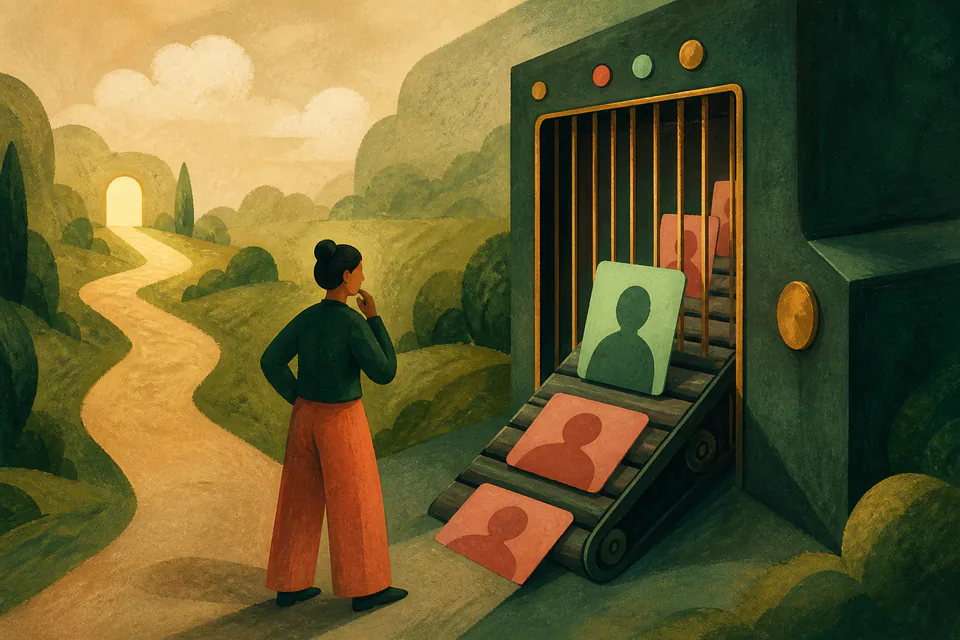
A role requires three years of experience. You have two, possess all the practical skills, and know automated screening will reject an honest application before a person sees it.
Can an unfair gatekeeping system justify misrepresentation?