English-language podcasts

Oral Arguments, with Context

Kendrick v. AW Distributing, et al. — 10th Cir. (Nov 16, 2026)
33 min

Listen through the publisher, then discuss the episode here or arrange an in-person Roundtable. Your city determines where to meet.

Roundtables are designed for groups of four, with a shared subject and room for everyone to speak. Come for discussion, with no dating expectation.

The Tenth Circuit hears Kendrick versus A W Distributing, a wrongful-death lawsuit involving aerosol computer dusters. Jonathan Kendrick died in a Kansas motel after inhaling gas from those products, a practice known as huffing. The lawsuit seeks to hold the companies that make and sell the dusters responsible for his death. The case began in Missouri but was transferred to Kansas. A federal judge applied Kansas law and dismissed the claims because huffing was illegal and connected to the fatal injury. The appeal asks whether the judge could choose that law and end the case based on the complaint, before a trial. Kendrick will argue that the judge improperly weighed disputed facts, and that Jonathan's purchases and addiction in Missouri matter to which state's law applies. The companies will argue that the pleaded facts already make Kansas law controlling, and that the claims would be barred under Missouri law as well. Listen for the difference between the place of death and where an injury first took effect, and between accepting allegations and resolving factual disputes. Kendrick v. AW Distributing, et al. (No. 25-3227) — U.S. Court of Appeals for the Tenth Circuit, argued November 16, 2026. Sources: Official Tenth Circuit oral argument: District of Kansas, December 1, 2025 dismissal order, ECF 138:

Episode information is provided by the publisher. Listening takes place on the publisher’s service.

Listen at the source ↗

Featured places to meet in Palo Alto, CA

Explore these places and arrange a conversation through ThinkMatch.

City guide for Palo Alto, CA

More from Oral Arguments, with Context

Oral Arguments, with Context

Dickerson v. Macmillan, et al. — 9th Cir. (Nov 20, 2026)

41 min

The Ninth Circuit considers a shareholder's challenge to disclosures used to sell UserTesting. During negotiations, Thoma Bravo reduced a proposed ten-dollar-a-share offer to seven dollars and fifty cents. The board initially rejected that lower price, but later recommended a deal at that price to shareholders. The shareholder alleges that the merger's proxy statement wrongly made the company's revenue performance look worse than it was. The disputed sentence grouped revenue with calculated billings and said both had fallen short of expectations. Her theory is that this depressed picture helped persuade shareholders to accept too little for their stock. That is an allegation, not a finding that the deal was unfair. The district court dismissed the revised complaint. Although it had treated the disputed sentence as false or misleading, it said the allegations still sounded in fraud and failed the stricter requirements for pleading the executive's responsibility. The shareholder will arg

Discuss this episode

Oral Arguments, with Context

Canandaigua National Corporation v. Board of Governors of the Federal Reserve System — 2d Cir. (Nov 20, 2026)

42 min

The Second Circuit considers a plan to help homebuyers who need mortgages compete with cash offers. Canandaigua National Corporation, a New York financial holding company, wanted to guarantee purchases arranged through its mortgage subsidiary. If a preapproved customer failed to obtain final mortgage approval, the company would buy the home itself and later resell it. The proposal capped the value of homes held at any one time at five million dollars and promised resale within two years. Canandaigua says those safeguards make the risk small. The Federal Reserve Board rejected the plan on safety-and-soundness grounds, looking beyond the risk to this particular company. It did not finally decide the remaining statutory factors. Canandaigua will argue that the Board ignored the limits in its actual application. The Board will defend considering what could happen if financial holding companies generally began buying property under such guarantees. This is a dispute over permission for a pr

Discuss this episode

Oral Arguments, with Context

EcoHub, LLC v. Recology, Inc., et al. — 9th Cir. (Nov 20, 2026)

38 min

The Ninth Circuit hears a dispute over a proposed waste-processing project in California. Nortech already operated the Western Placer Waste Management Authority's facility. It worked with EcoHub on a proposal for the facility's future, first seeking a contract extension and then preparing for competitive bidding. The collaboration broke down. Nortech ended discussions after EcoHub failed to produce a requested financing commitment. EcoHub says the financing demand was a pretext, and that Recology pushed Nortech to abandon their joint effort. EcoHub and Nortech eventually submitted separate bids. Neither won. EcoHub nevertheless says their work together had already created a legal partnership, with duties Nortech could not simply walk away from. The district court ruled against EcoHub before trial, finding insufficient evidence of shared control. It also found EcoHub's interference claims against Recology were brought too late. EcoHub will argue that the companies' conduct and board dis

Discuss this episode

Community Poll

Manufacturers should help cover harm from unsafe products even if older standards permitted them.

Share your view, then see how readers voted. No sign-in required. This poll is shared across stories.

Do you agree or disagree?

Choose one answer

Common Quandary

A Common Quandary to discuss

Another conversation to explore, separate from this news story.

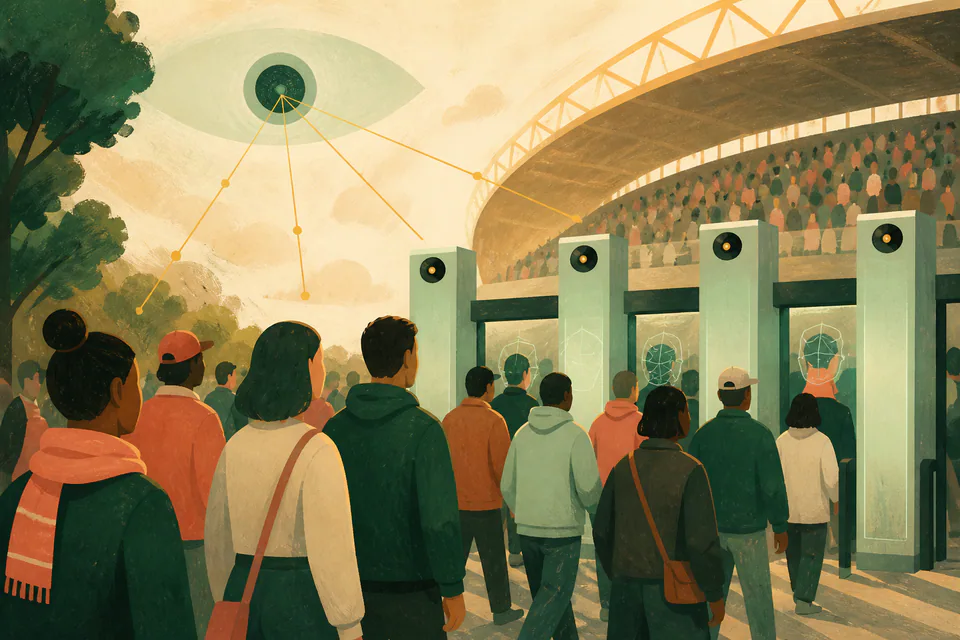
The stadium can ban violent fans by scanning every face at the gate. Would you walk in?

A stadium can use facial recognition to identify people banned for violence and shorten security lines. Every visitor would be scanned, error rates are not zero, and the resulting biometric data could become useful to police or advertisers.

How much privacy may a crowd be asked to trade for collective safety?

Explore this quandary