Kristine Lauria: The Midwife Who Has Caught 5,000 Babies | Allowed to Birth, Breech Birth, Twins, High Risk Pregnancy
66 min
Listen through the publisher, then discuss the episode here or arrange an in-person Roundtable. Your city determines where to meet.
Roundtables are designed for groups of four, with a shared subject and room for everyone to speak. Come for discussion, with no dating expectation.
This week I spoke with Kristine Lauria, an American midwife who has attended over 5,000 births in more than 25 countries and the midwife at the heart of the documentary Allowed to Birth. Kristine started out almost 38 years ago as an apprentice midwife among the Amish in rural Ohio. Today she works with Doctors Without Borders in places like South Sudan and Bangladesh, and teaches breech and twin birth skills to midwives and doctors all over the world with Breech Without Borders. We talk about what it really means when a pregnancy is labelled high risk, the follow up questions most women never think to ask, and whether a physiological birth is possible in a hospital. Kristine shares her own unassisted home birth with her son and explains why breech and twin births have come to be seen as so risky. I also share my own VBAC with Kit, including a forceps delivery, a postpartum haemorrhage and a NICU stay, and how the consultant who stayed by my side changed how I feel about it all. Allowed to Birth is showing at screenings across the UK now. You can find out more here: https://www.allowedtobirth.com/ Work with Kristine here: https://kristinelauria.com/ In this episode we talk about: What being labelled high risk actually means and the questions to ask your care provider Why physiological birth is so hard to replicate in a hospital setting Freebirth and unassisted birth, and what Kristine wants women to understand before choosing it Why breech birth and twin birth are classed as high risk, and the role of provider training The trust between a mother and her care provider, and why it matters so much Want to come on the podcast? Hosted on Acast.
Episode information is provided by the publisher. Listening takes place on the publisher’s service.
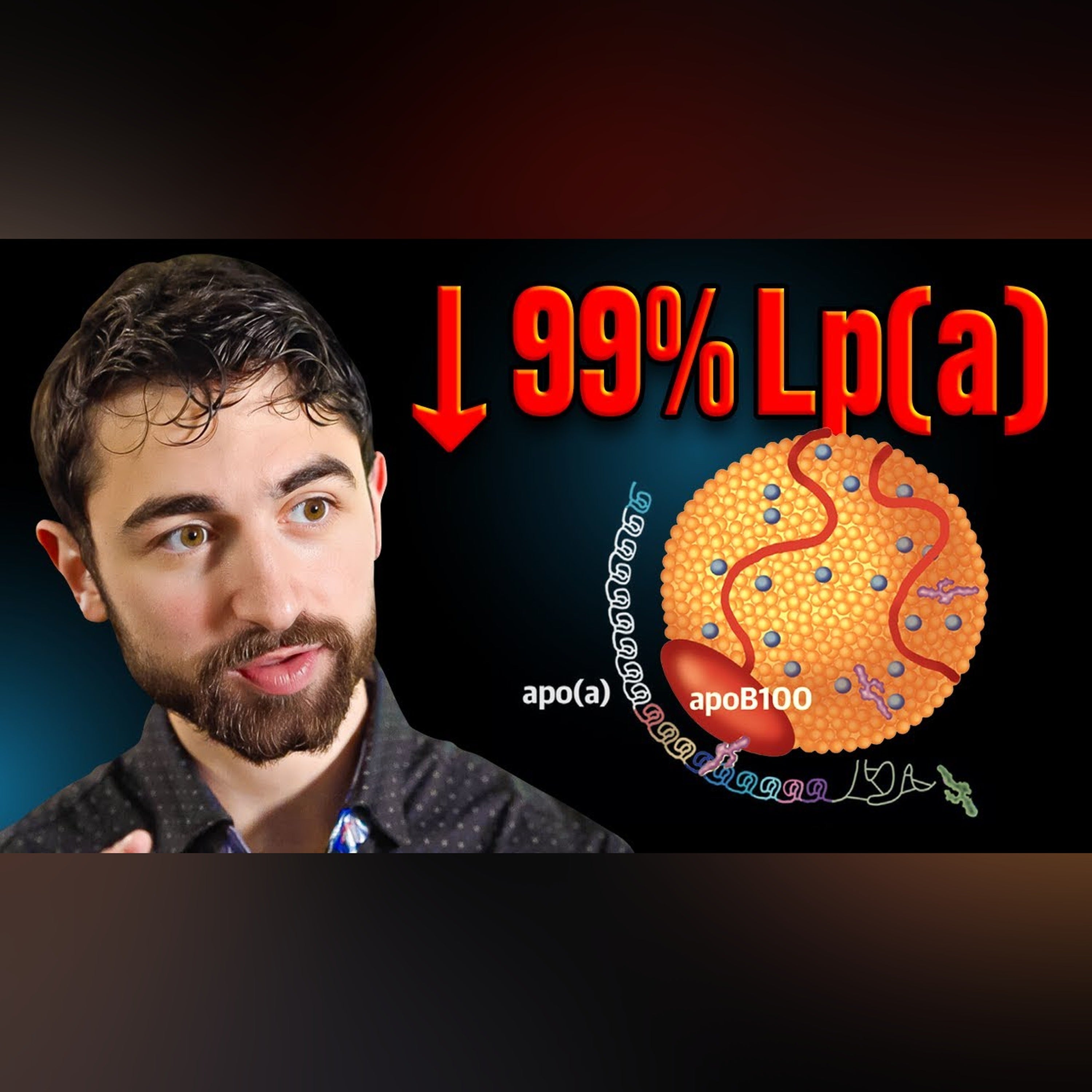
Lp(a), lipoprotein(a) is a major genetic risk factor for heart disease and one of the most talked-about topics in modern cardiology. It plays a significant role as a causal risk factor for cardiovascular disease and is thought to be largely genetically determined. What do you do if you’re genetically cursed, like me, with high Lp(a) levels? In this video, I promise on my own heart health, you'll gain a deeper understanding of Lp(a): what it is, why it’s so important for your heart and metabolic health, and what actionable steps you can take to manage your cardiovascular risk. To give you a roadmap, here’s what we’ll cover in the 8 chapters: 1. Defining Lp(a) 2. Guidelines on measuring Lp(a) and risk thresholds 3. Medications in development to reduce Lp(a) by as much as 99% 4. How to reduce cardiovascular risk 5. Why statins increase Lp(a) and what this means 6. Saturated fat can lower Lp(a) level 7. Oxidized phospholipids as the cargo of Lp(a) 8. Nuance notes for the nerds. This video
Discover the transformative power of living ready every single day. Learn why readiness isn’t about scrambling when opportunity knocks, but building habits, discipline, and systems so you can step into any moment with calm confidence. The prepared don’t panic—they execute. Key Topics From This Motivational speech: Why staying ready beats getting ready How preparation builds quiet confidence and trust Why readiness is built in private, not under pressure The link between daily discipline and long-term opportunity How readiness protects peace, reputation, and performance This inspiring message reveals that opportunity rarely gives warning—it rewards those already prepared. Readiness is a daily standard, not a switch you flip. By training in the quiet seasons, sharpening your skills, and tightening your systems, you build a reputation for dependability that creates influence, opens doors, and keeps you grounded under pressure. This Jim Rohn Motivational speech Is Perfect For: Professional
Today, Mel is taking 58 years of hard-earned life lessons and is packing them into under an hour, to save you some of the time, frustration, and worry it took her to learn them the hard way. In this episode, Mel is fielding real questions from listeners around the world. From making friends and bouncing back from rejection to feeling stuck in life and wondering if it's all going to work out, Mel is sharing the advice she wishes she'd known sooner. And she's not holding back. You'll hear Mel get personal about her own setbacks, and what she's learned about starting over, going after what you want, and trusting yourself when life doesn't go according to plan. You'll learn: -How to stop worrying about the future when nothing feels certain -How to make big life decisions, including whether or not to have kids -How to make new friends as an adult -What to do when you get rejected from your dream job -What to do when a friend ghosts you -How to stop procrastinating and finally follow through
We’re about to time travel into the future Sam Altman is building… I interviewed Sam Altman, the CEO of OpenAI, the company behind ChatGPT. They’re trying to build a “superintelligence” that could far exceed humans in almost every field – and they just released their most powerful tool yet, GPT-5. A few years ago, that would’ve sounded like science fiction! Not anymore. In fact, they’re not alone. We’re in the middle of the most high stakes global race any of us have ever seen. Hundreds of billions of dollars and an unbelievable amount of human work… It’s a profound moment. Most people never see a huge technological shift like this in their lives and it’s happening all around us right now. So in this conversation, I’m going to try to time travel into the future with Sam Altman, to see what he’s trying to build… so you and I can really understand what’s coming. Welcome to HUGE* Conversations. Chapters: 0:00 What future are we headed for? 2:06 What can GPT-5 do that GPT-4 can’t? 6:57 Wha
We spend so much time caught up in the demands of everyday life that we forget to appreciate how extraordinary it is to be alive. Inspired by Robert Greene's new book, The Law of the Sublime (https://www.thepaintedporch.com/products/the-law-of-the-sublime?_pos=13&_sid=e0d7a8c03&_ss=r), Ryan explores what the Stoics understood about finding beauty in the ordinary, seeing life from a different perspective, recognizing our connection to something bigger than ourselves, and remembering just how lucky we are to be alive. Watch this episode (https://www.youtube.com/watch?v=eCjqWcbsK1M) on YouTube: https://www.youtube.com/watch?v=eCjqWcbsK1M Watch the NEW Robert Greene Daily Stoic Podcast Episode HERE (https://www.youtube.com/watch?v=Kp_wYiuPD_o): https://www.youtube.com/watch?v=Kp_wYiuPD_o If you want to get your own dedicated privacy specialist and an emergency threat response team who can protect the privacy of you and your family, go to https://incogni.com/dailystoic Hosted on Acast.
In this video, Disability Attorney Walter Hnot of the Disability Resolution Law Firm goes over DI 24501 TN 33 and how a document is being restricted from viewing access. America’s Most Viewed, Clicked On, Subscribed To Social Security Disability Attorney Like the content? Review us here: https://g.page/r/CcwyektC7nCPEAg/review . If the link does not work, Google: Disability Resolution, P.A. Need Medicare? I don’t do that…so call Chapter Medicare at 339 226 6287 or use askchapter.org/disability Great News!! Chapter is paying me to create this video. Welcome to the largest Social Security Disability Tutorial Video Library On Earth. PRIVATE ONE 60/30 MIN SESSION PHONE CALL https://www.dropbox.com/scl/fi/h48yr0wagaizrvbype2vu/250-hourly-Attorney-Hnot-Contract-V.9.pdf?rlkey=ax5vf89x0v4qk43w8oqj6ynof&dl=0 (https://www.dropbox.com/scl/fi/h48yr0wagaizrvbype2vu/250-hourly-Attorney-Hnot-Contract-V.9.pdf?dl=0&rlkey=ax5vf89x0v4qk43w8oqj6ynof) NEED MEDICARE? I don’t do it, but I trust these folks t
Phoebe’s waters had been broken for over 48 hours when a midwife coming back on shift raised the alarm. Phoebe is a London mum of three and the founder and CEO of health tech app Inherit. Phoebe went into her first birth feeling prepared. She’d done her NCT classes, stayed off social media, and made it to her Christmas Day due date after a pregnancy spent being sick more than 20 times a day with hyperemesis. Two days later her baby was barely moving, so she was induced at St Thomas’ in London. Over the next few days, on a packed ward between Christmas and New Year, her contractions kept coming but she stayed at two centimetres, even after her waters broke on their own. Late on New Year’s Eve the midwife who had been there when her waters broke came back on shift and saw she was still waiting. Bloods showed a severe infection and her baby’s heart rate had dropped, so Phoebe was rushed to theatre for an emergency caesarean. Her daughter Evie was born not breathing, and the team got her b
I had Antonia on the pod today to share the story of her first pregnancy, one she describes herself as one in a million. Antonia has worked in health and fitness for almost a decade, runs her own business and is a Pilates instructor who specialises in supporting women with eating disorders and body image. She knew she wanted a planned caesarean before she was even pregnant. Then hyperemesis gravidarum started on day one and never let up, and at her 20 week scan her baby was measuring on the zero centile, which led to specialist care at St George's. At 26 weeks, after weeks of breathlessness and rib pain she'd been told was probably anxiety, a CT scan found blood clots in both of her lungs. Antonia made it to her planned caesarean at exactly 37 weeks, with a team she'd helped choose around her. Her breech daughter was born four minutes after the first incision, screaming. She also talks about her recent diagnosis of antithrombin deficiency, a rare genetic clotting condition, and why she
This week I had Toya on the pod, a content creator and mum of one from London. She was induced at 38 weeks after a scan found extra fluid, and pushed her son River out with an epidural in. Toya was low risk and loved being pregnant until her 36 week scan showed polyhydramnios and some pressure on the umbilical cord. She was induced with a pessary at 38 weeks, and on the second day her waters went on the hospital bed. Labour came on fast, she had an epidural, and after 40 minutes of pushing River was born with no assistance. In this episode we talk about: • High prolactin before pregnancy, and being told conceiving could be difficult • Polyhydramnios and the 36 week scan that not every NHS trust offers • How she pushed with an epidural by visualising and letting it wear off a little • Her second degree tear, and why she never opened any of the sprays and pads she bought • Tongue tie, weight loss and why her breastfeeding journey ended at five months Want to come on the podcast? Hosted o
Public contracts should consider quality and reliability, even when the lowest bid costs less.
Share your view, then see how readers voted. No sign-in required. This poll is shared across stories.
Do you agree or disagree?
Common Quandary
A Common Quandary to discuss
Another conversation to explore, separate from this news story.
You cannot stand your friend's partner. Do they still get a wedding invitation?
You are planning a small wedding and strongly dislike the person your longtime friend has been dating. Inviting them would make you uncomfortable, but excluding only that partner would embarrass your friend.
Whose comfort should govern a celebration centered on you?