Lake Superior's Ansel Adams: 50 Years of Landscape Photography | Craig Blacklock
73 min
Listen through the publisher, then discuss the episode here or arrange an in-person Roundtable. Your city determines where to meet.
Roundtables are designed for groups of four, with a shared subject and room for everyone to speak. Come for discussion, with no dating expectation.
This week on F-Stop Collaborate and Listen, host Matt Payne interviews Craig Blacklock (https://blacklockgallery.com/). Craig Blacklock learned photography from his father Les Blacklock, a pioneer in color nature photography, and has spent fifty years exploring Minnesota and Lake Superior's shorelines. In this conversation, Craig traces his path from analog view cameras and calendar work to digital workflows, self-publishing, and drone photography. He shares the story behind his breakout book, born from a 100-day solo kayak circumnavigation of Lake Superior, and how he sold tens of thousands of copies without a conventional publisher. The conversation goes deep on the creative value of committing to a single subject over decades, shifting from literal landscapes to human figures and abstract water reflections, and the technical challenges of view camera tilt-shift work and book sequencing. Craig also discusses environmental advocacy, meticulous drone previsualization using Google Earth, and his honest read on the current photography business landscape. Resources and Links Craig Blacklock (https://blacklockgallery.com/) The Tripod Podcast (https://www.thetripodpodcast.com/) (with Talor Stone and David Thompson) Brian Hansel (https://www.bryanhansel.com/) Jan Bell (https://www.bellimages.com/Artist.asp?Akey=BMWXJ6N3&ArtistID=50555&ajx=1) Layne Kennedy (https://www.laynekennedy.com/index) Chapters 00:00 Introduction 00:06 Meet Craig Blacklock 09:13 The Lake Superior Circumnavigation 13:20 Building a Direct Audience 18:14 Creative Shifts and Collaboration 29:52 Light Waves and Abstraction 36:35 Advocacy and Metaphor 42:17 Previsualization and Drone Work 50:03 Book Sequencing and Editing 55:37 The Modern Photography Market 01:08:12 Closing and Guest Recommendations
Episode information is provided by the publisher. Listening takes place on the publisher’s service.
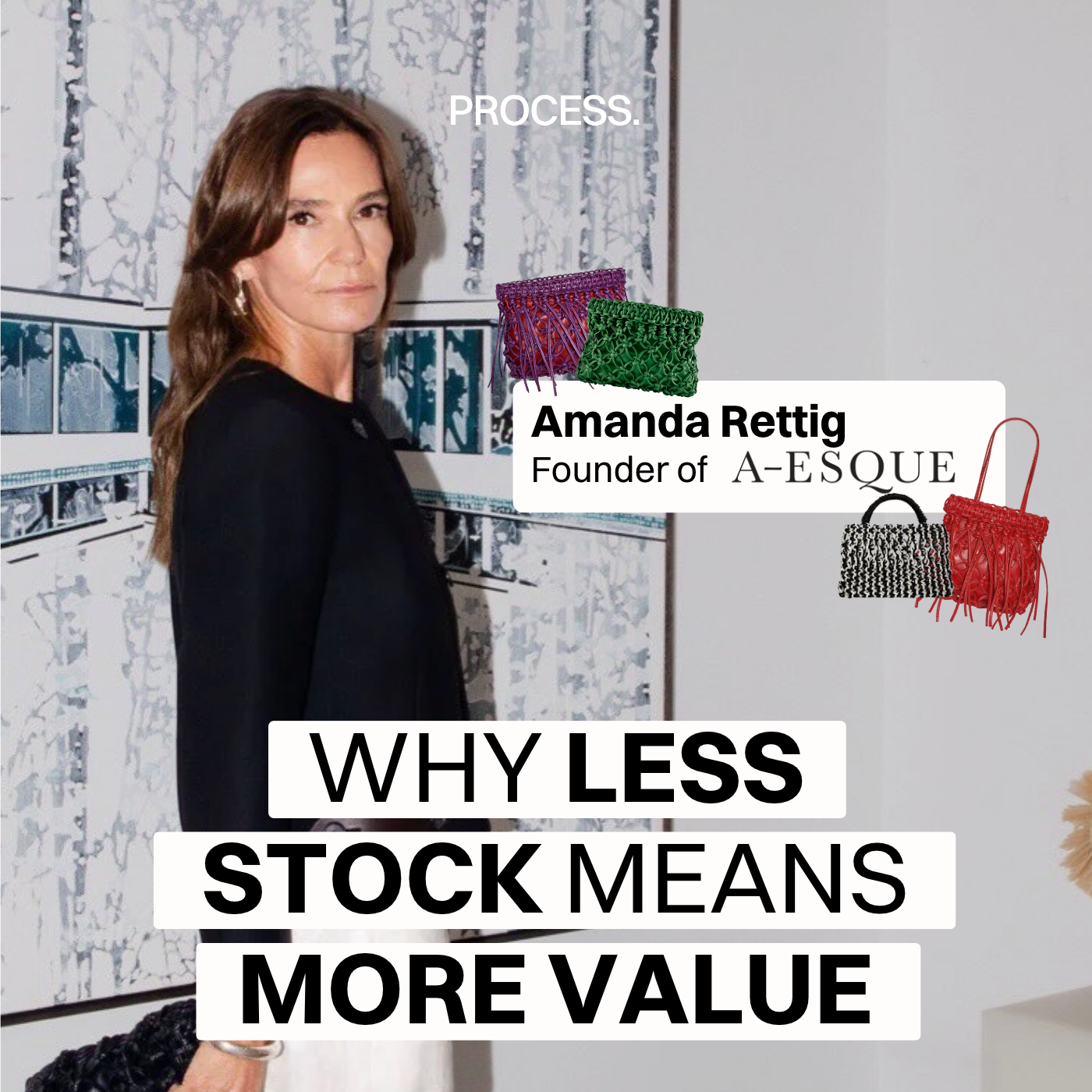
“The only time I would get scared is if I didn’t really believe in something.” - Amanda Rettig Australian designer and founder Amanda Briskin-Rettig has spent 30 years building fashion brands. She founded Mimco in 1996, sold it in 2007, and 13 years ago started A-esque, a self-funded leather goods brand handmade in small batches in Melbourne. Its philosophy is simple: build slowly, create intentionally, and make things that last. In this episode, Amanda shares how to start a fashion brand and grow it sustainably. She covers product development and product architecture, small-batch manufacturing inspired by Toyota’s lean model, and how to avoid excess inventory, deadstock and discounting. She also talks about local manufacturing, building a direct-to-consumer business, brand storytelling, collaborations, and what she learned from building and selling a business. If you want to start a handbag or accessories brand, build a sustainable fashion business, or grow a brand without compromisin
Google Jaywick, a small village on the Essex coast in England, and you'll find a seemingly endless supply of negative headlines, television documentaries and YouTube films about life in what has repeatedly been named England's most deprived neighbourhood. But how much do we really know about the people who live there? My guest this week, documentary photographer and journalist David J Shaw, has spent the best part of two years getting to know Jaywick and its residents. He's discovered a community fiercely proud of its identity, where neighbours look after one another, where karaoke nights are as much about friendship and support as singing, and where people are understandably tired of outsiders arriving with a story they've already decided to tell. We talk about our responsibility as photographers when documenting other people's lives, the politics of representation, and David's decision to exhibit his photographs in the village while he was still making the work, inviting the communit
. [youtube.com] (https://www.youtube.com/watch?v=b5PkVGsPxJQ), [amazon.com] (https://www.amazon.com/Barrie-Craig-Original-Radio-Broadcast/dp/1617095745) BARRIE CRAIG, CONFIDENTIAL INVESTIGATOR KITCHENS COME WITH KNIVES & FOG OVER MURDER 1001 Radio Crime Solvers Podcast He's Barrie Craig, Confidential Investigator, the Madison Avenue private eye whose calling card might as well have read:"Your man when you can't go to the cops. Confidentiality a specialty." William Gargan stars as Craig. [librivox.app] (https://librivox.app/book/101664), [fourble.co.uk] (https://fourble.co.uk/podcast/barriecraigconfidentialinvestigatorsingleepisodes) Two more cases from the Golden Age of Radio prove once again that trouble has a way of finding Barrie Craig. KITCHENS COME WITH KNIVES Original Broadcast: September 22, 1953 Starring: William Gargan as Barrie Craig. [youtube.com] (https://www.youtube.com/watch?v=Qs9693xA69E), [audible.com] (https://www.audible.com/pd/Barrie-Craig-Confidential-Investigator-C
In this week's Podcast: I’ve just pumped out a 300kg barrel of honey and at the bottom was a thick, granulated layer of sugary goodness. It got me thinking about why honey granulates, the science behind it all, why that’s a good thing and how, we beekeepers, can use it to our advantage. Hi, I’m Stewart Spinks, welcome to Episode 418 of my podcast, Beekeeping Short and Sweet. References: Manikis, I., & Thrasivoulou, A. (2001). The relation of physicochemical characteristics of honey and the crystallization rate. Apiacta, 36(2), 106–112. Escuredo, O., Míguez, M., Fernández-González, M., & Seijo, M. C. (2014). Nutritional value and antioxidant activity of honeys produced in a European Atlantic area. Food Chemistry, 154, 44–51. Venir, E., Spaziani, M., & Maltini, E. (2010). Crystallization in “Tarassaco” (Dandelion) Italian honey studied by DSC. Food Chemistry, 122(2), 410–415. Krishnan, R., Mohammed, T., Kumar, G. S., & Arunima, S. H. (2021). Honey crystallization: Mechanism, evaluation a
Europe's Little Anarchy: The Rise and Fall of Neutral Moresnet (https://bookshop.org/a/12343/9781501788147)(Cornell UP, 2026) uncovers the history of Neutral Moresnet: a once-forgotten space without borders, nationalism, or a recognized government. Between 1815 and 1919, this square mile of land wedged between Belgium, the Netherlands, and Germany was home to thousands of people living off the grid, free of taxation and oversight. But they also had no political status, police, legal currency, proper law courts, or government presence in sectors like public health, infrastructure maintenance, or education. Meanwhile, practical control over Neutral Moresnet lay in the hands of the local industry: a for-profit, multinational mining company that, because it owned rights to the land, also held a near monopoly on the supply of high-quality zinc to the rest of the world. Dr. Steven Press explores how the residents of Neutral Moresnet sought to improve their quality of life, appealing to Germa
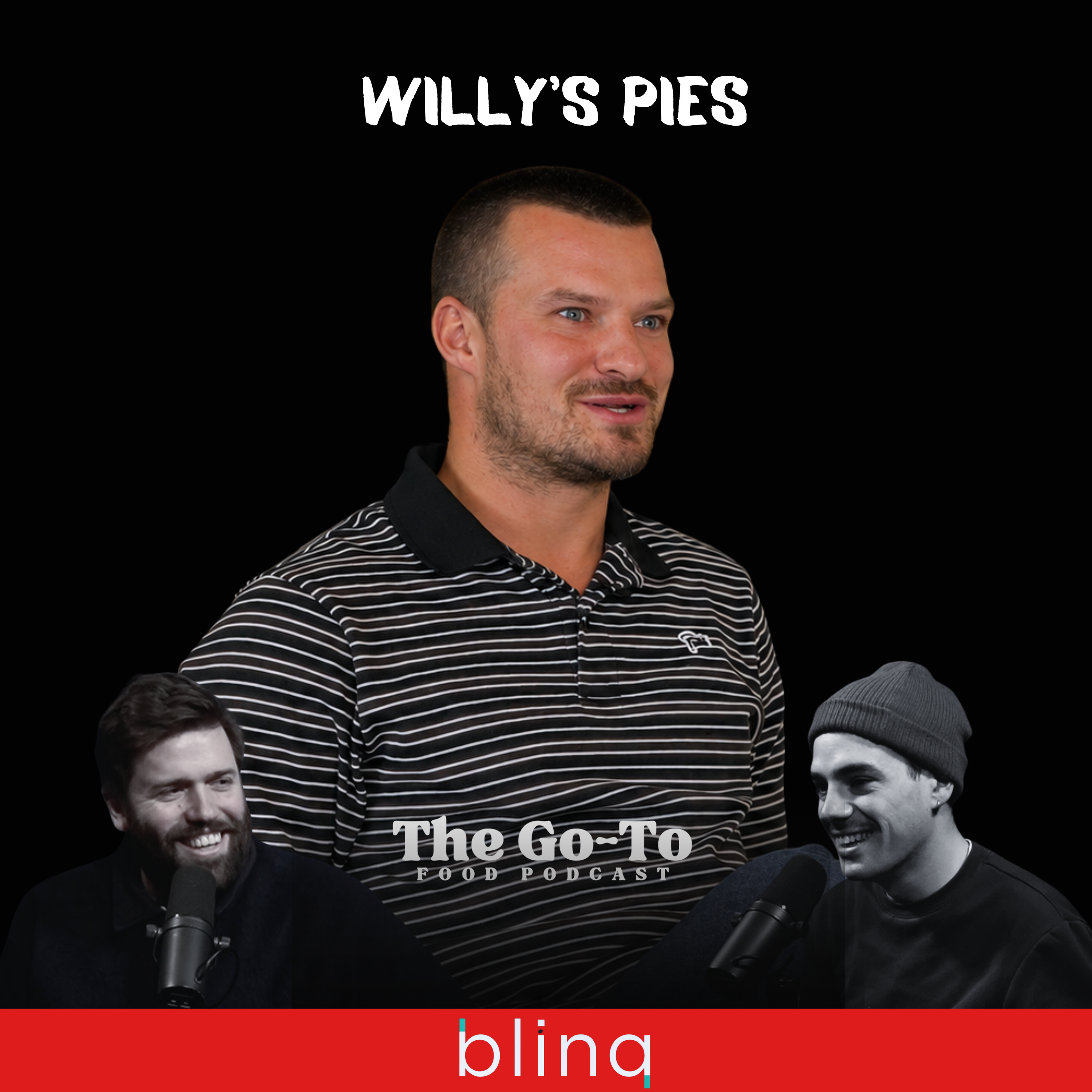
From making just 20 pies a week in his tiny kitchen during lockdown to supplying Arsenal, Crystal Palace and football stadiums across the country, Will Lewis has built something extraordinary with Willy's Pies. Today, his team makes around 8,500 pies a week from a 900-square-foot railway arch in East London, with even bigger ambitions ahead. This week on The Go-To Food Podcast, we're joined by the man behind Willy's Pies to hear how he turned a lockdown side project into one of Britain's most exciting independent food businesses. Will takes us on a brilliant journey, from getting a U in Business Studies and selling homemade Scotch eggs to old boys in the local pub at 16, to dropping out of university, living in a van in New Zealand and discovering his love of cooking. He tells us about working in some of London's most celebrated kitchens, including St John, Rochelle Canteen and Brat, before being furloughed during lockdown and deciding to start making pies. We discover how football leg
For episode 500 of F-Stop Collaborate and Listen, host Matt Payne gathers Tim Parkin (of OnLandscape magazine), Dan Hawk (from Sony Alpha Imaging), and Michael Howard (of the FOTO app) for a roundtable exploring why real photography endures, and thrives, in the era of AI. The panel dives into what makes standing in the landscape with a camera irreplaceable, the power of authentic moments, and how technological advances are reshaping both the industry and the photographic experience. Michael Howard discusses the FOTO sharing app’s philosophy of quiet, chronological feeds and the democratization of visual voices. Dan Hawk shares insight from the front lines of camera retail, describing young people’s renewed craving for tactile, imperfect tools. Tim Parkin highlights how meaningful work comes from story, intent, and the person behind the camera - all elements AI cannot replicate in experience or authorship. Together, the group untangles the challenges of social media algorithms, celebrat
For episode 499 of F-Stop Collaborate and Listen, host Matt Payne talks with Jules Oldroyd, a London-based wildlife photographer who pivoted from a 35-year television career—including Channel 4 and National Geographic—to full-time photography in her mid-50s. Jules Oldroyd describes how her first safari ignited her love for wildlife photography, the power of community, and how the challenges of COVID and personal loss led her to reinvent her professional life. She outlines lessons learned from transitioning to a print business, navigating website traffic and social media hurdles, and the tension between portfolio growth and marketing efforts. They dive into gender issues in wildlife photography, highlighting low competition entry rates for women and the impact of male-coded language and networking. Jules Oldroyd explains how her financial independence lets her focus on creative projects, conservation efforts, and specific wildlife, while also acknowledging the carbon footprint of travel
Reporting on court cases should protect personal privacy when details add little public value.
Share your view, then see how readers voted. No sign-in required. This poll is shared across stories.
Do you agree or disagree?
Common Quandary
A Common Quandary to discuss
Another conversation to explore, separate from this news story.
The prettiest trees on your street are ecological troublemakers. Do they come down?
A row of mature flowering trees defines a neighborhood and provides valuable shade. Ecologists identify them as invasive and recommend replacing them with native saplings that will take decades to grow.
How should visible community value be weighed against gradual ecological harm?