Why Real Photography Wins in the Age of AI | Tim Parkin, Dan Hawk & Michael Howard
85 min
Listen through the publisher, then discuss the episode here or arrange an in-person Roundtable. Your city determines where to meet.
Roundtables are designed for groups of four, with a shared subject and room for everyone to speak. Come for discussion, with no dating expectation.
For episode 500 of F-Stop Collaborate and Listen, host Matt Payne gathers Tim Parkin (of OnLandscape magazine), Dan Hawk (from Sony Alpha Imaging), and Michael Howard (of the FOTO app) for a roundtable exploring why real photography endures, and thrives, in the era of AI. The panel dives into what makes standing in the landscape with a camera irreplaceable, the power of authentic moments, and how technological advances are reshaping both the industry and the photographic experience. Michael Howard discusses the FOTO sharing app’s philosophy of quiet, chronological feeds and the democratization of visual voices. Dan Hawk shares insight from the front lines of camera retail, describing young people’s renewed craving for tactile, imperfect tools. Tim Parkin highlights how meaningful work comes from story, intent, and the person behind the camera - all elements AI cannot replicate in experience or authorship. Together, the group untangles the challenges of social media algorithms, celebrates the tactile ritual of photography, and asserts that real, experience-driven images will always outweigh fabricated data. Links and Resources: Get a copy of the Muench Workshops Destinations Magazine (https://muenchworkshops.com/request-a-magazine/) Dan Hawk (https://danhawk.com/) Michael Howard (https://www.howardphoto.com/) Tim Parkin (https://www.timparkin.co.uk/) On Landscape Magazine (https://www.onlandscape.co.uk/) Natural Landscape Photography Awards (https://naturallandscapeawards.com/) Musea Print Lab (https://musealab.com/) FOTO App (https://fotoapp.co/) Kodak Charm Digital Camera (https://amzn.to/3TxPu7X) Gareth Edwards' The Creator (https://www.20thcenturystudios.com/movies/the-creator) (film) 00:00 Episode Intro & Gratitude 01:03 AI’s Impact on Photography 04:32 Why Photography Matters to Each Guest 09:23 Human Nature & Billions of Photos 15:41 Intent, Experience, and the Magic of Being Present 24:26 Generated Images vs. Lived Moments 32:10 Authorship, Style, and Story in Photographs 36:17 Analog Comeback, Imperfection, Authenticity 46:10 FOTO App & Quiet Feed Philosophy 53:27 Editing, Curation, and Algorithmic Challenges 62:41 Why Photography Will Always Win 74:44 Closing Reflection & Listener Community
Episode information is provided by the publisher. Listening takes place on the publisher’s service.
What happens when photography becomes more than just a profession, and transforms into something that can change lives? This week on The Camera Life Podcast, we're joined by Gavin Blue OAM, an accomplished Melbourne-based commercial photographer with more than 30 years of experience capturing people, places and stories. From photographing CEOs, politicians, royalty and Olympic athletes to working with major Australian brands, Gavin has built an extraordinary career across advertising, editorial and corporate photography. He's also played a significant role in shaping Australia's photography industry, having served as President of the Australian Commercial and Media Photographers (ACMP). But Gavin's most meaningful contribution to photography goes far beyond his commercial work. Following the heartbreaking loss of his daughter Alexandra in 2006, Gavin went on to co-found Heartfelt in 2010, a volunteer organisation providing professional photographic memories, free of charge, to families
How do three modelers balance prototype accuracy, personal interests, and production complexity when bringing new HO scale freight cars, auto racks, and couplers to market? In this episode, the Prairie Shadows team discusses their approach to developing HO scale models that respond to both personal enthusiasm and the demands of prototype fidelity. The conversation covers recent and upcoming releases, including the Trinity 5125 PD5000 covered hopper, tri-level Thrall auto racks, Thrall 5150 covered hoppers, and a new in-house HO scale coupler called the Vandelay. The team describes how research, field measurements, and attention to railroad-specific detail drive decisions from initial project selection to production, while highlighting the influence of their own modeling interests and the realities of limited time and resources. Several points emerge around the tension between striving for accuracy and managing complexity, with the group emphasizing the logistics of maintaining detail d
Google Jaywick, a small village on the Essex coast in England, and you'll find a seemingly endless supply of negative headlines, television documentaries and YouTube films about life in what has repeatedly been named England's most deprived neighbourhood. But how much do we really know about the people who live there? My guest this week, documentary photographer and journalist David J Shaw, has spent the best part of two years getting to know Jaywick and its residents. He's discovered a community fiercely proud of its identity, where neighbours look after one another, where karaoke nights are as much about friendship and support as singing, and where people are understandably tired of outsiders arriving with a story they've already decided to tell. We talk about our responsibility as photographers when documenting other people's lives, the politics of representation, and David's decision to exhibit his photographs in the village while he was still making the work, inviting the communit
Here's a Thought… #2811 with Brooks Jensen Disproportional Scaling Morphing an image through disproportional scaling has never occurred to me. Jeff Schewe opened my eyes about this a few years ago. When I resisted because this would make my images less real, Jeff reminded me that everything we do in photography is unreal. He was right.
When elephants fight, the grass suffers. STORIES “Disappeared” When you’re the child of a changemaker, it can be a very isolating experience. For Lupita Nyong’o and her family, it feels like everything is at stake all the time. This story contains a brief mention of torture. Sensitive listeners, please be advised. Told by Lupita Nyong’o, original score by Khari Lucas. “The Lions’ Den” Portia is the daughter of a household name in Rwandan politics who’s large than life. He keeps his family safe and their spirits high with his irreverent sense of humor. Then the unthinkable happens. This story contains references to violence and death. Please take care while listening. Portia Karegeya, thank you for telling your story. Produced by David Exumé and Zahra Noorbakshkh. Original score by Lauryn Newson. Edited by John Fecile and Anna Sussman. This episode comes to us from Mind Your Own (https://lemonadamedia.com/show/mind-your-own-with-lupita-nyongo/)! Mind Your Own is a storytelling podcast n
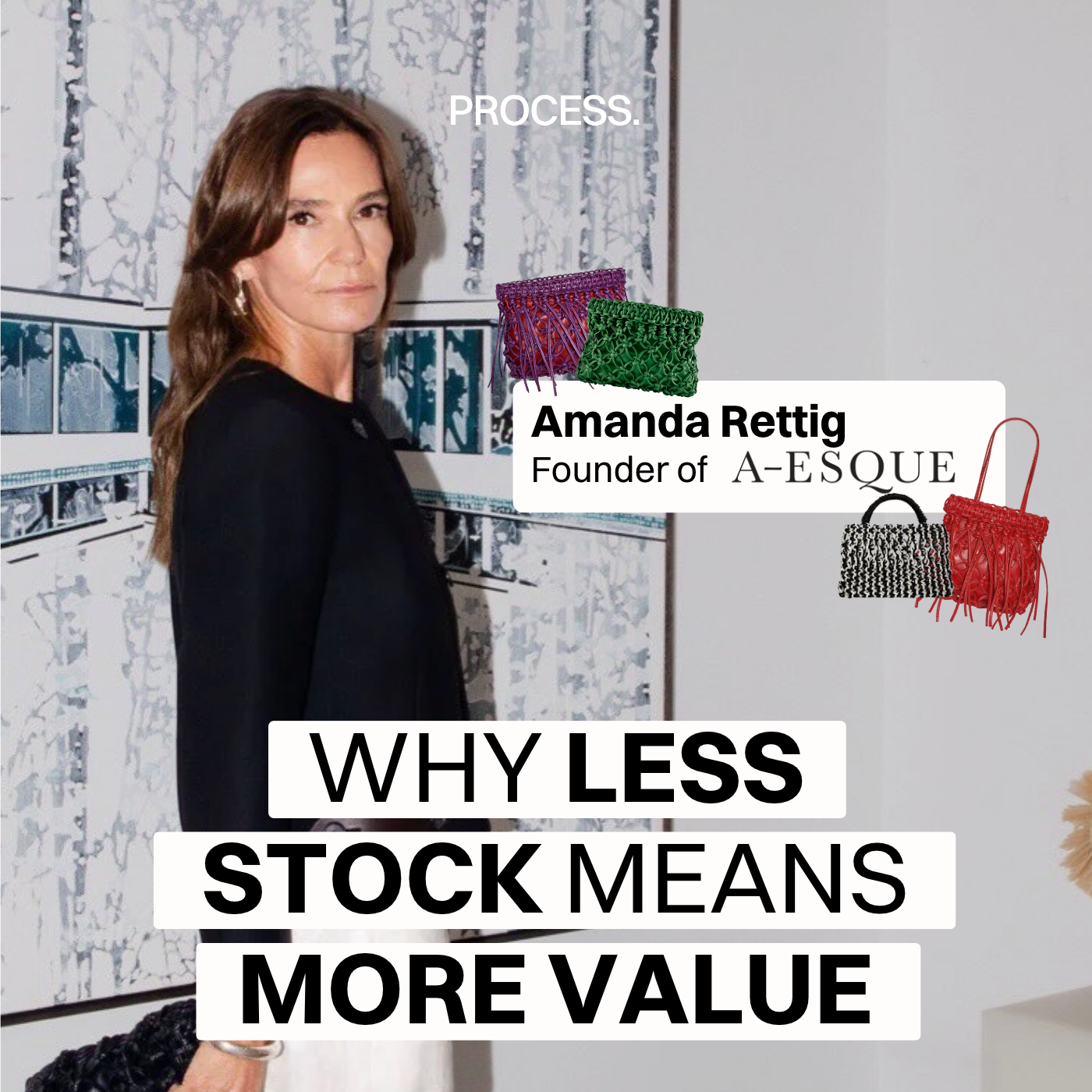
“The only time I would get scared is if I didn’t really believe in something.” - Amanda Rettig Australian designer and founder Amanda Briskin-Rettig has spent 30 years building fashion brands. She founded Mimco in 1996, sold it in 2007, and 13 years ago started A-esque, a self-funded leather goods brand handmade in small batches in Melbourne. Its philosophy is simple: build slowly, create intentionally, and make things that last. In this episode, Amanda shares how to start a fashion brand and grow it sustainably. She covers product development and product architecture, small-batch manufacturing inspired by Toyota’s lean model, and how to avoid excess inventory, deadstock and discounting. She also talks about local manufacturing, building a direct-to-consumer business, brand storytelling, collaborations, and what she learned from building and selling a business. If you want to start a handbag or accessories brand, build a sustainable fashion business, or grow a brand without compromisin
For episode 499 of F-Stop Collaborate and Listen, host Matt Payne talks with Jules Oldroyd, a London-based wildlife photographer who pivoted from a 35-year television career—including Channel 4 and National Geographic—to full-time photography in her mid-50s. Jules Oldroyd describes how her first safari ignited her love for wildlife photography, the power of community, and how the challenges of COVID and personal loss led her to reinvent her professional life. She outlines lessons learned from transitioning to a print business, navigating website traffic and social media hurdles, and the tension between portfolio growth and marketing efforts. They dive into gender issues in wildlife photography, highlighting low competition entry rates for women and the impact of male-coded language and networking. Jules Oldroyd explains how her financial independence lets her focus on creative projects, conservation efforts, and specific wildlife, while also acknowledging the carbon footprint of travel
Sporting rivals should be able to enjoy competition without hostility between supporters.
Share your view, then see how readers voted. No sign-in required. This poll is shared across stories.
Do you agree or disagree?
Common Quandary
A Common Quandary to discuss
Another conversation to explore, separate from this news story.
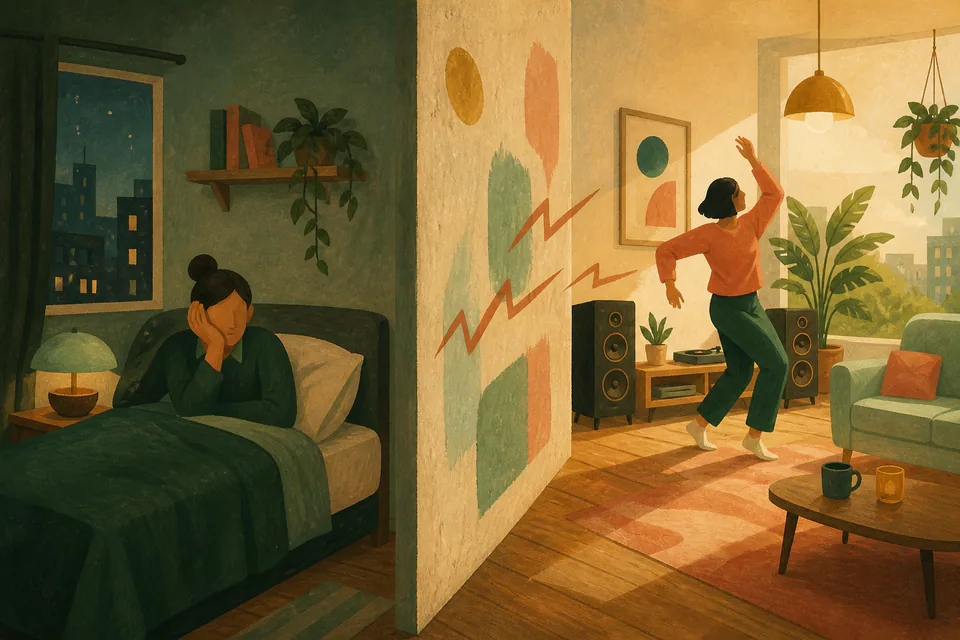
Your neighbor keeps playing music at midnight. How many friendly warnings do they get?
A neighbor regularly plays music late enough to disturb your sleep. Friendly requests help briefly, but a formal complaint could threaten their lease in a building with few affordable options.
How far should empathy extend when someone repeatedly ignores your needs?