On this day-after-Thanksgiving holiday, some favorite recent interviews: Maria Ressa, journalist, CEO of the news outlet Rappler, professor at Columbia University and the author of The Fight Back: A Citizen's Guide to Standing Up to Dictators (Harper, 2026), talks about the role of the press and individuals in maintaining democracy, especially in this age of AI. Francis Fukuyama, senior fellow at Stanford University's Freeman Spogli Institute for International Studies, former State Department official and the author of The End of History and the Last Man (Free Press, 1992) and his latest, In the Realm of the Last Man: A Memoir (Farrar, Straus and Giroux, 2026), tells his story and how it intersected with events and his political beliefs. Jessica Lucas, internet culture reporter, talks about the phenomenon of "iPad parents," adults whose adult children are fighting their screen addictions and battling feeds full of AI slop. Ash Wu, books news reporter for The New York Times, talks about
The Fifth Circuit hears Evan Domanic versus Christian Brothers Automotive Corporation. Domanic, who is Jewish, applied to become the owner of a Christian Brothers auto-repair franchise. The company restricts franchise ownership to Christians. After he identified himself as Jewish rather than Christian, it ended his application. This was an application to own a franchise, not to work as an employee. Domanic sued under Section 1981, a federal civil-rights law protecting against racial discrimination in contracting, including discrimination based on Jewish ancestry. The district court ruled for the company: its religious requirement supplied a race-neutral reason, and Domanic had not shown that reason concealed ethnic discrimination. His lawyer will accept that the company acted on religion, not on knowledge of his ethnicity. He will nevertheless argue for a broader reading of Section 1981 that would cover this refusal. The company will argue that the statute does not prohibit decisions b
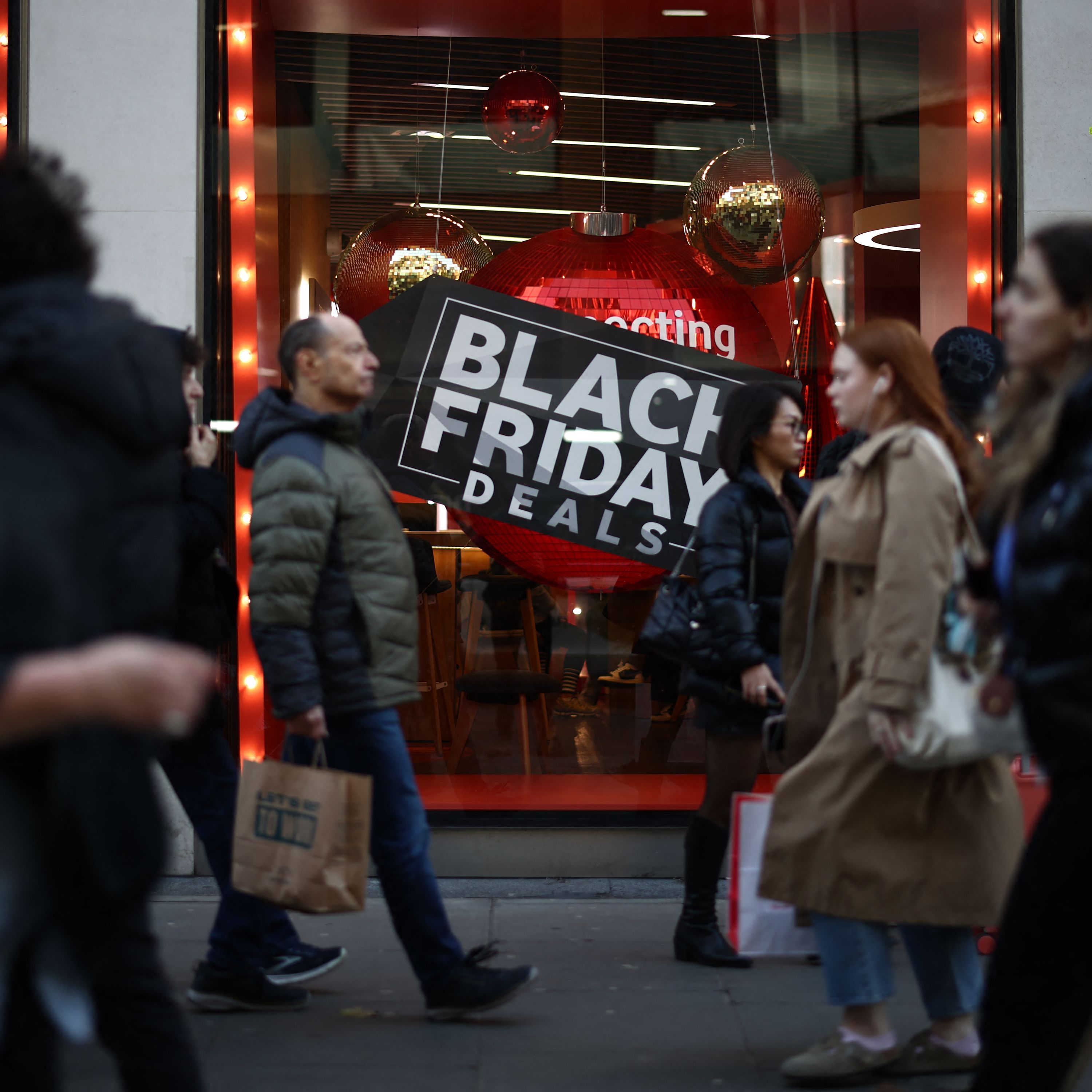
On Black Friday (https://www.cnbc.com/video/2026/11/27/black-friday-shopping-and-consumer-sentiment.html), Shopify President Harley Finkelstein gives us a live look at purchases around the globe and AI shopping tools as holiday shopping kicks into high gear. On the ground at a mall in New Jersey, CNBC’s Dominic Chu covers the brick-and-mortar side of the shopping weekend (https://www.cnbc.com/2026/11/27/black-friday-2026-inflation-value-deals.html); analysts are expecting this to be the biggest in person shopping day since before the pandemic. Then, media watcher Rich Greenfield runs through America’s football streaming schedule for Thanksgiving weekend. Plus, two Chinese firms linked to Alice Huang reportedly installed Nvidia chips, (https://www.cnbc.com/video/2026/11/27/two-chinese-firms-linked-to-alice-huang-installed-nvidia-blackwell-chips-report.html) and big tobacco could be getting bigger: Marlboro maker Altria is in talks to acquire (https://www.cnbc.com/2026/11/26/marlboro-mak
Dave Rubin of "The Rubin Report" talks to Dr. Phil McGraw about the growing anxiety among Americans over recent banking outages and infrastructure failures; why he suspects cyberattacks could be laying the groundwork for a much larger crisis; his concerns about America's cybersecurity vulnerabilities and the lack of coordination between Homeland Security, national intelligence agencies, and the White House; why government gridlock may be beneficial; why Kamala Harris's campaign never followed up after his appearance at Donald Trump's Madison Square Garden rally; his reaction to Grand Theft Auto 6 (GTA 6) and what research says about violent video games and real-world violence; the dangers of artificial intelligence (AI) and why he believes it cannot replicate authentic human intelligence; how AI and automation could undermine critical thinking, childhood development, and social skills; why parents must stop using smartphones and iPads as babysitters; the rise of online scams, catfishin
This lecture was recorded by Professor Phillip Ayoub on 20th of October 2026 at Barnard’s Inn Hall, London. Phillip M. Ayoub is a professor of International Relations in the Department of Political Science at University College London. He is the author of four books and volumes, including When States Come Out: Europe’s Sexual Minorities and the Politics of Visibility (Cambridge University Press, 2016), and his articles have appeared in the American Political Science Review, Comparative Political Studies, Social Forces, the Journal of Ethnic and Migration Studies, the European Journal of International Relations, the European Journal of Political Research, the Review of International Studies, Mobilization, the European Political Science Review, the Journal of Human Rights, Social Politics, Political Research Quarterly, and Social Movement Studies, among others. Further information can be found viA www.phillipayoub.com. The transcript and downloadable versions of the lecture are available
Republicans in the US Congress are pressing for sweeping investigations into the Nvidia scandal, mounting a rare challenge to Donald Trump over his support for the AI chip giant's reinstated chief executive, Jensen Huang. Are there loop holes in US AI Chip export controls? Guest: Lizzi C Lee, Fellow on the Chinese Economy at the Asia Society Policy Institute’s Center for China Analysis And are there parallels with the Watergate scandal of the Nixon era, when the key question was: What did the president know, and when did he know it? Guest: Nick Akerman, former Watergate Assistant Special Prosecutor
From April 25, 2025: For today's episode, Lawfare Foreign Policy Editor Daniel Byman interviewed Michael Sulmeyer, who was the top Defense official for all aspects of cyber policy in the Biden administration. Sulmeyer discusses the cyber threat landscape, different roles and missions, how Artificial Intelligence might be leveraged, and the key role of allies in cyberdefense, among other issues. Hosted on Acast.
From October 22, 2020: On this episode of Lawfare's Arbiters of Truth series on disinformation, Alina Polyakova and Quinta Jurecic spoke with Janine Zacharia, the Carlos Kelly McClatchy Lecturer in Stanford’s Department of Communication, and Andrew Grotto, director of the Program on Geopolitics, Technology and Governance and the William J. Perry International Security Fellow at Stanford’s Cyber Policy Center. In 2016, a key part of the Russian influence campaign involved the hacking and leaking of emails belonging to the Democratic Party and Clinton campaign chairman John Podesta. Journalists at mainstream news outlets rushed to write up the emails without giving adequate context to how they had been obtained. So how can the press avoid a similar disaster in 2020? Zacharia and Grotto teamed up in recent months to write a playbook (https://cyber.fsi.stanford.edu/content/how-responsibly-report-hacks-and-disinformation) for reporters facing the dilemma of writing about hacked material or
On Tuesday, Nov. 24, at 10 a.m. ET, Lawfare Editor in Chief Benjamin Wittes sat down on (https://www.youtube.com/watch?v=3KkwpBFyVz0)Lawfare Live (https://www.youtube.com/watch?v=3KkwpBFyVz0) with Senior Editor Michael Feinberg and Public Service Fellow Julia Curlee to discuss Nvidia's decision to reinstate Jensen Huang as President, CEO, and board member less than two weeks after he resigned amid allegations involving a suspected Chinese spy. Hosted on Acast.
Researchers should publish important limitations alongside the main findings.
Share your view, then see how readers voted. No sign-in required. This poll is shared across stories.
Do you agree or disagree?
Common Quandary
A Common Quandary to discuss
Another conversation to explore, separate from this news story.
One sibling did years of caregiving. Should they get more of the inheritance?
One sibling lives near an aging parent and handles appointments, errands, and emergencies. The others live far away, call regularly, and assume the nearby sibling will receive the same inheritance despite years of unpaid work.
When does family care become labor that should be repaid?