Lawfare Archive: Keith Whittington on the Law, Politics, and Purpose of the Impeachment Power
48 min
Listen through the publisher, then discuss the episode here or arrange an in-person Roundtable. Your city determines where to meet.
Roundtables are designed for groups of four, with a shared subject and room for everyone to speak. Come for discussion, with no dating expectation.
From November 12, 2024: Jack Goldsmith sits down with Keith Whittington, David Boies Professor of Law at Yale Law School, to discuss his new book (https://press.princeton.edu/books/hardcover/9780691265391/the-impeachment-power?srsltid=AfmBOoq_CGz8qMzZDgXbcJU36TNE9RTQ6_HUcL4BTzbioI5rfLM4S7tM), “The Impeachment Power: The Law, Politics, and Purpose of an Extraordinary Constitutional Tool.” They discuss what the Constitution says about the impeachment power, how we should think about high crimes and misdemeanors, why impeachment shows that Congress is the preeminent branch of government, and the goals and values of impeachment. They also discuss the abuse of the impeachment power given current politics and what can be done about it, as well as whether Trump should have been convicted and disqualified in the second impeachment. Hosted on Acast.
Episode information is provided by the publisher. Listening takes place on the publisher’s service.
From August 18, 2025: On Aug. 18 at 3pm ET, Lawfare Editor in Chief Benjamin Wittes sat down with Lawfare Ukraine Fellow Anastasiia Lapatina, Lawfare Contributing Editor Eric Ciaramella, and Lawfare Legal Fellow Mykhailo Soldatenko to discuss the meeting between President Trump and Russian President Putin in Alaska this past weekend, the White House meeting with Ukrainian President Volodymyr Zelensky alongside European leaders, and what this all means for ending the Russia-Ukraine War. Hosted on Acast.
November 20, 2026 On November 19, Trump met with Xi Jinping and Vladimir Putin in Shenzhen, China, The fact that the president of the US would meet with leaders of China and Russia was bizarre since both China and Russia have been helping Iran in its current fight against the US, Trump appeared to want the fanfare and President Xi played that up, Putin wanted the meeting because it would suggest that Russia was a great power, although it is far from being so and Putin’s war on Ukraine is going poorly, The meeting’s purpose seemed to be to produce propaganda for each of the three leaders, Beyond the propaganda is the larger story of the destruction of the post-World War II rules-based international order, In its place is the idea of dividing the world into spheres of influence, The three leaders met for 90 minutes and issued only a vague "joint declaration toward peace," which vowed to reform the UN and weaken the International Criminal Court, where Putin is already under indictment for
Lisa Graves and Popok are back on Unprecedented, the podcast devoted to the US Supreme Court and corruption in the federal court system. The Hosts explain how the current attacks by the Trump Administration on senate and house democratic leaders is already backfiring and could end up in the Courts; an update on voting rights cases up a the Supreme Court demonstrating that we are not out of the woods just yet; and new gun cases for a gun-happy right wing of the Court.
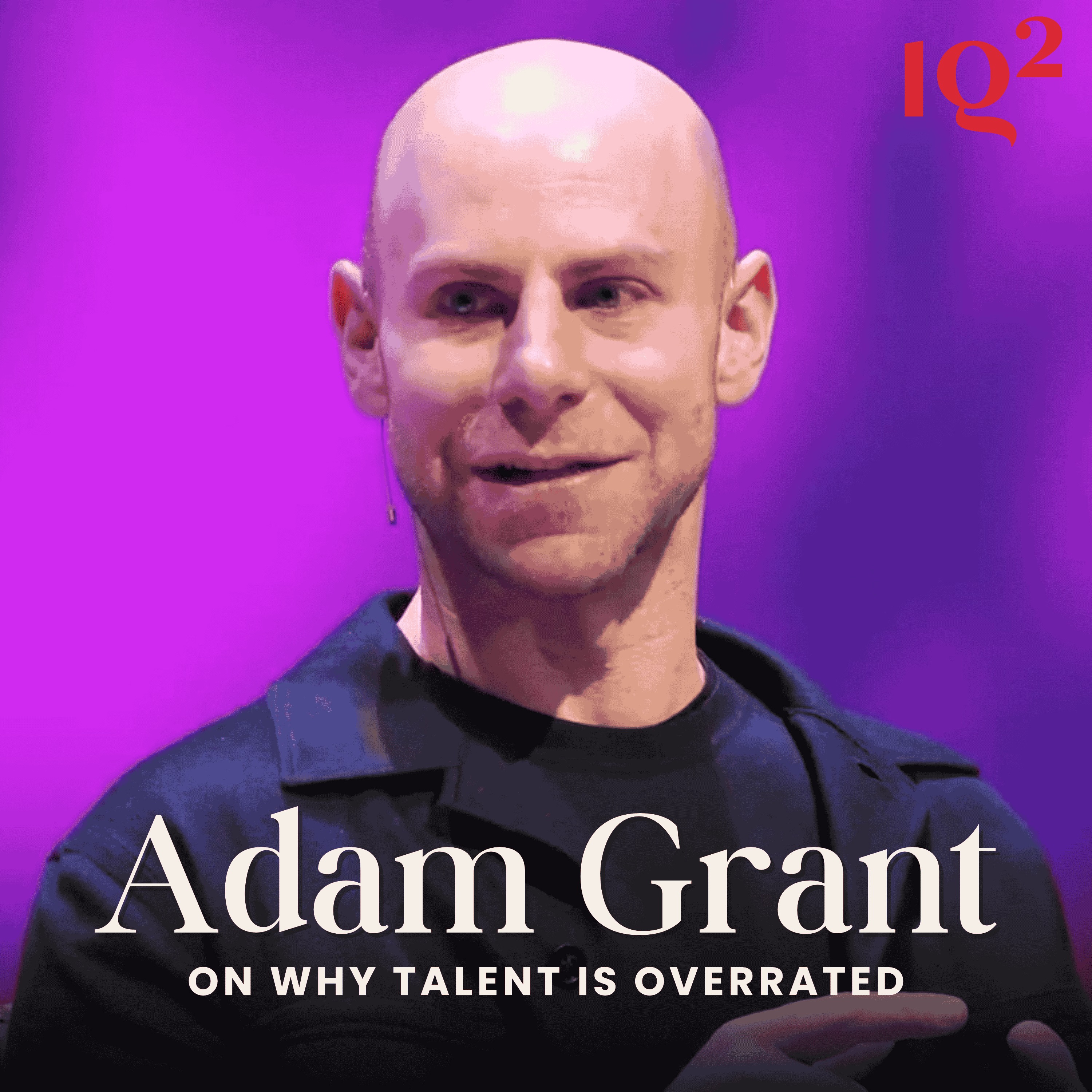
Adam Grant is one of the most sought after organisational psychologists in the world. He has provided expert advice to many of the world’s greatest business leaders, including Bill Gates and Sheryl Sandberg, equipping them with the mental tools to find motivation and meaning, rethink assumptions, and achieve greatness in their business and personal lives. In January 2024 Grant came to the Intelligence Squared stage for a rare, exclusive London event where he shared his revolutionary framework for how we can all exceed the expectations and aspirations we have set for ourselves. Drawing on his new book Hidden Potential he explained that despite living in a world that tends to admire people who start out with innate talent, there is clear scientific evidence that we can all bridge the biology gap and improve ourselves dramatically. In conversation with economist and FT columnist Tim Harford, Grant wove together groundbreaking evidence, surprising insights, and vivid story telling to take
Screen time in schools, kids and AI: why Australian students just posted their worst ever reading and maths results. The federal Education Minister says screens are part of the problem. Sweden led the world putting tablets in classrooms and is now pulling them back out. NSW will cap kindy kids at 15 minutes of screen time a day from next year. So were the "hippie" Steiner schools ahead of their time all along? Karl sits down with Andrew Hill, CEO of Steiner Education Australia, which represents 53 schools that keep screens out of early childhood classrooms. Andrew explains why some Silicon Valley tech executives sent their own kids to a screen-free Steiner school, who has profited from a laptop for every kid ("the terrible thing about handwriting is that it's free"), and why he believes Bluey's creator modelled the show's school on a Steiner school in Queensland. Karl also puts the tough questions: Will kids without screens be left behind? Is it all woo-woo? What about bullying, fees a
A summit like no other. In a political first, President Trump sat down with President Putin and President Xi for an unprecedented trilateral meeting. He insists they’re all friends, but what does this mean for their conflicting agendas in Iran and Ukraine? Former Biden adviser Rush Doshi joins Christiane Amanpour to assess what was, or wasn’t, achieved. Then, in a landmark case, the International Court of Justice has found Myanmar guilty of committing genocide against the minority Rohingya population. The U.N. High Commissioner for Human Rights, Volker Türk, joins the show to discuss why this moment is so important. Plus, CNN’s Clare Sebastian takes us underground to look at how Ukraine’s innovative operation is helping the country make substantial gains. And best-selling author Elizabeth Strout discusses her new book ‘The Things We Never Say’, exploring the political and personal tensions of America that emerged during the 2024 presidential election. From the archive, my report from U
From August 18, 2025: On Aug. 18 at 3pm ET, Lawfare Editor in Chief Benjamin Wittes will sit down with Lawfare Ukraine Fellow Anastasiia Lapatina, Lawfare Contributing Editor Eric Ciaramella, and Lawfare Legal Fellow Mykhailo Soldatenko to discuss the meeting between President Trump and Russian President Putin in Alaska this past weekend, the White House meeting with Ukrainian President Volodymyr Zelensky alongside European leaders, and what this all means for ending the Russia-Ukraine War. Hosted on Acast.
From July 7, 2025: Winnona Bernsen, nonresident fellow at the Atlantic Council’s Cyber Statecraft Initiative and founder of DistrictCon (https://www.districtcon.org/), joins Lawfare Contributing Editor Justin Sherman to discuss her recently released report "Crash (Exploit) and Burn: Securing the Offensive Cyber Supply Chain to Counter China in Cyberspace (https://www.atlanticcouncil.org/in-depth-research-reports/report/crash-exploit-and-burn/)." They discuss the offensive cyber industry, the private sector and individual players, and the government procurement pipelines in the United States and China. They also discuss the strengths and weaknesses of each country’s offensive cyber procurement ecosystem, what it takes to sell an exploit, Winnona’s findings on the markups that middlemen add to exploit sales, and what it all means for the future of competition and cybersecurity. Hosted on Acast.
Chris McGuire, senior fellow for China and emerging technologies at the Council on Foreign Relations and a former National Security Council official, joins Lawfare Public Service Fellow Julia Curlee to discuss the spy scandal that forced out Nvidia’s Jensen Huang. They examine how advanced Nvidia chips reached Chinese AI labs through Megaspeed, a Singapore company once run by suspected Chinese intelligence asset Alice Huang, and why the Commerce Department never cut off the flow of chips. They also discuss what China gained, Congress’s next moves, and how the scandal will impact this week’s Trump-Xi meeting. For more, read McGuire’s “Howard Lutnick Has Got to Go (https://www.nytimes.com/2026/11/13/opinion/jensen-huang-nvidia-howard-lutnick-commerce.html),” in the New York Times. Hosted on Acast.
Major sporting events should offer ways for people with limited budgets to take part.
Share your view, then see how readers voted. No sign-in required. This poll is shared across stories.
Do you agree or disagree?
Common Quandary
A Common Quandary to discuss
Another conversation to explore, separate from this news story.
The sign says twelve items and you have fourteen. Is the express lane still yours?
The regular checkout lines are long and the express lane is empty. You count fourteen small items, two over the posted limit. A shopper approaches behind you carrying a single carton of milk as the cashier waves you forward.
Are small rules optional when enforcing them would seem fussier than breaking them?