Lower Pre-Diabetes and Diabetes Risk by Focusing on Insulin Resistance
31 min
Listen through the publisher, then discuss the episode here or arrange an in-person Roundtable. Your city determines where to meet.
Roundtables are designed for groups of four, with a shared subject and room for everyone to speak. Come for discussion, with no dating expectation.
Belly fat isn’t just about how your jeans fit. It can be a visceral fat signal that your body is struggling with insulin resistance, the metabolic pattern that quietly drives weight gain, inflammation, and higher risk for type 2 diabetes and cardiovascular disease. I’m Dr. Holly Thacker, and I’m breaking down how to become “less sweet” by improving insulin sensitivity with realistic, science-based steps you can discuss with your clinician. We talk through women-specific red flags that often get missed, including gestational diabetes, pre-eclampsia, delivering a baby over nine pounds, and PCOS or PMOS. I also explain why the classic “apple-shaped” body pattern is more concerning than weight stored in the hips and thighs, and why fasting glucose plus lipid patterns like high triglycerides and low HDL can reveal cardiometabolic risk early. Then we dig into practical insulin sensitizers: smart nutrition that cuts refined carbs and added sugars, fiber-forward complex carbs, omega-3 fats, strength training to build muscle, and how better sleep can lower metabolic strain including sleep apnea risk. Medication and supplement conversations come with nuance. We cover metformin, GLP-1 therapies like semaglutide, and dual GLP-1/GIP options like tirzepatide, along with safety considerations including compounded products and delayed absorption of oral meds. Finally, we connect metabolic care to menopause care: emerging research suggests menopausal hormone therapy may improve insulin sensitivity and may boost weight-loss results when paired with GLP-1-based treatment for some postmenopausal women, with important guidance on progesterone and uterus protection.
Episode information is provided by the publisher. Listening takes place on the publisher’s service.
Today, I’m honored to connect with Dr. Troy Badger. He is a board-certified cardiologist and interventionalist and the founder of Cardiostrong, a concierge preventive cardiology clinic in Provo, Utah, focused on reducing cardiovascular risk, optimizing metabolic health, and improving strength and cardiorespiratory fitness for executives and athletes. In today’s conversation, we discuss Dr. Badger’s gender- and age-specific approach to heart health, including treatment differences for men and women, and diagnoses such as INOCA, SCAD, vasospastic disease, and Takotsubo. We examine emotions and their influence on heart health, coronary ischemia and cardiomyopathies, labs and diagnostics, how Dr. Badger assesses risk in his patients, and the differences between a CAC and a CCTA. Dr. Badger also shares the labs he finds essential for all patients and discusses the role of VO2 Max, cardiovascular training, and lifestyle—specifically nutrition, the use of GLP-1 drugs, and a multidisciplinary
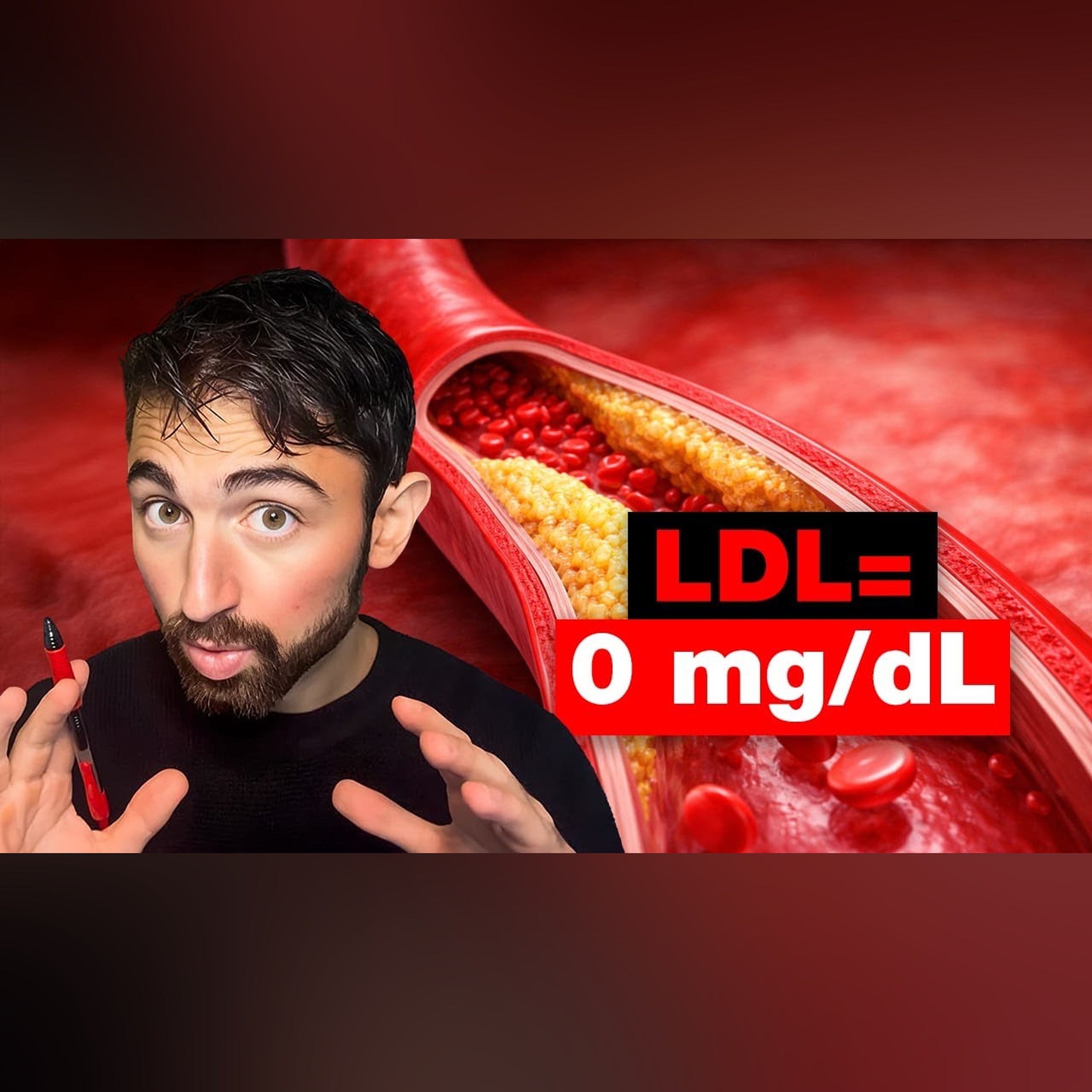
For all the references, extra nuance and early access to content like this, join the Best-Selling in Science StayCurious Metabolism Newsletter: https://staycuriousmetabolism.substack.com/p/beyond-ldl-rethinking-cardiovascular?r=40ekz2 Referenced Content Masterclass on Cholesterol-Lowering Medications, Letter: https://staycuriousmetabolism.substack.com/p/a-concise-masterclass-on-cholesterol?r=40ekz2 Statins Slash GLP-1, Video: https://youtu.be/6NomrgjK1yQ Statins Harms Mitochondria, Video: https://youtu.be/qHXMI3DudEc What Statin Trials Really Show, Video: https://youtu.be/Y3JKgfKqiBQ Statins Associated with Muscle Loss, Letter: https://staycuriousmetabolism.substack.com/p/a-doctor-texted-me-im-stopping-my?r=40ekz2 Lp(a) and Waist-to-Hip Ratio, Video: https://youtu.be/UOtYZ0ZSp24 Description Decades of cardiovascular research have focused on LDL cholesterol as the primary driver of atherosclerosis, yet even individuals with “optimal” LDL often develop arterial plaque. In this video, we
Glycine is an amino acid that helps build collagen and is involved in regulating inflammation, and researchers are exploring its role in healthy aging, yet your body may produce less of it as you get older Modern diets often lack glycine-rich connective tissues, such as bones, tendons and cartilage, making grass fed beef bone broth, gelatin and collagen-rich cuts of meat valuable additions to your meals Animal studies described by biochemist Joel Brind, Ph.D., found that glycine supplementation extended lifespan in rats and mice by approximately 10% to 15%, although researchers have yet to establish whether it produces similar benefits in humans In a small, three-month placebo-controlled trial of 74 adults with Type 2 diabetes, those given glycine had significantly lower HbA1c and reduced inflammatory markers compared with placebo, although larger studies are needed Research suggests glycine may help your body release heat and lower its core temperature before sleep, while collagen-ric
Is it too late to reverse Insulin resistance? Follow the steps to stay Consistently Keto: http://on.bozmd.com/CK Dr. Boz At Home A1C Test Kit: https://on.bozmd.com/A1CTest Get a CGM: https://meaningfulmedicine.org/landing-page/ My favorite blood sugar meter: https://shop.keto-mojo.com/?rfsn=6717371.1353e7&utm_source=refersion&utm_medium=affiliate&utm_campaign=6717371.1353e7 (https://shop.keto-mojo.com/?rfsn=6717371.1353e7) -------------- The Workbook: https://on.bozmd.com/BozWorkbook --------------------- Thanks for checking out the Dr. Boz Channel. See links below resources and recommendations. Tune in Tuesday nights, 4PM Eastern/3PM Central to watch me Live! We improve health - One ketone at a time. --------------------- FREE STUFF 50 Keto Fat-Facts: http://on.bozmd.com/50fat Dr. Boz Ratio Spreadsheet: http://on.bozmd.com/DBR Documentary Playlist: https://on.bozmd.com/AT --------------------- Dr. Boz’s Online Courses: Consistently Keto: http://on.bozmd.com/CK BRAINS: https://on.bozmd
Is your body weight stable, but you're still not eating enough to properly fuel your training, recovery, and overall health? Introducing Why Stable Weight Doesn't Always Mean You're Eating Enough from Jeff Hoehn of the Mind Muscle Connection Podcast (https://www.buzzsprout.com/1508401). Just because your weight isn't changing doesn't necessarily mean you're adequately fueled. In this episode, Jeff breaks down why maintaining a stable body weight doesn't always mean you're meeting your body's energy needs, especially if you're training hard, staying lean, or spending long periods dieting. You'll learn: Why stable body weight doesn't automatically mean adequate energy availability Who is most at risk of underfueling, even when their weight isn't changing How high training output, staying too lean, and chronic dieting can contribute to low energy availability The potential signs of underfueling, including changes in performance, recovery, hormones, and menstrual health Why spending too lo
Text me what you thought of the show (https://www.buzzsprout.com/1959372/fan_mail/new) Can working night shifts affect your fertility, ovulation or IVF success? After speaking with numerous women trying to fall pregnant while working shifts, including those undergoing expensive IVF treatment, I wanted to explore what the research actually tells us. In this episode of A Healthy Shift, we discuss how night shifts, disrupted sleep and circadian misalignment may affect reproductive health. We cover: Why the fertile window is so short. Shift work, reproductive hormones and menstrual irregularities. What research says about night shifts, fertility and IVF outcomes. The roles of sleep, stress, nutrition, weight and exercise. Practical steps for women trying to conceive while working shifts. Research links shift work with menstrual irregularities, but evidence that night shifts directly cause infertility or reduce IVF success remains uncertain. If you're trying to get pregnant while working ni
Losing strength is not an inevitable “getting older” problem and it often starts quietly. Your weight can stay the same while your muscle shrinks and body fat climbs, setting you up for slower metabolism, fatigue, falls, and the kind of frailty that steals independence. From the Sunflower House, Speaking of Women's Health Podcast host Dr. Holly Thacker walks you through why leucine has become one of the most talked-about amino acids for healthy aging and what it can realistically do for muscle support. She explains leucine as an essential branched-chain amino acid (BCAA) that helps trigger muscle protein synthesis by activating the mTOR pathway. You’ll hear practical, food-first ways to hit leucine targets using whey protein isolate, Swiss cheese, fish, beans, poultry, tofu, pumpkin seeds, and other high-protein options, plus why ultra-processed “protein” foods may not deliver the same results. She also shares the dosing ideas patients ask about most: aiming for roughly 2.5 to 3 grams
Fatigue that won’t quit, hair that won’t grow, legs that won’t rest at night, and a lab report that says everything is “normal” can leave you feeling stuck. We go back to where this podcast started and make the case for looking deeper, starting with iron stores and the ferritin test, not just a basic blood count. Speaking of Women's Health Podcast host Dr. Holly Thacker walks through why iron deficiency is so common across the female life cycle, from menstruation and pregnancy to blood donation and low-iron diets, and the signs that deserve attention before anemia becomes obvious. She also talks about the mistakes that delay real answers, like assuming low iron is always “just heavy periods,” especially for women over 40 who may need evaluation for occult gastrointestinal blood loss. That includes important red flags and why colon cancer screening guidance has shifted earlier. You’ll also get practical, food-first tactics to improve iron absorption, including pairing plant-based iron w
Platforms should prioritize preventing harassment even when this limits some expression.
Share your view, then see how readers voted. No sign-in required. This poll is shared across stories.
Do you agree or disagree?
Common Quandary
A Common Quandary to discuss
Another conversation to explore, separate from this news story.
Your friend asks for an honest review after every date. Do their dates deserve privacy?
A close friend sends detailed post-date reports and expects your advice about every message, kiss, and awkward silence. One recent date is someone you know professionally, who would be embarrassed to learn how much you have heard.
Where does friendship's need for advice become gossip about an unsuspecting person?