Listen through the publisher, then discuss the episode here or arrange an in-person Roundtable. Your city determines where to meet.
Roundtables are designed for groups of four, with a shared subject and room for everyone to speak. Come for discussion, with no dating expectation.
Episode #1532 from our long-running, weekly podcast On Photography and the Creative Process The Grand Idea of Your Art I believe that every important artist has some grand idea that is the foundation of their artistic expression. For example, Stieglitz believed that photography was as important an art medium as painting and tried to prove that with Gallery 291; Adams felt an overwhelming reverence for Nature and helped found the environmental movement; Lange knew a deep compassion for suffering; Weston the fragility and pathos of life, etc. What is the grand idea of your art? Instant access, terabytes of content, inspiration and ideas that expand daily with new content. Sign up for instant access! (https://checkout.subscriptiongenius.com/lenswork.com/1782/?redirect=1) You might also be interested in. . . Every Picture Is a Compromise, (https://www.brooksjensenarts.com/epic/epic.html)a series at www.brooksjensenarts.com. and... "How to" tutorials and camera reviews are everywhere on YouTube, but if you're interested in photography and the creative life, you need to know about the incredible resources you can access as a member of LensWork Online.
Episode information is provided by the publisher. Listening takes place on the publisher’s service.
This week on F-Stop Collaborate and Listen, host Matt Payne interviews Craig Blacklock (https://blacklockgallery.com/). Craig Blacklock learned photography from his father Les Blacklock, a pioneer in color nature photography, and has spent fifty years exploring Minnesota and Lake Superior's shorelines. In this conversation, Craig traces his path from analog view cameras and calendar work to digital workflows, self-publishing, and drone photography. He shares the story behind his breakout book, born from a 100-day solo kayak circumnavigation of Lake Superior, and how he sold tens of thousands of copies without a conventional publisher. The conversation goes deep on the creative value of committing to a single subject over decades, shifting from literal landscapes to human figures and abstract water reflections, and the technical challenges of view camera tilt-shift work and book sequencing. Craig also discusses environmental advocacy, meticulous drone previsualization using Google Earth
Poppin' pants cherries. This week, Jimmy and Larry are linking up bright and early to discuss return policy reform, what do you do when clothing you love becomes washed, sizing around the world, NYC is the jacket olympics, endearingly pronouncing brand names wrong because you have never talked to another actual person about clothing in real life, after 13 long years GTA VI is finally here so let's talk about it as two non-gamers, will skills in the game translate to real life and what kind of positive and negative impacts will it have on young men, Rockstar's satire of American life is now our reality, Robert Pattinson has been cast as James Bond and the expectations are already otherworldly, does Denis Villeneuve have a sense of humor, James Bond the menswear influencer sure has a lot of brand deals, SSENSE fired everyone and replaced them with AI and it's not going well, a peak behind the Throwing Fits curtain as we close out the year, and much more.
Blueberries...cameras...N*zis?? HERE THERE ARE BLUEBERRIES is now on Broadway and Matt’s mom demanded that he take her. But was the iconic Jewish diva moved by Tectonic’s picture play or was she “meh”? Has Matt’s views changed? TAKE A LISTEN! Important Links: * Broadway Breakdown Green Room: Patreon (https://www.patreon.com/cw/BroadwayBreakdown94) * Broadway Breakdown: Discord (https://discord.gg/NwAjcn65k) * Broadway Breakdown: Youtube (https://www.youtube.com/@BwayBreakdown/videos) Listener Questions: “Do you think some subject matter will just always resonate, no matter the quality of the show?” “Have you ever seen a new work and felt something earlier did it better? Or worse?” “What key components do you need when watching an ‘important work’?” This is a public episode.
Google Jaywick, a small village on the Essex coast in England, and you'll find a seemingly endless supply of negative headlines, television documentaries and YouTube films about life in what has repeatedly been named England's most deprived neighbourhood. But how much do we really know about the people who live there? My guest this week, documentary photographer and journalist David J Shaw, has spent the best part of two years getting to know Jaywick and its residents. He's discovered a community fiercely proud of its identity, where neighbours look after one another, where karaoke nights are as much about friendship and support as singing, and where people are understandably tired of outsiders arriving with a story they've already decided to tell. We talk about our responsibility as photographers when documenting other people's lives, the politics of representation, and David's decision to exhibit his photographs in the village while he was still making the work, inviting the communit
Content warning: This episode contains strong language, discussions of pornography and sexual violence, and references to self-harm. At peak times, close to a tenth of global internet traffic is devoted to streaming adult content. Across the world, as many people have instantaneous access to free pornography as to clean water. But the rise and rise of online pornography isn’t just a side effect of an increasingly connected and virtual world. Financial Times journalist Patricia Nilson makes a powerful argument that it is actually the blueprint for the modern internet itself. In this episode, Mia Sorenti speaks with Nilsson about how online pornography changed the way platforms capture our attention, and how it can help us to understand the logic of compulsion, gratification, addiction and endemic extremism that characterises so many online spaces today. Patricia Nilsson is a journalist at the Financial Times. Her book is Guilty Pleasure: The Pornification of the Internet, the Economy an
Merriam-Webster's Word of the Day for November 23, 2026 is: optimization • \ahp-tuh-muh-ZAY-shun\ • noun Optimization refers to an act, process, or methodology of making something (such as a design, system, or decision) as good, functional, or effective as possible. // She traded in her old phone for a newer model that offered improved battery optimization and better camera performance. See the entry > (https://www.merriam-webster.com/dictionary/optimization) Examples: "For better or worse, my notes app is the piece of technology closest to looking like the inside of my brain: a bit chaotic, annoyingly detail-oriented, and perhaps perpetually nostalgic. While handwritten to-do lists hold my life together, my notes app contains the catch-all, the weird (one that simply says 'possum'), and the important (a list of people's birthdays) coexisting. Somehow, the mess of my notes resists all forms of optimization, or even coherence." — Rainesford Stauffer, Time, 24 July 2026 Did you know? Opt
Here's a Thought… #2814 with Brooks Jensen What You Choose to Observe We learn so much about you by what you select — out of the entire world — to photograph. The most important thing in your photograph is not its style, not its size, not its medium, not its composition. To paraphrase that old saying about real estate, the three things that really count in a photograph are Subject, Subject, and Subject. What you see precedes how you see.
Here's a Thought… #2813 with Brooks Jensen Someone, Somewhere Decides Have you ever wandered through the displays in a major museum and wondered why this art, of all the possibilities, was chosen for the exhibition? Have you ever thought, "I have one better than that!" Or perhaps, "If I had made that print, I'd have tossed it in the trash." How does work rise to the level of being exhibited or published?
Here's a Thought… #2812 with Brooks Jensen Flipping Left to Right Our written language determines whether or not we see natively left to right, or right to left. I definitely see left to right, not just for reading the written word but also in my photographic images. There must be some connection here that leads me to flip images left to right with more images than you might guess.
Large technology projects should demonstrate local benefits before receiving public incentives.
Share your view, then see how readers voted. No sign-in required. This poll is shared across stories.
Do you agree or disagree?
Common Quandary
A Common Quandary to discuss
Another conversation to explore, separate from this news story.
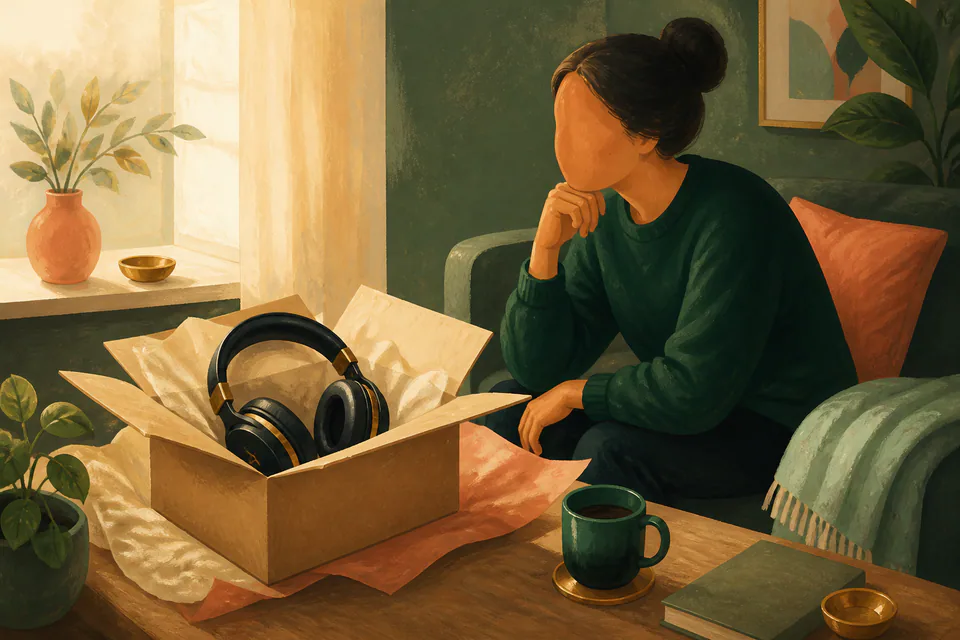
A $300 package lands at your door by mistake. Do you keep it?
A package containing expensive headphones arrives with your address but another person's name. The retailer says it has already replaced the order and does not ask you to return it.
If no one appears to lose, what still makes keeping it right or wrong?