Listen through the publisher, then discuss the episode here or arrange an in-person Roundtable. Your city determines where to meet.
Roundtables are designed for groups of four, with a shared subject and room for everyone to speak. Come for discussion, with no dating expectation.
In November 2024, Hungarian detectives searching for a missing American nurse traced her through CCTV from Budapest’s nightlife district. In the footage they saw Mackenzie Michalski, leaving a club and waling the city streets with a man. The pair entered an apartment building. After that, there was no further trace. Detectives set about locating the unidentified man - the last person seen with Mackenzie. When they did, they found an Irishman from a wealthy south Dublin family. Mackenzie had been spending one final night in a city she knew well and loved. The next morning, she missed her flight home. Her passport and belongings were still at her Airbnb, and her friends could not reach her. Camera by camera, investigators pieced together her last known movements. But they could find no footage of her leaving the man's apartment. In this episode, we follow the search for Mackenzie Michalski, examining how investigators pieced together the evidence from her last night in Budapest and uncovered a crime far darker than anything they first expected. Presented by John Sweetman Created by Darren Cleary Written by Sam Hobson Script Edited by Eoin Brennan Produced by Sam Hobson Senior Producer Siobhan Walsh Executive Produced by Eoin Brennan Sound Design and Editing by Neil Kavanagh Audio Editing Support by Ed Smith Artwork and Graphics by Eric Rowntree
Episode information is provided by the publisher. Listening takes place on the publisher’s service.
Hit subscribe so you don't miss any updates. Supported by True Crime Channel. ------- On the evening of 18 March 2009, Claudia Lawrence, a 35-year-old chef at the University of York, went home to her house on Heworth Road. The next morning she failed to arrive for her early shift, and she has never been seen since. More than seventeen years later, nobody has been charged, her body has never been found, and North Yorkshire Police treat her disappearance as suspected murder. Now, newly upscaled CCTV footage offers a clearer look at that night than ever before. In this special documentary, filmed on location in York, we retrace the streets around Claudia's home: from the Minster to Heworth Road, the alleyway behind her house and the corner where a CCTV camera was recording that night. We're also among the first to be allowed to film inside the Nags Head, Claudia's local pub, and we sit down with Tom McDermott to go through what happened in the hours before she vanished. At the centre of t
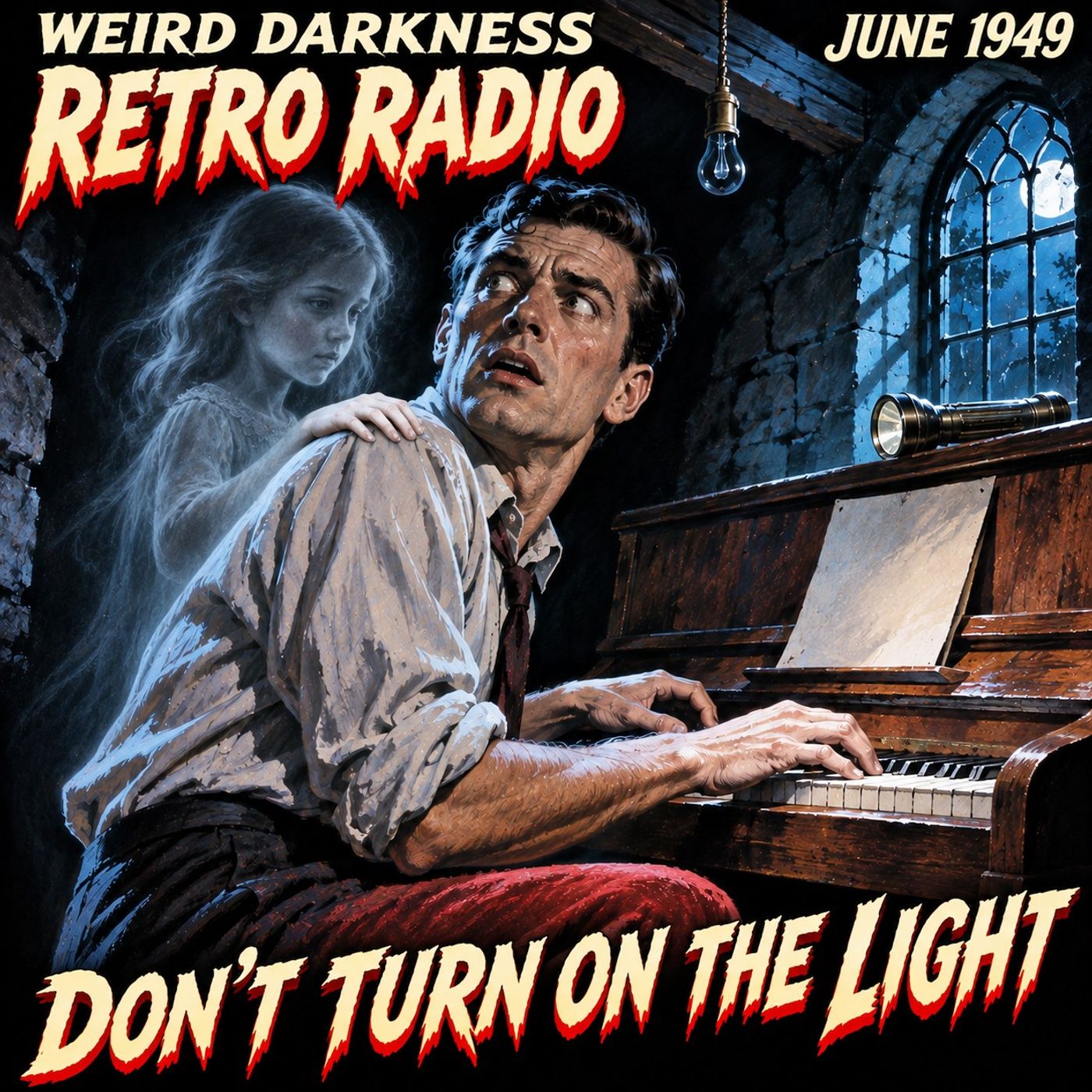
“Pavanne”: An American working in a small French town after the war is staying in his family's ancestral home, built in 1341, and when he plays Ravel's "Pavane for a Dead Princess" on the old piano in the dark, a little girl's voice answers and tells him that if he turns on the light, she'll have to go away. Wyllis Cooper wrote and directed it for Quiet, Please in 1949, with Ernest Chappell as the man who keeps going back to the piano. CHAPTERS & TIME STAMPS (All Times Approximate)… 00:00:00.000 = Show Open 00:01:30.028 = CBS Radio Mystery Theater, “Search For Eden” (May 07, 1979) ***WD 00:46:09.803 = Quiet Please, “Pavanne” (June 18, 1949) ***WD 01:16:36.758 = Radio City Playhouse, “Long Distance” (August 23, 1948) ***WD 01:45:33.510 = Sam Spade, “Dick Foley Caper” (September 26, 1948) 02:15:33.311 = The Sealed Book, “Beware Of Tomorrow” (July 29, 1945) ***WD 02:45:35.312 = The Shadow, “Spotlight On The Duchess” (November 04, 1945) ***WD 03:13:59.474 = The Sealed Book, “Beware of Tomo
In December of 1982, two men living in a secluded, hand-built brick manor deep in the Georgia woods, who had been the subject of rumors about Satanism, were brutally murdered inside their home. Investigators soon found that, when a group of young visitors arrived at the property one December night, a sinister plan was underway: a plot fueled by greed and rumors of hidden riches that would leave the manor shrouded in darkness for decades. These are the murders of Charles Lee Scudder and Joey Odom, also known as the Corpsewood Manor Murders. Hosted by Simplecast, an AdsWizz company.
Nine days after eight-year-old Sarah Payne disappears, her face is everywhere and the incident room is drowning in calls. But unbeknown to the public, detectives have a suspect they cannot name — Roy Whiting, a convicted sex offender who lives nearby. Within twenty-four hours of Sarah vanishing, officers interview him and, unconvinced by his account of his whereabouts on the night she went missing, they arrest him. But they are unable to find any real evidence linking him to Sarah, and have to let him go. Meanwhile the hunt for the missing child continues apace, and News of the World editor Rebekah Brooks decides to go down to Sussex herself to talk to Sarah Payne’s mother, Sara, in person. While she is there she learns, but cannot print, that Whiting is a key suspect. Then, after Sarah has been missing for 17 days, a farm worker clearing a field north of Pulborough finds the partially buried body of a child. Presenter and Series Producer: Edmund Coulthard Producer: Joanna Humphreys So
Nobody has ever been charged in the murder of JonBenét Ramsey, and the first piece of evidence anyone found is still the hardest to explain. Her mother found a ransom note on the back stairs. It was long, it demanded $118,000, and it was written on paper that came from the house itself. Producer Todd and Lisa join me for a staff discussion built on the questions people still ask. Investigators found what looked like a practice draft in the same notepad. The dollar amount nearly matched the bonus John Ramsey had just received. The note told the family not to call anyone, and Patsy called police and then friends. There's the bowl of pineapple on the table and the pineapple the autopsy found in JonBenét's stomach, which Patsy said she never gave her. There's the broken window with a suitcase under it and no sign of forced entry. And there are the first hours, when the house wasn't sealed, the kitchen got wiped down, and JonBenét's body was moved before forensics arrived. Listen Anywhere Y
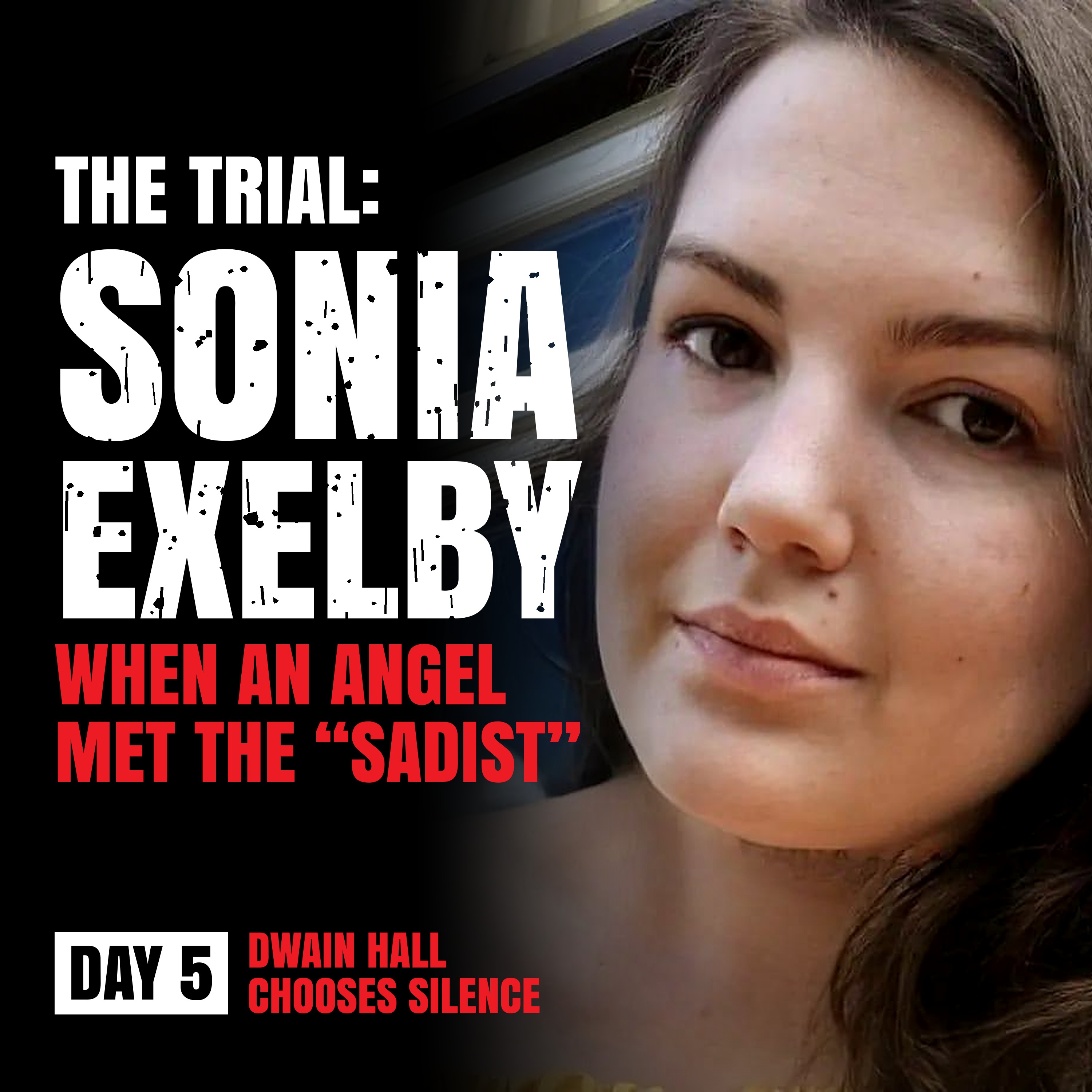
In this episode Caroline and Jack have details of the final evidence in the trial of Dwain Hall, including how his phone tracked his movements to the remote spot where Sonia Exelby was buried. We’ve also heard how police found a knife and sheath hidden at a friend’s house in Ohio, after Dwain Hall had secretly posted them just days after Sonia’s death. DNA experts told the jury that blood found on the knife had matched Sonia's DNA. We’ve also heard from the pathologist who carried out Sonia’s post-mortem, who revealed she had suffered four stab wounds, each of which could have been fatal. The prosecution have now finished presenting their case, and Dwain Hall has made the decision not to give evidence in his own defence. The Trial is part of The Crime Desk. Visit thecrimedesk.com (https://plus.thecrimedesk.com/exelby-podcast?sc_promo=EXELBY) for more information. Email us [email protected] WhatsApp us +447796657512 (start your message with ‘Trial’) Presenters: Caroline Cheetham an
On a summer morning in New York City, a team of US law enforcement lie in wait for an Irishman wanted for the killing of Detective Garda Adrian Donohoe. They are there to make the arrest Gardai have sought for more than four years. But the arrest does not mark the end of the story. Instead, it enters a new, unexpected and dramatic chapter. What follows is one of the longest and most complex murder trials in Irish history, marked by extraordinary witness testimony, allegations of intimidation, and a battle for investigators and prosecutors to break down the wall of silence protecting Adrian Donohoe's killer. With tensions mounting both inside and outside the courtroom, a jury must decide whether the evidence is sufficient to convict a man accused of killing a Garda in the line of duty. Presented by John Sweetman Created by Darren Cleary Episode written by Sam Hobson Script edited by Eoin Brennan Produced by Sam Hobson Executive Producer: Eoin Brennan Sound Design and Editing by Neil Kav
On a cold and wet night in January, 2013, two Garda detectives arrived at Lordship Credit Union in County Louth. They were there to provide an armed cash escort. As the detectives prepared to depart, a group of masked and armed men emerged from hiding. Within one minute, what should have been a routine journey became one of the most infamous crimes in Irish history, as Detective Garda Adrian Donohoe was shot and killed. Within just hours, one of the largest murder investigations in the history of the State was underway - but it would not be a quick, or straightforward task, as investigators encountered walls of silence and layers of deception. Presented John Sweetman Created by Darren Cleary Episode written by Sam Hobson Script edited by Eoin Brennan Produced by Sam Hobson Executive produced by Eoin Brennan Sound Design and Editing by Neil Kavanagh Audio Editing Support by Ed Smith Artwork and Graphics by Eric Rowntree
In this episode of Lines of Enquiry: Case Notes, John and Darren continue their conversation with Julieanne Lynch, Kelly Lynch’s mother. Following her memories of Kelly in Part One, Julieanne describes the days after her daughter’s death and the difficulty of trying to understand what had happened. She shares where she feels her family were let down, raising concerns about communication with the authorities, scene preservation and the handling of potential evidence. The conversation also explores the differing medical opinions the family have received about how Kelly died, and the questions they continue to seek answers to. Above all, Julieanne reflects on wanting Kelly to be remembered for the person she was, and her hope that seeking accountability in her name might help other families.
An artist's serious misconduct should affect decisions about publicly honoring their work.
Share your view, then see how readers voted. No sign-in required. This poll is shared across stories.
Do you agree or disagree?
Common Quandary
A Common Quandary to discuss
Another conversation to explore, separate from this news story.
A patient records every doctor visit for their followers. Can the doctor refuse to be filmed?
A patient with a large social-media following livestreams their health journey and wants to record every appointment. They say the videos help others and keep doctors accountable. Their physician finds the camera distracting and worries that casual remarks will be edited out of context.
Whose comfort should control a conversation about one person's body and another person's work?