Mark Mazzetti | Three-Time Pulitzer Recipient | Washington Investigative Correspondent for The New York Times
39 min
Listen through the publisher, then discuss the episode here or arrange an in-person Roundtable. Your city determines where to meet.
Roundtables are designed for groups of four, with a shared subject and room for everyone to speak. Come for discussion, with no dating expectation.
Mark Mazzetti, three-time Pulitzer Prize-winning investigative journalist and Washington correspondent for The New York Times, joins Clearer Than Truth to examine how intelligence agencies have evolved and how they shape American foreign policy. Drawing on more than two decades of reporting on national security, Mazzetti discusses the CIA's transformation into a paramilitary force after September 11, the limits of congressional oversight, and the intelligence and political dynamics behind America's involvement in the war with Iran. He also explores the relationship between Israeli and American strategic objectives, the intelligence failures leading up to October 7, and the growing role of artificial intelligence in intelligence gathering and military targeting. Looking ahead, Mazzetti considers whether intelligence agencies can learn from their failures and what happens when technological capabilities advance faster than human judgment. 00:00 Introduction: Mark Mazzetti 00:43 How the CIA Changed After 9/11 03:07 The CIA's Transformation Into a Paramilitary Force 04:49 The Cost of the War on Terror 05:29 Why the CIA Prioritized Counterterrorism 07:10 Mossad's Recruitment of Mahmoud Ahmadinejad 08:26 Israel's Plan for Regime Change in Iran 10:56 The Future of Congressional Intelligence Oversight 11:39 The Church Committee and CIA Accountability 13:19 What Congress Wants to Investigate 14:24 Can Congress Rein in the Intelligence Community? 16:01 Trump's Relationship With the Intelligence Agencies 17:18 The Deep State Debate and American Intelligence 18:39 Did Israel Push Trump Into War With Iran? 20:27 Do the US and Israel Share the Same Objectives? 23:15 The Uncertain Endgame in Iran 24:35 Can Iran's Proxy Groups Be Defeated? 26:08 Will Iran Ever Give Up Its Nuclear Ambitions? 28:03 Artificial Intelligence and the Future of Intelligence 29:15 The Risks of AI in Military Operations 31:15 Could Terrorists Use AI to Develop Dangerous Weapons? 32:53 What Did Netanyahu Know Before October 7? 34:17 How Israel's Intelligence Agencies Failed 35:17 Can Israel Prevent Another Intelligence Disaster? 36:38 Mark Mazzetti's Upcoming Book: Jericho Wall 37:19 Where to Follow Mark Mazzetti's Work
Episode information is provided by the publisher. Listening takes place on the publisher’s service.
For review: 1. Iraq has reached a compromise with the powerful Iran-backed militia Kataeb Hezbollah, three senior security officials said, after Prime Minister Ali al-Zaidi readied security forces to move against the group. Reflecting the gravity of the situation, Iraqi Shiite political sources said Esmail Qaani, commander of Iran’s elite Revolutionary Guards’ Quds Force, arrived in Baghdad late on Monday to help defuse tensions with Kataeb Hezbollah, Tehran’s most powerful militia ally in Iraq. 2. Lebanese President Joseph Aoun launched a lengthy rebuke of Iran in an Independence Day address, arguing that the Islamic Republic does not have the right to interfere in Lebanon’s internal affairs, as it long has via support for its local terror proxy, Hezbollah. 3. Yemen’s Houthis launched strikes on the Saudi capital Riyadh on Saturday, after vowing reprisals for a “special operation” by the Saudi-led coalition fighting them. The coalition later said it had “intercepted and destroyed” thr
This week on The Necessary Conversation, it's Chad, Haley, and Mary Lou. Bob is still recovering but sent in a video message about Trump calling Putin his friend that we watch together. 🇷🇺 Trump held the first-ever three-way talks with Putin and Xi, called it a "12 out of 10," and produced nothing. Then at a press conference he called Putin his friend — and when asked if Putin is a friend to America, the president of the United States said, "I can't speak to America." That same day, Trump's friend Putin launched massive strikes into Ukraine, hit Poland with two missiles — an act of war against a NATO ally — then struck near a Ukrainian restaurant and drone-bombed the first responders, killing a 7-year-old child and a 20-year-old paramedic. We watch Bob's video and ask Mary Lou: is Russia our friend? 🇨🇳 The House Foreign Affairs Committee revealed Trump's Commerce Department approved nearly 880,000 advanced AI chips for Chinese military-linked companies including Alibaba, Tencent, a
November 21, 2026 On November 22, 1963, President John F. Kennedy and First Lady Jacqueline Kennedy were visiting Texas, They hoped to heal a rift in the Democratic Party, as the white supremacists who made up the base of the party’s southern wing loathed the Kennedy administration for its support for Black rights, That base was furious about the administration’s backing of James Meredith, the first Black American to enroll at the University of Mississippi, By going to Dallas, Kennedy hoped to mend some fences in the state Democratic Party, The President's motorcade began with high spirits, Lady Bird Johnson thought, when she heard three shots, that it “must be firecrackers or some sort of celebration,” The Secret Service, knowing what had happened, rushed the motorcade to a hospital, When Vice President Johnson and Lady Bird were told that the President was dead, officials rushed LBJ away, In the confusion - in addition to the murder, it wasn't clear how extensive the plot was against
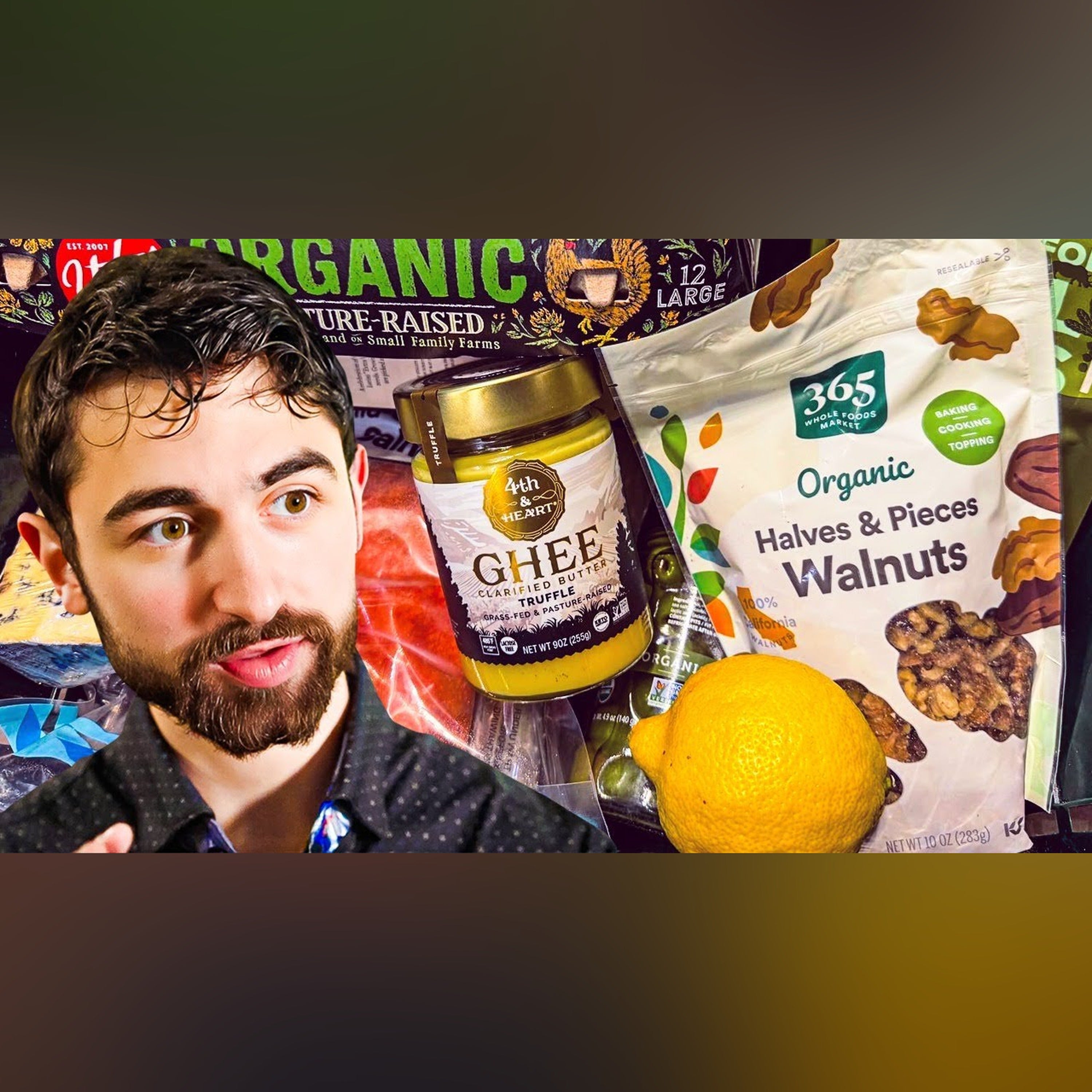
For all references and a written breakdown, references and brands recommendations, see the Newsletter: https://staycuriousmetabolism.substack.com/p/ketosis-casein-and-chocolate-what?r=40ekz2 CHAPTER *Call our service line at 815-STAY-CUR (815-782-9287) *Learn more about the data, here: https://staycuriousmetabolism.substack.com/p/life-or-death-in-the-fine-print-the?r=40ekz2 I’ve been asked countless times to make a What I Eat in a Day video — and I’ve finally cracked, like an egg. In this video, I break down what I eat and the science behind every choice. This isn’t a “follow my diet” video — it’s a framework for how to think about food. Whether you’re low-carb, keto, or simply curious about how to optimize your nutrition, this breakdown will give you practical insights into how to make science-backed food choices. For my full shopping list and preferred brands (no affiliations), check out the linked newsletter (above). Referenced Content: How to Cook Eggs: https://youtu.be/Dhmq6F5M8kc
Your body doesn't work like you think... Take your personal data back with Incogni. How and when people are having kids is changing, but our bodies aren't. As we get older, it can get harder to have kids when we want to. So smart people figured out it’s possible to remove eggs, freeze them, and unfreeze them to use later. They can even fertilize those eggs to make embryos and freeze those. Basically, humans invented cryosleep! … Just for tiny cells. It’s totally sci-fi - and you need to know about it. This is a level of control over our bodies no species has ever had before. It’s already changing people’s lives - and how our species can reproduce. But there are real concerns about whether it’s worth it. Because let me tell you, the process is not easy. I’ve been taking medication for two weeks. And at the same time, I’ve been doing research, talking to doctors, and learning as much as I can about the cutting edge of fertility tech. In this video, I'm going to take you behind the scenes
"Principle Driven Self-Alignment" and "Preference Ranking Optimization" [Best Alignment Papers!]Episode release date: 16 Jul 2023Spreading awareness about the works of some of the leading educators in the AI revolution. Core Ideas: Metamodernism: Narratives and emergence view of reality - Reduce suffering - Increase prosperity - Increase understanding mantra: Seek knowledge. ELABORATE: Add depth and detail to understanding, weaving comprehensive and nuanced explanations.DISCLAIMER: This is a community-driven show. ----- Keywords: deep learning, prompt engineering, artificial general intelligence, agi, future technology
Frank Lavin, former White House Political Director under President Ronald Reagan, former U.S. Ambassador to Singapore, and former Undersecretary of Commerce for International Trade, joins Clearer Than Truth to discuss the lessons of presidential leadership and the evolving challenges of American foreign policy. Drawing on his firsthand experience in the Reagan White House, Lavin explains how Reagan built consensus, communicated an optimistic vision for the country, and used economic and military strength as tools of statecraft. The conversation explores Reagan's approach to the Soviet Union, the importance of diplomacy and trade policy, and the differences between aspirational and grievance-driven political leadership. Lavin also examines China's growing influence in Southeast Asia, the strategic calculations behind Beijing's foreign policy, and the extent of coordination among China, Russia, Iran, and North Korea. He makes the case for an American foreign policy that remains an attrac
Kori Schake, Director of Foreign Policy Studies at the American Enterprise Institute and contributing writer at The Atlantic, joins Clearer Than Truth to examine the foundations of American civil-military relations and the challenges facing US foreign policy. Drawing on her book The State and the Soldier, Schake explains how the Founding Fathers established civilian control over the military, why that tradition remains essential to American democracy, and how political leaders can contribute to the politicization of the armed forces. The conversation also explores America's dependence on foreign supply chains, the growing coordination among China, Russia, Iran, and North Korea, the future of NATO and America's alliances, and how economic interdependence can become a weapon in geopolitical competition. Schake makes the case for a conservative internationalism built on military strength, strong alliances, and cooperation with like-minded countries. 00:00 Introduction: Kori Schake 00:57 W
Retailers should show a product's recent normal price alongside advertised discounts.
Share your view, then see how readers voted. No sign-in required. This poll is shared across stories.
Do you agree or disagree?
Common Quandary
A Common Quandary to discuss
Another conversation to explore, separate from this news story.
The restaurant forgot your expensive entrée. Do you point it out?
After a crowded dinner, you notice the restaurant omitted your most expensive entrée from the bill. Service was slow, the server seemed overwhelmed, and correcting it may create trouble for the person who made the mistake.
Does protecting someone from consequences ever justify benefiting from their error?