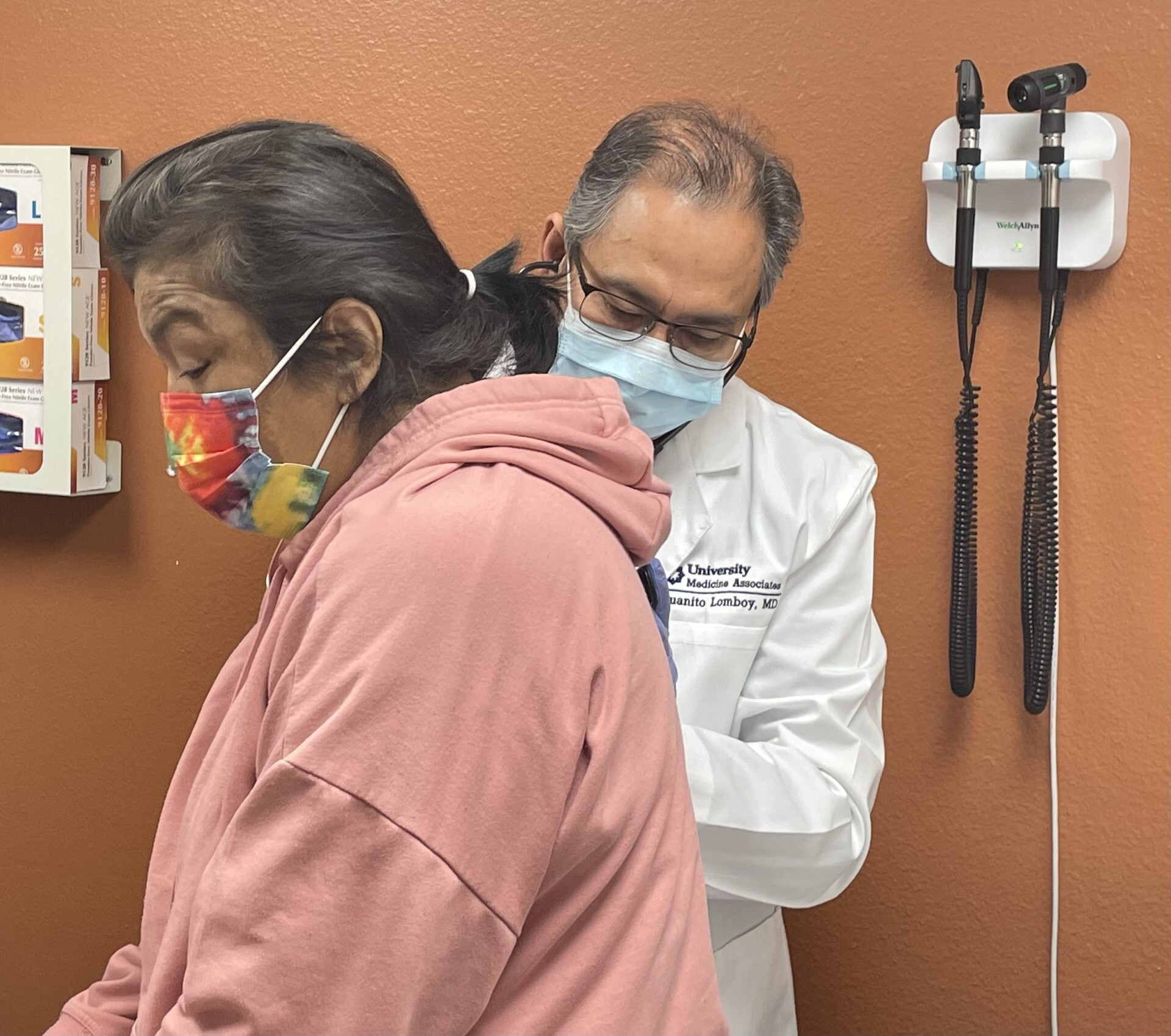
Medicaid expansion could cover more than a million Texans, but millions would remain uninsured
26 min
Listen through the publisher, then discuss the episode here or arrange an in-person Roundtable. Your city determines where to meet.
Roundtables are designed for groups of four, with a shared subject and room for everyone to speak. Come for discussion, with no dating expectation.
Governor-elect Gina Hinojosa says expanding Medicaid is a priority. And many other elected Democratic lawmakers are on board. In the state with the highest number of uninsured people, what does this mean? When Medicaid expands coverage in Texas who benefits? And how this is not the solution for the state's health care crisis.
Episode information is provided by the publisher. Listening takes place on the publisher’s service.
Rebuilding the government after Trump and DOGE will take more than rehiring the people they fired last year. The Supreme Court enabled the administration’s assault on services and protections millions of Americans rely upon, and it could still block the rebuilding, too. On this week’s Amicus, Dahlia Lithwick talks with Cornell law professor and former Biden administration official K. Sabeel Rahman about his new book, Remaking the State: A New Blueprint for American Democracy (https://www.amazon.com/dp/1967190208?tag=slatmaga-20&th=1), about why restoring the old machinery of the administrative state won’t be enough. Rahman connects DOGE’s slash-and-burn campaign to a much longer legal project. He explains why doctrines that constrain regulation remain a threat to future policymaking, even as the high court supercharges Trump’s executive power grabs. But this is not just a damage assessment. From stronger consumer protections to easier access to public benefits and a meaningful democrat
Elon Musk is scrambling to distance himself from Trump and the MAGA movement after spending hundreds of millions backing Republicans who suffered major midterm losses. Anthropic’s potential IPO is drawing attention as the AI company prepares for what could be one of the biggest public offerings in tech history. Right-wing media figures are increasingly divided over the expansion of AI data centers and their environmental and economic consequences. Fox News host Brian Kilmeade is furious with JD Vance for acknowledging that some people want the Iran war to continue indefinitely. New forensic analysis of Jeffrey Epstein’s autopsy is raising fresh questions about the official ruling that he died by suicide. Conservative commentator Jonah Goldberg laments that accusations of antisemitism no longer silence critics, while acknowledging Tucker Carlson’s podcast draws a much larger audience. Rep. Tim Burchett is attacking the upcoming Grand Theft Auto VI, claiming violent video games contribut
**SOCIAL SECURITY BEFORE AGE 62? YES! YOU COULD QUALIFY AT 43, 53, 60, OR EVEN YOUNGER!** Think you have to wait until age 62 to start receiving Social Security benefits? **Think again!** Millions of Americans know about Social Security retirement benefits, but many don't realize that certain people can receive monthly Social Security payments years, or even decades, before reaching retirement age. Need help with Medicare? Contact our friends at Chapter Medicare for FREE HELP!! 352-841-0632 **Could YOU qualify for Social Security benefits earlier than you think?** In today's video, **Dr. Ed Weir, a former Social Security Administration District Manager**, explains the often-overlooked Social Security rules that allow certain individuals to qualify for benefits in their 40s, 50s, and even younger. You may be surprised by who's eligible, which benefits are available, and what circumstances could allow you to start receiving payments. **IN THIS VIDEO, WE'LL ANSWER:** Can you really start
The Tenth Circuit hears Utah versus Express Scripts. Utah sued Express Scripts, Optum, and related companies in state court over their alleged role in the opioid crisis. These pharmacy benefit managers help health plans decide which prescription drugs are covered and on what terms. Utah alleges they favored opioids in exchange for payments from manufacturers, while failing to curb dangerous prescribing. The companies also serve military, veterans', and federal-employee health plans. They moved the lawsuit to federal court under the federal-officer removal law. Utah says its complaint expressly excludes their federal work. The district judge accepted that limitation and sent the case back to state court. The companies' lawyer will argue that joint rebate negotiations and shared drug lists cannot be divided neatly between federal and private business. Utah's lawyer will argue that the claims target non-federal conduct and can remain in state court. There is also a second question: must t
Artificial intelligence is already finding its way into ambulances, patient care reports and EMS operations — but do agency leaders actually know what technology their people are using? This week on EMS One-Stop, host Rob Lawrence welcomes back EMS attorneys Doug Wolfberg and Ryan Stark of Page, Wolfberg & Wirth (PWW) to explore the rapidly emerging challenge of shadow AI and shadow IT. From smart glasses and personal recording devices, to ambient listening applications and generative AI platforms, the discussion examines how well-intentioned clinicians may be putting protected health information at risk without realizing it. Wolfberg and Stark explain why HIPAA hasn't fundamentally changed in the AI era, why business associate agreements and organizational oversight matter, and why simply banning technology is unlikely to be an effective long-term solution. Instead, EMS leaders must understand the tools being used, update their policies, educate their workforces and establish safeguar
For review: 1. Iraq has reached a compromise with the powerful Iran-backed militia Kataeb Hezbollah, three senior security officials said, after Prime Minister Ali al-Zaidi readied security forces to move against the group. Reflecting the gravity of the situation, Iraqi Shiite political sources said Esmail Qaani, commander of Iran’s elite Revolutionary Guards’ Quds Force, arrived in Baghdad late on Monday to help defuse tensions with Kataeb Hezbollah, Tehran’s most powerful militia ally in Iraq. 2. Lebanese President Joseph Aoun launched a lengthy rebuke of Iran in an Independence Day address, arguing that the Islamic Republic does not have the right to interfere in Lebanon’s internal affairs, as it long has via support for its local terror proxy, Hezbollah. 3. Yemen’s Houthis launched strikes on the Saudi capital Riyadh on Saturday, after vowing reprisals for a “special operation” by the Saudi-led coalition fighting them. The coalition later said it had “intercepted and destroyed” thr
We think of the surrender of Robert E. Lee as the end of the Civil War, but the end really wasn’t clear at the time. The Galveston News reported Lee’s surrender as a positive development for the Confederacy and encouraged Texans to fight on. How did Lincoln’s peace take hold? How did a divided nation come together? Michael Vorenberg’s new book is Lincoln’s Peace: The Struggle to End the American Civil War.
As many Texans struggle to pay their power utility bills, a new analysis projects that federal energy policy changes will cost Texas households an additional $96 billion through 2040. What can be done to keep electricity bills affordable for Texans?
Under the Trump administration the machine of the federal government has been dismantled. It doesn’t protect the public from foodborne illness. It can’t keep the airlines flying and no longer wants to respond to natural disasters. But with the blue wave how can the administrative state be rebuilt to be better than ever and with a moral vision?
Officials should distinguish confirmed facts from uncertainty during developing incidents.
Share your view, then see how readers voted. No sign-in required. This poll is shared across stories.
Do you agree or disagree?
Common Quandary
A Common Quandary to discuss
Another conversation to explore, separate from this news story.
A private joke from years ago goes public. How long should it follow the person who wrote it?
Someone shares a screenshot of a tasteless joke made years ago in a private friends' chat. The person who wrote it says they were performing for a small audience, have changed, and never agreed to have the message made public.
How private should speech remain when it reveals something troubling?