Micro- and Nanoplastics in the Blood Linked to Increased Heart Attack Risk Factors
7 min
Listen through the publisher, then discuss the episode here or arrange an in-person Roundtable. Your city determines where to meet.
Roundtables are designed for groups of four, with a shared subject and room for everyone to speak. Come for discussion, with no dating expectation.
People having the most severe type of heart attack were far more likely to have micro- and nanoplastics in the blood flowing through their coronary arteries than people with stable heart disease or normal coronary arteries, suggesting these particles are linked to more advanced cardiovascular damage Tiny plastic particles don't simply circulate through your bloodstream; research shows they damage the protective lining of your blood vessels, increase oxidative stress, trigger chronic inflammation and make artery-clogging plaque more likely to become unstable Smoking and exposure to air pollution were strongly associated with higher levels of plastic particles in the bloodstream, showing that multiple environmental exposures work together to increase stress on your cardiovascular system Many of your largest sources of plastic exposure are within your control, including your drinking water, food packaging, plastic food containers and other everyday products, giving you practical opportunities to lower your overall exposure Replacing plastic where possible, filtering your drinking water, choosing fresh whole foods, reducing seed oils high in linoleic acid and supporting healthy blood vessels through lifestyle habits all help reduce the biological conditions linked to cardiovascular disease
Episode information is provided by the publisher. Listening takes place on the publisher’s service.
For the references, extra details and early access to context, see the newsletter: https://open.substack.com/pub/staycuriousmetabolism/p/lowering-cholesterol-killed-a-study?r=40ekz2&utm_campaign=post&utm_medium=web&showWelcomeOnShare=true (https://open.substack.com/pub/staycuriousmetabolism/p/lowering-cholesterol-killed-a-study?r=40ekz2&showWelcomeOnShare=true) Description: What if lowering cholesterol didn’t save lives—but actually increased the risk of death? In this video, I break down a forgotten ‘gold-standard’ randomized controlled trial from the late 1960s and early 1970s: the Minnesota Coronary Experiment. This uniquely rigorous study tested whether replacing saturated fat (butter, beef) with vegetable oils rich in linoleic acid would reduce heart disease and mortality. The results were shocking. Cholesterol dropped—but deaths increased. Even more unsettling, the greater the cholesterol reduction, the higher the risk of death. Cardiovascular outcomes didn’t improve either. The
Today, I’m honored to connect with Dr. Troy Badger. He is a board-certified cardiologist and interventionalist and the founder of Cardiostrong, a concierge preventive cardiology clinic in Provo, Utah, focused on reducing cardiovascular risk, optimizing metabolic health, and improving strength and cardiorespiratory fitness for executives and athletes. In today’s conversation, we discuss Dr. Badger’s gender- and age-specific approach to heart health, including treatment differences for men and women, and diagnoses such as INOCA, SCAD, vasospastic disease, and Takotsubo. We examine emotions and their influence on heart health, coronary ischemia and cardiomyopathies, labs and diagnostics, how Dr. Badger assesses risk in his patients, and the differences between a CAC and a CCTA. Dr. Badger also shares the labs he finds essential for all patients and discusses the role of VO2 Max, cardiovascular training, and lifestyle—specifically nutrition, the use of GLP-1 drugs, and a multidisciplinary
She doesn't know she's dying. -------------- The Workbook: https://on.bozmd.com/BozWorkbook --------------------- Thanks for checking out the Dr. Boz Channel. See links below resources and recommendations. Tune in Tuesday nights, 4PM Eastern/3PM Central to watch me Live! We improve health - One ketone at a time. --------------------- FREE STUFF 50 Keto Fat-Facts: http://on.bozmd.com/50fat Dr. Boz Ratio Spreadsheet: http://on.bozmd.com/DBR Documentary Playlist: https://on.bozmd.com/AT --------------------- Dr. Boz’s Online Courses: Consistently Keto: http://on.bozmd.com/CK BRAINS: https://on.bozmd.com/BrainsT2R --------------------- WAYS TO SUPPORT THIS CHANNEL: Share Dr. Boz content with people you love. Everyone wins when you share. Buy Dr. Boz Products: Dr. Boz Food Guide: http://on.bozmd.com/FoodGuide Walmart: https://on.bozmd.com/WalmartKetoMap Amazon: https://on.bozmd.com/AmazonAttKetoMap Beginners love this! Dr. Boz K2+D3: https://on.bozmd.com/K2D3 Walmart: https://on.bozmd.com/W
Is your body weight stable, but you're still not eating enough to properly fuel your training, recovery, and overall health? Introducing Why Stable Weight Doesn't Always Mean You're Eating Enough from Jeff Hoehn of the Mind Muscle Connection Podcast (https://www.buzzsprout.com/1508401). Just because your weight isn't changing doesn't necessarily mean you're adequately fueled. In this episode, Jeff breaks down why maintaining a stable body weight doesn't always mean you're meeting your body's energy needs, especially if you're training hard, staying lean, or spending long periods dieting. You'll learn: Why stable body weight doesn't automatically mean adequate energy availability Who is most at risk of underfueling, even when their weight isn't changing How high training output, staying too lean, and chronic dieting can contribute to low energy availability The potential signs of underfueling, including changes in performance, recovery, hormones, and menstrual health Why spending too lo
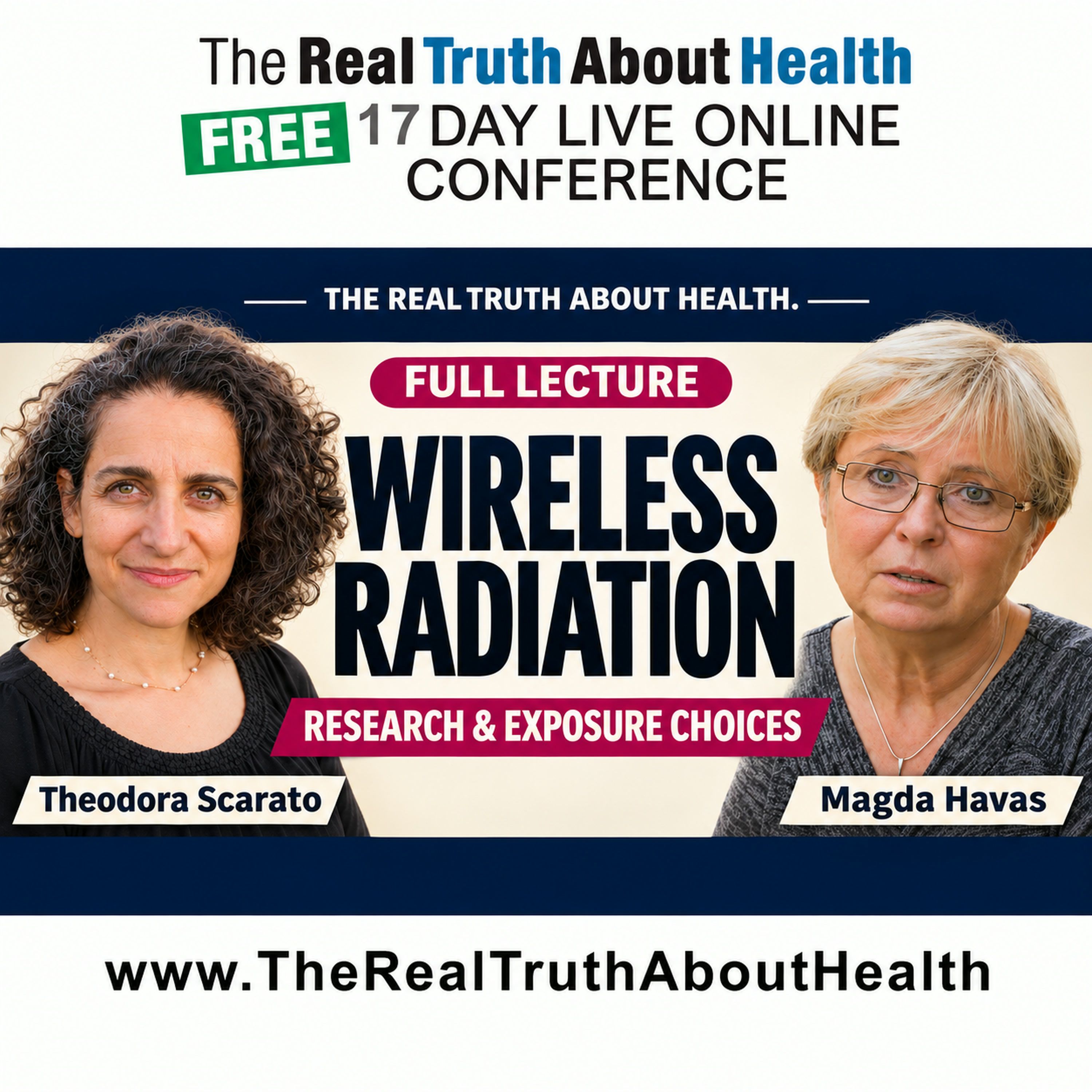
Wireless Radiation: What the Research Says—and How to Reduce Exposure if You Choose Theodora Scarato, MSW, and Magda Havas, PhD, examine what research says about wireless radiation and potential health effects. Learn about everyday exposure sources, scientific concerns, and practical steps people can choose to reduce EMF exposure at home, work, and school. #WirelessRadiation #EMF #PublicHealth
Big News! Clicking Here (https://meditationsounds.supercast.com/) Email List (https://bit.ly/3T010m4) Calm Your Nervous System Naturally — 528 Hz Healing Frequency + Brown Noise | Reduce Anxiety, Palpitations, and Stress is designed to help your body and mind settle into a deep state of relaxation. The 528 Hz frequency is often associated with emotional balance and inner harmony, while brown noise provides a grounding, low-frequency sound that helps calm the nervous system. Together, they create a soothing soundscape that may help ease anxiety, reduce stress, and support relaxation during rest, sleep, meditation, or quiet focus. This audio is ideal for unwinding after a long day, calming racing thoughts, or creating a peaceful background for deep rest. Simply listen, breathe slowly, and allow your body to relax. #528Hz #BrownNoise #HealingFrequencies #ReduceAnxiety #StressRelief #CalmMind #NervousSystem #DeepRelaxation #SleepSounds #SoundTherapy 528 hz healing frequency brown noise, re
Glycine is an amino acid that helps build collagen and is involved in regulating inflammation, and researchers are exploring its role in healthy aging, yet your body may produce less of it as you get older Modern diets often lack glycine-rich connective tissues, such as bones, tendons and cartilage, making grass fed beef bone broth, gelatin and collagen-rich cuts of meat valuable additions to your meals Animal studies described by biochemist Joel Brind, Ph.D., found that glycine supplementation extended lifespan in rats and mice by approximately 10% to 15%, although researchers have yet to establish whether it produces similar benefits in humans In a small, three-month placebo-controlled trial of 74 adults with Type 2 diabetes, those given glycine had significantly lower HbA1c and reduced inflammatory markers compared with placebo, although larger studies are needed Research suggests glycine may help your body release heat and lower its core temperature before sleep, while collagen-ric
"The Big Secret" documentary portrays how the U.S. healthcare system was reshaped by corporate and pharmaceutical forces, replacing natural healing with a drug-centered, profit-driven medical monopoly The shift began with the Flexner Report, backed by Carnegie and Rockefeller interests, which redefined medical legitimacy and opened the door to corporate control over healthcare Modern medicine has wrongly vilified cholesterol, leading to widespread statin use that can undermine hormone health, cognitive function, and metabolic resilience Industrial agriculture, glyphosate, and processed foods strip essential minerals from the food supply. This has been linked to widespread nutritional deficiency and chronic disease across generations The real "big secret" is that health can restore itself once you eliminate what disrupts it and provide the inputs it's always required
For thousands of years, olive oil was valued as much as a medicine as a food, and modern research has largely supported that reputation. In large randomized trials, adding extra virgin olive oil to a Mediterranean diet lowered rates of heart attacks, strokes, diabetes, and atrial fibrillation Those benefits come not from the oil's fat, but from a small fraction of compounds (e.g., polyphenols) that refining destroys and that degrade with time, heat, and light. Two bottles labeled extra virgin can differ more than tenfold in them, which means the right oil delivers its benefits in a teaspoon, and the wrong one delivers little at any dose One of these compounds, oleocanthal, was discovered because it stings the throat the same way ibuprofen does, and it was then found to block the same enzymes. In clinical trials, olive oil has lowered markers of inflammation, the Mediterranean diet has the most evidence of any diet for rheumatologic patients, and in a small trial, olive oil applied dire
Polluters should pay cleanup costs even when the damage occurred many years ago.
Share your view, then see how readers voted. No sign-in required. This poll is shared across stories.
Do you agree or disagree?
Common Quandary
A Common Quandary to discuss
Another conversation to explore, separate from this news story.
Your ex's streaming password still works. When does borrowing become stealing?
Months after a friendly breakup, your television remains logged into your ex's streaming account. They have never mentioned it, the service allows several screens, and your viewing does not increase their monthly bill.
Can silence count as permission when asking might end the benefit?