Mo Ibrahim, philanthropist: Africa must not trade rights for development
23 min
Listen through the publisher, then discuss the episode here or arrange an in-person Roundtable. Your city determines where to meet.
Roundtables are designed for groups of four, with a shared subject and room for everyone to speak. Come for discussion, with no dating expectation.
“While we see great development in infrastructure, in economic opportunities, and we see development in also the area of education and health. We see major deterioration in security, rule of law, and also deterioration on rights, space for civil society has been shrinking. That is worrying. There cannot be trade-off between economic development or infrastructure and people's rights or even people's safety.” Dingindaba Buyoya speaks to Mo Ibrahim, the billionaire philanthropist and founder of the Mo Ibrahim Foundation, which measures how well African governments serve their people. Ibrahim warns that progress in infrastructure and economic opportunity across Africa cannot compensate for declining rights and worsening security. He challenges military leaders who promised to make their countries safer, and questions whether the economic gains they claim to have delivered under their rule can last. He also argues that African leaders are increasingly taking their cues from powerful figures elsewhere in the world, reflecting a wider global shift towards strongman politics. The best interviews from the BBC, including episodes with human rights lawyer Shami Chakrabarti, Ugandan diplomat Olara Otunnu, and dancer Carlos Acosta. Presenter: Dingindaba Buyoya Producer: Osman Iqbal Editor: Farhana Haider (Image: Mo Ibrahim. Credit: Getty)
Episode information is provided by the publisher. Listening takes place on the publisher’s service.
Runaway government spending, rising costs, and a new wave of legal battles over constitutional rights. With Democrats preparing to take control of Congress and several state governments, Republicans are confronting a very different political landscape. John Solomon and Amanda Head welcome Montana Senator-elect Kurt Alme, who says Washington must get serious about reining in spending, lowering inflation, and making everyday life affordable again. Already preparing for his arrival in the Senate, Alme discusses his priorities for protecting Montana's way of life, keeping taxes low, creating good-paying jobs, and working across party lines when possible. He also addresses the challenges Republicans face in the minority, the remaining lame-duck session, and concerns about efforts to expand the Supreme Court and eliminate the filibuster. Then, Southeastern Legal Foundation President Kimberly Hermann joins the show with a warning about potential policy reversals in states where Democrats have
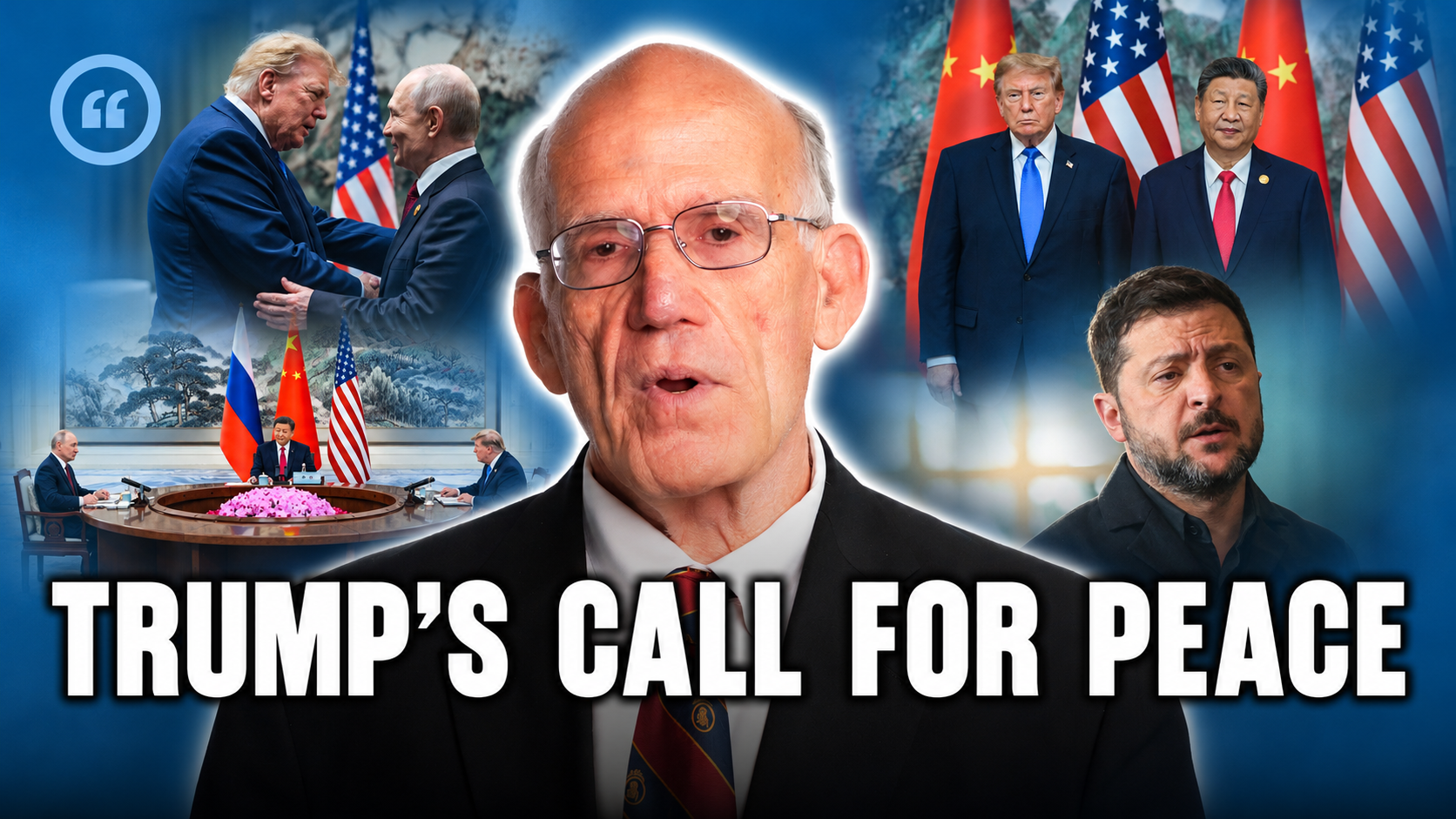
President Donald Trump's first ever trilateral summit with Vladimir Putin and Xi Jinping raises questions about the future of the war in Ukraine and whether a peace agreement could finally be within reach. Victor Davis Hanson and Sami Winc examine the summit on today’s edition of “Victor Davis Hanson: In His Own Words,” discussing Russia's declining influence, potential territorial concessions in Ukraine, and Europe's frustration over Trump's peace negotiations. Hanson criticizes Hillary Clinton's attacks on Trump's diplomacy; he also argues that European leaders have weakened their influence by neglecting defense spending and relying on American military protection. They discuss Elon Musk's shifting political allegiances, and Hanson warns that distancing himself from MAGA may not protect him from Democrat investigations. They also discuss the potential economic benefits of artificial intelligence and the challenges facing Hakeem Jeffries as Democrats prepare to take control of the Hou
This week on the Mark Levin Show, 2028 Republican Presidential candidates must directly address the urgent threats to the country - Marxism and Islamism. These candidates should deliver bold, courageous speeches that clearly explain what is happening in the country, identify those responsible, and directly challenge these threats rather than leaving such warnings to a small number of media voices. Also, it is difficult to believe so many major outages affecting entities such as the NSA, FAA, airline systems, Microsoft, and Apple services could be merely coincidental. The timing and scale of the incidents are troubling and remain inadequately explained. President Trump had proposed a major modernization and restructuring of air traffic control in 2017 that Congress failed to enact. Had those reforms been adopted, many current FAA failures might have been avoided. Later, does Senator John Kennedy know anything about originalism? Originalism is not pure textualism. The meaning and intent
Europe's Little Anarchy: The Rise and Fall of Neutral Moresnet (https://bookshop.org/a/12343/9781501788147)(Cornell UP, 2026) uncovers the history of Neutral Moresnet: a once-forgotten space without borders, nationalism, or a recognized government. Between 1815 and 1919, this square mile of land wedged between Belgium, the Netherlands, and Germany was home to thousands of people living off the grid, free of taxation and oversight. But they also had no political status, police, legal currency, proper law courts, or government presence in sectors like public health, infrastructure maintenance, or education. Meanwhile, practical control over Neutral Moresnet lay in the hands of the local industry: a for-profit, multinational mining company that, because it owned rights to the land, also held a near monopoly on the supply of high-quality zinc to the rest of the world. Dr. Steven Press explores how the residents of Neutral Moresnet sought to improve their quality of life, appealing to Germa
The Second Circuit considers a plan to help homebuyers who need mortgages compete with cash offers. Canandaigua National Corporation, a New York financial holding company, wanted to guarantee purchases arranged through its mortgage subsidiary. If a preapproved customer failed to obtain final mortgage approval, the company would buy the home itself and later resell it. The proposal capped the value of homes held at any one time at five million dollars and promised resale within two years. Canandaigua says those safeguards make the risk small. The Federal Reserve Board rejected the plan on safety-and-soundness grounds, looking beyond the risk to this particular company. It did not finally decide the remaining statutory factors. Canandaigua will argue that the Board ignored the limits in its actual application. The Board will defend considering what could happen if financial holding companies generally began buying property under such guarantees. This is a dispute over permission for a pr
On 4th March 2023, UN member states agreed a historic treaty that had been over fifteen years in the making. The High Seas Treaty is the first ever treaty to protect the world’s oceans outside national boundaries. The aim is to meet the 30 by 30 biodiversity target, protecting 30% of the world’s oceans by the year 2030. Also known as the open sea or international waters, the high seas begin at the limit of countries’ exclusive economic zones. That means up to 370km, or 200 nautical miles, from the coastline. They account for 64% of the world’s oceans, and have been referred to as the last true wilderness, given how much mystery still lies within. Why is protecting the oceans so important? What measures are expected to come from the treaty? In under 3 minutes, we answer your questions! To listen to the last episodes, you can click here: How to make the most out of a rental property? (https://originals.bababam.com/do-you-really-know/202303090400-how-make-most-out-rental-property) What is
“By a process of elimination, he didn't die from a natural cause. He didn't die from old age in his cell, and he didn't die from an accident. So the only option that we have is that he died as a result of a homicide.” BBC Newsnight presenter Victoria Derbyshire speaks to forensic medicine expert Michael Freeman, who says he's reviewed Jeffrey Epstein's autopsy records and contends Epstein's death in jail was the result of homicide rather than suicide. Epstein was a wealthy American financier and convicted sex offender, with links to prominent figures around the world. He died in a New York jail in 2019 while awaiting trial on charges of sex trafficking involving underage girls. His death was ruled a suicide by New York City's medical examiner. A subsequent FBI investigation found no evidence of criminal activity connected to his death, while the US Department of Justice’s Inspector General also concluded there was no evidence of foul play. In an interview with BBC Newsnight, Freeman ch
“I like to think of it as a kind of love poem to our home planet. And if you think about what's a billion years from now, Earth would be unrecognisable. Everything we love will have either left for parts unknown or be gone... but the Voyagers will still sing for us.” Kaine Pieri speaks to Ann Druyan, the American science director and author. In 1977, Druyan was the Creative Director of NASA's Voyager Interstellar Message Project, helping to curate and design the contents of the Golden Records carried by both Voyager 1 and Voyager 2. The discs contain images and various recordings of music, natural sounds and spoken greetings from Earth, intended as a message from humanity to any extraterrestrial intelligence that might one day encounter the spacecraft. Originally launched to explore Jupiter and Saturn, the Voyager probes far exceeded their primary mission. Voyager 2 went on to visit Uranus and Neptune a decade later, before both probes continued their journeys towards the outer reaches
Gabriel Gatehouse speaks to Canadian author and activist Naomi Klein. She first rose to international prominence in 1999, when she published her first book No Logo. It investigated how global corporations prioritised lifestyle branding over manufacturing, exposing the human cost of sweatshop labour and the growing corporate invasion of public space. She has since written several more books exploring capitalism and globalisation, establishing her as one of the most influential and outspoken figures on the political Left. Her latest book End Times Fascism, co-written with Astra Taylor, argues that the global economic order is combining with other powerful forces to hasten the end of the world as we know it. In this interview, Klein discusses what a world beyond capitalism might look like, and suggests we should start by getting rid of billionaires. Thank you to the Radical team for their help in making this programme. The best interviews from the BBC, including episodes with Nobel Peace
Companies should be responsible for serious harm caused by suppliers they choose.
Share your view, then see how readers voted. No sign-in required. This poll is shared across stories.
Do you agree or disagree?
Common Quandary
A Common Quandary to discuss
Another conversation to explore, separate from this news story.
A private joke from years ago goes public. How long should it follow the person who wrote it?
Someone shares a screenshot of a tasteless joke made years ago in a private friends' chat. The person who wrote it says they were performing for a small audience, have changed, and never agreed to have the message made public.
How private should speech remain when it reveals something troubling?