Mysteries of vernacular: Zero - Jessica Oreck and Rachael Teel
4 min
Listen through the publisher, then discuss the episode here or arrange an in-person Roundtable. Your city determines where to meet.
Roundtables are designed for groups of four, with a shared subject and room for everyone to speak. Come for discussion, with no dating expectation.
View full lesson: http://ed.ted.com/lessons/mysteries-of-vernacular-zero-jessica-oreck-and-rachael-teel Uploaded 01-08-13 Though the first written number system can be dated back to 2500 years ago in Mesopotamia, a zero-like symbol did not appear until 7th century CE India. Jessica Oreck and Rachael Teel track the evolution of zero from a dot to the symbol we use today, as well as the Arabic, Italian and French roots of the word. Lesson by Jessica Oreck and Rachael Teel, animation by Jessica Oreck.
Episode information is provided by the publisher. Listening takes place on the publisher’s service.
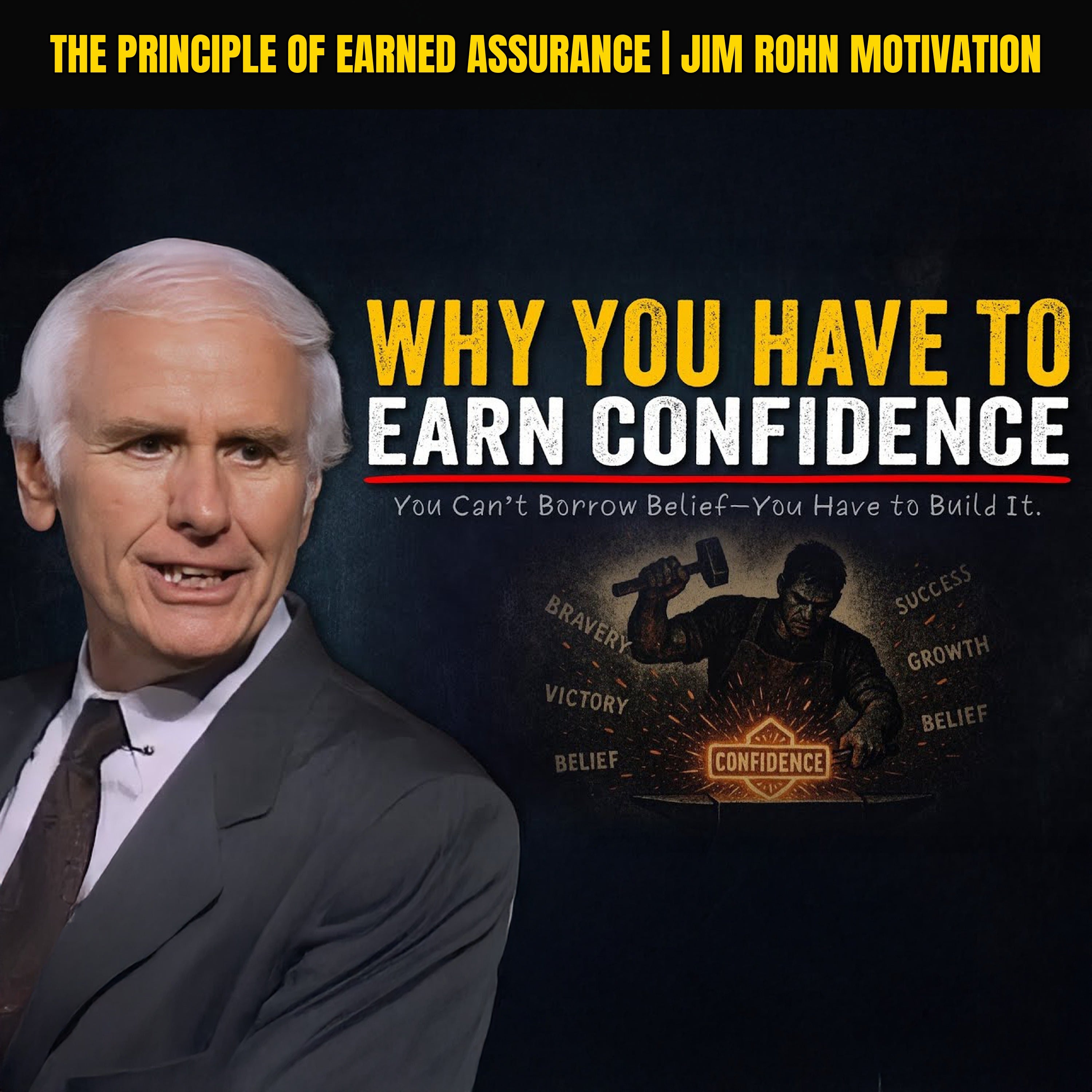
In this Jim Rohn Motivation speech, discover the timeless truth that real confidence isn’t loud—it’s earned. Like roots growing beneath a mighty oak, lasting self-belief comes from preparation, discipline, and small victories stacked over time. Key Topics From This Motivational speech: The true source of lasting confidence Why small wins create unstoppable momentum How self-discipline strengthens belief The danger of false assurance and shortcuts The role of repetition and reflection in mastery This powerful Jim Rohn motivational speech reminds us that confidence is not something you're born with—it's built through quiet acts of consistency, honest effort, and character. Each sacrifice, each challenge you face, adds to a reservoir of belief that no one can take from you. It’s not magic—it’s earned, moment by moment, through the process of growth and personal accountability. This Jim Rohn Motivational speech Is Perfect For: Anyone struggling with self-doubt and needing clarity on how to
Have you ever told someone, "Thanks a million!" or claimed you have "a million toys to clean up"? We use the word "million" all the time to mean "a whole lot," but have you ever stopped to wonder just how big a real million actually is? Join Mira and Finn on a mind-blowing math adventure as they discover the quiet power of giant numbers! Imagine counting one number every single second without ever stopping to eat or sleep. It wouldn't take a few hours or a long weekend—it would take you about eleven and a half days just to reach one million! And what about its giant neighbor, the billion? Counting to a billion the exact same way would take a whopping thirty-two years. That's a grown-up's whole life so far! In this amazing episode, we won't just look at numbers on a page; we’ll learn to feel their true size. Find out how much space a million grains of rice would take up, and discover exactly how far a million footsteps would carry you. Get ready to stretch your brain and learn why being
Today, Mel is taking 58 years of hard-earned life lessons and is packing them into under an hour, to save you some of the time, frustration, and worry it took her to learn them the hard way. In this episode, Mel is fielding real questions from listeners around the world. From making friends and bouncing back from rejection to feeling stuck in life and wondering if it's all going to work out, Mel is sharing the advice she wishes she'd known sooner. And she's not holding back. You'll hear Mel get personal about her own setbacks, and what she's learned about starting over, going after what you want, and trusting yourself when life doesn't go according to plan. You'll learn: -How to stop worrying about the future when nothing feels certain -How to make big life decisions, including whether or not to have kids -How to make new friends as an adult -What to do when you get rejected from your dream job -What to do when a friend ghosts you -How to stop procrastinating and finally follow through
Unock the free Masterclass: https://nci.university (https://nci.university/) Uploaded 03-07-25 Before you spoke your first word, the world had already assigned you an identity—names, roles, expectations, and limitations. This video is a decoding of that lie. In this 10-minute deep dive, we explore the hidden machinery behind identity—psychologically, philosophically, and socially. With insight from Carl Jung, Plato, and Social Identity Theory, we confront the truth: most of what you think of as “you” was scripted for you. ⸻ In this video: • Carl Jung’s Shadow and the hidden self • Plato’s Allegory of the Cave and waking up to illusion • The roots of identity through memory, tribe, and opposition • How we’re trained to obey, belong, and perform • The psychological cost of not knowing who you are • The path to reclaiming authorship over your life ⸻ For the Seekers: This is not self-help. This is not motivation. This is for those who suspect the story they’re living isn’t their own. ⸻ If
For the references, deeper nuances, and additional content the StayCurious Metabolism letter: https://staycuriousmetabolism.substack.com/p/can-visceral-fat-cause-depression?r=40ekz2 Hidden in this letter is a secret — a scientific breakthrough more than 75 years in the making. By the end of this video, I’ll show you exactly what’s inside it. But before we get there, understand this: I mean it literally. Scientists have just discovered that fat cells send secret letters to the brain — and the messages encoded inside them control your hunger, your energy, your metabolism, and potentially the root cause of obesity itself. These letters determine whether your brain feels satisfied and energized… or hungry, sluggish, and metabolically broken. Here’s the shocking part: if your biology writes the right message, you stay lean and healthy almost effortlessly. If it writes the wrong one, your brain goes blind to satiety, your metabolism slows, and your body enters a hormonal state that drives we
View full lesson: http://ed.ted.com/lessons/surviving-a-nuclear-attack-irwin-redlener The face of nuclear terror has changed since the Cold War, but disaster-medicine expert Irwin Redlener reminds us the threat is still real. He looks at some of history's farcical countermeasures and offers practical advice on how to survive an attack. Talk by Irwin Redlener.
Explore what makes polio so dangerous, what is causing the 21st century resurgence of cases, and how we can eradicate the disease. -- In 1952, polio was everywhere: killing or paralyzing roughly half a million people annually. Yet just 10 years later, paralytic polio cases in the US dropped by 96% and we were on track to get rid of polio for good. But in recent years, the virus started striking back. So, what’s behind these recent spikes? Explore the dangers of poliovirus and the possibility of eradicating this deadly disease. Directed by Anton Bogaty. This video made possible in collaboration with Gates Ventures Learn more about how TED-Ed partnerships work: https://bit.ly/TEDEdPartner A special thanks to Ananda Bandyopadhyay, Amber Zeddies, and Kathleen O'Reilly who provided information and insights for the development of this video. Support Our Non-Profit Mission ---------------------------------------------- Support us on Patreon: http://bit.ly/TEDEdPatreon Check out our merch: htt
Todd Humphreys forecasts the near-future of geolocation when millimeter-accurate GPS "dots" will enable you to find pin-point locations, index-search your physical possessions ... or to track people without their knowledge. And the response to the sinister side of this technology may have unintended consequences of its own. (Filmed at TEDxAustin.) Uploaded 26-06-13 Talk by Todd Humphreys.
International institutions should explain their decisions to the people affected by them.
Share your view, then see how readers voted. No sign-in required. This poll is shared across stories.
Do you agree or disagree?
Common Quandary
A Common Quandary to discuss
Another conversation to explore, separate from this news story.
You find a rare library book your father kept for forty years. Do you return it anonymously?
While clearing your father's attic, you find a rare book stamped by the local library and due in 1986. The library would be thrilled to recover it, but returning it openly would expose a secret he apparently kept for decades—and might produce a spectacular overdue fine.
Does making an old wrong right require admitting who did it?