MYSTERY: Diane Schuler & the Taconic Parkway Crash
49 min
Listen through the publisher, then discuss the episode here or arrange an in-person Roundtable. Your city determines where to meet.
Roundtables are designed for groups of four, with a shared subject and room for everyone to speak. Come for discussion, with no dating expectation.
On July 26, 2009, 36-year-old Diane Schuler drove the wrong way down the Taconic State Parkway with five children in her minivan, killing eight people including herself and four of the children. Her blood alcohol was nearly twice the legal limit, but everyone who knew her insisted it was impossible, and her husband never accepted the findings. In this episode of Murder: True Crime Stories, host Carter Roy traces the crash, the toxicology battle, and the question no one has ever answered: what happened in the two and a half hours between that gas station security camera and the moment eight-year-old Emma Hance picked up the phone. Want all 2 parts of every case all at once? Need More to Binge? Follow me on Social Instagram: @Crimehouse (https://www.instagram.com/crimehouse/) TikTok: @Crimehouse (https://www.tiktok.com/@crimehouse) X: @crimehousemedia (https://x.com/crimehousemedia)
Episode information is provided by the publisher. Listening takes place on the publisher’s service.
In May 1983, 27-year-old Diane Downs drove her three children, Christie, Cheryl, and Danny, down a dark Oregon road and shot each of them, then turned the gun on herself to sell a story about a stranger. Seven-year-old Cheryl died; the two survivors barely clung to life while their mother gave media interviews and planned her next pregnancy. It took months for nine-year-old Christie to find the words to name the shooter: her own mother. Want all 2 parts of every case all at once? Need More to Binge? Follow me on Social Instagram: @Crimehouse (https://www.instagram.com/crimehouse/) TikTok: @Crimehouse (https://www.tiktok.com/@crimehouse)
In 1983, Oregon mother Diane Downs shot her three young children on a rural road, leaving one dead and two critically wounded...all to win back a man who wanted nothing to do with her kids. Raised in a home where love felt conditional and scarce, Diane spent her life seeking unconditional devotion, eventually convinced her own children stood between her and the man she was obsessed with. This episode traces her childhood, her turbulent marriage, and the obsession that led to an act of unthinkable violence. Follow Serial Killers & Murderous Minds for part 2 of this episode: https://pod.link/1769285458 To hear episodes ad-free, subscribe to Crime House+. Need More to Binge? Follow me on Social Instagram: @Crimehouse (https://www.instagram.com/crimehouse/) TikTok: @Crimehouse (https://www.tiktok.com/@crimehouse) X: @crimehousemedia (https://x.com/crimehousemedia)
In the fall of 1982, seven people in the Chicago area died after taking Tylenol capsules that had been laced with cyanide. The victims ranged from a 12-year-old girl to a young mother who had just given birth. None of them knew each other, and none of them had any idea what was in the bottles sitting in their medicine cabinets. The killings triggered a nationwide panic, transformed how every over-the-counter medication is packaged, and gave rise to the term "product tampering" as a federal crime. But more than four decades later, no one has ever been charged with the murders. In today's second episode of Conspiracies & the Unknown, Carter Roy revisits one of the most chilling unsolved cases in American history, the suspects who came and went over the years, and the question that still haunts investigators: who walked into those stores, and why did they choose Tylenol? And for more cases just like this one, be sure to check out the Crime House Original, Murder: True Crime Stories. Need
On the morning of February 28th, 1993, David Koresh walked back into his Bible study shaking and told the man across from him, “They’re coming.” That man was an undercover federal agent. In the second part of our 3-part series on the Waco siege, Katie Ring digs into the abuse allegations inside Mount Carmel, the newspaper investigation and stray grenade shipment that put Koresh on the ATF’s radar, and the raid that was blown before it even began. Want all three parts of every case all at once? Need More to Binge? Follow me on Social Instagram: @Crimehouse (https://www.instagram.com/crimehouse/) TikTok: @Crimehouse (https://www.tiktok.com/@crimehouse) X: @crimehousemedia (https://x.com/crimehousemedia) America’s Most Infamous Crimes is hosted by Katie Ring
News out of Santa Fe, New Mexico -- On September 2022, 38 year old Daniel Reyes had dinner with friends downtown, left Carmen's restaurant alone that night, and wouldn’t be seen again for six months. But what started as a tragic, perplexing missing persons case turned into a homicide investigation — an investigation that would be solved because of a clue that had been sitting there all along, for six months, like the tell tale heart in digital form. Crime Adjacent Live Episode 598: The Venmo Murder, told live in Charlotte during our tour. OK, profilers. Can you solve an unsolvable murder? Join host and serial killer survivor Chase Patrick live on stage for Crime Adjacent, the world’s biggest true crime podcast. Every week, at shows across the country, Chase reopens the most haunting, enduring mysteries from the grim underbelly of American true crime and challenges you to solve them. “An atmospheric and immersive podcast where true crime and psychological thrillers intersect.” — Earwort
Matthew Farwell’s conviction settled the federal case against him. It did not settle what may have happened to evidence, what other officers knew, or how many cases depended on his work as a Stoughton police detective. Tony Brueski is joined by retired FBI agents Jennifer Coffindaffer and Robin Dreeke to connect two questions that belong together: could there be more arrests in the Sandra Birchmore case, and should prosecutors review the cases Farwell once investigated? These are not the same question, and neither has an automatic answer. William Farwell, Matthew’s twin, testified under federal immunity. Former Stoughton deputy chief Robert Devine has contested an oversight board’s findings concerning the “Marty Riggs” Facebook account, saying he was hacked. Neither has been charged in Sandra’s death. Coffindaffer lays out what investigators would need: corroborated communications, authenticated account access, consistent timelines and proof of each person’s conduct. Knowing somebody i
On the morning of December 16th, 1998, 33-year-old Ronda Reynolds, a former Washington State trooper, was found dead in a closet at her home in Toledo, Washington, less than a year into her second marriage. Her husband Ron called 911 to report a suicide, but the details at the scene troubled investigators from the start: the gun's position kept changing, Ron's hands were never tested for gunshot residue, and Ronda had been booked on a flight home to Spokane that morning. This episode contains discussions of suicide, pregnancy loss, and sexual harassment. Want all 2 parts of every case all at once? Need More to Binge? Follow me on Social Instagram: @Crimehouse (https://www.instagram.com/crimehouse/) TikTok: @Crimehouse (https://www.tiktok.com/@crimehouse) X: @crimehousemedia (https://x.com/crimehousemedia)
On February 9th, 2004, Maura Murray emailed her professors at UMass Amherst to say there had been a death in her family. There hadn't been. She withdrew cash, packed her car, and drove north into New Hampshire without telling anyone where she was going. That evening her black Saturn ran off Route 112 in Haverhill. A school bus driver stopped and offered to call for help, and she told him a tow truck was already coming, which was not true either. Police arrived sixteen minutes after the crash and found the car locked and empty. No trace of Maura Murray has ever been found, and New Hampshire's Cold Case Unit still has the file open. Want all 2 parts of every case all at once? Need More to Binge? Follow me on Social Instagram: @Crimehouse (https://www.instagram.com/crimehouse/) TikTok: @Crimehouse (https://www.tiktok.com/@crimehouse) X: @crimehousemedia (https://x.com/crimehousemedia)
In November 2001, Jennifer Blagg and her six-year-old daughter Abby vanished from their home in Grand Junction, Colorado, leaving only blood in the master bedroom. Seven months later, Jennifer's body was recovered from a county landfill, shot through the eye, still in her nightshirt, her retainer in her mouth. Her husband Mike was tried twice and convicted twice of first-degree murder; Abby has never been found. This episode discusses domestic violence and the disappearance of a child, please listen with care. Want all 2 parts of every case all at once? Need More to Binge? Follow me on Social Instagram: @Crimehouse (https://www.instagram.com/crimehouse/) TikTok: @Crimehouse (https://www.tiktok.com/@crimehouse) X: @crimehousemedia (https://x.com/crimehousemedia)
An adaptation should be free to depart substantially from the original work.
Share your view, then see how readers voted. No sign-in required. This poll is shared across stories.
Do you agree or disagree?
Common Quandary
A Common Quandary to discuss
Another conversation to explore, separate from this news story.
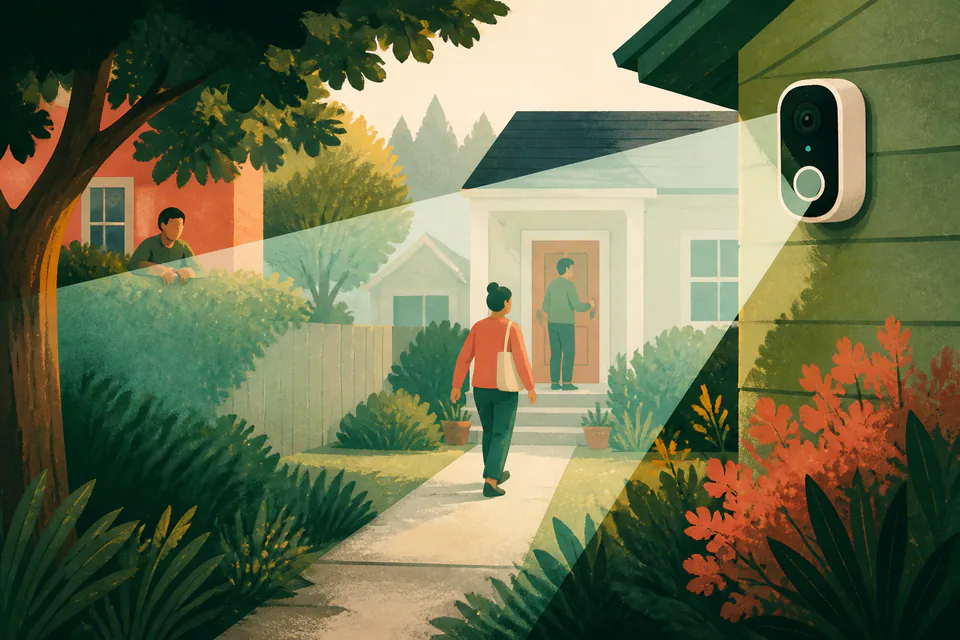
Your neighbor's doorbell camera watches everyone entering your home. Is that their business?
A neighbor installs a doorbell camera that records your front yard and every visitor entering your home. They say the wide angle is necessary to capture package theft and the footage is rarely reviewed.
Where should private security stop in a shared public view?