Nearly 8 In 10 Young Adults Are in Early Stages of Metabolic Disorder, Study Finds
7 min
Listen through the publisher, then discuss the episode here or arrange an in-person Roundtable. Your city determines where to meet.
Roundtables are designed for groups of four, with a shared subject and room for everyone to speak. Come for discussion, with no dating expectation.
Nearly 8 in 10 young adults studied had at least one cardiovascular-kidney-metabolic (CKM) risk factor, even though their average age was only 22.9 years Young adults with more advanced CKM problems had cardiovascular health scores about 13 points lower than those without CKM risk factors Ultrasound revealed thicker carotid artery walls as CKM advanced, showing that early arterial injury was already detectable in people barely into their 20s Even young adults without CKM risk factors often fell short of high cardiovascular health, highlighting an opportunity to improve metabolic health before disease develops Cutting excess linoleic acid from seed oils, eating enough carbohydrates and protein, staying active and tracking insulin resistance are practical starting points for supporting metabolic health early
Episode information is provided by the publisher. Listening takes place on the publisher’s service.
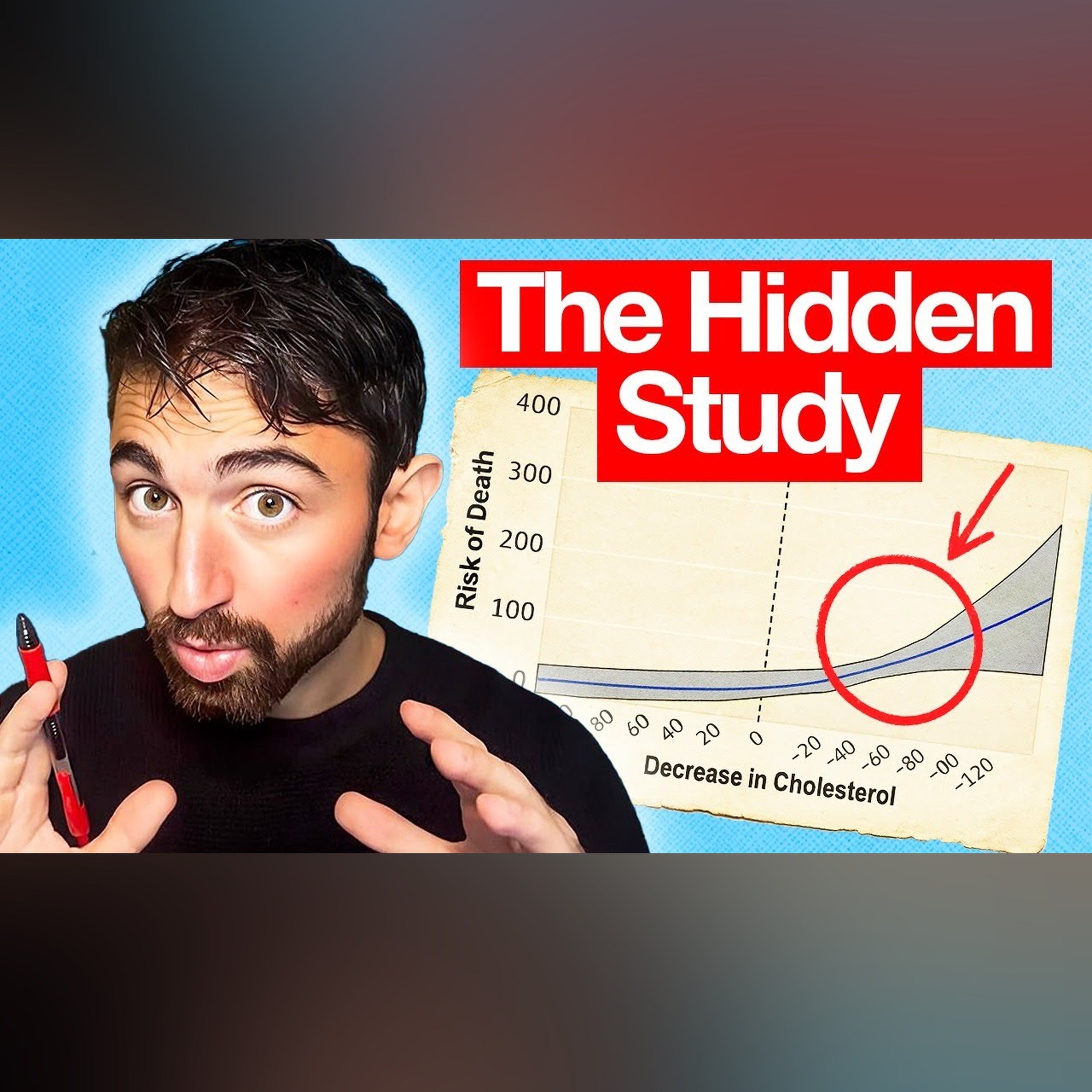
For the references, extra details and early access to context, see the newsletter: https://open.substack.com/pub/staycuriousmetabolism/p/lowering-cholesterol-killed-a-study?r=40ekz2&utm_campaign=post&utm_medium=web&showWelcomeOnShare=true (https://open.substack.com/pub/staycuriousmetabolism/p/lowering-cholesterol-killed-a-study?r=40ekz2&showWelcomeOnShare=true) Description: What if lowering cholesterol didn’t save lives—but actually increased the risk of death? In this video, I break down a forgotten ‘gold-standard’ randomized controlled trial from the late 1960s and early 1970s: the Minnesota Coronary Experiment. This uniquely rigorous study tested whether replacing saturated fat (butter, beef) with vegetable oils rich in linoleic acid would reduce heart disease and mortality. The results were shocking. Cholesterol dropped—but deaths increased. Even more unsettling, the greater the cholesterol reduction, the higher the risk of death. Cardiovascular outcomes didn’t improve either. The
Today, I’m honored to connect with Dr. Troy Badger. He is a board-certified cardiologist and interventionalist and the founder of Cardiostrong, a concierge preventive cardiology clinic in Provo, Utah, focused on reducing cardiovascular risk, optimizing metabolic health, and improving strength and cardiorespiratory fitness for executives and athletes. In today’s conversation, we discuss Dr. Badger’s gender- and age-specific approach to heart health, including treatment differences for men and women, and diagnoses such as INOCA, SCAD, vasospastic disease, and Takotsubo. We examine emotions and their influence on heart health, coronary ischemia and cardiomyopathies, labs and diagnostics, how Dr. Badger assesses risk in his patients, and the differences between a CAC and a CCTA. Dr. Badger also shares the labs he finds essential for all patients and discusses the role of VO2 Max, cardiovascular training, and lifestyle—specifically nutrition, the use of GLP-1 drugs, and a multidisciplinary
The Butterfly by Hans Christian Andersen — A Short Calming Bedtime Story for Sleep & Insomnia | Books at Bedtime Drift off to sleep with The Butterfly by Hans Christian Andersen, a short, gently funny fairy tale read aloud by Martin Hewlett on Books at Bedtime, the sleep story series from Calming Anxiety. There was once a butterfly who wished for a bride, and naturally he wanted to choose the very prettiest one from among the flowers. He asks the wise little daisy, Marguerite, to tell him which flower he should marry, but she stays silent. So off he flies through the garden to begin his wooing. It is early spring, and the crocus and the snowdrop are lovely but rather formal. The anemones are a little sour, the violet too sentimental, the lime blossoms too small, and the apple blossoms might fall at the first wind that blows. The pea-blossom almost wins him, until he spots her withered sister. Spring turns to summer, summer turns to autumn, and still the butterfly has not decided, until
Is your body weight stable, but you're still not eating enough to properly fuel your training, recovery, and overall health? Introducing Why Stable Weight Doesn't Always Mean You're Eating Enough from Jeff Hoehn of the Mind Muscle Connection Podcast (https://www.buzzsprout.com/1508401). Just because your weight isn't changing doesn't necessarily mean you're adequately fueled. In this episode, Jeff breaks down why maintaining a stable body weight doesn't always mean you're meeting your body's energy needs, especially if you're training hard, staying lean, or spending long periods dieting. You'll learn: Why stable body weight doesn't automatically mean adequate energy availability Who is most at risk of underfueling, even when their weight isn't changing How high training output, staying too lean, and chronic dieting can contribute to low energy availability The potential signs of underfueling, including changes in performance, recovery, hormones, and menstrual health Why spending too lo
If you're training hard but feeling wiped, eating a restricted diet for your gut, or just never hungry after a tough workout, you might not be getting the protein you need. This episode breaks down how much you really need and how to get it without upsetting your gut. YOU'LL TAKEAWAY: Macronutrients and calories 101, and how restrictive diets throw off your balance How your body digests protein, and why it matters before workouts The many roles of protein, from enzymes and iron storage to post-workout appetite How much protein you need, plus 3 easy low FODMAP ways to boost it — RESOURCES & LINKS MENTIONED: ⤵️ Want high touch coaching support for IBS & fuelling performance? Apply for coaching. (http://gutfitnutrition.com/apply) Free Training: How to Control IBS So You Can Fuel Your Training Without a Lifelong Low FODMAP Diet (https://gutfitnutrition.com/heal-ibs-training-live) Supporting your immune system when you're sick (Ep. 70) (https://open.spotify.com/episode/5bCto0jWLcbC5hQW4hrH6
I thought I'd seen just about everything at the sex club… until Mistress Mia told me a story that nearly made me fall out of my chair. She's back for a deliciously naughty debrief, and apparently what happens behind those doors is even wilder than what I witnessed firsthand. There's a couple whose particular arrangement has me completely fascinated, a rather attentive young admirer who discovered one of my unexpected weak spots, and a party guest who got the shock of his LIFE. But the really interesting part is what Mistress Mia notices about people the moment they walk through her doors—and how quickly their carefully constructed inhibitions can disappear. Ohhh, I have questions, I have new fantasies, and I'm beginning to think my sex-club adventures are only getting started. THE PRIVATE PODCAST IS HERE! To learn more about Mistress Mia, go to: callmemistressshow.com (https://www.callmemistressshow.com/)
Glycine is an amino acid that helps build collagen and is involved in regulating inflammation, and researchers are exploring its role in healthy aging, yet your body may produce less of it as you get older Modern diets often lack glycine-rich connective tissues, such as bones, tendons and cartilage, making grass fed beef bone broth, gelatin and collagen-rich cuts of meat valuable additions to your meals Animal studies described by biochemist Joel Brind, Ph.D., found that glycine supplementation extended lifespan in rats and mice by approximately 10% to 15%, although researchers have yet to establish whether it produces similar benefits in humans In a small, three-month placebo-controlled trial of 74 adults with Type 2 diabetes, those given glycine had significantly lower HbA1c and reduced inflammatory markers compared with placebo, although larger studies are needed Research suggests glycine may help your body release heat and lower its core temperature before sleep, while collagen-ric
"The Big Secret" documentary portrays how the U.S. healthcare system was reshaped by corporate and pharmaceutical forces, replacing natural healing with a drug-centered, profit-driven medical monopoly The shift began with the Flexner Report, backed by Carnegie and Rockefeller interests, which redefined medical legitimacy and opened the door to corporate control over healthcare Modern medicine has wrongly vilified cholesterol, leading to widespread statin use that can undermine hormone health, cognitive function, and metabolic resilience Industrial agriculture, glyphosate, and processed foods strip essential minerals from the food supply. This has been linked to widespread nutritional deficiency and chronic disease across generations The real "big secret" is that health can restore itself once you eliminate what disrupts it and provide the inputs it's always required
For thousands of years, olive oil was valued as much as a medicine as a food, and modern research has largely supported that reputation. In large randomized trials, adding extra virgin olive oil to a Mediterranean diet lowered rates of heart attacks, strokes, diabetes, and atrial fibrillation Those benefits come not from the oil's fat, but from a small fraction of compounds (e.g., polyphenols) that refining destroys and that degrade with time, heat, and light. Two bottles labeled extra virgin can differ more than tenfold in them, which means the right oil delivers its benefits in a teaspoon, and the wrong one delivers little at any dose One of these compounds, oleocanthal, was discovered because it stings the throat the same way ibuprofen does, and it was then found to block the same enzymes. In clinical trials, olive oil has lowered markers of inflammation, the Mediterranean diet has the most evidence of any diet for rheumatologic patients, and in a small trial, olive oil applied dire
Sporting rivals should be able to enjoy competition without hostility between supporters.
Share your view, then see how readers voted. No sign-in required. This poll is shared across stories.
Do you agree or disagree?
Common Quandary
A Common Quandary to discuss
Another conversation to explore, separate from this news story.
Your coworker's religious holiday means you work the unpopular shift again. Is that fair?
A workplace accommodates religious observances by asking other employees to cover unpopular shifts. One coworker objects that nonreligious commitments can be equally meaningful but receive less formal protection.
Does equal respect require treating every kind of commitment identically?