Ngaire Woods, Founding Dean of the Blavatnik School of Government, on Governance and Leadership
42 min
Listen through the publisher, then discuss the episode here or arrange an in-person Roundtable. Your city determines where to meet.
Roundtables are designed for groups of four, with a shared subject and room for everyone to speak. Come for discussion, with no dating expectation.
Cristian Iftodii and Marc Naro talk with Professor Ngaire Woods, founding Dean of the Blavatnik School of Government and Professor of Global Economic Governance at the University of Oxford. They discuss the state of international economic cooperation, what separates governments that work from those that don’t, and what she has learned from building a school dedicated to better government. Hosted by Cristian Iftodii and Marc Naro. Recorded at the Blavatnik School of Government, University of Oxford.
Episode information is provided by the publisher. Listening takes place on the publisher’s service.
Remove your personal information from the web at https://joindeleteme.com/SPACETIME One of the most important reasons we go to space is to know our own planet better. Today I'm going to tell you about an orbiting facility that literally watches Earth's biosphere breath and grow and die with incredible resolution. I'll talk about its profound existential and economic importance, and about why it's in danger of being lost. PBS Member Stations rely on viewers like you. To support your local station, go to:http://to.pbs.org/DonateSPACE Sign Up on Patreon to get access to the Space Time Discord! Check out the Space Time Merch Store Pale Blue Dot By Carl Sagan Search the Entire Space Time Library Here: https://search.pbsspacetime.com/ Hosted by Matt O'Dowd Written by Fernando Franco Félix & Matt O'Dowd Post Production by Leonardo Scholzer, Yago Ballarini & Stephanie Faria Directed by Andrew Kornhaber Associate Producer: Bahar Gholipour Executive Producer: Andrew Kornhaber Executive in Charge
Screen time in schools, kids and AI: why Australian students just posted their worst ever reading and maths results. The federal Education Minister says screens are part of the problem. Sweden led the world putting tablets in classrooms and is now pulling them back out. NSW will cap kindy kids at 15 minutes of screen time a day from next year. So were the "hippie" Steiner schools ahead of their time all along? Karl sits down with Andrew Hill, CEO of Steiner Education Australia, which represents 53 schools that keep screens out of early childhood classrooms. Andrew explains why some Silicon Valley tech executives sent their own kids to a screen-free Steiner school, who has profited from a laptop for every kid ("the terrible thing about handwriting is that it's free"), and why he believes Bluey's creator modelled the show's school on a Steiner school in Queensland. Karl also puts the tough questions: Will kids without screens be left behind? Is it all woo-woo? What about bullying, fees a
As 2026 enters its final stretch, where are the opportunities and risks for two of Canada's most closely watched sectors? Join Robert Reynolds, Equity Research Analyst, as he shares his latest outlook on Canadian banks and industrial companies heading into year-end. From earnings trends and economic headwinds to capital deployment and sector leadership, Robert discusses the key themes shaping the final quarter of the year and what investors should be watching as 2027 approaches. Recorded on November 13, 2026. -- Perspectives de fin d’année des banques et sociétés industrielles – Robert Reynolds Pour une version avec des sous-titres français, veuillez consulter Alors que 2026 entre dans sa dernière ligne droite, quelles occasions et quels risques se dessinent dans deux des secteurs les plus suivis au Canada? Joignez-vous à Robert Reynolds, analyste en recherche sur les actions, alors qu’il présentera ses plus récentes perspectives sur les banques et les sociétés industrielles canadienne
November 21, 2026 On November 22, 1963, President John F. Kennedy and First Lady Jacqueline Kennedy were visiting Texas, They hoped to heal a rift in the Democratic Party, as the white supremacists who made up the base of the party’s southern wing loathed the Kennedy administration for its support for Black rights, That base was furious about the administration’s backing of James Meredith, the first Black American to enroll at the University of Mississippi, By going to Dallas, Kennedy hoped to mend some fences in the state Democratic Party, The President's motorcade began with high spirits, Lady Bird Johnson thought, when she heard three shots, that it “must be firecrackers or some sort of celebration,” The Secret Service, knowing what had happened, rushed the motorcade to a hospital, When Vice President Johnson and Lady Bird were told that the President was dead, officials rushed LBJ away, In the confusion - in addition to the murder, it wasn't clear how extensive the plot was against
Having been jailed for 10 years and six months, disgraced entertainer Russell Brand remains very much in the headlines. Since his conviction, six more women have come forward with allegations of misconduct. Meanwhile, Brand's voice and image continue to be broadcast around the world, and not just in the form of news stories and documentaries. Brand's X account remains open, and his popular YouTube channel recently uploaded a pre-recorded episode of his Sunday Service programme that also featured a post-sentencing letter penned by Brand and read aloud by his wife, Laura Gallacher. In addition, the UK government is under pressure to change laws related to the age of sexual consent in the wake of Brand’s imprisonment. Fionnán Sheahan is joined by Daily Mail feature writer Fred Kelly and Irish Independent features journalist Kirsty Blake Knox to look at the impact that the jailing of Russell Brand has had on the disgraced comedian’s brand. Hosted on Acast.
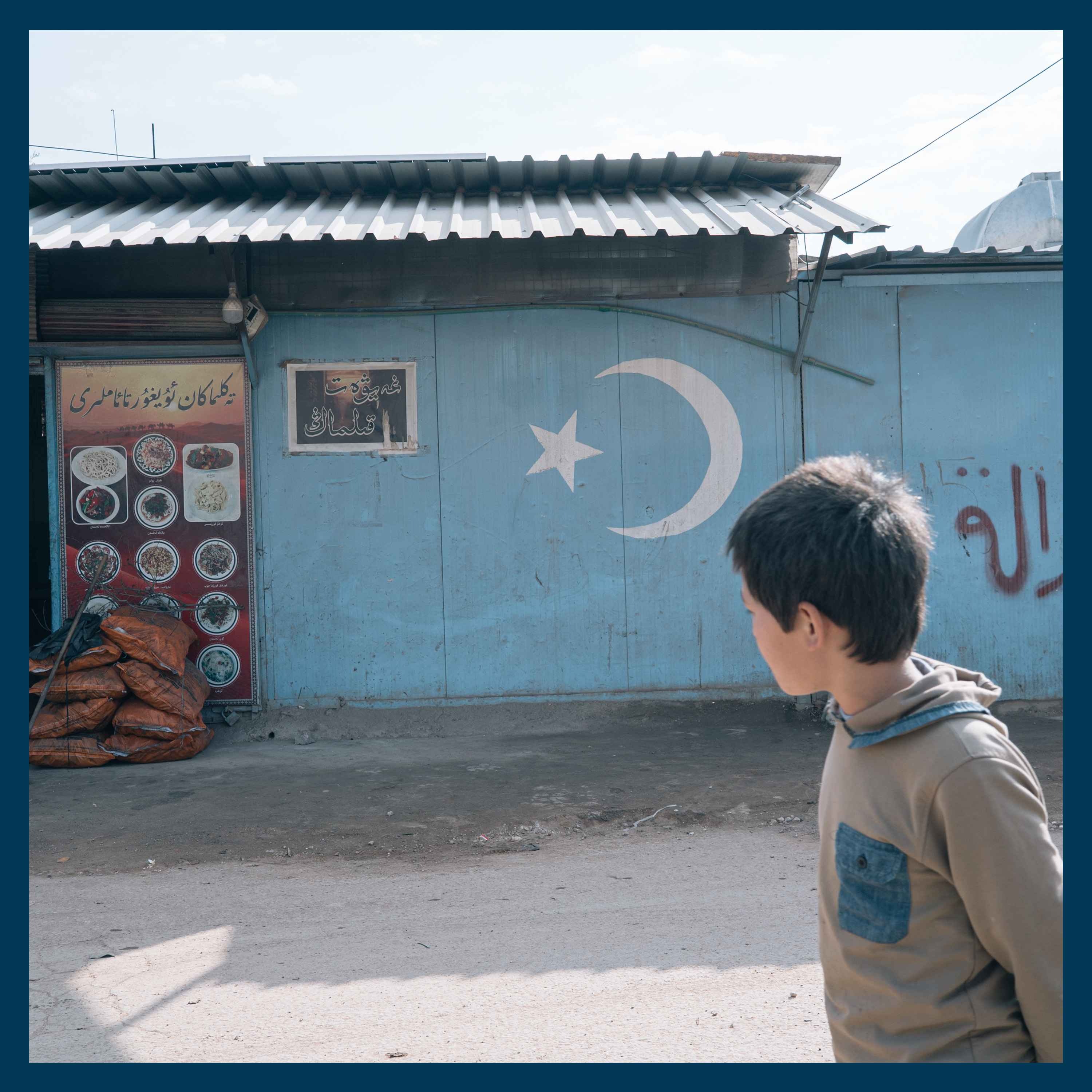
Over 20,000 Uighur refugees escaped repression in China by fleeing to Syria at the height of its brutal civil war. Originally from north western China, the Muslim minority fought fiercely against the Assad regime. But now that the war is over, they live in limbo, unable to return home or even contact loved ones while the Chinese state continues its campaign against their community. So will the new Syrian government honour their sacrifice? Or try to stay on good terms with the Chinese state? Our reporter has been to northern Syria to meet them. Guest: Anthony Loyd, special correspondent, The Times Host: Luke Jones Producer: Robyn Simon and Harry Stott We want to hear from you - email: [email protected] Read more: They fought for Syria’s freedom. Will they fight for their own? (https://www.thetimes.com/world/middle-east/article/uighur-fighters-syria-xinjiang-china-cfv5733d8) Further listening: SAS in Syria: the untold murder probe (https://pod.fo/e/6c8ea9) Clips: The New York Times,
Courts should protect careful consideration even when this slows case processing.
Share your view, then see how readers voted. No sign-in required. This poll is shared across stories.
Do you agree or disagree?
Common Quandary
A Common Quandary to discuss
Another conversation to explore, separate from this news story.
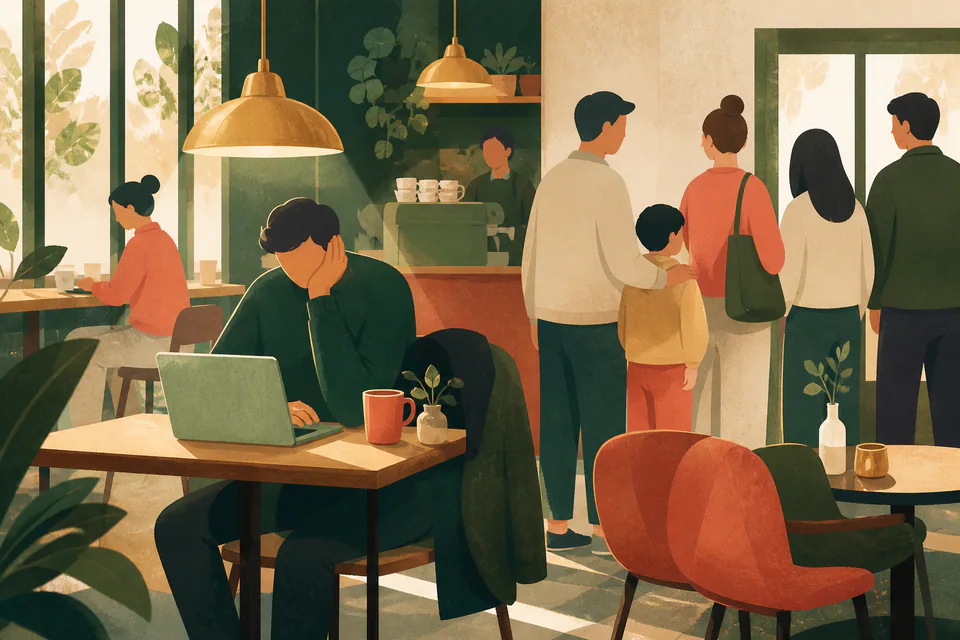
One coffee, four hours, last table. Can the café ask you to leave?
A neighborhood café has become a popular remote workplace. Some guests buy one drink and occupy tables for hours, while families and friends regularly leave because they cannot sit together.