English-language podcasts

You Are Not A Frog

Nice Isn’t Kind: Hard Conversations for High Achievers

74 min

Listen through the publisher, then discuss the episode here or arrange an in-person Roundtable. Your city determines where to meet.

Roundtables are designed for groups of four, with a shared subject and room for everyone to speak. Come for discussion, with no dating expectation.

If you nod in a meeting, then say what you really think afterwards, this episode is for you. Our ingrained programming tells us we have to please everyone all the time to feel good enough, so we choose ‘nice’ to keep the peace. Unfortunately, that stores the pain up for later, and it will affect your next decision, and the one after that. In this episode with Alice Driscoll and Louise van Haarst, co-founders of The Power House and authors of Smart Conflict, we get into how to have the conversation that would actually lighten the load on us - including how to tell a colleague hard truths, and how to repair when you get it wrong. We cover: Nice vs kind - why nice often withholds the information someone needs to do well You and me versus the problem - how to stop a rota or task issue turning into you versus me The Responsibility Trap - why the conflict ends up being between an exhausted consultant and a junior doctor instead of where it belongs High support, high challenge - why a lovely, supportive leader who never challenges can become an accidental arsehole Repair - why one apology is rarely enough, and the small gestures that put most ruptures in relationships right A phrase to open a hard conversation, how to say no to the knock on the door, and permission to go back and try again This episode is for you if... You are a high achiever in a leadership role who has to have the conversation nobody else will, has to make the call someone disagrees with, and lies awake replaying a decision you had to make. You can deliver bad news to a patient or client, but you freeze when the problem is a colleague you have to see tomorrow. Hard as that is, it makes sense - but it can be different. You are not a frog. You Are Not a Frog — for GPs, hospital doctors and other high-stakes professionals who want to thrive, not just survive. Podcast: You Are Not a Frog with Dr Rachel Morris Email list: https://youarenotafrog.com/welcome (https://youarenotafrog.com/welcome/)/ (https://youarenotafrog.com/about/) Website: https://youarenotafrog.com/ Guests: Alice Driscoll and Louise van Haarst are co-founders of The Power House and authors of Smart Conflict: How to Have Hard Conversations at Work. Together they train leaders in how to do conflict well, high support, high challenge communication and repair. Team diagnostic tool: https://www.thepowerhouse.company/diagnostics Learn more about The Power House Company: https://www.thepowerhouse.company/ Read Smart Conflict®: https://mybook.to/SmartConflict Mentioned in this episode: ⭐️ Book Your FrogFest Ticket Now (https://you-are-not-a-frog.captivate.fm/frogfest)

Episode information is provided by the publisher. Listening takes place on the publisher’s service.

Listen at the source ↗

Featured places to meet in Palo Alto, CA

Explore these places and arrange a conversation through ThinkMatch.

City guide for Palo Alto, CA

More from You Are Not A Frog

You Are Not A Frog

Is It Me, or Is It the System? Shame in Medicine.

60 min

You snap at a trainee you respect, then lie awake replaying it — I'm not coping, I'm not cut out for this, maybe I'm not good enough. If you recognise that spiral, this episode is for you. I talk with philosopher Luna Dolezal about why good leaders snap at the people they most want to help, and what shame has to do with burnout, perfectionism and overworking. Our ingrained programming tells us we have to please everyone all the time to feel good enough, so a patient or client complaint feels very different and can be devastating. Luna shares over a decade of research on shame in medicine: why perfectionism is trying to stay slightly ahead of shame, the 4 ways we defend against shame without realising it, and why if you don't transform it, you will transfer it. You will learn how to spot shame in yourself and in colleagues — lashing out, withdrawing, or compensating through overwork — and a simple question to use tonight: is it me, or is it the world? Hard as that is to hear, it helps y

Discuss this episode

You Are Not A Frog

You're Not Confused. You're Scared of the Conversation.

19 min

t's Saturday, you're out with friends and you're nodding along, but part of you isn't really there. You're still turning over that decision you have to make. You may tell yourself you're confused, but in your heart of hearts, you know what you really want. In this re-release from October 2024, we get into why the decision itself isn't wrong - it's the next step that feels impossible, because it might mean letting someone down and having the conversation nobody else will have. I'm bringing it back while I'm writing my book, How to Say No When Someone Might Die, out May 2027, because our ingrained programming tells us we have to please everyone all the time to feel good enough - and it will affect your next decision, and the one after that. If you learn to ask a different question, it may help you carry it differently. We cover: Why telling yourself you're confused is often they worry about the how, not the what The question I still use almost every week: in my heart of hearts, what do I

Discuss this episode

Community Poll

Keeping food affordable should not require producers to work for an unsustainable income.

Share your view, then see how readers voted. No sign-in required. This poll is shared across stories.

Do you agree or disagree?

Choose one answer

Common Quandary

A Common Quandary to discuss

Another conversation to explore, separate from this news story.

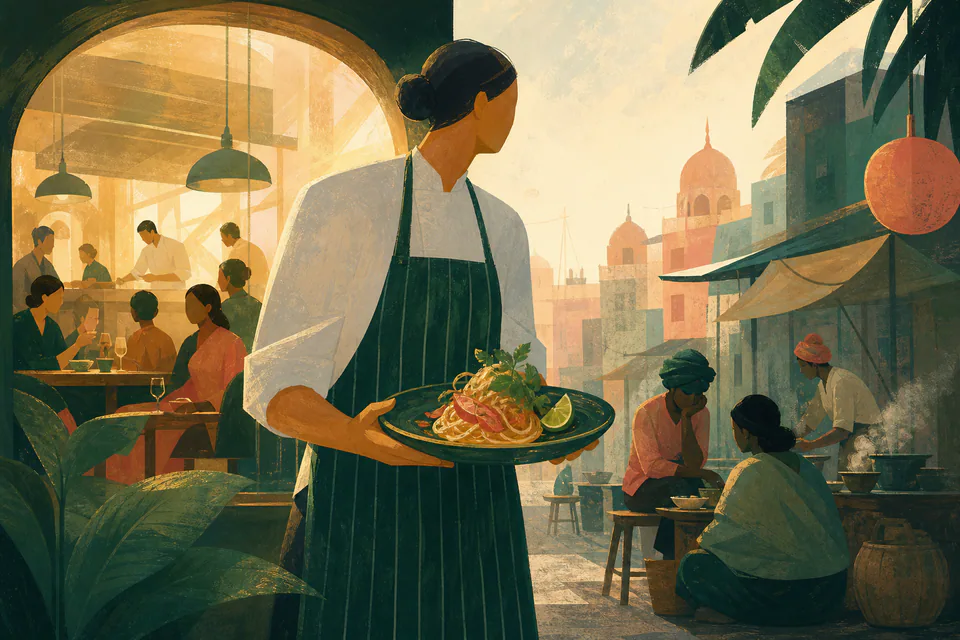
An outsider becomes famous cooking another culture's food. Appreciation or taking over?

A chef becomes known for food from a culture outside their own after years of study with respected cooks. The restaurant is successful, while small businesses run by people from that culture struggle for attention.

When does appreciation become taking opportunity from the people who created a tradition?

Explore this quandary