Listen through the publisher, then discuss the episode here or arrange an in-person Roundtable. Your city determines where to meet.
Roundtables are designed for groups of four, with a shared subject and room for everyone to speak. Come for discussion, with no dating expectation.
You snap at a trainee you respect, then lie awake replaying it — I'm not coping, I'm not cut out for this, maybe I'm not good enough. If you recognise that spiral, this episode is for you. I talk with philosopher Luna Dolezal about why good leaders snap at the people they most want to help, and what shame has to do with burnout, perfectionism and overworking. Our ingrained programming tells us we have to please everyone all the time to feel good enough, so a patient or client complaint feels very different and can be devastating. Luna shares over a decade of research on shame in medicine: why perfectionism is trying to stay slightly ahead of shame, the 4 ways we defend against shame without realising it, and why if you don't transform it, you will transfer it. You will learn how to spot shame in yourself and in colleagues — lashing out, withdrawing, or compensating through overwork — and a simple question to use tonight: is it me, or is it the world? Hard as that is to hear, it helps you separate what is yours to own from what was never yours to carry. In this episode: Perfectionism as a shame defence The Shame Compass: lash out, attack self, withdraw, compensate Transform it or transfer it down the hierarchy Is it me or is it the system? How to build shame competence at work About our guest: Luna Dolezal is Professor of Philosophy and Medical Humanities at the University of Exeter; she is also co-Founder and co-Director of The Shame Lab. She has researched shame and shame in medicine for almost 20 years. Join our email list: https://youarenotafrog.com/welcome (https://youarenotafrog.com/welcome/)/ (https://youarenotafrog.com/about/) You are not a frog. Mentioned in this episode: Say it So You’re Heard (https://www.shapestoolkit.com/communication-cribsheet) A FREE crib sheet for clear and calm communication in high-stress moments.
Episode information is provided by the publisher. Listening takes place on the publisher’s service.
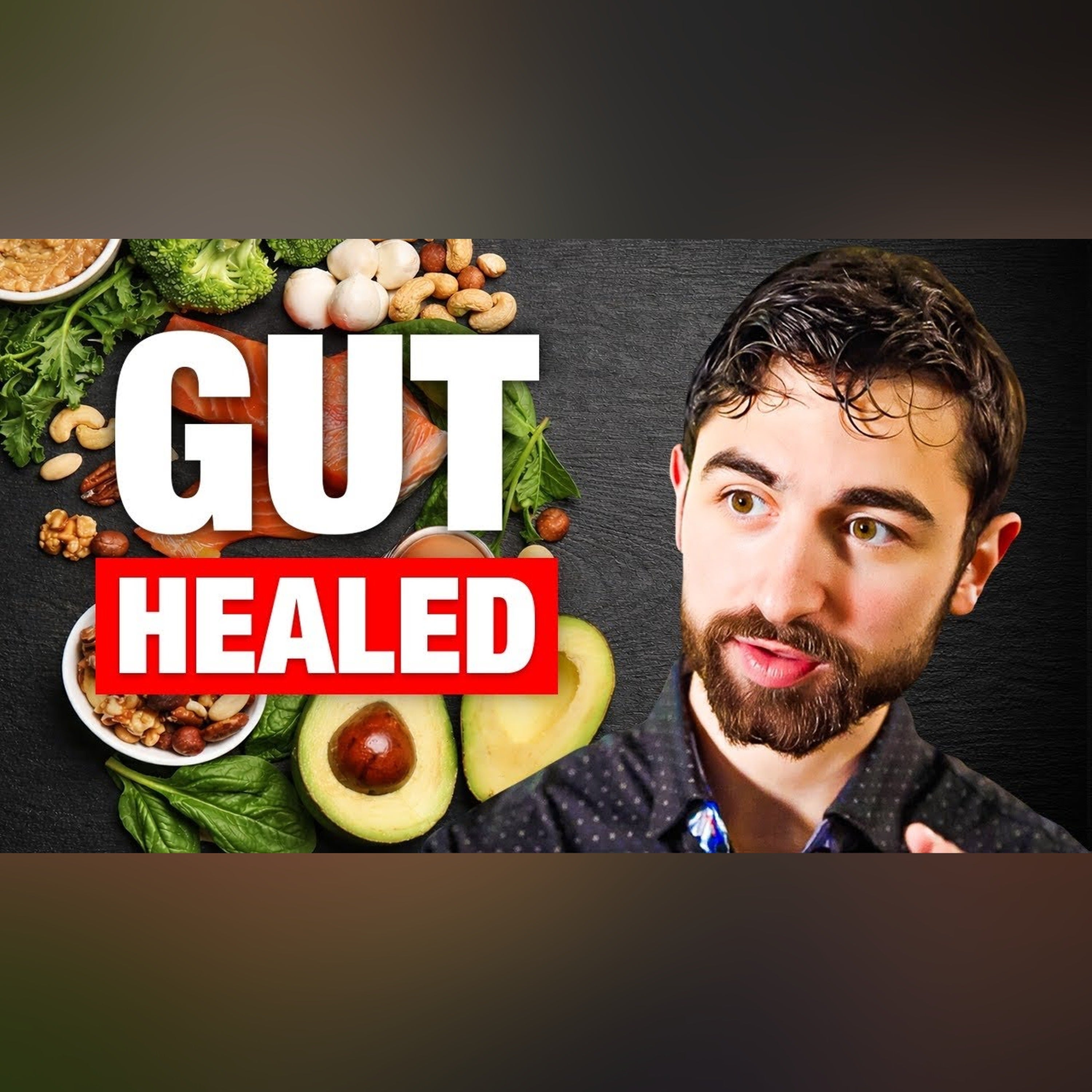
For extra details and all references, see this newsletter: https://staycuriousmetabolism.substack.com/p/a-keto-diet-cured-my-inflammatory?r=40ekz2 Description: There was a time when I was dying from inflammatory bowel disease. It was my rock bottom. Out of desperation, I tried a ketogenic diet—and within a week, everything changed. My symptoms stopped, inflammation markers dropped, and follow-up testing showed no active disease. In this video, I unpack what may have happened biologically. We walk through human and animal data showing how a ketogenic diet reshapes the gut microbiome, suppresses inflammatory TH17 immune cells, and reduces inflammation not just in the intestines, but system-wide. We even look at fecal transplant experiments demonstrating that the ketogenic microbiome itself can transfer anti-inflammatory effects. This isn’t a promise or a prescription. It’s a personal story, grounded in real data, that explores the tension between lived biology and what medicine has—or ha
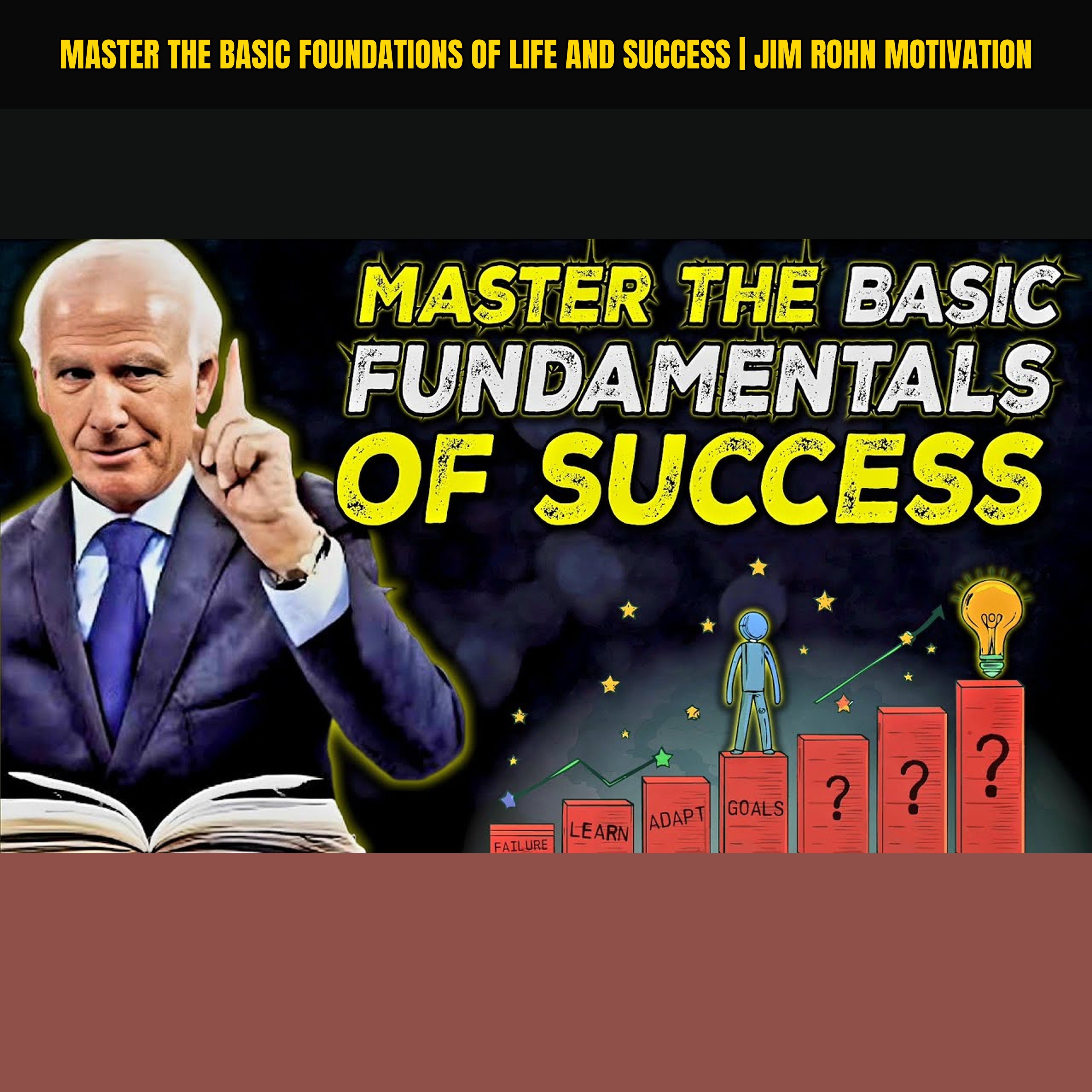
#JimRohnMotivation #JimRohn #JimRohnSpeech Success is not about complexity—it is about mastering the fundamentals. Most people spend their lives looking for shortcuts, hacks, and quick fixes, only to stay stuck in the same cycle of frustration and mediocrity. The truth is, success is built on simple habits, simple disciplines, and simple decisions—repeated consistently over time. In this Jim Rohn Motivation video, learn the timeless principles that separate those who win from those who quit. Key Topics From This Motivational Video: Why most people fail—not because they are not capable, but because they are not consistent The difference between working hard once in a while and executing daily at a high level Why mindset, habits, and discipline are more important than talent or intelligence How the most successful people in the world operate with precision and focus The truth about motivation—it is unreliable, and success comes from discipline This Jim Rohn Motivational Video Is Perfect
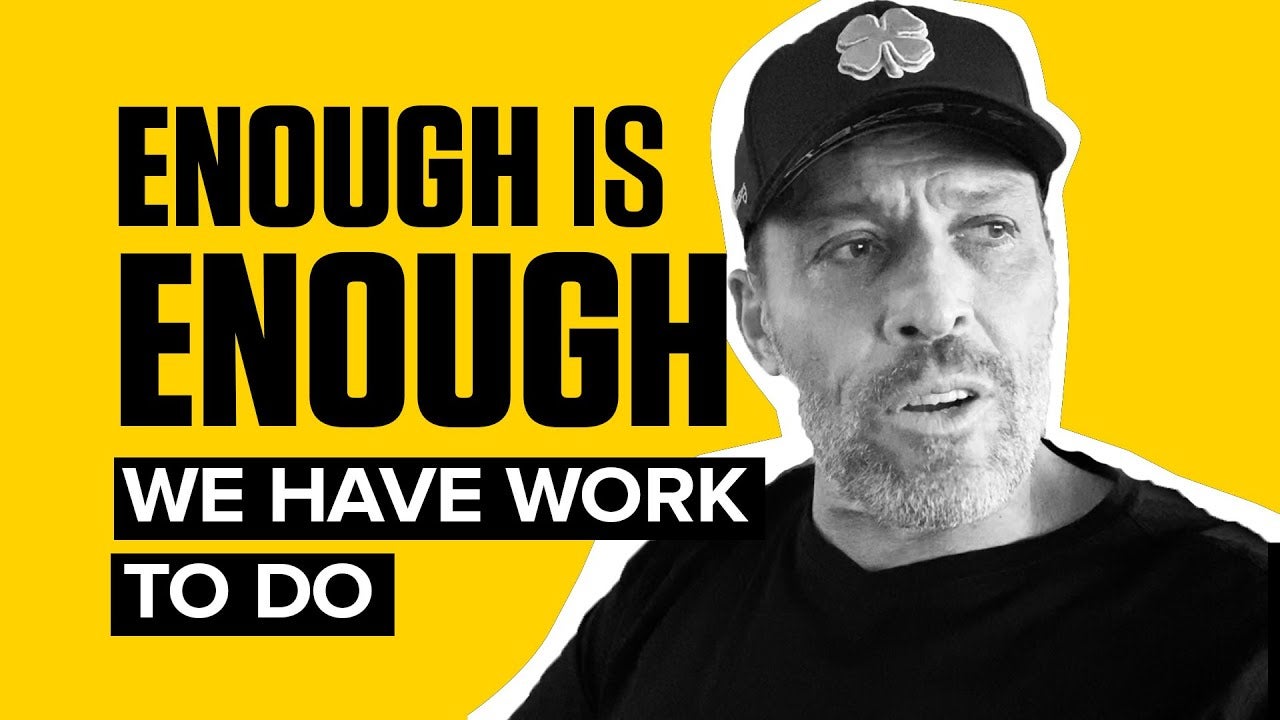
ENOUGH IS ENOUGH. WE HAVE WORK TO DO. Uploaded 04-06-20 Throughout my 40+ year career, I’ve been obsessed with helping people transform their quality of life. This can only be done when we realize: THINGS ONLY GET BETTER WHEN WE GET BETTER. Things only change when WE change. My call has ALWAYS been to RISE to the challenge that life brings to us. To find a way to do better, not only for ourselves and our own family, but for our communities, and the greatest good of our brothers and sisters on the planet. The unconscionable murder of George Floyd and countless others before him are an urgent call to ALL OF US in this country and all over the globe. I AM COMMITTED to doing all I can to be a part of the solution, and to help begin to put a STOP to racial injustice and violence, and the tragic loss of innocent life. If you’re reading this and are anything like me, you know the power of a TRUE COMMITMENT. ️ Join me now in this commitment to JUSTICE, HARMONY, COMPASSION, HIGHER TRUTH, LOVE,
The world’s most astonishing science experiment, simply explained. On the border between France and Switzerland is the biggest science experiment humanity has ever built. Over a 100 meters underground, there’s a tunnel 27 kilometers long in a big loop under nearby homes, businesses, and farms. Inside that tunnel, scientists built a blue tube big enough to crawl through, and inside that tube, they put two pipes that they keep colder and emptier than outer space. Down those pipes, they fire particles smaller than atoms in opposite directions…. and push them faster and faster… until when they’re almost at the speed of light… they SMASH TOGETHER. This underground particle-smasher is also known as the Large Hadron Collider at CERN. It took thousands of scientists from over nearly 100 different countries $5 billion dollars and 30 years to plan and build. My question is: Why? Why did they do that??? Why spend so much money and time to smash particles underground? And now… why do so many scien
Hello Beautiful, I'm so grateful you're here with me Calm doesn't have to be something you chase or force yourself to feel. This 3 hour guided sleep meditation invites you to slow your breathing, release built-up tension, and gently settle your mind after a demanding day. Take your time arriving here, knowing that rest is available even when everything inside you hasn't become perfectly quiet. Love, Katie TAKE THE FREE QUIZ! ♀️What kind of meditator are you? Take the free quiz & discover your meditation style now! Want an ad-free meditation experience?
🇺🇸 TWO NAVY SEALS. TWO INCREDIBLE JOURNEYS. ONE POWERFUL MISSION TO TRANSFORM YOUR FINANCIAL FUTURE! Michael Jaco welcomes fellow former Navy SEAL Larry Yatch, founder of TruPath Mastery, for an eye-opening conversation about success, leadership, financial trauma, and the hidden subconscious patterns that can keep even the most accomplished people from reaching their full potential. With 24 years as a Navy SEAL and 11 years as a CIA security operative, Michael shares the powerful lessons of mental discipline, intuition, and personal transformation that shaped his extraordinary journey. Larry brings 10 years of Navy SEAL service and an impressive career advising Fortune 50 executives. But despite achieving tremendous professional success, he discovered that the survival patterns that once made him successful were also keeping him trapped in his own business. THE BIG REVELATION: YOUR MONEY HABITS MAY HAVE VERY LITTLE TO DO WITH MONEY! From childhood programming and fear of scarcity to
t's Saturday, you're out with friends and you're nodding along, but part of you isn't really there. You're still turning over that decision you have to make. You may tell yourself you're confused, but in your heart of hearts, you know what you really want. In this re-release from October 2024, we get into why the decision itself isn't wrong - it's the next step that feels impossible, because it might mean letting someone down and having the conversation nobody else will have. I'm bringing it back while I'm writing my book, How to Say No When Someone Might Die, out May 2027, because our ingrained programming tells us we have to please everyone all the time to feel good enough - and it will affect your next decision, and the one after that. If you learn to ask a different question, it may help you carry it differently. We cover: Why telling yourself you're confused is often they worry about the how, not the what The question I still use almost every week: in my heart of hearts, what do I
If you nod in a meeting, then say what you really think afterwards, this episode is for you. Our ingrained programming tells us we have to please everyone all the time to feel good enough, so we choose ‘nice’ to keep the peace. Unfortunately, that stores the pain up for later, and it will affect your next decision, and the one after that. In this episode with Alice Driscoll and Louise van Haarst, co-founders of The Power House and authors of Smart Conflict, we get into how to have the conversation that would actually lighten the load on us - including how to tell a colleague hard truths, and how to repair when you get it wrong. We cover: Nice vs kind - why nice often withholds the information someone needs to do well You and me versus the problem - how to stop a rota or task issue turning into you versus me The Responsibility Trap - why the conflict ends up being between an exhausted consultant and a junior doctor instead of where it belongs High support, high challenge - why a lovely,
Governments should remove practical barriers to voting, even when doing so costs more.
Share your view, then see how readers voted. No sign-in required. This poll is shared across stories.
Do you agree or disagree?
Common Quandary
A Common Quandary to discuss
Another conversation to explore, separate from this news story.
Your best friend is an AI that profits when you stay lonely. Is the friendship real?
A lonely adult considers an AI companion their closest confidant. The service is always patient and supportive, but the company profits when users spend more time engaged with it.
Does a comforting system have a duty to make itself less necessary?