On 4th March 2023, UN member states agreed a historic treaty that had been over fifteen years in the making. The High Seas Treaty is the first ever treaty to protect the world’s oceans outside national boundaries. The aim is to meet the 30 by 30 biodiversity target, protecting 30% of the world’s oceans by the year 2030. Also known as the open sea or international waters, the high seas begin at the limit of countries’ exclusive economic zones. That means up to 370km, or 200 nautical miles, from the coastline. They account for 64% of the world’s oceans, and have been referred to as the last true wilderness, given how much mystery still lies within. Why is protecting the oceans so important? What measures are expected to come from the treaty? In under 3 minutes, we answer your questions! To listen to the last episodes, you can click here: How to make the most out of a rental property? (https://originals.bababam.com/do-you-really-know/202303090400-how-make-most-out-rental-property) What is
This episode is brought to you by Sarmaya Partners. Learn more about Sarmaya’s LENS ETF, their full data and comparison, including performance here: https://sarmayaetf.com/ In this episode of Other People's Money, Max Wiethe sits down with Muddy Waters Capital founder Carson Block to discuss his firm's explosive new short thesis on Nvidia. Block breaks down the alarming connections between a former Nvidia executive and a former SMCI executive recently implicated in a major chip smuggling scandal. The conversation dives deep into the national security implications of dual-use technology and how the ongoing geopolitical tug-of-war between the US and China is reshaping the semiconductor sector. Tune in to hear why Block believes this scandal goes far beyond CEO indiscretions and could trigger a massive regulatory reckoning for Silicon Valley's biggest players. Follow Muddy Waters on X: https://x.com/muddywatersre Follow Max on X: https://x.com/maxwiethe Follow Other People’s Money on: App
The fight for the future of car racing has begun... If you want more optimistic stories about technology, subscribe to support our show! You already know about Formula 1. The car racing sport is famous around the world and is skyrocketing in popularity in the US in part because of the Netflix series Drive To Survive. But Formula 1 has a problem. More and more the cars that we drive are going fully electric, and the cars that they drive… aren’t. That matters, because the real reason F1 gets all this money and attention is that big companies are investing in and advertising their cutting edge tech. If that tech gets outdated, it loses the point - and the extra investment. What is the future of car racing? If it’s electric, does F1 change? Or is someone else going to get there first? Enter Formula E, the all-electric Formula 1. In this video, we explore the future of car racing, explain Formula E’s amazing tech and wild rules, and break down the drama within one of the world’s most popula
Get the 200+ Page Optimal Living Daily Workbook (PDF) - Free. Want to turn today's episode into an actionable plan? Episode 3779: Joshua Fields Millburn and Ryan Nicodemus of The Minimalists explain the first steps they took to regain control of their money after years of six-figure debt. It starts with a written monthly budget that sorts every expense into essentials, nonessentials and junk, plus a small safety net for emergencies, and then reframes investing as simply paying your future self, automated so you never miss the money. Read along with the original article(s) here: https://www.theminimalists.com/freedom/ Quotes to ponder: "Most of us have no idea where our money is going. We think we know, but we don't really know." "The stricter you are, the sooner you'll be free." "Right now is the best time to start planning for your future." Airwallex is a financial technology company, not a bank. Services in the US are provided by Airwallex US, LLC, a licensed money transmitter (NMLS
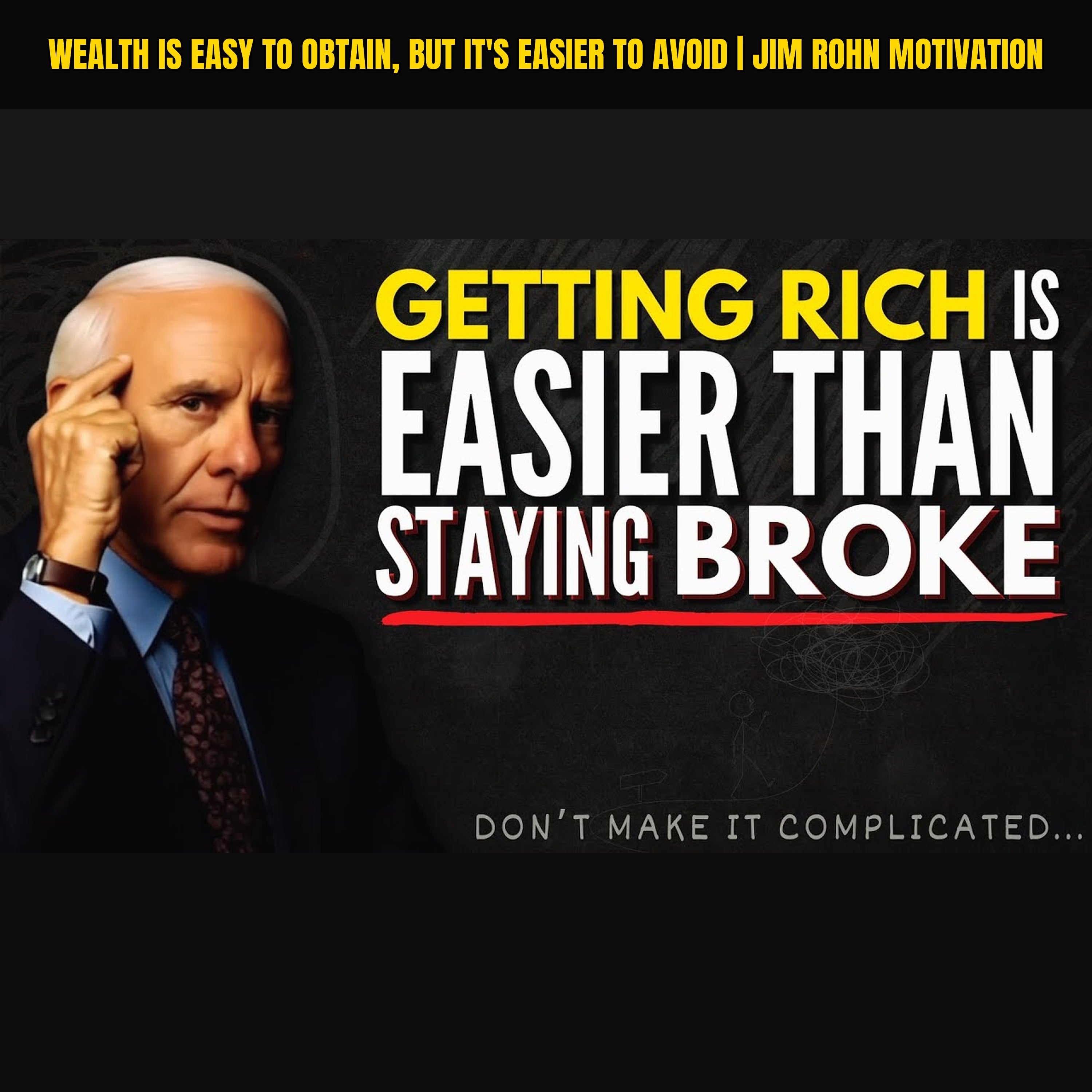
#JimRohnMotivation #JimRohn #JimRohnSpeech In this Jim Rohn Motivation video, discover the truth about wealth building—it’s easy to get rich, but easier not to. Jim Rohn reveals how small, consistent habits—not luck, genius, or perfect timing—create lasting financial success. Learn the simple daily disciplines that separate those who build wealth from those who only wish for it. Key Topics From This Motivational Video: Why the habits that build wealth are simple—but easy to ignore The hidden cost of procrastination, comfort, and distraction How systems—not willpower—drive consistent results Why small daily actions compound into lasting wealth The mindset shift from spending to building Jim Rohn explains that wealth isn’t built on dramatic leaps—it’s built on quiet, repeatable steps practiced over time. The math is simple: earn more than you spend, invest the difference, and let time work its magic. But the challenge isn’t knowing what to do—it’s doing it every day, without excuse, and
Could letting go of blame, labels, and expectations be the key to deeper love and connection? Sage Robbins shares 7 keys to restoring true connection. When we recognize that others mirror what’s happening within us, we gain the power to let go, forgive, and reconnect with the people we love. Uploaded 22-12-25 Watch more videos like this The 4 Seasons Test Every Strong Relationship Must Pass: https://youtu.be/ccVLjDf9U1U How Sage and Tony Robbins Actually Met: https://youtu.be/pCfXH26fqHY These 4 Questions Transformed Our Marriage with Tony and Sage Robbins: https://youtu.be/eeuianOXbrg Moving Through The "Winter" Seasons of Life | Sage and Tony Robbins: https://youtu.be/OLXEcgWbk_4 Join my weekly newsletter 'The Mirror' to receive these exclusive videos each week: https://www.sagerobbins.com (https://www.sagerobbins.com/) Follow Sage Robbins: Instagram: https://www.instagram.com/sagerobbins Facebook: https://www.facebook.com/SageRobbins Tiktok: https://www.tiktok.com/@sage.robbins Link
What can you do with $50 a week, and how do you make saving feel less like a sacrifice? In this special Australian Finance Podcast Q&A with Pearler, Owen Rask and Gemma Mitchell connect everyday money habits with the next step: investing consistently. The thread running through the episode is simple: start with an amount you can sustain, understand what you own and keep good records. Whether you are starting with a few dollars or revisiting an established portfolio, this conversation offers ideas to consider. Episode resources – Buy Gemma’s book “The Money Reset” (https://amzn.to/42Uz0aK) – Speak with the Rask Advice team (https://rask.com.au/advice) Show partner resources Rask resources – All services (https://bit.ly/R-services) – Financial Planning (https://bit.ly/R-plan) – Invest with us (https://bit.ly/R-invest) – Access Show Notes (https://bit.ly/R-notes) – Ask a question (https://bit.ly/R-quest) – We love feedback! (https://raskau.typeform.com/to/ZbfHy6IP) – Instagram: @rask.inve
Can you turn part of your home loan into investment debt without increasing the total you owe? On the Australian Finance Podcast, Owen Rask and financial adviser James Phelan unpack debt recycling in a LIVE Q&A, from the basic loan split to the mistakes that can unravel the strategy. This is a practical starting point, not a personal recommendation or a substitute for tailored financial and tax advice. Listen for the questions to take to your adviser, accountant and mortgage broker before making a move. Episode resources – Buy Gemma’s book “The Money Reset” (https://amzn.to/42Uz0aK) – Speak with the Rask Advice team (https://rask.com.au/advice) Show partner resources Rask resources – All services (https://bit.ly/R-services) – Financial Planning (https://bit.ly/R-plan) – Invest with us (https://bit.ly/R-invest) – Access Show Notes (https://bit.ly/R-notes) – Ask a question (https://bit.ly/R-quest) – We love feedback! (https://raskau.typeform.com/to/ZbfHy6IP) – Instagram: @rask.invest (ht
Can you still retire early in Australia, invest simply and enjoy your money today? Owen Rask puts seven hard money questions to Hayden Smith, co-founder of Pearler, on the Australian Finance Podcast, and sneaks in a bonus question about building a business. It is a frank, accessible conversation about FIRE, saving, ETFs, housing and the money decisions that rarely have a neat one-size-fits-all answer. Episode resources – Speak with the Rask Advice team (https://rask.com.au/advice) – Ask a question (select the Investors podcast) (https://bit.ly/R-quest) Show partner resources – ETF investor? Go beyond ordinary with Global X: View all funds (https://www.globalxetfs.com.au/) Rask resources – All services (https://bit.ly/R-services) – Financial Planning (https://bit.ly/R-plan) – Invest with us (https://bit.ly/R-invest) – Access Show Notes (https://bit.ly/R-notes) – Ask a question (https://bit.ly/R-quest) – We love feedback! (https://raskau.typeform.com/to/ZbfHy6IP) – Instagram: @rask.inves
Equipment rules should preserve fair competition even when they limit innovation.
Share your view, then see how readers voted. No sign-in required. This poll is shared across stories.
Do you agree or disagree?
Common Quandary
A Common Quandary to discuss
Another conversation to explore, separate from this news story.
A patient records every doctor visit for their followers. Can the doctor refuse to be filmed?
A patient with a large social-media following livestreams their health journey and wants to record every appointment. They say the videos help others and keep doctors accountable. Their physician finds the camera distracting and worries that casual remarks will be edited out of context.
Whose comfort should control a conversation about one person's body and another person's work?