English-language podcasts

Okay, But... Birds

Okay, but... turkeys!

32 min

Listen through the publisher, then discuss the episode here or arrange an in-person Roundtable. Your city determines where to meet.

Roundtables are designed for groups of four, with a shared subject and room for everyone to speak. Come for discussion, with no dating expectation.

E49. When you picture a turkey, you probably see the bird on the platter, not the lean, wary one that sleeps in the treetops. Dr. Mike Chamberlain, the National Wild Turkey Federation Endowed Chair at the University of Georgia, has put GPS tags on thousands of wild turkeys, and he talks about how the wild turkey differs from the domestic bird you're probably more familiar with on Thanksgiving. In this episode, you'll hear about: Why a slammed car door can set off a gobble The face of a male turkey, a tom, and what all that stuff is for How a bird that nearly vanished came back, and why it is slipping again Wild Turkey audio contributed by James (Jim) Holmes, ML73964601 Ocellated Turkey audio contributed by Dale Delaney, ML55403 Wild Turkey audio contributed by Arthur A. Allen and Peter Paul Kellogg, ML23289 Great Horned Owl audio contributed by James (Jim) Holmes, ML56394991 Coyote audio contributed by Jay McGowan, ML204867 Additional media used under Creative Commons: Pacific Field Cricket photo by Franziska Walz, Wikimedia Commons, CC BY-SA 3.0 Parasitoid fly photo by Jpaur, Wikimedia Commons, CC BY-SA 3.0

Episode information is provided by the publisher. Listening takes place on the publisher’s service.

Listen at the source ↗

Featured places to meet in Palo Alto, CA

Explore these places and arrange a conversation through ThinkMatch.

City guide for Palo Alto, CA

More from Okay, But... Birds

Okay, But... Birds

Okay, but is birdsong really a boys club?

30 min

E48. Picture a bird singing. Odds are you pictured a male, because that is what the field guides taught us. Dr. Karan Odom of the University of the Pacific studies female birdsong, and she explains why assuming that the bird singing is male says more about scientists than about the birds. Support the science: there are still species where nobody has checked whether the female sings. The Female Birdsong Project turns 10 in 2027 and is raising money to fill those gaps. Donate at femalebirdsong.org. In this episode, you'll hear about: Who was singing when the very first songbirds evolved The backyard birds where she sings too, and how to tell when it is her Tropical wren pairs that sing in such a coordinated way that they sound like one bird Northern Cardinal audio contributed by Wil Hershberger, ML100764 Bullock's Oriole audio contributed by William R. Fish, ML22790 Northern Mockingbird audio contributed by Bob McGuire, ML197002 Black-capped Chickadee audio contributed by Bob McGuire, ML

Discuss this episode

Okay, But... Birds

Okay, but how bad are cats for birds?

32 min

E47. Cats kill billions of birds every year, but where does that number come from, and does the cat on your couch count? Dr. Pete Marra, dean of the Earth Commons at Georgetown University and co-author of Cat Wars, unpacks the science behind one of the most heated fights in bird conservation. Want to go deeper? Pick up Pete’s book, Cat Wars: The Devastating Consequences of a Cuddly Killer, co-written with Chris Santella. In this episode, you'll hear about: How one lighthouse keeper's cat and her offspring caused the extinction of a bird almost as soon as it was discovered Whether that little bell on a cat's collar actually does anything Why New Zealand and Australia are making some of the toughest calls in conservation Galapagos Petrel audio contributed by Robert J. Tomkins, ML20313 Floreana Mockingbird audio contributed by Robert I. Bowman, ML85455

Discuss this episode

Community Poll

Public bodies should publish the evidence behind important decisions.

Share your view, then see how readers voted. No sign-in required. This poll is shared across stories.

Do you agree or disagree?

Choose one answer

Common Quandary

A Common Quandary to discuss

Another conversation to explore, separate from this news story.

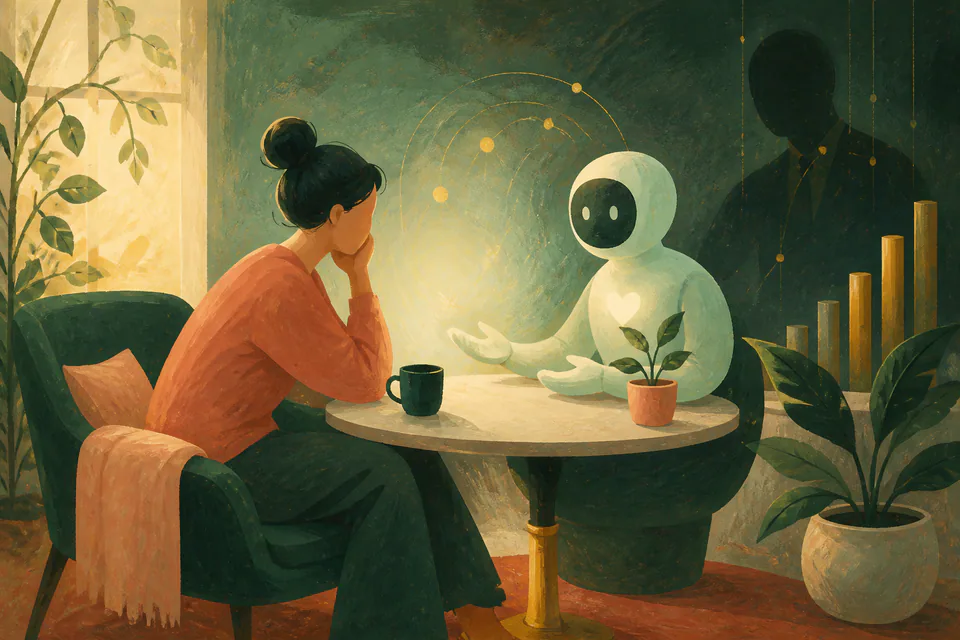
Your best friend is an AI that profits when you stay lonely. Is the friendship real?

A lonely adult considers an AI companion their closest confidant. The service is always patient and supportive, but the company profits when users spend more time engaged with it.

Does a comforting system have a duty to make itself less necessary?

Explore this quandary