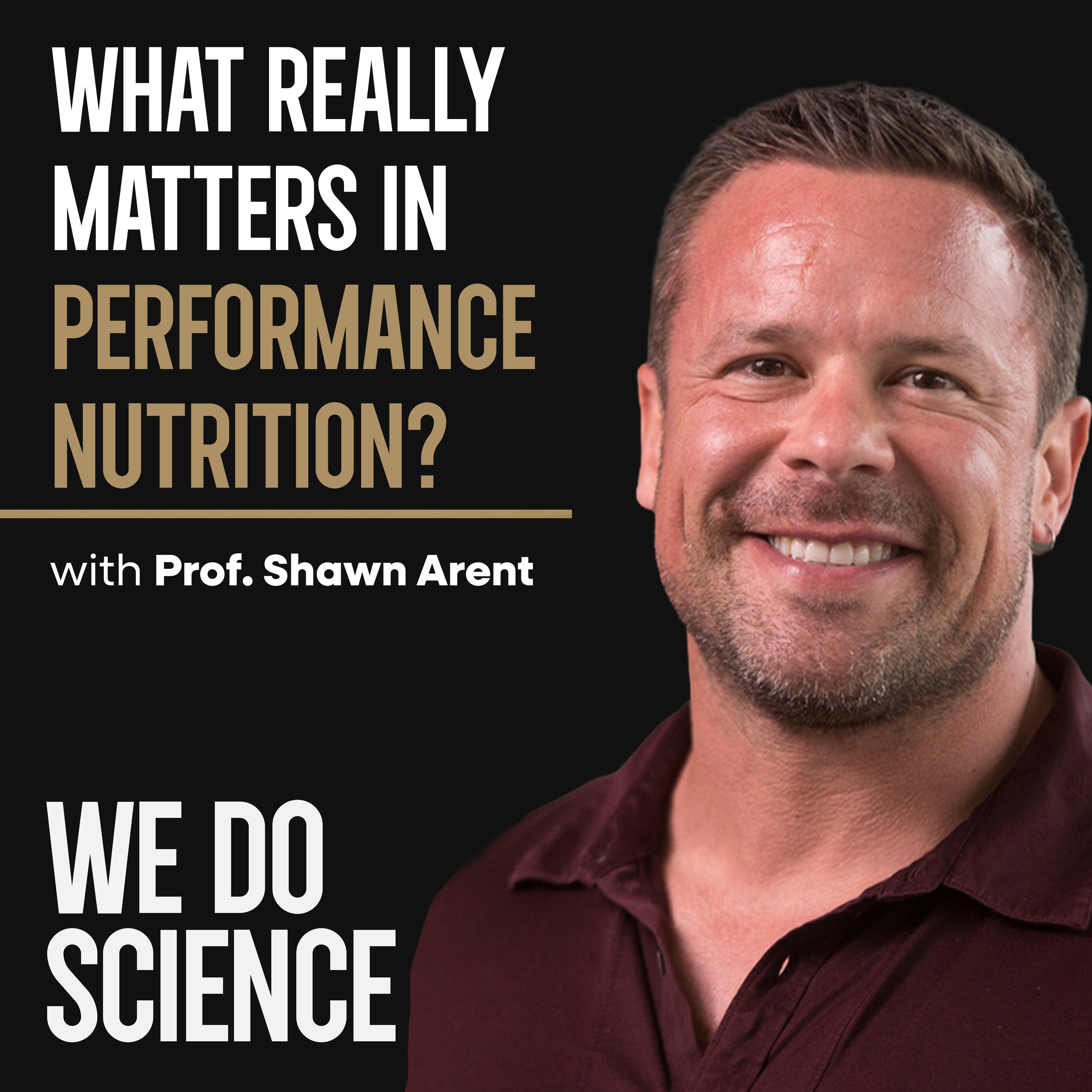
Performance Nutrition: What Really Matters? | Prof. Shawn Arent
Listen through the publisher, then discuss the episode here or arrange an in-person Roundtable. Your city determines where to meet.
Roundtables are designed for groups of four, with a shared subject and room for everyone to speak. Come for discussion, with no dating expectation.
In this episode of We Do Science, I’m joined by Professor Shawn Arent to explore what still matters in performance nutrition and how to separate established scientific principles from changing trends. We discuss what has evolved in sports nutrition, which fundamentals remain important, and what matters when translating scientific evidence into real-world practice. Shawn explains why hydration, carbohydrates and protein remain central to athletic performance, while addressing common misconceptions around nutrient timing, the anabolic window and fasted training. We explore the relationship between nutrition, training stress and recovery, why individual circumstances matter, and why advice intended for the general population may not always apply to competitive athletes. We also discuss the practical challenges of working with athletes and coaches, including how to communicate scientific evidence and build effective relationships. Shawn shares insights from his experience in elite sport, exploring the value of performance testing, body composition assessments and biomarkers. We examine the limitations of measurement tools, the importance of interpreting results correctly, and why collecting more data doesn't necessarily lead to better decisions. Whether you’re a sports nutrition practitioner, coach or athlete, this conversation explores how to identify what genuinely matters in performance nutrition, apply scientific evidence effectively, and make informed decisions based on the needs of the individual athlete. CHAPTERS 00:00 Introduction05:09 Introducing Prof. Shawn Arent12:09 What's changed in performance nutrition?17:39 Nutrition myths, trends and pseudoscience22:44 The fundamentals: Hydration, carbohydrates and protein27:19 Energy deficits, training stress and recovery33:34 Individual needs and the relationship with food41:09 Communicating science to athletes and coaches51:29 Performance testing, monitoring and biomarkers1:03:29 Interpreting results and measurement limitations1:09:09 Body composition and tracking athlete progress1:17:09 Blood testing, wearables and performance data1:27:39 Key takeaways and practical applications If you enjoy the episode, please subscribe to We Do Science and share your thoughts in the comments. Connect with Shawn: LinkedIn: https://www.linkedin.com/in/shawnmarent/ Connect with Laurent: Substack: https://substack.com/@laurentbannock Website: https://www.laurentbannock.com (https://www.laurentbannock.com/) Instagram: https://www.instagram.com/laurent_bannock
Episode information is provided by the publisher. Listening takes place on the publisher’s service.
Listen at the source ↗