Polypharmacy and Medication Review | Medical English Podcast (S5E28)
7 min
Listen through the publisher, then discuss the episode here or arrange an in-person Roundtable. Your city determines where to meet.
Roundtables are designed for groups of four, with a shared subject and room for everyone to speak. Come for discussion, with no dating expectation.
In this episode of the Medical English Podcast, we do a deep dive into polypharmacy — a patient taking multiple medications at once — with a focus on the precise English you need for medication reviews, handovers, and documentation. You'll learn how to: • Pronounce and use "polypharmacy," "regimen," "adherence," "interaction," and "deprescribing" with clinical confidence • Explain a patient's medication list and any planned changes in language they can actually follow • Translate technical terms into patient-friendly phrasing, such as "going through your tablets together" for a regimen review • Avoid the outdated term "compliance" in favour of the more collaborative "adherence" • Get the grammar right around "medication" as both an uncountable and countable noun We explore the clinical context behind polypharmacy, the essential vocabulary for medication reviews, and how small, deliberate word choices support safer prescribing conversations. This episode is perfect for doctors, nurses, pharmacists, international medical graduates, and healthcare professionals preparing for exams like the OET, who want to sharpen both their clinical English vocabulary and patient communication skills. https://australiabiomed.com/med (https://australiabiomed.com/med%C2%A0) Free transcript & practice quiz for this episode: Structured lessons, real-world case dialogues, pronunciation practice, and exam preparation — all designed for healthcare professionals who want to communicate with confidence.
Episode information is provided by the publisher. Listening takes place on the publisher’s service.
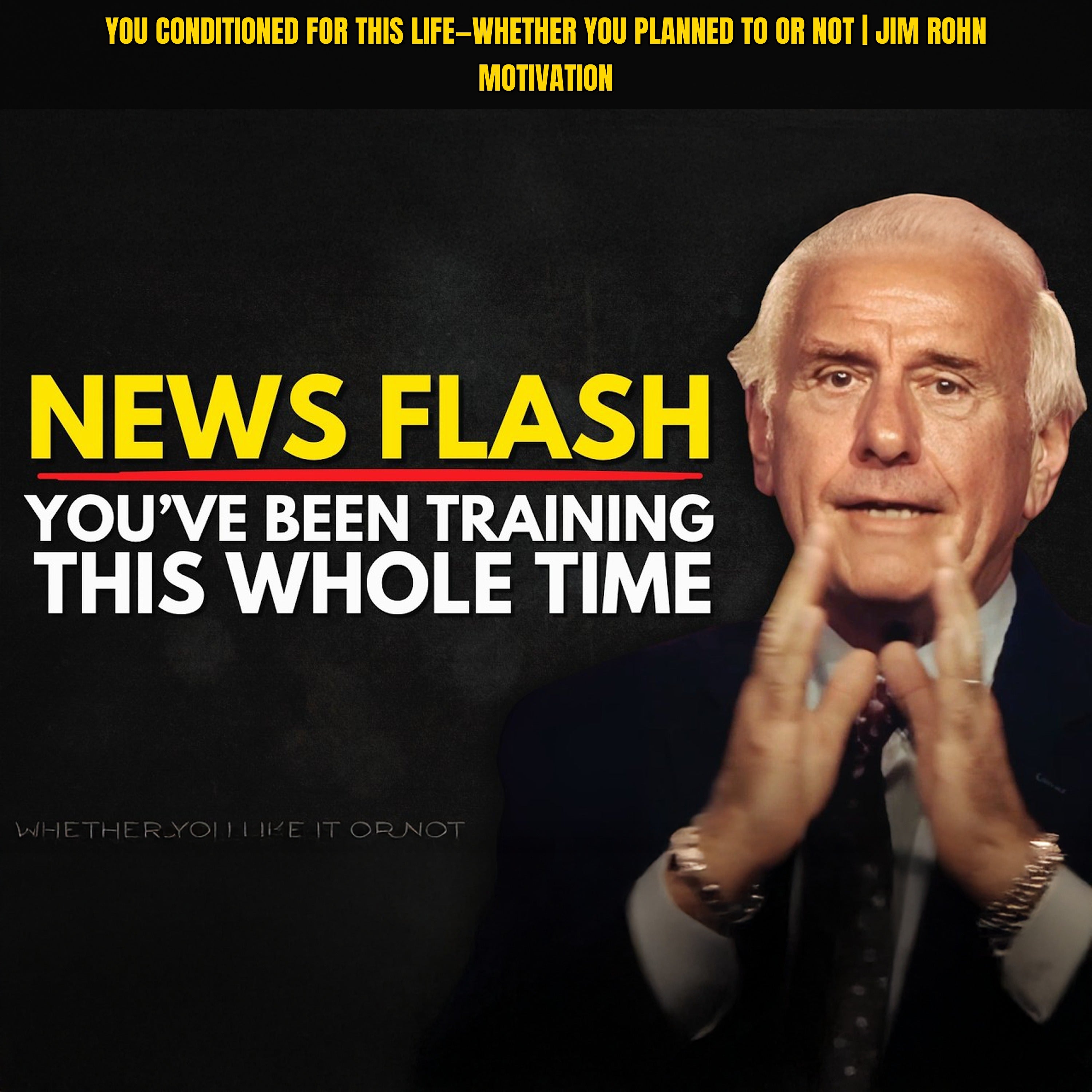
In this Jim Rohn Motivation speech, discover the powerful truth that your current life isn’t random—it’s the result of your training. Every habit, decision, and repeated action has been preparing you for the life you're now living. The question is: are you training for what you want or what you’re trying to avoid? Key Topics From This Motivational speech: Why your habits are training you every single day How unconscious repetition creates unwanted results The difference between practice and preparation Why neglect is also a form of training How to retrain your mind and life through small, consistent action This motivational speech is a wake-up call for anyone coasting through life unaware of how much their routines are shaping them. From discipline to distraction, every action casts a vote for your future. Whether you’re building strength or rehearsing weakness, the process is the same: repetition. If your results don’t match your desires, it’s time to change the training. Start small,
Black Friday sale: one week only Our Black Friday sale starts Friday, November 27. For one week, you can get a yearly Culips membership for $126. That’s 30% less than paying monthly for a year. You’ll get every lesson, all of our study tools, unlimited live speaking classes, and ad-free audio, all in our new app. There’s no coupon code. Just visit Culips.com before the sale ends on Thursday, December 3. Get the Black Friday deal at Culips.com (https://culips.com/). Andrew and Indiana catch up on what they’ve been doing lately. Indiana tells a story about a painful trip to the dentist, and Andrew talks about going to a rap concert by himself in Seoul. They also talk about AI music in gyms and cafes, a famous horror movie that Indiana saw at a special screening with its actors, and Andrew’s new rice cooker. Along the way, you’ll learn useful English vocabulary like “that’s the kicker,” “at the top of one’s game,” “more bang for your buck,” “clocked in, clocked out,” “right on the button,
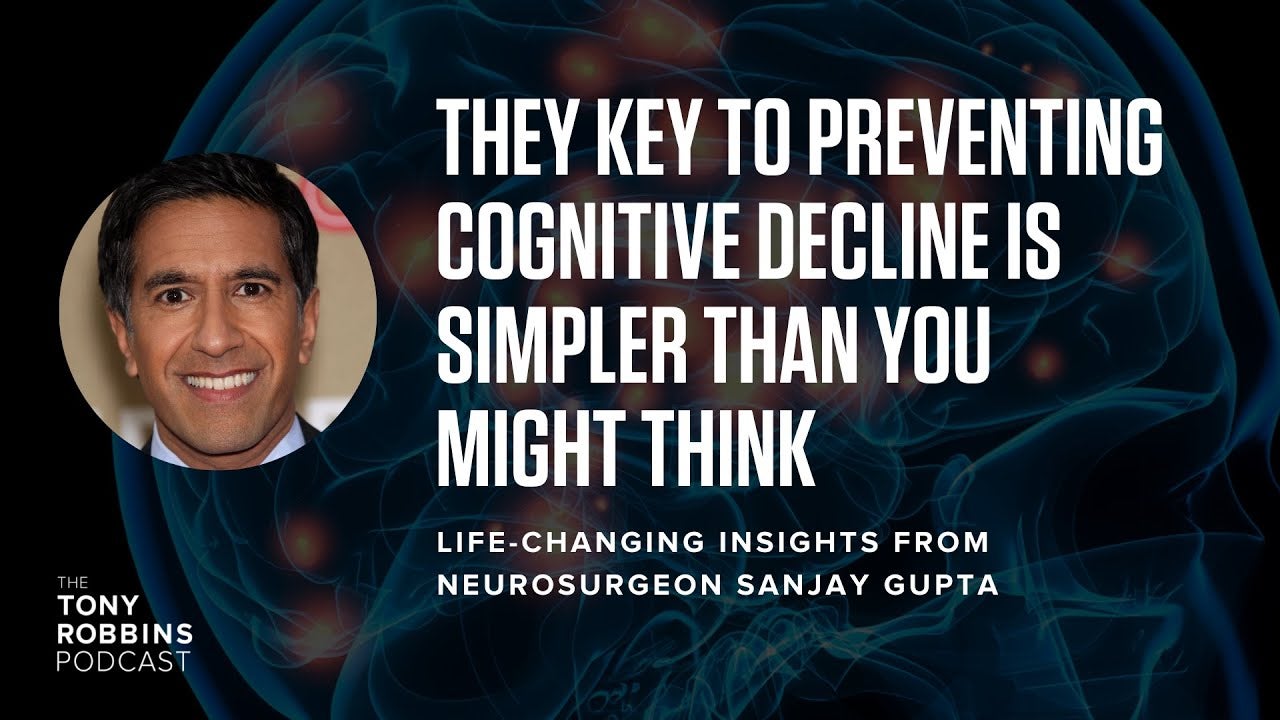
Dr. Sanjay Gupta is an American neurosurgeon, medical reporter and author. He is currently the associate chief of neurosurgery at Grady Memorial Hospital in Atlanta, Georgia, associate professor neurosurgery at the Emory School of Medicine and a chief medical correspondent at CNN. Uploaded 28-05-21 Throughout his successful career, he has been featured on numerous CNN and NBC news programs, including a six-part mini series titled Chasing Life and his Emmy-award winning show Sanjay Gupta MD. Dr. Gupta is also an accomplished author. As of winter of 2022, he has written five books: Chasing Life; Monday Mornings; Cheating Death; Keep Sharp: Build a Better Brain at Any Age; and World War C: Lessons from the Covid-19 Pandemic and How to Prepare for the Next One. In this episode of the Tony Robbins podcast, Tony sits down with Dr. Gupta to discuss how your brain health has large effects on your life. In an engaging conversation, they talk about how everything from movement to nourishment aff
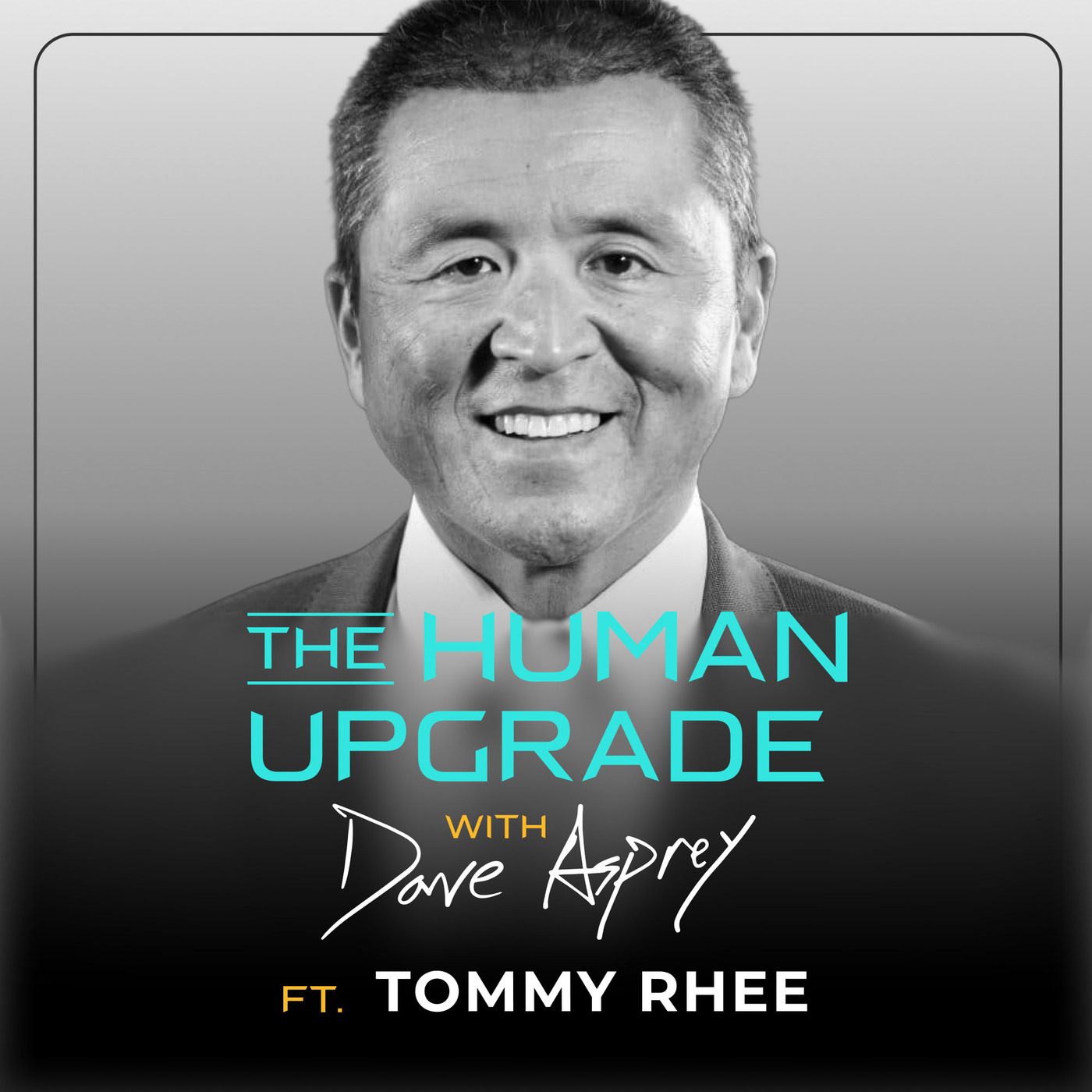
Whole-Body Vibration, Longevity, Nitric Oxide, Bone Density & Cellular Health Host Dave Asprey sits down with Dr. Tommy Rhee, sports chiropractor, regenerative medicine expert, and former practitioner with the Tampa Bay Buccaneers and UCLA Athletics, to explore whole-body vibration, longevity, nitric oxide production, blood circulation, bone density, muscle activation, and the science of mechanical stimulation. Drawing on more than 20 years of clinical experience working with professional and Olympic athletes, Dr. Rhee explains how specific vibration frequencies may influence cellular signaling, cardiovascular function, and physical performance. Dave and Tommy examine why whole-body vibration has become a popular biohacking technology and how just a few minutes of mechanical stimulation may support multiple systems throughout the body. Dr. Rhee explains how standing on a vibration platform creates rapid muscle contractions and mechanical forces that stimulate circulation and may activa
Viewers like you help make PBS (Thank you ) . Support your local PBS Member Station here: https://to.pbs.org/DonateSPACE Uploaded 05-09-18 Thanks to CuriosityStream for supporting PBS Digital Studios. You can learn more at https://www.curiositystream.com/spacetime and use the code "spacetime" during the sign-up process. You can further support us on Patreon at https://www.patreon.com/pbsspacetime Get your own Space Time t-shirt at http://bit.ly/1QlzoBi Tweet at us! @pbsspacetime Facebook: facebook.com/pbsspacetime Email us! pbsspacetime [at] gmail [dot] com Comment on Reddit: http://www.reddit.com/r/pbsspacetime Help translate our videos! Previous Episode: Is There Life on Mars? Hosted by Matt O'Dowd Written by Matt O'Dowd Graphics by Luke Maroldi Assistant Editing and Sound Design by Mike Petrow Made by Kornhaber Brown (www.kornhaberbrown.com) Black Holes should have no entropy, but they in fact hold most of the entropy in the universe. Let’s figure this out. If black holes exist – w
How would you describe your 2026 year so far? Around us, there seems to be so much happening in the world today, with wars, a shaky economy, and political issues in the government. Personally, you might have had something unexpected happen like a sudden death or a serious health crisis. A friend of mine used this word to describe how things felt around her. She said things felt ‘uncertain’. I couldn’t agree more. In some ways, it seems remarkable that we have even made it this far! Well, if things have been feeling stressful and uncertain for you, let’s take a DEEP breath together now. In this episode, let’s look back on this year and have a moment of quiet reflection. I’ll also share some top thanksgivings from my clients who are eating plant-powered to inspire and encourage you. I hope you’ll see that our health doesn’t need to suffer or get sidelined, despite the external circumstances. So, if you’re ready to pause for a moment of reflection and gratitude with me, pull up a chair wi
In this episode of the Medical English Podcast, we do a deep dive into anxiety and anxiety disorders — a topic where the everyday word and the clinical word are the same, which makes drawing the line even more important. You'll learn how to: Use key vocabulary including "panic attack," "generalized anxiety disorder," "hypervigilance," "avoidance behaviour," and "SSRI" Distinguish normal, protective worry from an anxiety disorder that's interfering with daily life Explain what's happening in the body during a panic attack without dismissing very real physical symptoms Discuss cognitive behavioural therapy (CBT) and medication in plain, reassuring language Adapt the same explanation across three different patients: one presenting with physical symptoms, one adjusting long-term treatment, and one anxious about the diagnosis itself We explore how the language around anxiety shifts depending on where a patient is at, and why validating real physical symptoms builds trust before you even men
In this episode of the Medical English Podcast, we follow a consultation with Jake, a young patient attending a follow-up appointment after his first seizure, as his doctor works through triggers, treatment, and what to do if it happens again. You'll learn how to: Use key vocabulary including "seizure," "aura," "trigger," "antiepileptic medication," and "status epilepticus" Take a history that identifies warning sensations and common triggers like missed sleep or missed medication Explain why a diagnosis of epilepsy still warrants medication even when a trigger is identified Discuss what to do — and what not to do — if someone around the patient has a seizure Recognise status epilepticus as a medical emergency and communicate that urgency clearly We explore a full epilepsy follow-up consultation from history-taking through to medication planning and safety advice, and how a clear explanation turns a frightening diagnosis into something a patient feels in control of. This episode is per
In this episode of the Medical English Podcast, we do a deep dive into anaesthesia — not the clinical administration, but the precise English you need to discuss it confidently in preoperative consultations, handovers, and documentation. You'll learn how to: Pronounce and use "general anaesthesia," "local anaesthesia," "regional anaesthesia," "sedation," and "induction" with clinical confidence Explain each type of anaesthesia to a patient in natural, spoken language rather than textbook definitions Distinguish anaesthesia from anaesthetic, and understand why the difference matters in documentation Avoid mixing up sedation and anaesthesia, which describe very different depths of consciousness Steer clear of the classic slip between "conscious" and "conscience" in clinical notes We explore the essential language of anaesthesia and how small, precise word choices set the right expectations for a patient before a procedure. This episode is perfect for doctors, nurses, anaesthetic and surg
A striking scientific discovery should face stronger scrutiny before changing established practice.
Share your view, then see how readers voted. No sign-in required. This poll is shared across stories.
Do you agree or disagree?
Common Quandary
A Common Quandary to discuss
Another conversation to explore, separate from this news story.
Your grandfather brought home an ancient artifact. A museum wants it back. Do you surrender it?
In your grandfather's attic you discover a beautiful ancient object he brought home while working overseas decades ago. Your family treasures it and his papers suggest the rules were murky. A museum from that country says it belongs to their collection and asks for its return.
Can a family inherit clear ownership of something acquired through unclear power?