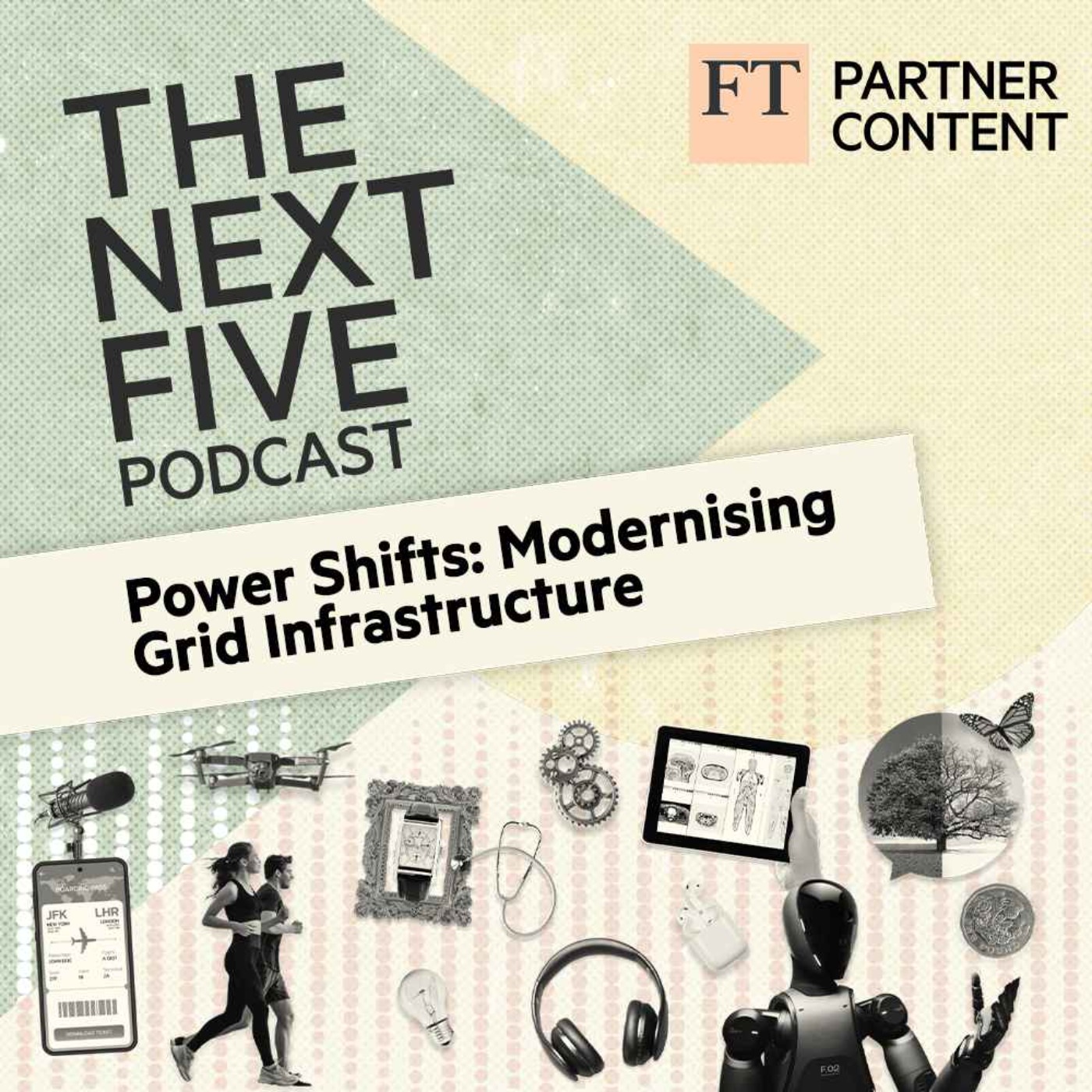
Power Shifts: Grid Bound - Modernising Grid Infrastructure
Listen through the publisher, then discuss the episode here or arrange an in-person Roundtable. Your city determines where to meet.
Roundtables are designed for groups of four, with a shared subject and room for everyone to speak. Come for discussion, with no dating expectation.
It’s a hot afternoon in July 2026. You’re at home, and the sun is beating down on your roof. Your solar panels are working overtime, generating more clean, free energy than your house can possibly use. In a perfect world, that excess power would be flowing back into the grid, charging your neighbour’s electric car or powering a local hospital. But you look at your smart meter and see a red warning light. The grid in your area is ‘congested.’ It’s full. Instead of that green energy being used, it’s being ‘curtailed’, essentially thrown away. Somewhere else, a gas-fired power station is being paid to fire up because your clean energy simply can't reach the people who need it. This is the grid gap. We have been building wind farms and solar parks at record speed over the last decade, but for all the good they bring, we are still trying to plug them into a nervous system designed for the 1950s and right now, it’s creaking under the weight. Joining, our host, Tom Parker is Ferrari Careto, CEO of E-Redes and Head of Global Networks Platform at EDP, Alice Delahunty, Chief Technology and Innovation Officer at National Grid and Jean-Christophe Moureau, Senior Vice President of Operations at Schneider Electric. This episode was recorded on 22nd October, 2026 Sources: FT Resources, IEA, European Commission, ACER, The Times, Ember. This content is paid for by EDP and is produced in partnership with the Financial Times' Commercial Department. The views and claims expressed are those of the guests alone and have not been independently verified by The Financial Times. Hosted on Acast. See acast.com/privacy (https://acast.com/privacy) for more information.
Episode information is provided by the publisher. Listening takes place on the publisher’s service.
Listen at the source ↗