Rational Security: The “Riding the Blue Wave Special Election" Edition
87 min
Listen through the publisher, then discuss the episode here or arrange an in-person Roundtable. Your city determines where to meet.
Roundtables are designed for groups of four, with a shared subject and room for everyone to speak. Come for discussion, with no dating expectation.
This week, Scott sat down with his Lawfare colleagues Managing Editor Tyler McBrien and Senior Editor Eric Columbus; and Contributing Editor and Vice President of Research, Security and Defense at the Chicago Council on Global Affairs Ariane Tabatabai to talk through the week’s big international news stories, including: “The Subpoena Is Coming From Inside the House.” Democrats scored a historic victory in yesterday’s midterm elections, securing control of both the House and Senate by a healthy (but not filibuster-proof) margin that is widely seen as a direct rebuke of the Trump administration. How will a Democratic agenda impact President Trump’s policy agenda over his last two years in office? Which topics are likely to be the clearest targets of oversight and other measures? And how effective are these measures likely to be in pressuring him to change his tack? “Lame Duck and Cover.” The most significant issue in this week’s elections was undoubtedly President Trump’s decision to initiate the Iran War, and the subsequent impact it has had on the global economy. Yet Trump and his advisors have not been shy about their intent to escalate the war with Iran once again after the election, and have arguably already done so through a series of secret strikes that only became public the day of the midterm elections. What limits does a Democratic congress put on Trump’s war-fighting capabilities? And how much further will Trump be able to pursue the war now that he will no longer have a compliant Congress? “2028 Days Later.” With the midterms over, the race for 2028 is about to begin in earnest. Does this most recent election give any insight into which national security issues are likely to be a major concern in the next presidential race? And what do the dynamics of the midterms tell us about how those issues will shape – and be shaped by – the primaries and general election to follow? In object lessons, Tyler recommends the new album, "No Bad Memories (https://us.theavalanchesstore.com/products/no-bad-memories-cd)," by The Avalanches. Ari is blown away by the set design and acting in the stage play, "Stranger Things: The First Shadow. (https://broadway.strangerthingsonstage.com/)" Scott is listening to the new revival of the FiveThirtyEight Politics podcast, called "Still Counting. (https://crooked.com/podcast-series/still-counting/)" And Eric has discovered the classical music streaming service IDAGIO (https://www.idagio.com/us/?gad_campaignid=24373941969&gad_source=1&gbraid=0AAAAADfA8cxc-2LETHPPrzKWnrAE9PLnG). Hosted on Acast.
Episode information is provided by the publisher. Listening takes place on the publisher’s service.
For review: 1. Iraq has reached a compromise with the powerful Iran-backed militia Kataeb Hezbollah, three senior security officials said, after Prime Minister Ali al-Zaidi readied security forces to move against the group. Reflecting the gravity of the situation, Iraqi Shiite political sources said Esmail Qaani, commander of Iran’s elite Revolutionary Guards’ Quds Force, arrived in Baghdad late on Monday to help defuse tensions with Kataeb Hezbollah, Tehran’s most powerful militia ally in Iraq. 2. Lebanese President Joseph Aoun launched a lengthy rebuke of Iran in an Independence Day address, arguing that the Islamic Republic does not have the right to interfere in Lebanon’s internal affairs, as it long has via support for its local terror proxy, Hezbollah. 3. Yemen’s Houthis launched strikes on the Saudi capital Riyadh on Saturday, after vowing reprisals for a “special operation” by the Saudi-led coalition fighting them. The coalition later said it had “intercepted and destroyed” thr
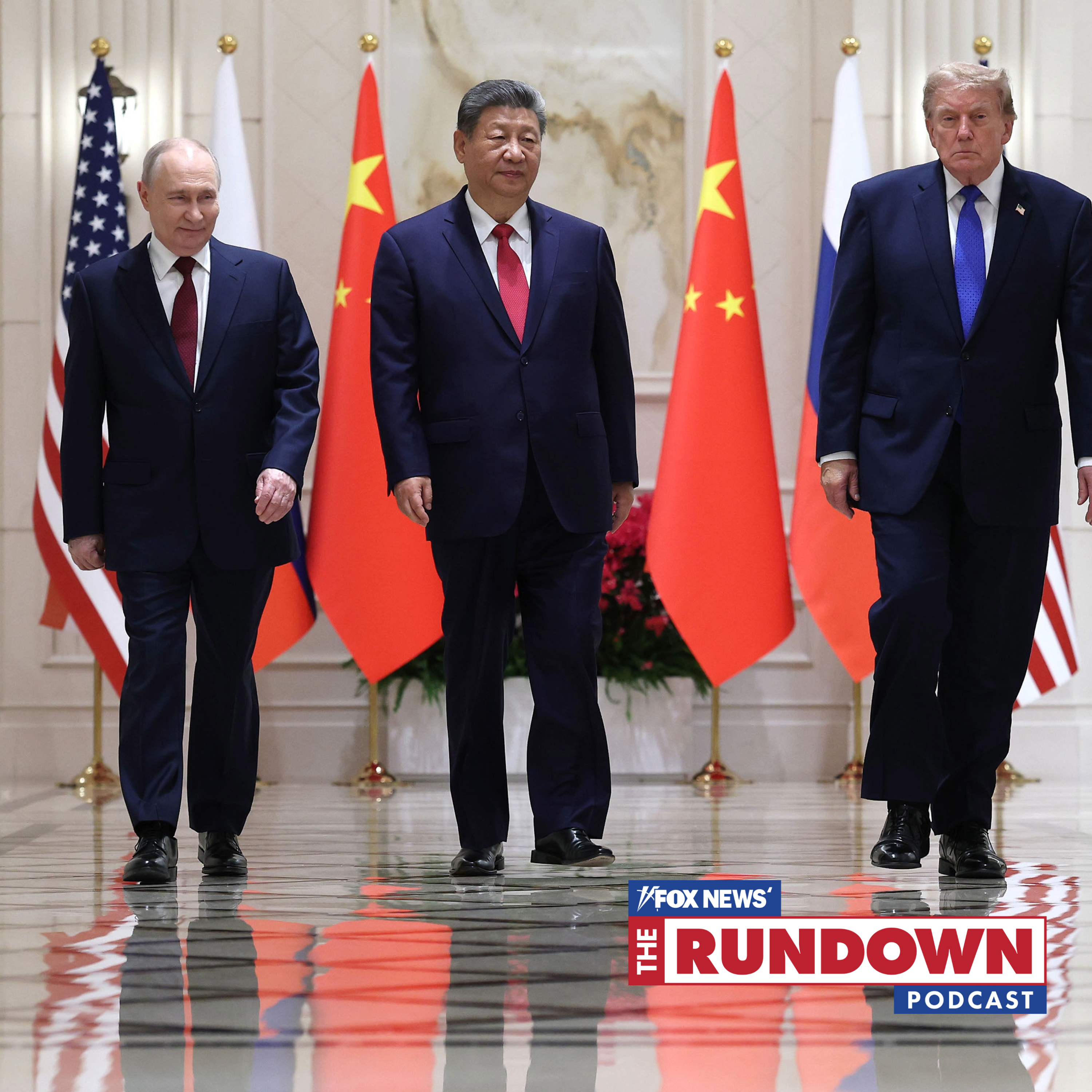
Following President Trump’s trip to Asia and a first-ever trilateral meeting with the leaders of China and Russia, foreign policy experts are weighing what was accomplished on the world stage. Former national security advisor to Vice President Dick Cheney and Heritage Foundation senior research fellow Stephen Yates joins The Rundown to analyze the summit’s outcomes on Taiwan, Ukraine, Iran, and strategic arms talks. Yates also explains how new rare-earth agreements with U.S. allies and export controls on AI chips balance Trump’s warmer rhetoric toward Beijing. Later, widespread tech outages across major platforms and government systems raise urgent questions about whether U.S. digital infrastructure is prepared for the artificial intelligence era. Former Cybersecurity and Infrastructure Security Agency (CISA) director Bridget Bean breaks down how rapid software patching can trigger cascading system failures, the growing cyber threats posed by China and Iran, and how organizations can d
A summit like no other. In a political first, President Trump sat down with President Putin and President Xi for an unprecedented trilateral meeting. He insists they’re all friends, but what does this mean for their conflicting agendas in Iran and Ukraine? Former Biden adviser Rush Doshi joins Christiane Amanpour to assess what was, or wasn’t, achieved. Then, in a landmark case, the International Court of Justice has found Myanmar guilty of committing genocide against the minority Rohingya population. The U.N. High Commissioner for Human Rights, Volker Türk, joins the show to discuss why this moment is so important. Plus, CNN’s Clare Sebastian takes us underground to look at how Ukraine’s innovative operation is helping the country make substantial gains. And best-selling author Elizabeth Strout discusses her new book ‘The Things We Never Say’, exploring the political and personal tensions of America that emerged during the 2024 presidential election. From the archive, my report from U
One of the best Christian films that Glenn Beck has ever seen was written by… Ben Shapiro? Glenn speaks with Ben about his new film, “Confession,” starring Rob Lowe and James Franco, a gritty drama about a prisoner in Stalin’s USSR. They discuss why Ben wanted to tell this story, why it feels very different from your standard Christian film, and what it may signal about Hollywood, which is snubbing it. Glenn also gets Ben’s thoughts on why antisemitism has become so popular on both the left and right, as well as what it truly means to be a man. Plus, Ben gives his rapid-fire takes on this week’s biggest news stories: the release of GTA VI, the outages, Jensen Huang and Nvidia, Robert Pattinson’s casting as James Bond, the midterms, the next leaders of the Republican and Democratic parties, data centers in space, how Joe Rogan became a right-wing icon, and whether woke is coming back. Glenn’s Sponsors: PreBorn: This Christmas, you can sponsor an ultrasound and help save a baby’s life fo
One week after the U.S. midterm elections, join Valérie Beaudoin, one of Canada's most respected commentators on U.S. politics, for a discussion on how Canadian policymakers and officials are digesting the results in Washington. From the new balance of power in Congress to the potential implications for Canada-U.S. relations, trade economic growth, and cross-border policy priorities, we'll explore what the election outcome could mean for Canada in the months ahead. Recorded on November 10, 2026. -- Optique canadienne sur les élections américaines de mi-mandat – Valérie Beaudoin Pour une version avec des sous-titres français, veuillez consulter Une semaine après les élections de mi-mandat aux États-Unis, Valérie Beaudoin, l’une des commentatrices de la politique américaine les plus respectées du Canada, discute des façons dont les décideurs canadiens et Ottawa ont réagi aux résultats à Washington. Du nouvel équilibre des pouvoirs au Congrès aux répercussions possibles sur les relations
This week on the Mark Levin Show, 2028 Republican Presidential candidates must directly address the urgent threats to the country - Marxism and Islamism. These candidates should deliver bold, courageous speeches that clearly explain what is happening in the country, identify those responsible, and directly challenge these threats rather than leaving such warnings to a small number of media voices. Also, it is difficult to believe so many major outages affecting entities such as the NSA, FAA, airline systems, Microsoft, and Apple services could be merely coincidental. The timing and scale of the incidents are troubling and remain inadequately explained. President Trump had proposed a major modernization and restructuring of air traffic control in 2017 that Congress failed to enact. Had those reforms been adopted, many current FAA failures might have been avoided. Later, does Senator John Kennedy know anything about originalism? Originalism is not pure textualism. The meaning and intent
From July 7, 2025: Winnona Bernsen, nonresident fellow at the Atlantic Council’s Cyber Statecraft Initiative and founder of DistrictCon (https://www.districtcon.org/), joins Lawfare Contributing Editor Justin Sherman to discuss her recently released report "Crash (Exploit) and Burn: Securing the Offensive Cyber Supply Chain to Counter China in Cyberspace (https://www.atlanticcouncil.org/in-depth-research-reports/report/crash-exploit-and-burn/)." They discuss the offensive cyber industry, the private sector and individual players, and the government procurement pipelines in the United States and China. They also discuss the strengths and weaknesses of each country’s offensive cyber procurement ecosystem, what it takes to sell an exploit, Winnona’s findings on the markups that middlemen add to exploit sales, and what it all means for the future of competition and cybersecurity. Hosted on Acast.
Chris McGuire, senior fellow for China and emerging technologies at the Council on Foreign Relations and a former National Security Council official, joins Lawfare Public Service Fellow Julia Curlee to discuss the spy scandal that forced out Nvidia’s Jensen Huang. They examine how advanced Nvidia chips reached Chinese AI labs through Megaspeed, a Singapore company once run by suspected Chinese intelligence asset Alice Huang, and why the Commerce Department never cut off the flow of chips. They also discuss what China gained, Congress’s next moves, and how the scandal will impact this week’s Trump-Xi meeting. For more, read McGuire’s “Howard Lutnick Has Got to Go (https://www.nytimes.com/2026/11/13/opinion/jensen-huang-nvidia-howard-lutnick-commerce.html),” in the New York Times. Hosted on Acast.
This week, Scott was joined by his Lawfare colleagues Senior Editors Anna Bower, Michael Feinberg, and Molly Roberts to talk through the week’s big national security news stories, including: “Occam’s Router.” It’s been a rough week for the systems that keep the country running. On Friday, the FAA ordered a rare nationwide ground stop after a communications failure disrupted radar and radio links at air traffic control centers across the country—just a day after a global Microsoft outage knocked Outlook and Teams offline. On Monday, customers at Chase and other big banks found themselves unable to log in or move money. And on Tuesday, the NSA’s classified internal network went dark, forcing the agency to stagger employees’ arrivals at Fort Meade. Officials insist none of these incidents was a cyberattack, and the explanations offered so far—a misbehaving router, a latent software bug, a routine patch gone wrong—are decidedly mundane. But the clustering has fueled plenty of anxiety and s
Reporting on court cases should protect personal privacy when details add little public value.
Share your view, then see how readers voted. No sign-in required. This poll is shared across stories.
Do you agree or disagree?
Common Quandary
A Common Quandary to discuss
Another conversation to explore, separate from this news story.
You paid extra for the aisle seat. Must you trade with a parent?
You reserved and paid extra for an aisle seat on a long flight. A parent asks you to trade for a middle seat so they can sit beside their young child after the airline separated them.
When does another person's predicament become your responsibility?