Listen through the publisher, then discuss the episode here or arrange an in-person Roundtable. Your city determines where to meet.
Roundtables are designed for groups of four, with a shared subject and room for everyone to speak. Come for discussion, with no dating expectation.
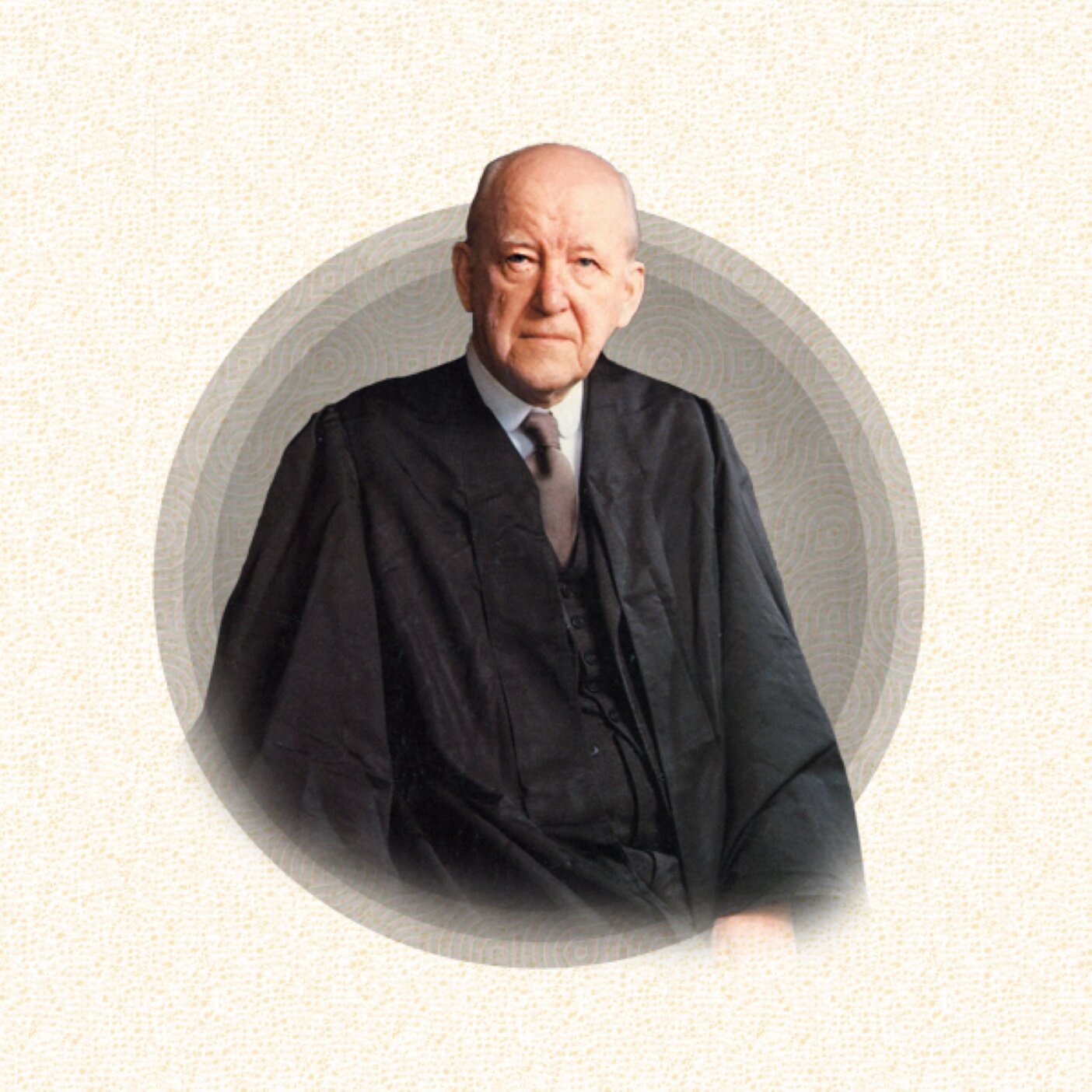
What is the nature of the new life of the Christian? In this sermon from Ephesians 4:23 titled “Renewed in the Spirit of the Mind,” Dr. Martyn Lloyd-Jones says the renewal of the mind by the power of the Holy Spirit transforms one’s most central faculty. This transformation is not simply a repair of minds, but it is a Spirit-empowered supernatural recreation of what the fall and sin have corrupted and distorted. This does not mean that fallen people are not as smart as Christians or that only Christians can know truth. But this transformation allows the new self to see the fingers of God in all life. It is a new orientation towards the same world that both Christians and non-Christians live in. This does not mean that when the minds of sinful people are renewed, they immediately become more intelligent, but this spiritual renewal allows them to see the gross nature of sin and the glorious love of God. The Spirit transforms people from the inside to the outside. This new self lives in accordance with godliness having been renewed by the power of the gospel.
Episode information is provided by the publisher. Listening takes place on the publisher’s service.
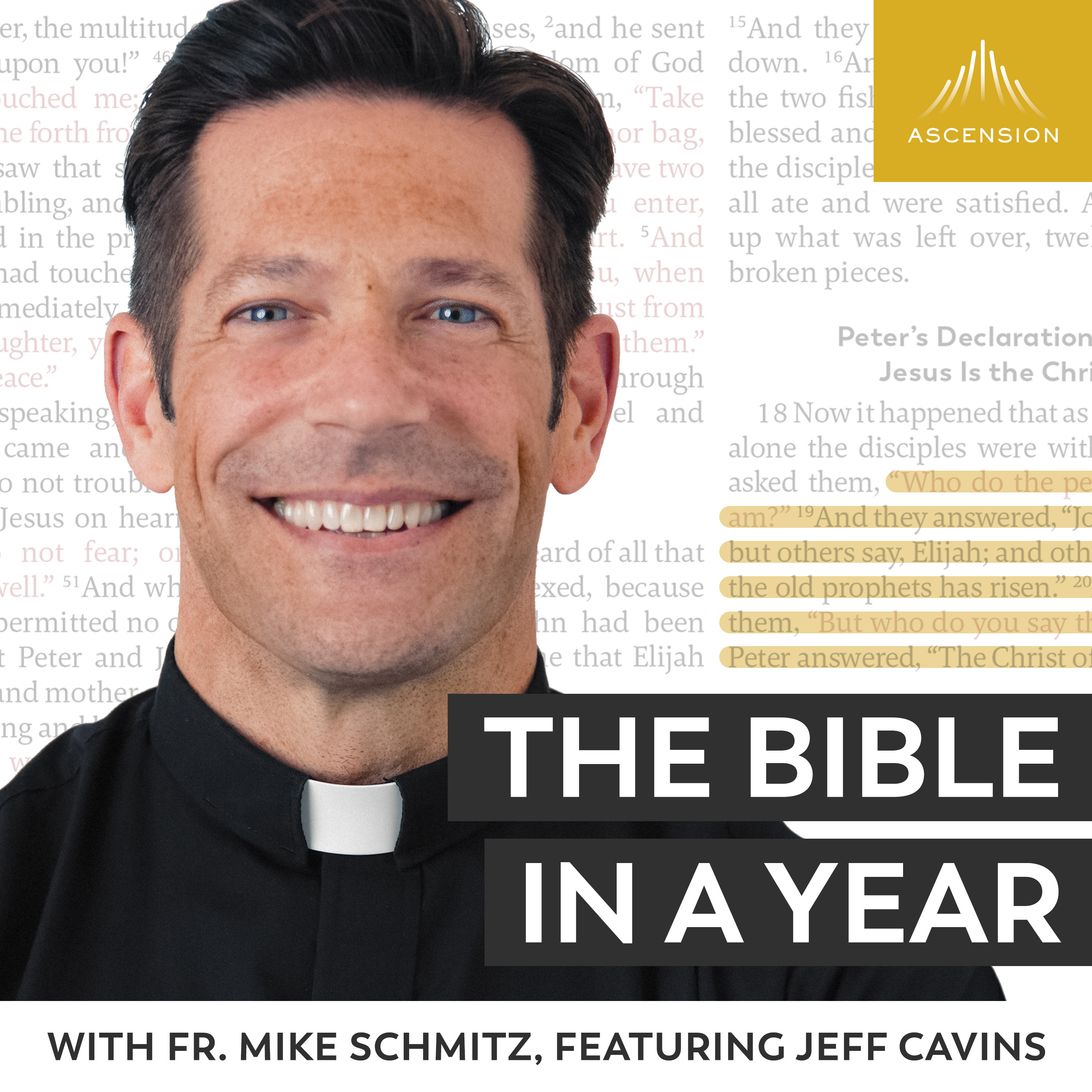
Fr. Mike discusses the ministry of the apostles and encourages us to allow God to work in our lives in the same way. He also reminds us that through Baptism, we are set free from our fallen human nature and given the freedom to live according to the spirit. Today’s readings are from Acts 5, Romans 8, and Proverbs 27:7-9. Support The Bible in a Year (with Fr.
🇺🇸 TWO NAVY SEALS. TWO INCREDIBLE JOURNEYS. ONE POWERFUL MISSION TO TRANSFORM YOUR FINANCIAL FUTURE! Michael Jaco welcomes fellow former Navy SEAL Larry Yatch, founder of TruPath Mastery, for an eye-opening conversation about success, leadership, financial trauma, and the hidden subconscious patterns that can keep even the most accomplished people from reaching their full potential. With 24 years as a Navy SEAL and 11 years as a CIA security operative, Michael shares the powerful lessons of mental discipline, intuition, and personal transformation that shaped his extraordinary journey. Larry brings 10 years of Navy SEAL service and an impressive career advising Fortune 50 executives. But despite achieving tremendous professional success, he discovered that the survival patterns that once made him successful were also keeping him trapped in his own business. THE BIG REVELATION: YOUR MONEY HABITS MAY HAVE VERY LITTLE TO DO WITH MONEY! From childhood programming and fear of scarcity to
Proverbs 25:28 compares a person without self-control to a city whose walls have been broken down. In ancient times, city walls provided protection against anything that could attack from outside. Without them, the city was vulnerable. In the same way, when we lack self-control, every temptation, impulse, distraction and emotion can gain access to our lives Every contribution counts. Thank you for being part of our journey!
The debate over Christian nationalism raises some uncomfortable questions about faith, politics, and the role of government. Al, Zach, John Luke, and Christian examine how Christianity transformed the Roman Empire and why the early church flourished despite intense persecution. The guys also revisit the Garden of Eden, questioning whether Adam's failure to protect Eve was the first sin and what his actions reveal about responsibility and obedience. They consider what history teaches us about the dangers of unchecked power and why Christians must put their allegiance to God's kingdom above any earthly government. In this episode: Genesis 2, verses 15–17; Genesis 3, verses 1–7; Daniel 2; John 1, verses 4–5; Matthew 5, verses 27–30; Matthew 28, verses 18–20; John 11, verses 49–52; Luke 23, verses 6–12; Galatians 3, verse 28; 1 Timothy 2, verses 11–14; Romans 13, verses 1–7 Today’s conversation is about Lesson 6 of Western Heritage: From the Book of Genesis to John Locke taught by various
Saturday 21 November 2026 Welcome to the Saturday Examen. On Saturdays, we like to reflect back on the week just passed. This isn’t a memory test but instead a simple invitation to notice what we do remember with the help of the Holy Spirit, and under the loving gaze of God. We call this an examen prayer. Here’s a suggestion of an examen with pen and paper. Use your journal or a sheet of paper. You can pause to find them. Now draw two vertical lines to create three equal columns. Head the first column: ‘Life-giving’ and the last column: ‘Life-sapping’. The middle column doesn’t need a heading though you might want to invent one. Ask for God’s light as you review your week... Look back at your week starting exactly seven days ago. Consider work, leisure, people, places, activities, times of prayer and anything else that comes to mind. Note whatever comes and place it in one of the three columns... Some things may fit into more than one. When you’ve done this, look back at the page. Eith
The Teapot by Hans Christian Andersen — A Short Calming Bedtime Story for Sleep & Insomnia | Books at Bedtime Drift off to sleep with The Teapot by Hans Christian Andersen, a short and gentle fairy tale read aloud by Martin Hewlett on Books at Bedtime, the sleep story series from Calming Anxiety. A proud porcelain teapot rules the tea table. The cups have their handles and the sugar bowl its lid, but the teapot has both, and a spout besides, and it believes that makes it the queen of the tea table. Then one afternoon a delicate but awkward hand lifts it, and the teapot falls. The spout snaps off, the handle snaps off, and everybody laughs at the teapot rather than at the hand that dropped it. Called an invalid and pushed into a corner, the broken teapot is given away to a poor woman, who fills it with earth and plants a flower bulb inside. And there, just as it is, the teapot's better life begins. The bulb becomes its living heart, and as the flower grows and blooms, the teapot forgets
What are the behaviors that are to characterize the lives of Christians? What actions, thoughts, and type of speech should be avoided? In this sermon on Ephesians 5:3–5 titled “Evils not…Among Saints,” Dr. Martyn Lloyd-Jones teaches on Paul’s exhortation to live according to God’s word. In this passage, Paul provides a list of things that are generally characteristic of those who do not follow Christ— sexual immorality, uncleanness, covetousness, and other vices. His point is that Christians are to make every effort to avoid them. But in a world that actively engages in and encourages such sins, how can believers avoid them? First, Dr. Lloyd-Jones says, Christians must kill temptation at the first hint of it— they must not allow it even a small foothold in their lives. They are to run at the sight of it. Paul states that such things are to “not even be named among you.” Many read these verses and conclude that Christians are to be dull people. Yet that is not at all what these instruct
The great message of Christianity is that Christians are not only saved from their sin and made right before a holy God, but they are made new creatures as the first fruits of the new creation in Christ. In this sermon on Ephesians 5:3–5 titled “Distinct Roles of Church and State,” Dr. Martyn Lloyd-Jones demonstrates how Scripture undercuts all doctrines of antinomianism, because by the power of the Holy Spirit all who are true believers are renewed and transformed daily through God’s grace. For it is the gospel that truly transforms fallen men and women; it alone can overcome the depravity of fallen human nature and make them new in Christ. This is why all attempts to make people moral without the gospel fail to address the deepest need of humanity. When the church becomes more concerned with moralism than the gospel, it loses the focus of its mission. This has often happened throughout the history of the church, and today many are repeating this error. The remedy to this is to see th
Christians often talk about the atoning death of Christ when in conversation about spiritual things. It is often mentioned regarding its relation to salvation. However, is it possible that it could mean even more? What is the impact it is supposed to have on the rest of one’s life? In this sermon on Ephesians 5:2 titled “The Atoning Work of Christ,” Dr. Martyn Lloyd-Jones instructs on how this verse and Christ’s atonement apply to the lives of believers even after they are saved. The Scriptures are never satisfied with a mere general statement about the love of God— as this verse demonstrates, God’s love is specifically written about in the Bible because the specific acts of God demonstrate His love. A person’s conduct is determined by their doctrine. Dr. Lloyd-Jones reminds that “as a man thinks, so is he.” Thus, one’s view of the doctrine of Christ’s atonement will have consequences for the Christian walk. In Christ’s atonement, one gains a clear example of the love of God. Dr. Lloyd
Preserving historic places can justify limiting redevelopment.
Share your view, then see how readers voted. No sign-in required. This poll is shared across stories.
Do you agree or disagree?
Common Quandary
A Common Quandary to discuss
Another conversation to explore, separate from this news story.
Your anonymous gift could inspire millions more if you reveal your name. Do you?
A donor wants to make a transformative gift without recognition. The charity believes announcing the gift and the donor's identity would encourage matching contributions and help far more people.
Can the opportunity to create more good outweigh a preference for privacy?