Listen through the publisher, then discuss the episode here or arrange an in-person Roundtable. Your city determines where to meet.
Roundtables are designed for groups of four, with a shared subject and room for everyone to speak. Come for discussion, with no dating expectation.
Paul Enright is a private investor managing his own capital under single family office, Krainos Capital. Paul opened Krainos after a dozen years at Viking Global Investors, the multi-billion dollar long-short equity hedge fund that also has been one of the most successful breeding grounds for talent in the industry. He has a deep understanding of intricacies of long-short equity investing and a knack for explaining it well. Our conversation covers Paul's career path to Viking, training while there, and advice to early-career investors. We dive into the distinction between business analysis and stock picking, and the importance of portfolio management to investment success. In the process, we discuss liquidity, shorting, portfolio rebalancing, incentive compensation, and market structure. We close with Paul's approach to managing his own money and his answers to a terrific set of questions sourced from his Twitter feed before the show. Learn More Follow Ted on Twitter at @tseides (https://twitter.com/tseides?lang=en) or LinkedIn (https://www.linkedin.com/in/tedseides/) Subscribe to the mailing list (https://capitalallocators.com/) Access Transcript with Premium Membership (https://capitalallocators.com/signup) Editing and post-production work for this episode was provided by The Podcast Consultant (https://thepodcastconsultant.com/https://thepodcastconsultant.com (https://thepodcastconsultant.com/)https://thepodcastconsultant.com/)
Episode information is provided by the publisher. Listening takes place on the publisher’s service.
This episode is brought to you by Sarmaya Partners. Learn more about Sarmaya’s LENS ETF, their full data and comparison, including performance here: https://sarmayaetf.com/ In this episode of Other People's Money, Max Wiethe sits down with Muddy Waters Capital founder Carson Block to discuss his firm's explosive new short thesis on Nvidia. Block breaks down the alarming connections between a former Nvidia executive and a former SMCI executive recently implicated in a major chip smuggling scandal. The conversation dives deep into the national security implications of dual-use technology and how the ongoing geopolitical tug-of-war between the US and China is reshaping the semiconductor sector. Tune in to hear why Block believes this scandal goes far beyond CEO indiscretions and could trigger a massive regulatory reckoning for Silicon Valley's biggest players. Follow Muddy Waters on X: https://x.com/muddywatersre Follow Max on X: https://x.com/maxwiethe Follow Other People’s Money on: App
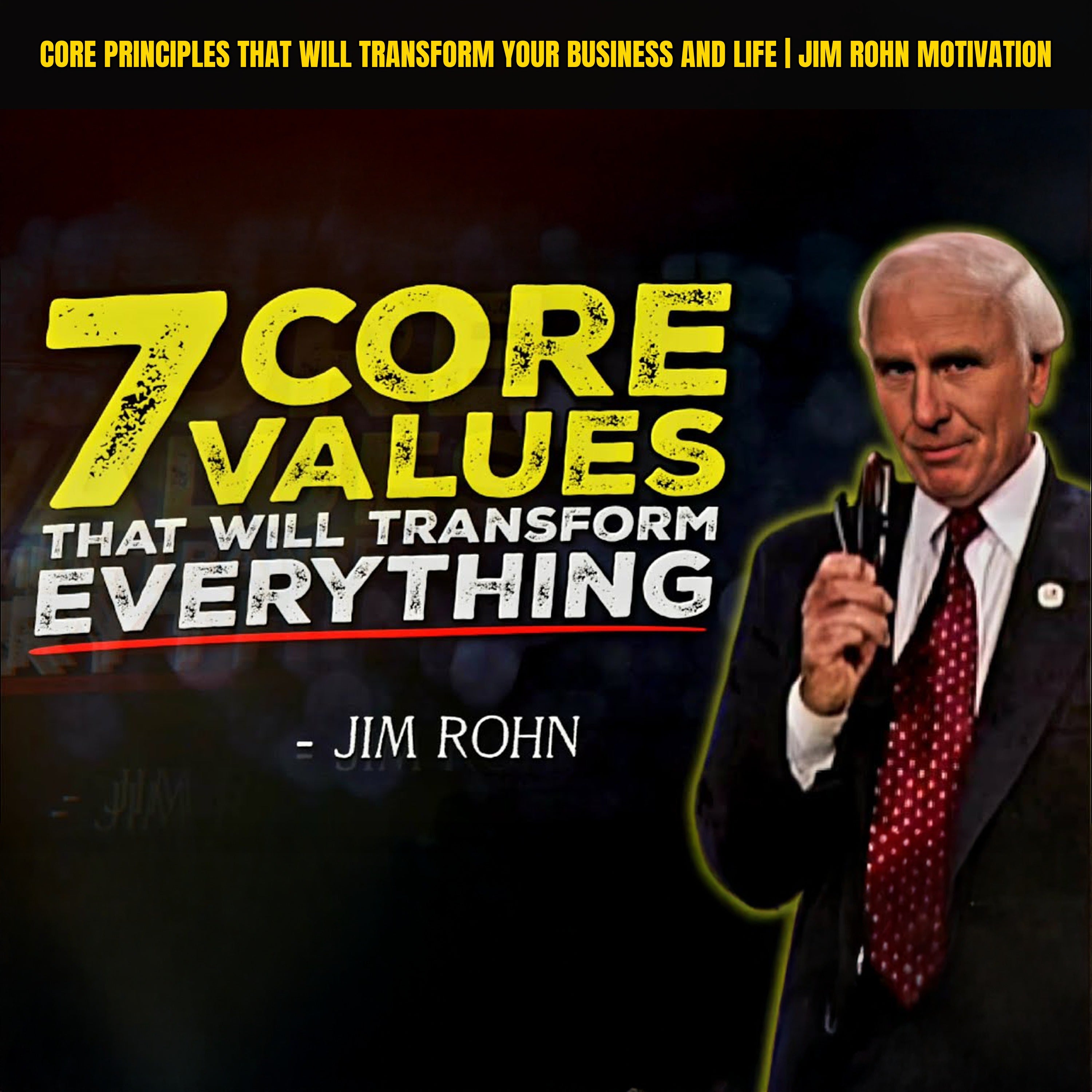
We dive deep into the 7 Core Values that transform not just leadership—but life. From integrity to courage, this message reminds us that success isn’t just about performance. It’s about principle. When your values lead, your results follow. Key Topics From This Motivational speech: Why integrity is the foundation for trust and influence How responsibility shifts you from blame to power Why discipline is the difference between vision and results How humility unlocks wisdom and real leadership Why adaptability is essential for growth in uncertain times How generosity builds impact, not just income Why courage is required to move before you're ready This Jim Rohn motivational speech isn’t about hype—it’s about the habits and values that hold you up when motivation fades. If your results feel unstable, start with your values. Because when those are clear, your actions have direction, your leadership has depth, and your business has backbone. These values don’t shift under pressure—they lea
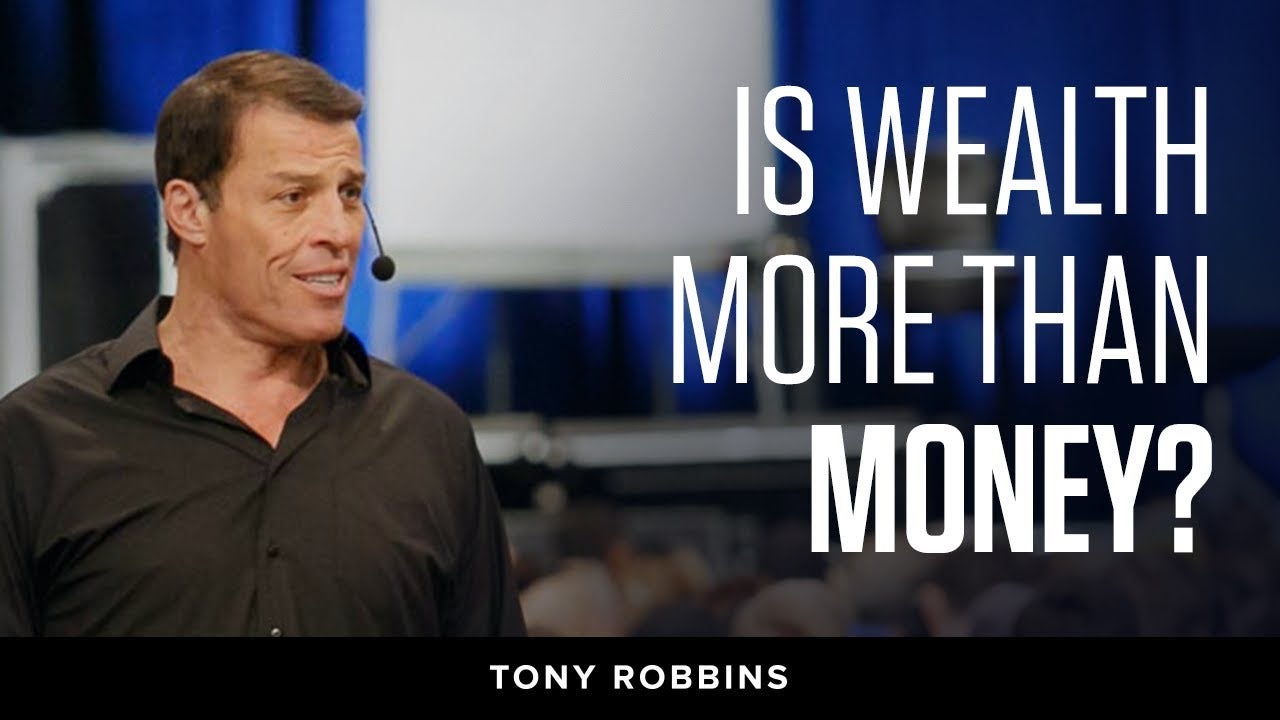
How will you know when you’ve reached true wealth? Is it when you have your dream home? Once you own an expensive car? Perhaps the signifier is when you’re wealthy enough to have your own private airplane? In Tony’s opinion, these are the wrong things to use when measuring your wealth. Uploaded 12-09-19 The people with mansion-sized homes, with three sports cars sitting in the garage, with a private plane that takes them to and from their vacation home – these people may not necessarily have access to true wealth. None of these are indicators of true wealth; they’re indicators of monetary wealth. True wealth is the ability to live life on your own terms. It’s freedom. Tony explains that money itself isn’t wealth, it’s a vehicle – a tool you can use to achieve financial freedom, to go after the dreams you didn’t think were possible, to design your life in a way that makes you feel alive and fulfilled. While Unshakeable is a financial freedom playbook, the process of becoming unshakeable
Now Mark wants to help you become financially free as well. Follow the podcast and turn on notifications! This Podcast is fan-made. No copyright infringement intended. ------------------------------ -------- Keywords: money tips, get rich, financial scams, financial education, buying vs renting, wealth creation, financial freedom, atm fraud
As 2026 enters its final stretch, where are the opportunities and risks for two of Canada's most closely watched sectors? Join Robert Reynolds, Equity Research Analyst, as he shares his latest outlook on Canadian banks and industrial companies heading into year-end. From earnings trends and economic headwinds to capital deployment and sector leadership, Robert discusses the key themes shaping the final quarter of the year and what investors should be watching as 2027 approaches. Recorded on November 13, 2026. -- Perspectives de fin d’année des banques et sociétés industrielles – Robert Reynolds Pour une version avec des sous-titres français, veuillez consulter Alors que 2026 entre dans sa dernière ligne droite, quelles occasions et quels risques se dessinent dans deux des secteurs les plus suivis au Canada? Joignez-vous à Robert Reynolds, analyste en recherche sur les actions, alors qu’il présentera ses plus récentes perspectives sur les banques et les sociétés industrielles canadienne
The sharp reply is ready before you finish reading the message. Some of it addresses the issue. Some of it only aims to hurt. Which response will you stand behind afterward? In this episode of The Level Up Podcast, Paul Alex breaks down how to communicate firmly under frustration while remaining accountable for your words. Paul connects lessons from police work with the responsibility to communicate clearly under pressure. Strong feelings can be acknowledged without turning the exchange into a personal attack. Before responding, identify the fact that needs attention and what you want the conversation to accomplish. Ask for the answer, correction, or boundary you need. Also check whether pressure from elsewhere is entering the exchange. Keeping the reply close to the actual situation gives your message a clearer purpose. In this episode, you’ll learn: • How to identify the result you need from a heated conversation. • Why firm communication does not require a personal attack. • What to
Peter Mintzberg is CEO of Grayscale, one of the world's largest digital asset managers founded in 2013. Peter joined Grayscale two years ago after a career in strategy and M&A at Goldman Sachs, Apollo, and BlackRock. He saw digital assets as the next step in the evolution of traditional finance. Our conversation covers the rapid mainstream adoption of digital assets, Grayscale's transition from its pioneering trusts to a broad ETF platform, and opportunities beyond Bitcoin and Ethereum. We discuss active management in digital assets, the evolution of blockchain applications, and the changing regulatory environment. We then turn to Peter's view of what comes next, including the convergence of AI and tokenization, personalized portfolios, and a future where the distinction between liquid and illiquid assets fades away. See full disclaimer here (https://www.capitalallocators.com/podcast/evolution-of-digital-assets-at-grayscale/). Learn More Follow Ted on X (https://twitter.com/tseides?lan
Paul Enright is a guru on equity hedge fund investing. Paul manages his family office, Krainos Holdings, that he started after a long career at Viking Global. For the last three years, he went back into the business as Chairman of Fundamental Equities for multi-manager pod shop Jain Global. Our conversation is a deep dive on single manager and multi manager hedge funds and on equity research in the age of AI. AlphaSense free trial (https://www.alpha-sense.com/capital/) for Capital Allocators listeners. Take Ridgeline's investment management tech survey (http://ridgeline.ai/survey). Learn more about Juniper Square here (https://www.junipersquare.com/). Learn More Follow Ted on X at @tseides (https://twitter.com/tseides?lang=en) or LinkedIn (https://www.linkedin.com/in/tedseides/) Subscribe to the mailing list (https://capitalallocators.com/) Access Transcript with Premium Membership (https://capitalallocators.com/signup) Editing and post-production work for this episode was provided by
The new documentary about Elizabeth Holmes and a candid conversation with a successful investment manager got me thinking about how we discover the truth. In this What Ted's Thinking, You Can't See Everything, I explore how the questions allocators ask can shape the answers they receive, and how our search for certainty can get in the way of understanding. Read Ted's blog here (https://www.capitalallocators.com/teds-blog/?category_2=what-teds-thinking&filterwp=31888). Editing and post-production work for this episode was provided by The Podcast Consultant (https://thepodcastconsultant.com (https://thepodcastconsultant.com/))
Organizations should help affected people recover after a personal-data breach.
Share your view, then see how readers voted. No sign-in required. This poll is shared across stories.
Do you agree or disagree?
Common Quandary
A Common Quandary to discuss
Another conversation to explore, separate from this news story.
A stray cat adopts you—and starts killing birds. Do you keep feeding it?
A stray cat visits your yard daily and appears to depend on the food you leave out. Neighbors complain that outdoor cats kill birds and say feeding it encourages the problem without taking responsibility for the animal.
Does caring for one visible animal excuse harm to less visible ones?