English-language podcasts

The Documentary Podcast

Restoring Libya’s Jasmine City

31 min

Listen through the publisher, then discuss the episode here or arrange an in-person Roundtable. Your city determines where to meet.

Roundtables are designed for groups of four, with a shared subject and room for everyone to speak. Come for discussion, with no dating expectation.

Derna, in eastern Libya, was devastated three years ago by the world’s deadliest flood disaster this century. About 4,000 lives were lost. Now, the historic Mediterranean port famous for its fragrant jasmine flowers has been rebuilt, with new roads, bridges, housing blocks, schools and medical facilities. Families that lost their homes have been rehoused, many in spacious apartments. The work’s been planned and paid for by a reconstruction fund with a budget of $2bn, headed by Belgacem Haftar, a son of the military strongman who rules eastern Libya. Reporter Tim Whewell visits Derna to talk to survivors about their memories of the flood, and how they live now. How has the reconstruction been achieved? How does it fit into the political plans of the powerful Haftar family? And what mental scars remain after the flood in a city where almost everyone lost someone they loved, and many bodies have still not been identified? Produced and presented by Tim Whewell

Episode information is provided by the publisher. Listening takes place on the publisher’s service.

Listen at the source ↗

Featured places to meet in Palo Alto, CA

Explore these places and arrange a conversation through ThinkMatch.

City guide for Palo Alto, CA

More from The Documentary Podcast

The Documentary Podcast

My country is being lost to the sea

24 min

Tuvalu looks like paradise – a cluster of islands, with white sandy beaches lined with palm trees, surrounded by the deep blue of the Pacific Ocean. But the tiny nation, which is roughly midway between Australia and Hawaii, is facing the existential threat of rising sea levels, caused by climate change. The 11,000 or so inhabitants are reckoning with a future where their country may no longer be habitable. With world leaders meeting at the UN COP31 climate talks, we bring together three young women to share their experiences of life in Tuvalu. “I want my children to understand [Tuvaluan] values, to know the language,” Moeli tells us. “To know more about Tuvalu, you have to sit down, respect the elders, no talking when elders are talking, everything like that.”

Discuss this episode

The Documentary Podcast

Vodou child

27 min

At school in Curaçao, Fré Calmes was called a witch and shunned by classmates. Within the family, spiritual practices were surrounded by secrecy. Today, the Haitian-born artist and Vodou priest is making that faith visible through sculpture, ceremony and a video game. Eric Mugaju travels to the Netherlands to meet Fré and explore the relationship between faith, creativity and belonging.

Discuss this episode

The Documentary Podcast

Kazakhstan's chess Gambit

27 min

Kazakhstan is a fast-emerging powerhouse in chess, with young women players leading the way. Chess-mad journalist Zoe Strimpel hears from grassroots players as she explores how central Asia’s largest economy has built a state-led initiative to promote the game. And she asks why chess is so important in nation-building, as the former Soviet republic squeezed between Russia and China uses the game to show itself to the world.

Discuss this episode

Community Poll

Acting on preliminary research can be justified when the risks of waiting are high.

Share your view, then see how readers voted. No sign-in required. This poll is shared across stories.

Do you agree or disagree?

Choose one answer

Common Quandary

A Common Quandary to discuss

Another conversation to explore, separate from this news story.

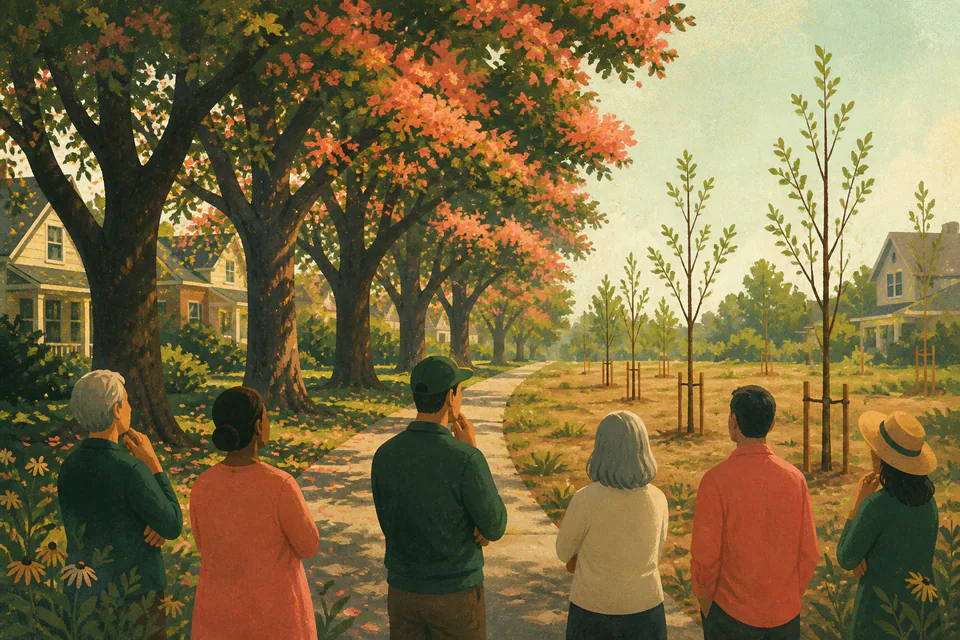
The prettiest trees on your street are ecological troublemakers. Do they come down?

A row of mature flowering trees defines a neighborhood and provides valuable shade. Ecologists identify them as invasive and recommend replacing them with native saplings that will take decades to grow.

How should visible community value be weighed against gradual ecological harm?

Explore this quandary