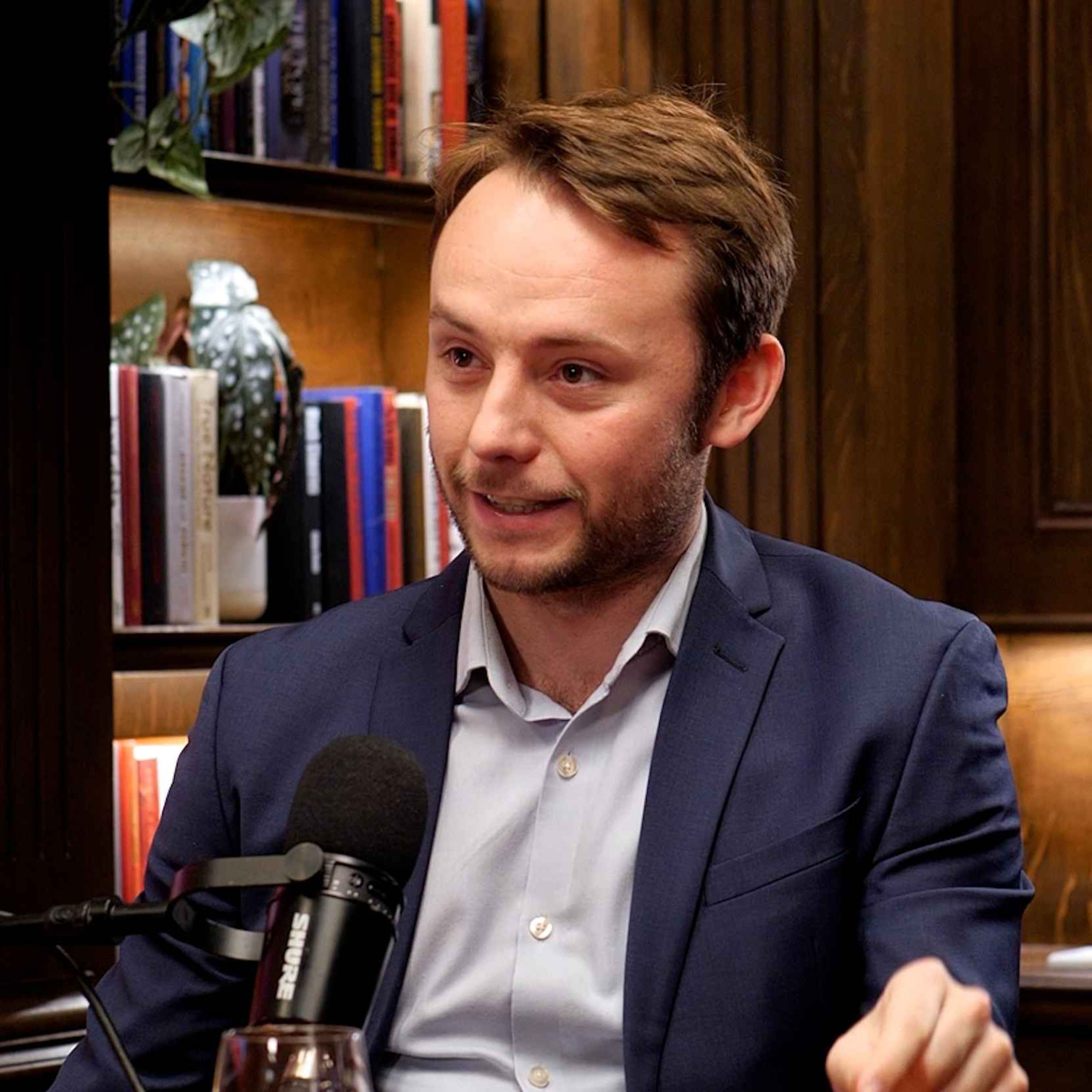
In this episode, Dr. K analyzes viral advice from financial influencers urging people to abruptly quit their jobs, contrasting their survivorship bias against clinical and economic data on the real risks of career disruption. He explains that difficult decisions become paralyzing when we attempt to engineer compromises that avoid emotional discomfort, which neuroscience reveals actually impairs risk calculation and produces worse choices. Rather than hunting for risk-free guarantees, Dr. K outlines how facing fear directly through realistic contingency planning and internal resolution allows you to commit fully to your path without being held back by dread. Mental health resources designed by Dr. K and made with love: https://bit.ly/3ZOopgQ Talk to a HG Coach 1-on-1: https://bit.ly/46bIkdo Dr. Dr. K's Guide to Mental Health: https://bit.ly/44z3Szt HG Memberships : https://bit.ly/3TNoMVf Products & Services : https://bit.ly/44kz7x0
The holidays can bring joy and connection, but they can also make grief feel even more present. Grief therapist and clinical psychotherapist Kelly Grosklags shares compassionate, practical advice for navigating the season after loss, including how to handle holiday gatherings, what to say (and not say) to someone who's grieving, and why "time heals all" doesn't quite capture how grief really works. Plus, how to make space for both sorrow and meaning, adjust traditions when needed, and honor the people we've lost during the holidays and beyond. Learn more about our guest(s): https://www.theNewsWorthy.com/shownotes (https://www.thenewsworthy.com/shownotes) Join us again for our 15-minute daily news roundups every Mon-Fri! Become an INSIDER and get ad-free episodes here: https://www.theNewsWorthy.com/insider (https://www.thenewsworthy.com/insider) Get The NewsWorthy MERCH here: https://www.theNewsWorthy.com/merch (https://www.thenewsworthy.com/merch) We've worked out a special deal with H
Nancy Guthrie hadn't missed her Sunday mornings in years. When she didn't come, her friends started calling. Here's The Nancy Guthrie Story, Part 1 and Part 2 back to back. You'll meet Nancy first. The society editor at the Kentucky Kernel. The young wife who lived in Australia and came home to Arizona. The widow who went to work at 48 and spent her summers running a medical camp for high school kids. Then you'll follow her last evening, minute by minute: the Uber to her daughter's house at 5:32, the garage door at 9:48, the masked man on her porch hours later, and the deputies who found a small trail of dried blood the next afternoon. Part 2 turns to Sheriff Chris Nanos. You'll hear about the sergeant he picked to run homicide, the search plane that went up after dark, the Rio Rico traffic stop and the lawsuit claim that followed, and the county investigation that found his command abused its authority. Nine months in, there's no suspect. The family's $1 million reward stands, and the
⭕️ NCI GRAD SCHOOL: https://nci.university/home-v2 Uploaded 21-05-26 There are 17 sentence structures that make another person's brain do the persuading for you. You don't argue. You don't push. You deliver the architecture and their own neurology finishes the job. These aren't scripts or phrases. They're machines. Each one was discovered independently — by Socrates, by trial lawyers, by hostage negotiators, by cult leaders — across 2,400 years, by people who never met and never read each other's work. They all found the same invisible thing. In this lecture I break all 17 into the four families nobody has ever mapped before: — Sentences that make the listener argue your position for you — Sentences that collapse resistance without pushing through it — Sentences that install an identity the person's own brain will defend long after you leave — Sentences that make a decision feel like it already happened Not one of them tells anyone what to think. Not one argues a position. Not one pers
Is unemployment in Britain rising or falling? The worrying answer is that we don't really know. The Office for National Statistics (ONS) is struggling to produce reliable employment figures, with fewer than four in ten people now responding to its Labour Force Survey. But what does this mean for government policy, interest rates and our understanding of the British economy? Michael Simmons speaks to Labour MP and former pollster Chris Curtis about why Britain's economic statistics have become so unreliable, whether the UK's youth unemployment crisis is as bad as we think and how flawed data has distorted our understanding of productivity. They also discuss whether Britain relies too heavily on evidence-based policymaking, why Chris wants to make participation in the Labour Force Survey compulsory and whether better use of government data could help fix the problem. Produced by Patrick Gibbons. Hosted on Acast.
People's reported experiences should matter as much as official service-performance targets.
Share your view, then see how readers voted. No sign-in required. This poll is shared across stories.
Do you agree or disagree?
Common Quandary
A Common Quandary to discuss
Another conversation to explore, separate from this news story.
Your family connection could get your child into their dream school. Do you use it?
A university argues that considering family ties builds loyalty and encourages donations that fund scholarships. Critics say the preference preserves inherited advantage and takes places from stronger applicants.
Can benefits to the whole institution justify an unequal admissions advantage?