She Thought Alcohol Was Helping: Taura’s Journey to Sobriety
88 min
Listen through the publisher, then discuss the episode here or arrange an in-person Roundtable. Your city determines where to meet.
Roundtables are designed for groups of four, with a shared subject and room for everyone to speak. Come for discussion, with no dating expectation.
Taura wasn’t drinking just to have fun. She wanted a few hours without the physical pain, anxiety, and feelings she didn’t know how to face. Growing up with an abusive father whose drinking made home unpredictable, Taura knew how much damage alcohol could cause. But because her own drinking looked different, she convinced herself it wasn’t a problem. A couple of beers became drinking every night, and attempts to moderate left her exhausted by the constant negotiations in her head. In this episode of Sober Motivation, Taura shares her experiences with childhood trauma, chronic illness, motherhood, and the moment she finally said, “I wanna be free.” She also opens up about finding support, learning to feel worthy of a different life, and why connecting with other people in recovery changed so much for her. Stay through the end for her powerful goodbye letter to alcohol. Connect with Taura on IG: https://www.instagram.com/tauralee33 Sober Motivation Website: https://www.sobermotivation.com Contact me anytime: [email protected] Hosted on Acast.
Episode information is provided by the publisher. Listening takes place on the publisher’s service.
Tom started speaking on the AA circuit at three years sober, but the applause did something he couldn't do for himself: it made him feel worthwhile. Five minutes after the room sat down, that feeling was gone. ☀️ Sober Sunrise App ☀️ Sober Sunrise Episode Archive Hundreds of AA speaker tapes and recovery stories: Sober Sunrise Merch Sober Sunrise Newsletter More than 31 years sober, Tom talks about the emotional dependencies that can remain long after the drinking stops. The end of a relationship brought him to an emotional bottom, and Bill W.'s writing on emotional sobriety helped him examine how much of his worth he had placed in other people's hands. His wife and friends could write pages describing the good in him, and his son could tell him he couldn't have asked for a better father, yet Tom struggled to believe any of it. With blunt humor, he connects his people-pleasing, perfectionism, controlling behavior, and automatic self-criticism to the continuing work of the Twelve Steps.
What do you do when you feel backed into a corner, the plan you were sure was meant for you falls through, and you honestly have no idea which way to turn next? In this raw, unscripted episode of The Positive Mindset Podcast, Henry Lawrence shares from right inside that moment—speaking to anyone sitting with the question, "What do I do?" Henry opens up about walking in faith after a door he felt certain had lined up closed unexpectedly. Instead of pretending he already has the neat answer, he walks through the shift in real time: checking the ego that resists asking for help, recognizing when we're asking God to help us control an outcome versus surrendering to His will, and discovering who we really are in our core when there is nothing external left to support it. He invites you to stop carrying the weight alone, hold your head high because of who your Father is, and bring the struggle to God first—not only in crisis, and not as a last resort. He leads an opening breath and prayer, a
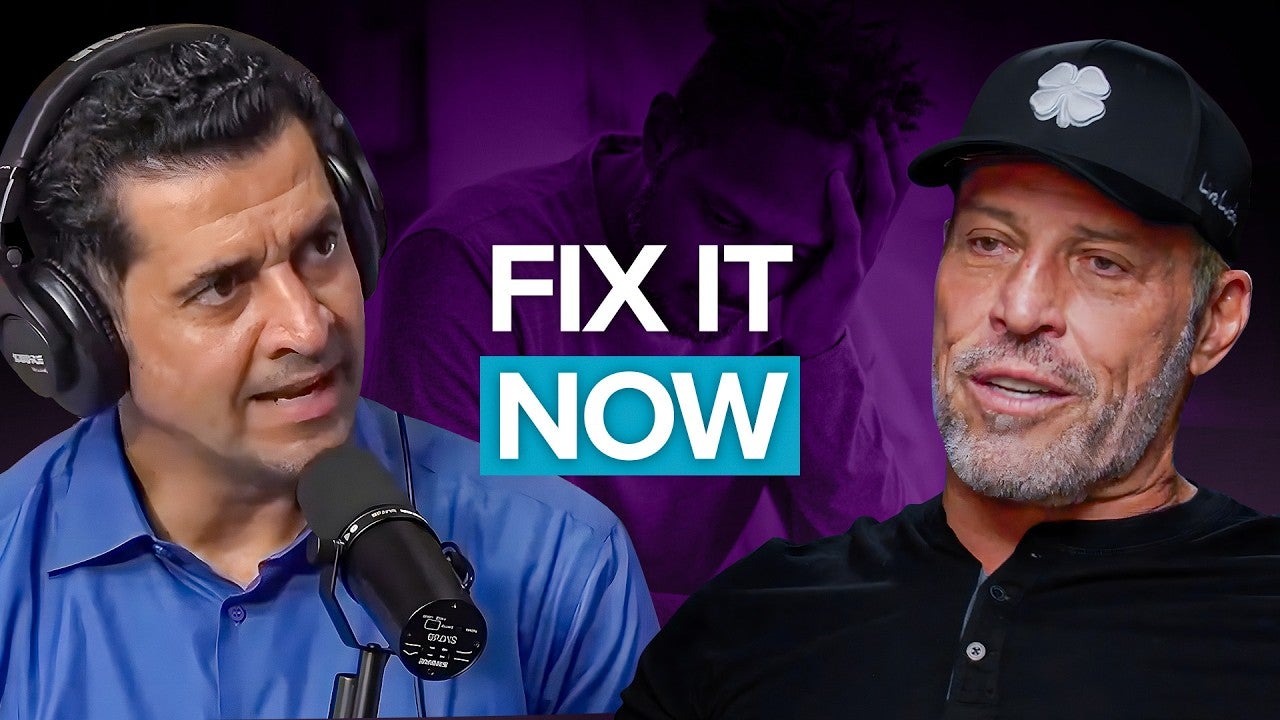
What if everything you thought took years to change… could be transformed in minutes? In this powerful episode, Tony Robbins joins The PBD Podcast with the host Patrick Bet-David—entrepreneur, author, and founder of Valuetainment, known for interviewing the world’s top thinkers and leaders. Uploaded 11-05-25 Together, they explore Tony’s early clashes with skeptics and his groundbreaking methods for helping people overcome trauma, addiction, and deep emotional blocks—fast. Tony also shares the mindset and tools behind these rapid breakthroughs, and how you can use them to transform your own life. Watch more videos like this The #1 Most Important Skill for Improving Your Life: https://youtu.be/8joX6mdOVcE How To Raise Your Standards To Get ANYTHING YOU WANT: https://youtu.be/-FEFeG1nEmc Prime Your Brain to STOP Stress, Anxiety and Fear INSTANTLY: https://youtu.be/60ROjGMqXUQ How To Be Happy and Remove Negative Thoughts in ANY Situation: https://youtu.be/r4ZdyS6v3qA Follow Tony Robbins:
discover how to turn lost time into unstoppable momentum. Whether you’ve drifted, delayed, or feel behind in life, this message offers a powerful mindset shift: you may be starting late, but you can still finish strong. Key Topics: The hidden cost of waiting and procrastination Why starting late requires sharper focus and urgency How to build discipline that replaces regret Turning pressure into purpose, not panic Redeeming lost time through intentional action This motivational speech delivers a wake-up call to anyone feeling behind. You’ll learn that the cost of delay isn’t just time—it’s position, confidence, momentum. But the good news? You can catch up—if you stop negotiating with comfort and start moving with purpose. This isn’t about rushing blindly; it’s about focused urgency, discipline, and smart execution. No matter where you’re starting, the path forward is always one step at a time. This Jim Rohn Motivational speech Is Perfect For: People who feel like they’ve wasted time a
Imagine taking a walk in the woods after a particularly busy week. You listen to the birds, watch the sunlight filter through the trees, and gradually notice little things you would normally walk past without a second thought. Nature has a way of bringing us back to the present moment. Hello everyone, and welcome to Daily English. Today's expression is “have a way of doing something.” When we say someone or something has a way of doing something, we mean that they have a particular ability or tendency to produce a certain effect, sometimes in a way that's difficult to explain. Let's look at a few examples. Imagine you're walking through a supermarket when you suddenly hear a song you used to listen to years ago. Within seconds, you're thinking about an old friend, a particular summer, and a version of yourself you haven't thought about in a long time. You might say: “Music has a way of bringing back memories we didn't even know we still had.” Now, imagine you've been worrying about a p
"Curing cancer," explained. We’re not looking for a “cure for cancer” anymore. Cancer is hundreds of diseases, so we’re really in a multi front fight against all of them. Cancer is a problem for us today in a way it wasn’t for previous generations. But, luckily, we also have more and more ways to fight back. I started this episode with endless questions: What is cancer? What causes it? How do we treat cancer? What are the symptoms? Why are some cancers easier to treat than others? Why is cancer so hard to cure? Why do so many people die of cancer? What I found is an incredible, complex, inspiring effort to treat and stop an insidious killer. In this video, we dive deep into how we treat cancer today. But I also found that we may not be helping the greatest number of people we can. In this episode of Huge If True, I want to make the case that while we have made enormous strides in the fight against cancer we have also largely ignored one of the single best ways to save the most lives. I
Frank spent 40 years building a successful television career while privately struggling with alcohol and cocaine. Viewers saw a confident news anchor. Behind the scenes, he felt like a fraud—hiding his addiction, making promises to stop, and watching his relationships suffer. Eventually, he was drinking up to two quarts of vodka a day and had almost given up on the possibility of sobriety. In this episode of Sober Motivation, Frank shares how his substance use progressed, why asking for help felt like weakness, and what changed during 75 days in treatment. He opens up about the impact on his family, the difficulty of forgiving himself, and the daily actions that have helped him build a different life. Now 68 and approaching two years sober, Frank is rediscovering joy, keeping commitments to himself, and doing things he once only dreamed about. His story is an honest reminder that years of struggling don’t mean change is out of reach. Connect with Frank: https://www.instagram.com/franks
“How could I have missed his addiction for five years?” That question stayed with Mike after losing his son, Robert. As a dentist, he had taken opioid courses and prescribed these medications regularly. But at home, he hadn’t recognized what his son was going through. A second question would shape his search for understanding: Why can it be so difficult for someone in active addiction or recovery to reach out for help—especially when they need it most? In episode 320 of Sober Motivation, we hear Robert’s story through the eyes of his father. Only once before have we explored this perspective on the podcast. Mike remembers a creative, entrepreneurial young man with a smile that drew people in. He shares the changes his family initially understood as teenage growing pains, the hope they held through treatment and recovery, and the life Robert was building when they believed he was finding his way. “If love were enough, my son would still be here.” This is an honest conversation about lov
Cheryl hid hundreds of empty wine bottles under the stairs, afraid that asking for help would mean losing her children. Behind the secrecy was a drinking problem that had grown to four bottles of wine a day, plus vodka. In this episode of the Sober Motivation Podcast, Cheryl shares how alcohol went from a source of comfort at 15 to something that controlled her life. She opens up about motherhood, the exhaustion of hiding her drinking, and the moment she told a rehab worker she didn’t believe she could survive another two weeks. We talk about what changed when she accepted help, the grief of letting alcohol go, and how she began rebuilding her relationships and finding joy in recovery. Today, Cheryl shares her story so others can feel less alone—and see that a different life is possible. Sober Motivation Website: https://www.sobermotivation.com Contact me anytime: [email protected] Hosted on Acast.
Institutions should demonstrate equal treatment through people's actual experiences, not just written policies.
Share your view, then see how readers voted. No sign-in required. This poll is shared across stories.
Do you agree or disagree?
Common Quandary
A Common Quandary to discuss
Another conversation to explore, separate from this news story.
Your family wants an AI to settle an old argument. Would you hand over the group chat?
A recurring family dispute has reached the point where nobody agrees on what was actually said. Your cousin proposes uploading five years of the family group chat to an AI that can reconstruct events, flag contradictions, and recommend a fair resolution. Nearly everyone agrees—but one relative refuses.
Can a tool make a family argument fair without turning intimacy into evidence?