Listen through the publisher, then discuss the episode here or arrange an in-person Roundtable. Your city determines where to meet.
Roundtables are designed for groups of four, with a shared subject and room for everyone to speak. Come for discussion, with no dating expectation.
Synopsis In 1974, St. Petersburg was still called Leningrad and still part of what we now call the former Soviet Union. Back then, the most famous living Soviet composer was Dmitri Shostakovich, whose health was rapidly failing from the cancer that would claim his life the following year. On today’s date in 1974, Shostakovich’s String Quartet No. 15, his final, was given its premiere performance by the Taneyev Quartet. The work was supposed to have been premiered by the Beethoven Quartet, but its cellist died unexpectedly, and, mindful of his own mortality, Shostakovich was reluctant to postpone the scheduled premiere. After all, he might not be around by the time the Beethoven Quartet found a replacement cellist. When his String Quartet No. 1 had premiered in 1938, Shostakovich had described that work as “joyful, merry, lyrical” and “springlike.” His String Quartet No. 15, on the other hand, is obviously a “winter work,” written by someone who knows he might never see another spring. If Shostakovich’s fifteen symphonies represent the public side of a Soviet composer, his fifteen string quartets might be described as chronicling his private inner world of hopes, fears and dreams. Music Played in Today's Program Dmitri Shostakovich (1906-1975): String Quartet No. 15; Emerson String Quartet; DG 463 284
Episode information is provided by the publisher. Listening takes place on the publisher’s service.
Short version Laura Frank is an artist from the Scenic Rim in Queensland who has been releasing music since 2019 and toured Australia extensively with Tom Curtain and his Outback Experience. She has released her debut album, Life in the Front Seat, and the current single is ‘Living My Life in the Front Seat’. Long version Laura Frank (https://www.laurafrank.com.au/) is a multi-disciplined artist from Queensland’s Scenic Rim who has been releasing music since 2019 and also makes videos, both for her songs and for other people. She’s also a veteran of fellow artist Tom Curtain’s Outback Experience, sharing the stage with him and taking her own animals on the road, joining Curtain’s horses and dogs. Life in the Front Seat is her first album, a collection of songs written by Frank and her husband and collaborator, Nick Morrissey. ‘I’m really proud of the fact that Nick and I have written all of our material,’ Frank tells me in this new interview as we discuss only the album and several oth
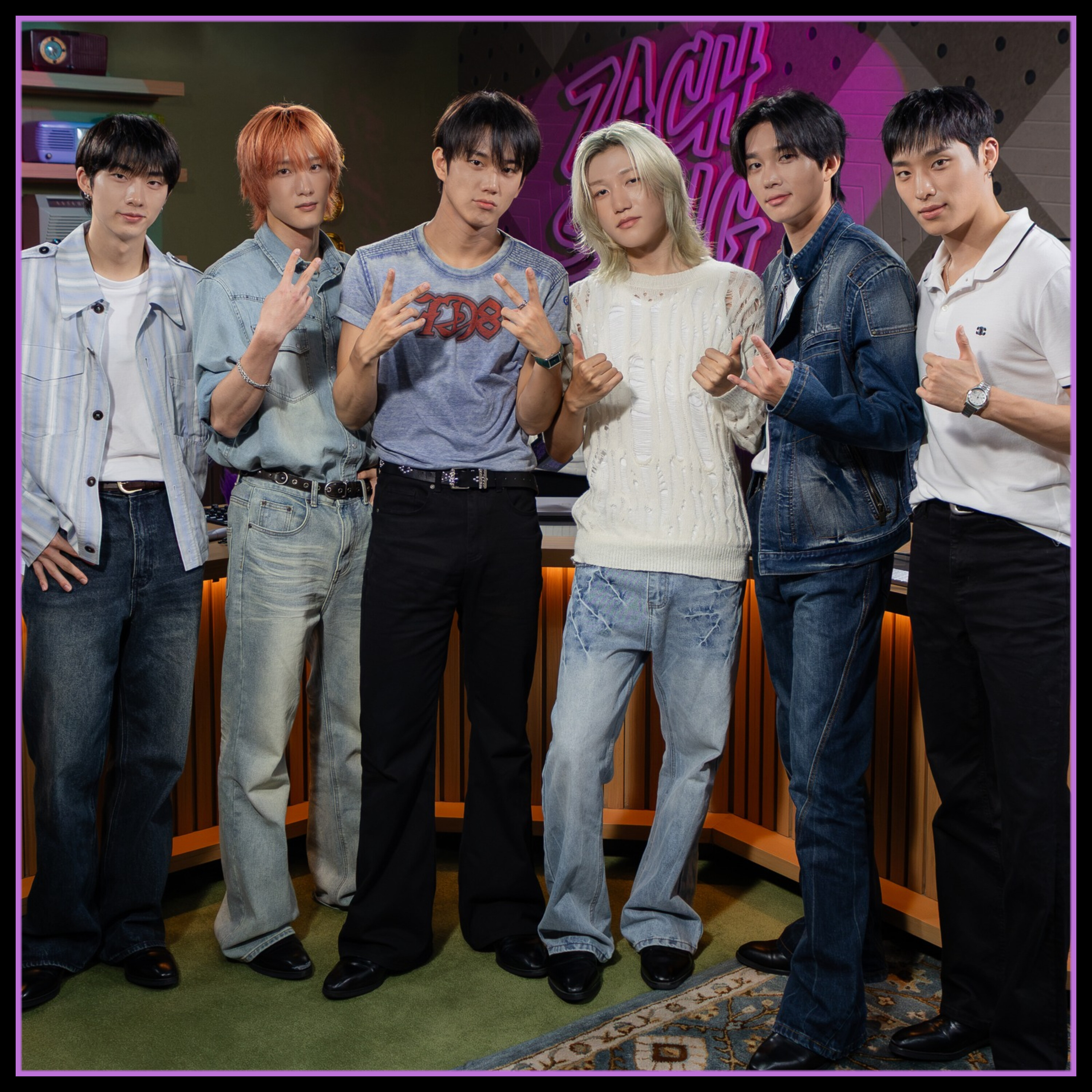
P1Harmony are back on the couch for the fourth time! Keeho, Theo, Jiung, Intak, Soul and Jongseob join us discuss their latest release, ‘MOMENTUM,’ the success of their last EP ‘UNIQUE,’ and how seven years of hard work, patience and consistency have paid off. They get into experimenting with electronic music, drawing inspiration from Nelly Furtado, Frost Children and Tiffany Day, writing their own lyrics, and why love songs have never really been their thing. They also talk about the ongoing superhero storyline connecting their albums, Theo's ambitious Horror Haven project, reinventing Rain's “Hip Song,” and embracing their sexier side onstage. And, of course, there's plenty of P1Harmony lore: a Princess Theo update, Soul's unforgettable pink-suited performance, their individual fashion choices, collecting live bugs, sleep-talking, tiny heads, and whether Intak really saved someone's life. "BLOW UP" ►►https://youtu.be/pdqij5LE7Hc?si=eJBTNhNM6GzVofUP
■ PUN He started with an 800-baht microphone in his bedroom — and at the height of it all, he stepped away to become a monk. PUN is a Thai R&B and indie-pop singer-songwriter signed to Universal Music Thailand. He started as a teenager in a school rock band, then recorded songs into an iPad through an 800-baht microphone. As PUNYARB he joined YARBCREW, an underground hip-hop crew, as its youngest member and the one who brought the melodies. He never studied theory; he wrote lyrics "10 times, 100 times, 1,000 times" until he found his voice. His debut single, "Kryptonite," on High Cloud Entertainment, was not hip-hop at all, a deliberate step out of his comfort zone. He moved to Universal Music Thailand in 2023 with "Therapist," then released "GOODBYE," which passed 30 million streams in two months, and "DAY ONE," written in a single day and now past 100 million. His 2024 debut album, "PUN," has passed 600 million streams and won Best New Artist and Best Album in 2025, the year his firs
Heavy metal has always been built on pure adrenaline, raw talent, and unvarnished attitude, but the digital age is threatening to tear down everything the genre stands for. From artificial intelligence invading the songwriting process to the complete collapse of physical album sales and streaming payouts, the modern music business is pushing real musicians to the absolute brink. Can authentic heavy metal survive when technology takes over the creative process, or are fans witnessing the final curtain call for real, unscripted music? If you are hunting for the absolute best heavy metal content on the planet, look no further because this is the ultimate destination to satisfy your heaviest classic metal cravings! From hard-hitting album breakdowns to aggressive industry debates, we deliver pure power straight to your screen every single week. MYSTIC PROPHECY - IN METAL https://amzn.to/4zmliw0 Get commercial free and uncensored episodes without any delays, bonus posts and episodes, and TH
If meditation never worked for you, Amy Strauss has some good news: nothing is wrong with you. Your intuition just speaks a different language. Amy is a practicing psychic, the creator of Your Resident Intuitive, and the author of The Six Intuitive Archetypes. She grew up in Hinsdale, Illinois, found her way to Washington, D.C., and recently stepped back from client readings to focus on teaching. The archetypes came to her, fully formed, on a day she was sitting around incredibly bored. We walk through all six: the Mystic, the Black Cat, the Butterfly, the House Witch, the Healer and the Emperor, and why the daily practice for each one looks completely different. For one person it's silent meditation. For another it's channeling into a voice memo. For a House Witch, it might be baking cookies. Amy explains why forcing yourself to sit for 20 minutes can make things worse, why the biggest block to intuition is the voice in your head that says "who do you think you are?", and the rule she
Written by Rob Hirst, and completed by his daughter Lex, the new book, World Is Almost At Peace, moves through the many songs Rob wrote and recorded and shares remarkable detail about the writing of a lifetime of music. Lex Hirst and Rob’s wife, Lesley Holland join Andy to share their memories of Rob and their reflections on his life and his music. Hana Stretton’s first album, Soon, was a response to isolation - with Covid and Australian bushfires looming in its background. On her latest, tiarn (https://hanastretton.bandcamp.com/album/tiarn-2), Hana has been folding ever more into her compositions: more voices, more instruments, more ideas, but it retains much of that shimmering, distant sound and remains inspired by the natural world around her. Hana is performing 8 Dec at Phoenix Central Park, Sydney; 9 Dec at Lansdowne Hotel, Sydney; 10 Dec at Thornbury Theatre, Melbourne; 11 Dec at Oregon Hall, Beechworth; 13 Dec at Meredith Music Festival Music heard in this program: Title: StoveA
Synopsis In August, 2019, thousands of women took to the streets of Mexico City to protest the outrageous police indifference to violent crimes against women, which largely went unpunished. Their protest became known as the “revolución diamantina” (glitter revolution), since they showered Mexico City’s security chief with pink glitter during their inaugural demonstration. Their protest inspired Mexican composer Gabriela Ortiz to collaborate with her compatriot, Pulitzer Prize-winning Mexican author Cristina Rivera Garza, in the creation of a ballet score that would chronicle their history and honor their action. The result of their collaboration was Revolución Diamantina, a 42-minute work of surprising power and beauty. Ortiz said, “It was up to me to imagine the music by using not only aesthetic languages already known to me, but by taking risks, learning, and experimenting with new tools. In this ballet, it has been my hope that the audience will explore different pathways that radic
Synopsis On today’s date in 1922, the British Broadcasting Corporation began daily radio transmissions from London, at first offering just news and weather — the latter read twice, in case anyone wanted to take notes. The following month, on Dec. 23, 1922, the BBC broadcast its first orchestral concert. Over time, the BBC became affectionately nicknamed “the Beeb,” or, less affectionately “Auntie,” due to the upper-middle class, slightly patronizing tone of its music announcers in the 1940s and ‘50s. That said, Auntie has proven to be hip in one aspect: The BBC has been a major commissioner of and advocate for new music by a wide range of composers — and not just British ones. In 2007, for example, the BBC Symphony premiered the Doctor Atomic Symphony, by American composer John Adams, live on-air at a BBC Proms Concert at the Royal Albert Hall. And it’s not just famous, big-name composers who get an airing on the Beeb either. Each year, BBC Radio 3 hosts a competition for teenage compo
Synopsis While for Puerto Ricans, the bomba and the plena are more familiar representatives of their proud dance tradition, the musical form known as danza holds a special place in their hearts. Danza originated in southern Puerto Rico in the early 19th century, originally similar to the waltz, but over time it absorbed Afro-Cuban influences. Manuel Gregorio Tavárez, a 19th-century Puerto Rican composer raised the danza to a cultivated art form, and accordingly he was dubbed “the Chopin of America.” Puerto Rican composer Dan Román paid tribute to Tavárez and other earlier danza masters in a piece for cello and piano called Retrospectos, or Retrospectives. This work premiered on today’s date in 2007 at the University of Colorado at Boulder, played by the Montserrat Duo, which had commissioned the piece. “Each movement of my piece uses a different aspect of the danza. Each movement also explores a particular composer from among the most significant authors of the genre. However, the s
Classroom technology should prove educational value before becoming standard.
Share your view, then see how readers voted. No sign-in required. This poll is shared across stories.
Do you agree or disagree?
Common Quandary
A Common Quandary to discuss
Another conversation to explore, separate from this news story.
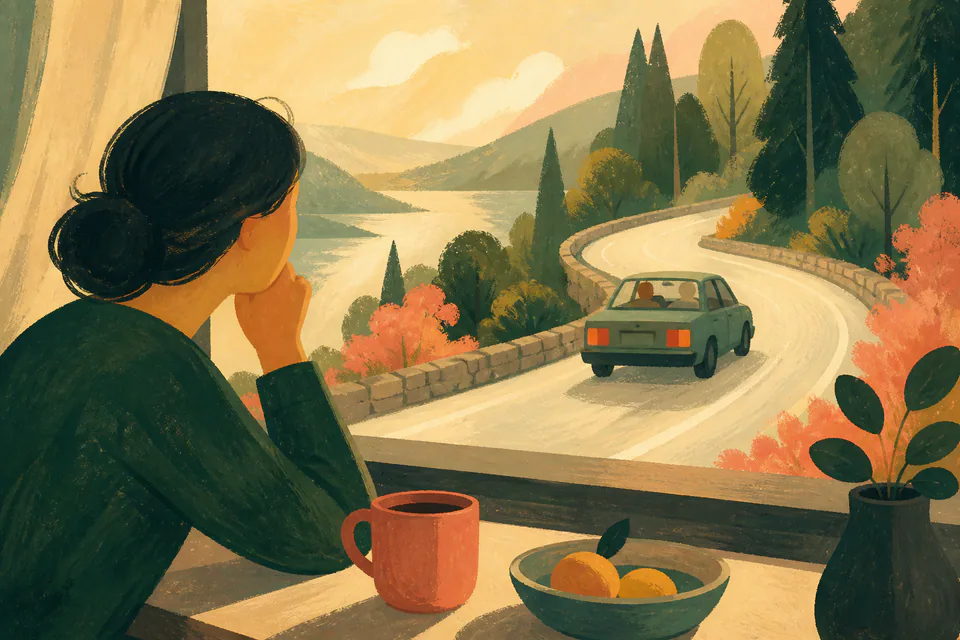
Your father is becoming a dangerous driver. Would you report him behind his back?
Your father values the independence his car gives him. He has not caused an accident, but his reactions have noticeably slowed and several recent drives frightened you. He refuses an assessment.