Listen through the publisher, then discuss the episode here or arrange an in-person Roundtable. Your city determines where to meet.
Roundtables are designed for groups of four, with a shared subject and room for everyone to speak. Come for discussion, with no dating expectation.
Synopsis In August, 2019, thousands of women took to the streets of Mexico City to protest the outrageous police indifference to violent crimes against women, which largely went unpunished. Their protest became known as the “revolución diamantina” (glitter revolution), since they showered Mexico City’s security chief with pink glitter during their inaugural demonstration. Their protest inspired Mexican composer Gabriela Ortiz to collaborate with her compatriot, Pulitzer Prize-winning Mexican author Cristina Rivera Garza, in the creation of a ballet score that would chronicle their history and honor their action. The result of their collaboration was Revolución Diamantina, a 42-minute work of surprising power and beauty. Ortiz said, “It was up to me to imagine the music by using not only aesthetic languages already known to me, but by taking risks, learning, and experimenting with new tools. In this ballet, it has been my hope that the audience will explore different pathways that radically alter how they listen, feel and perceive.” Revolución Diamantina received its first performance at Walt Disney Concert Hall, on today’s date in 2023, with Gustavo Dudamel conducting the LA Philharmonic and solo singers from the LA Master Chorale. Music Played in Today's Program Gabriela Ortiz (b. 1964): Revolución Diamantina; soloists from Los Angeles Master Chorale; Los Angeles Philharmonic; Gustavo Dudamel, conductor; LAPHIL02
Episode information is provided by the publisher. Listening takes place on the publisher’s service.
DESCRIPTION / SHOW NOTES The Brown Bag crew is back with a full episode packed with relationship drama, celebrity chisme, hilarious debates, and everything happening around Los Angeles! Don't You Know I'm Local – LA Olympics Security! – Los Angeles prepares for the 2028 Olympics with discussions about increased cybersecurity, airspace protection, and coastal security. Concrete wonders why the city isn't already taking these precautions! Airbnb Controversy! – The crew debates a reported Airbnb listing connected to a celebrity death. Should rental guests be told about a property's history? Petty Police – Ice Spice & Young Thug! – A resurfaced Halloween photo sparks online drama involving Ice Spice, Young Thug, and Mariah the Scientist. The crew breaks down the social media pettiness! Scrolling with the Homies – Willow Smith's Viral Cover! – Willow Smith's rendition of Amerie's classic “1 Thing” divides the internet. Concrete isn't impressed, and the crew attempts their own hilarious vers
The South African DJ on Afro house's global rise, the townships that incubated it and why the sound should stay open to all. Shimza grew up in Tembisa, a township east of Johannesburg, where as a kid he followed the DJs who played the area's stokvel parties. Members of these community savings clubs took turns hosting and competed to book the best DJs. Those DJs became local tastemakers, and some went on to play national radio and run the record shops that shaped grassroots South African house. He eventually broke out of that circuit to become one of Afro house's biggest exports. This year he brought his Shimza & Co residency back to Pacha for a second Ibiza season, and he now sells out shows for thousands from Amsterdam to Mexico City. Along the way he built Kunye, which started as a lockdown livestream and grew into a label and party platform for the next generation of African artists. In this Exchange with RA's content production lead Antonia Odunlami, Shimza weighs in on the growing
The South African DJ on Afro house's global rise, the townships that incubated it and why the sound should stay open to all. Shimza grew up in Tembisa, a township east of Johannesburg, where as a kid he followed the DJs who played the area's stokvel parties. Members of these community savings clubs took turns hosting and competed to book the best DJs. Those DJs became local tastemakers, and some went on to play national radio and run the record shops that shaped grassroots South African house. He eventually broke out of that circuit to become one of Afro house's biggest exports. This year he brought his Shimza & Co residency back to Pacha for a second Ibiza season, and he now sells out shows for thousands from Amsterdam to Mexico City. Along the way he built Kunye, which started as a lockdown livestream and grew into a label and party platform for the next generation of African artists. In this Exchange with RA's content production lead Antonia Odunlami, Shimza weighs in on the growing
On this episode: blackmail, chart rigging, police corruption, prostitution, drug trafficking, harassment, doxxing, attempted home invasions, suicide, sexual assault, and a suspicious death, all of which will have you asking the same question. Is K-pop the most violent music scene the world has ever known? This episode contains material that may disturb some listeners, including descriptions of sexual assault and suicide. If you are struggling with thoughts about suicide or are worried about someone who is, help is available by calling the lifeline at 988. Visit www.disgracelandpod.com/merch (https://www.disgracelandpod.com/merch) to see the latest Disgraceland merch! Follow Jake and DISGRACELAND: Instagram (https://www.instagram.com/disgracelandpod/) YouTube (https://www.youtube.com/@disgracelandpod) X (https://twitter.com/disgracelandpod) (formerly Twitter)
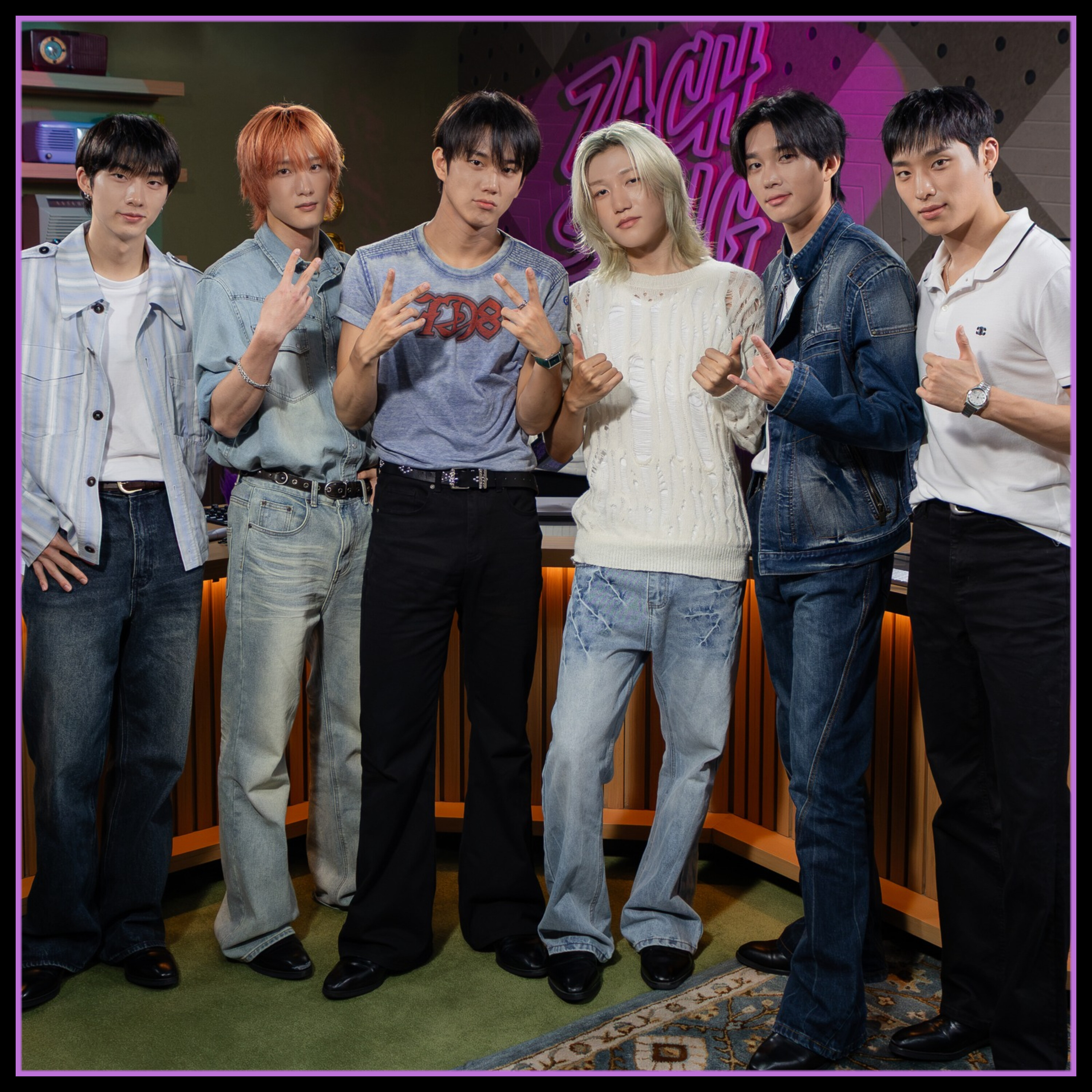
P1Harmony are back on the couch for the fourth time! Keeho, Theo, Jiung, Intak, Soul and Jongseob join us discuss their latest release, ‘MOMENTUM,’ the success of their last EP ‘UNIQUE,’ and how seven years of hard work, patience and consistency have paid off. They get into experimenting with electronic music, drawing inspiration from Nelly Furtado, Frost Children and Tiffany Day, writing their own lyrics, and why love songs have never really been their thing. They also talk about the ongoing superhero storyline connecting their albums, Theo's ambitious Horror Haven project, reinventing Rain's “Hip Song,” and embracing their sexier side onstage. And, of course, there's plenty of P1Harmony lore: a Princess Theo update, Soul's unforgettable pink-suited performance, their individual fashion choices, collecting live bugs, sleep-talking, tiny heads, and whether Intak really saved someone's life. "BLOW UP" ►►https://youtu.be/pdqij5LE7Hc?si=eJBTNhNM6GzVofUP
Bomani Jones and Spencer Hall revisit Joe Paterno, Jerry Sandusky and the Penn State scandal in this Time Machine Tuesday episode of The Right Time. Fifteen years after the events of November 2011, they examine how Paterno became inseparable from Penn State's identity—and why the university's image of doing college football the right way made its institutional failures so revealing. Visit https://prizepicks.onelink.me/LME0/BOMANI and use code BOMANI to get $25 instantly in Packs after you rip your first $5 PackFrom Paterno's “Grand Experiment” and Penn State's national profile to Sandusky's place in the football program and The Second Mile, Bomani and Spencer trace the reputation surrounding the people and institutions at the center of the story. They discuss Sara Ganim's reporting, Mike McQueary, the reaction from former players including Matt Millen and Franco Harris, and the difficulty of confronting allegations involving someone treated as a father figure. They also question the NC
Synopsis In 1974, St. Petersburg was still called Leningrad and still part of what we now call the former Soviet Union. Back then, the most famous living Soviet composer was Dmitri Shostakovich, whose health was rapidly failing from the cancer that would claim his life the following year. On today’s date in 1974, Shostakovich’s String Quartet No. 15, his final, was given its premiere performance by the Taneyev Quartet. The work was supposed to have been premiered by the Beethoven Quartet, but its cellist died unexpectedly, and, mindful of his own mortality, Shostakovich was reluctant to postpone the scheduled premiere. After all, he might not be around by the time the Beethoven Quartet found a replacement cellist. When his String Quartet No. 1 had premiered in 1938, Shostakovich had described that work as “joyful, merry, lyrical” and “springlike.” His String Quartet No. 15, on the other hand, is obviously a “winter work,” written by someone who knows he might never see another spring.
Synopsis On today’s date in 1922, the British Broadcasting Corporation began daily radio transmissions from London, at first offering just news and weather — the latter read twice, in case anyone wanted to take notes. The following month, on Dec. 23, 1922, the BBC broadcast its first orchestral concert. Over time, the BBC became affectionately nicknamed “the Beeb,” or, less affectionately “Auntie,” due to the upper-middle class, slightly patronizing tone of its music announcers in the 1940s and ‘50s. That said, Auntie has proven to be hip in one aspect: The BBC has been a major commissioner of and advocate for new music by a wide range of composers — and not just British ones. In 2007, for example, the BBC Symphony premiered the Doctor Atomic Symphony, by American composer John Adams, live on-air at a BBC Proms Concert at the Royal Albert Hall. And it’s not just famous, big-name composers who get an airing on the Beeb either. Each year, BBC Radio 3 hosts a competition for teenage compo
Synopsis While for Puerto Ricans, the bomba and the plena are more familiar representatives of their proud dance tradition, the musical form known as danza holds a special place in their hearts. Danza originated in southern Puerto Rico in the early 19th century, originally similar to the waltz, but over time it absorbed Afro-Cuban influences. Manuel Gregorio Tavárez, a 19th-century Puerto Rican composer raised the danza to a cultivated art form, and accordingly he was dubbed “the Chopin of America.” Puerto Rican composer Dan Román paid tribute to Tavárez and other earlier danza masters in a piece for cello and piano called Retrospectos, or Retrospectives. This work premiered on today’s date in 2007 at the University of Colorado at Boulder, played by the Montserrat Duo, which had commissioned the piece. “Each movement of my piece uses a different aspect of the danza. Each movement also explores a particular composer from among the most significant authors of the genre. However, the s
Public officials should meet ethical standards higher than the minimum required by law.
Share your view, then see how readers voted. No sign-in required. This poll is shared across stories.
Do you agree or disagree?
Common Quandary
A Common Quandary to discuss
Another conversation to explore, separate from this news story.
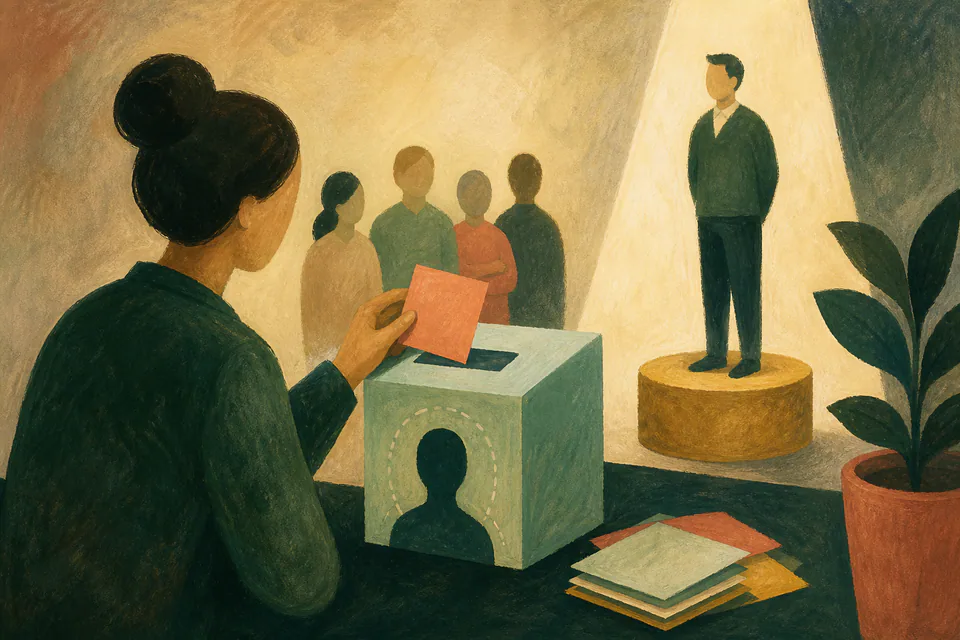
Your anonymous review could cost a coworker a promotion. Do you sign your name?
A company requests anonymous feedback about a colleague being considered for promotion. You have serious concerns based on direct experience, but anonymity prevents them from asking questions or understanding the context of your criticism.
Does honest criticism require accepting personal accountability for it?