SOTR: Banks, Airlines, Government Outages - What’s happening?
72 min
Listen through the publisher, then discuss the episode here or arrange an in-person Roundtable. Your city determines where to meet.
Roundtables are designed for groups of four, with a shared subject and room for everyone to speak. Come for discussion, with no dating expectation.
Why does it seem like everything is breaking at once? This week on Suspension of the Rules, Isaac and Kmele are joined by Tangle Editor Audrey Moorhead, who’s filling in for Ari Weitzman while he’s on paternity leave. They start with a week of outages across Microsoft, the FAA, major banks, Apple and even the National Security Agency, asking whether it all adds up to something bigger or whether recency bias is playing a role. Kmele tees off on a viral post warning of a “software Beirut,” while Isaac brings in data on the history of major outages and updates his skepticism about Anthropic’s Project Glasswing and AI cyber threats. Each host places themselves on a scale from one to prepper, and they react to JD Vance’s comments about preparing for the worst. Finally, Audrey explains how reading Vance’s new memoir about his conversion to Catholicism has changed how she sees the vice president, and Isaac names Sen. Mike Rounds (R-SD) good guy of the week. As always, we end with some grievances, this time about the College Football Playoff committee’s rankings, Amtrak’s disappearing tickets, and drivers who stop dead in the middle of the highway to make their exit. This episode covers: • A week of outages: real or illusion? • Nicole Perlroth’s “software Beirut” warning • Are tech outages actually on the rise? • Isaac updates his take on the AI cyber threat • One to prepper: where do the hosts land on AI doomerism? • JD Vance on preparing for the worst • Audrey reconsiders JD Vance after reading his memoir • Can government fill the “God-shaped hole”? • Good guy of the week: Sen. Mike Rounds Black Friday Deal! Steepest discount we've ever done. The Great Salt Lake debate. In early 2023, a group of scientists reported that the Great Salt Lake would suffer ecological collapse within five years if its water level continued its rate of decline. It would be a catastrophe of epic proportions, devastating the local environment and economy while potentially exposing millions of people to “toxic dust” from the lakebed. Now, as we approach the four-year mark since the report was published, what’s happening with the lake? In our newest mini-documentary, we head to Utah to find some answers. Check it out here. (https://youtu.be/yRhjXDYSLAQ?si=JQMfBCgnc6Z_98vS) Our Executive Editor and Founder is Isaac Saul. Our Executive Producer is Jon Lall. This podcast hosted by: Isaac Saul (https://www.readtangle.com/author/isaac-saul/) and audio engineered and edited by Dewey Thomas. Music for the podcast was produced by Jon Lall. Hosted on Acast.
Episode information is provided by the publisher. Listening takes place on the publisher’s service.
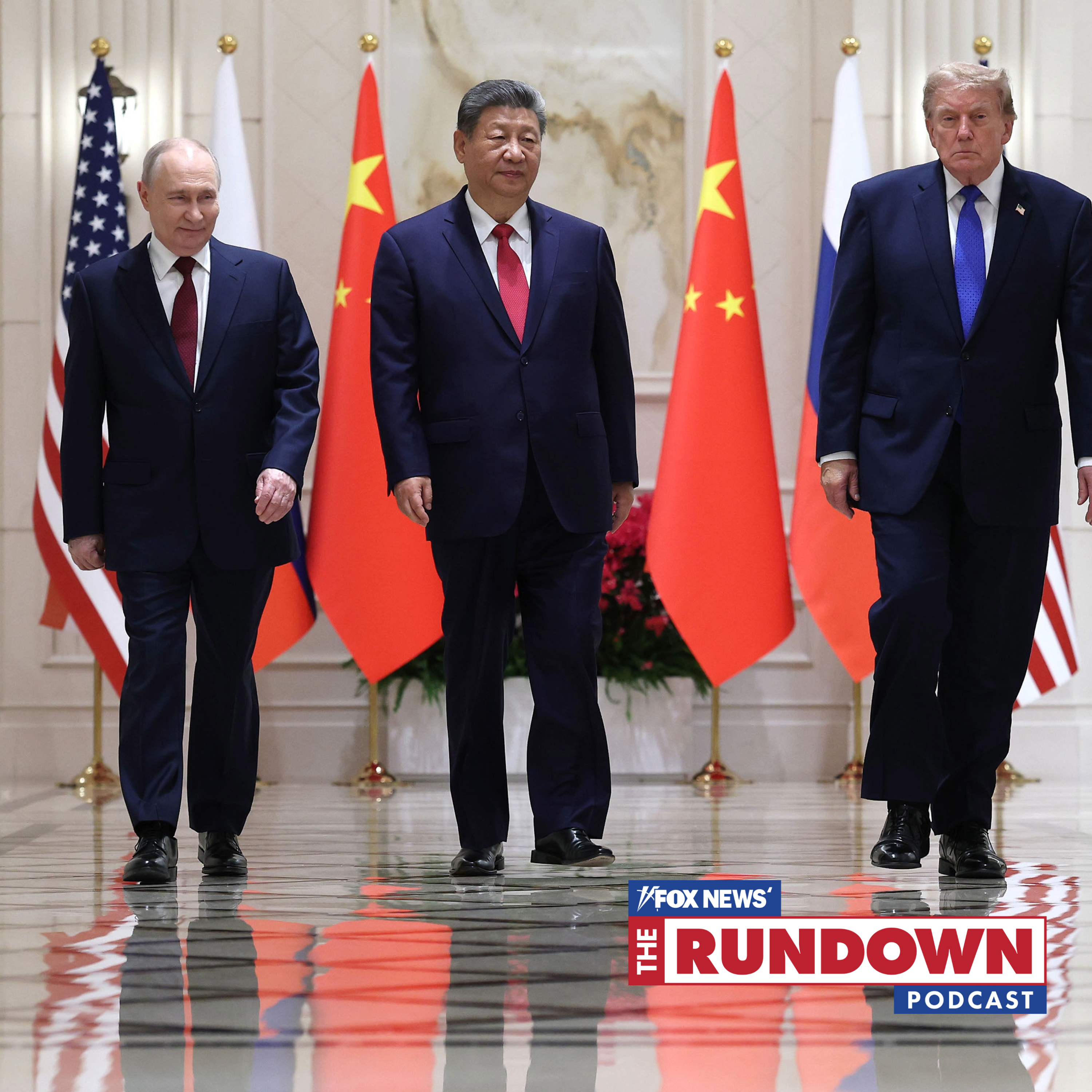
Following President Trump’s trip to Asia and a first-ever trilateral meeting with the leaders of China and Russia, foreign policy experts are weighing what was accomplished on the world stage. Former national security advisor to Vice President Dick Cheney and Heritage Foundation senior research fellow Stephen Yates joins The Rundown to analyze the summit’s outcomes on Taiwan, Ukraine, Iran, and strategic arms talks. Yates also explains how new rare-earth agreements with U.S. allies and export controls on AI chips balance Trump’s warmer rhetoric toward Beijing. Later, widespread tech outages across major platforms and government systems raise urgent questions about whether U.S. digital infrastructure is prepared for the artificial intelligence era. Former Cybersecurity and Infrastructure Security Agency (CISA) director Bridget Bean breaks down how rapid software patching can trigger cascading system failures, the growing cyber threats posed by China and Iran, and how organizations can d
Project Synapse: Markets in Freefall, Fragile Infrastructure, and AI's Perfect Storm The hosts banter through the show's intro before focusing on a sense that "things are out of control," citing a WallStreetBets suicide-hotline post amid a market crash and discussing cascading system failures involving Microsoft, the FAA, and a reported NSA internal communications outage. They argue politicians and leadership lack technical competence and clear messaging, increasing panic, while emphasizing that many problems stem from aging, underfunded infrastructure and complex, brittle software (PHP, NGINX, Java), not proven AI attacks—more a "perfect storm" of crises. They debate whether AI should help fix complexity, stressing critical thinking, accountability, and using multiple AIs to verify each other. In a lightning round they cover Anthropic's IPO performance, mixed reactions and token limits with ChatGPT 6.2 (favoring "Sol" over "Astra"), Google's cheaper Neon model and confusing UX, Loblaw
A wave of major technology outages is raising troubling questions about America's cybersecurity, aging infrastructure, and readiness for a new era of artificial intelligence. Are these isolated technical failures, or warning signs of a much larger national security problem? John Solomon and Amanda Head welcome Ohio Congressman and former Army Ranger Warren Davidson, who discusses recent disruptions involving the FAA, Microsoft, and other critical systems. Davidson calls for greater transparency from government agencies and technology companies, questions whether America's infrastructure is adequately protected against emerging cyber threats, and examines how artificial intelligence could be used both to strengthen defenses and exploit vulnerabilities. The conversation also turns to immigration and national security, with Davidson raising concerns about individuals who entered the country illegally, potential gaps in government screening systems, and the surveillance powers used to moni
This week on the Mark Levin Show, 2028 Republican Presidential candidates must directly address the urgent threats to the country - Marxism and Islamism. These candidates should deliver bold, courageous speeches that clearly explain what is happening in the country, identify those responsible, and directly challenge these threats rather than leaving such warnings to a small number of media voices. Also, it is difficult to believe so many major outages affecting entities such as the NSA, FAA, airline systems, Microsoft, and Apple services could be merely coincidental. The timing and scale of the incidents are troubling and remain inadequately explained. President Trump had proposed a major modernization and restructuring of air traffic control in 2017 that Congress failed to enact. Had those reforms been adopted, many current FAA failures might have been avoided. Later, does Senator John Kennedy know anything about originalism? Originalism is not pure textualism. The meaning and intent
Jensen Huang stepped down as Nvidia CEO on November 12, 2026, after reports about an extramarital relationship with Alice Huang, a former senior executive at Megaspeed. U.S. intelligence reportedly viewed her as an asset working for Beijing. That allegation is not a conviction, and it is not the same thing as proof Nvidia secrets changed hands. Tony Brueski brings in retired FBI Special Agent Robin Dreeke, former leader of the bureau’s Counterintelligence Behavioral Analysis Program, for the question behind the headlines: how does somebody who helped build one of the world’s most important technology companies fail to recognize a possible intelligence threat in his personal life? Huang apologized to his family and Nvidia employees for infidelity. The board announced an outside investigation, while saying it knew of no reason to believe national security or proprietary information was compromised. Reuters subsequently reported that Huang had previously told Nvidia leaders his encounters
November 21, 2026; 10am: The president’s coziness with tech oligarchs is muddying the waters of protecting America’s best interests. Congressman-elect Dan Koh expresses his concerns about the series of recent tech outages and how the administration is prioritizing beneficial relationships and cash over the safety of Americans and their cybersecurity; Lisa Rubin breaks down the obstacles ex-Nvidia CEO Jensen Huang can expect as legal inquiries come his way; Project 2025 may seem like a distant memory, but its policies are more present in this administration than you might think. David Graham outlines the consequences of the Heritage Foundation’s influence; Victor Fontanez is known on the internet as VicBlends, a viral haircutting sensation. But to many in the California prison system, he’s a mentor and hero, helping incarcerated men prepare for a career. Fontanez reflects on his impact. Hosted by Simplecast, an AdsWizz company.
The industry is operating on flawed assumptions. Most days, our technological landscape feels unshakeably miraculous. You can save hundreds of thousands of documents in organized folders and send messages to a friend on the other side of the world in mere seconds; the internet crams all recorded knowledge into your pocket; personal agents sit at your beck and call to schedule doctor appointments or retrieve any information you might need; and AI software can crunch more data in one minute than you could in a lifetime. We’ve made it. Except this week things felt precarious. Black Friday Deal! Steepest discount we've ever done. Suspension of the Rules. A “software Beirut”? Apps and emails and agencies going down? Advisories to stockpile supplies? On this week’s Suspension of the Rules, Isaac, Kmele, and guest host Audrey Moorehead break down AI-related fears and how they’re thinking about the past week’s news. You can watch here. (https://youtu.be/WE5W7gWozQs?si=lC7wGwKSxi2IPy4p) The Gre
Over the past week, a slew of outages across industries, service providers, and government agencies have heightened concerns about vulnerabilities in U.S. technology systems and the threat of artificial intelligence-driven cyberattacks. Black Friday Deal! Steepest discount we've ever done. Suspension of the Rules. A “software Beirut”? Apps and emails and agencies going down? Advisories to stockpile supplies? On this week’s Suspension of the Rules, Isaac, Kmele, and guest host Audrey Moorehead break down AI-related fears and how they’re thinking about the past week’s news. You can watch here. (https://youtu.be/WE5W7gWozQs?si=lC7wGwKSxi2IPy4p) The Great Salt Lake debate. In early 2023, a group of scientists reported that the Great Salt Lake would suffer ecological collapse within five years if its water level continued its rate of decline. It would be a catastrophe of epic proportions, devastating the local environment and economy while potentially exposing millions of people to “toxic d
On Monday, November 16, the Senate voted (https://www.readtangle.com/r/6696ee5e?m=c128382d-3df4-42e5-be0b-357e72caf266) 70–27 to end debate on the Bipartisan American Affordability and Jobs Act (BAAJA), a major permitting reform bill. The decision sets up a final Senate vote on the legislation, and if passed, it would then go to the House. The 494-page bill would constitute the most comprehensive permitting reform in decades, significantly overhauling existing processes for building projects that require federal approval. Ad-free podcasts are here! The Great Salt Lake debate. In early 2023, a group of scientists reported that the Great Salt Lake would suffer ecological collapse within five years if its water level continued its rate of decline. It would be a catastrophe of epic proportions, devastating the local environment and economy while potentially exposing millions of people to “toxic dust” from the lakebed. Now, as we approach the four-year mark since the report was published, w
Documentaries should disclose editing choices that substantially affect how events are understood.
Share your view, then see how readers voted. No sign-in required. This poll is shared across stories.
Do you agree or disagree?
Common Quandary
A Common Quandary to discuss
Another conversation to explore, separate from this news story.
The restaurant gives free birthday cake. Is moving your birthday by a week close enough?
A restaurant offers a spectacular free dessert on birthdays. Your birthday was last week, but nobody took you out then. When the server asks whether anyone is celebrating, your friends point at you and wait for your answer.
How much flexibility can a harmless celebration tolerate before it becomes a lie?