English-language podcasts

The Projection Booth

Special Report: Stranded on Earth (2026)
76 min

Listen through the publisher, then discuss the episode here or arrange an in-person Roundtable. Your city determines where to meet.

Roundtables are designed for groups of four, with a shared subject and room for everyone to speak. Come for discussion, with no dating expectation.

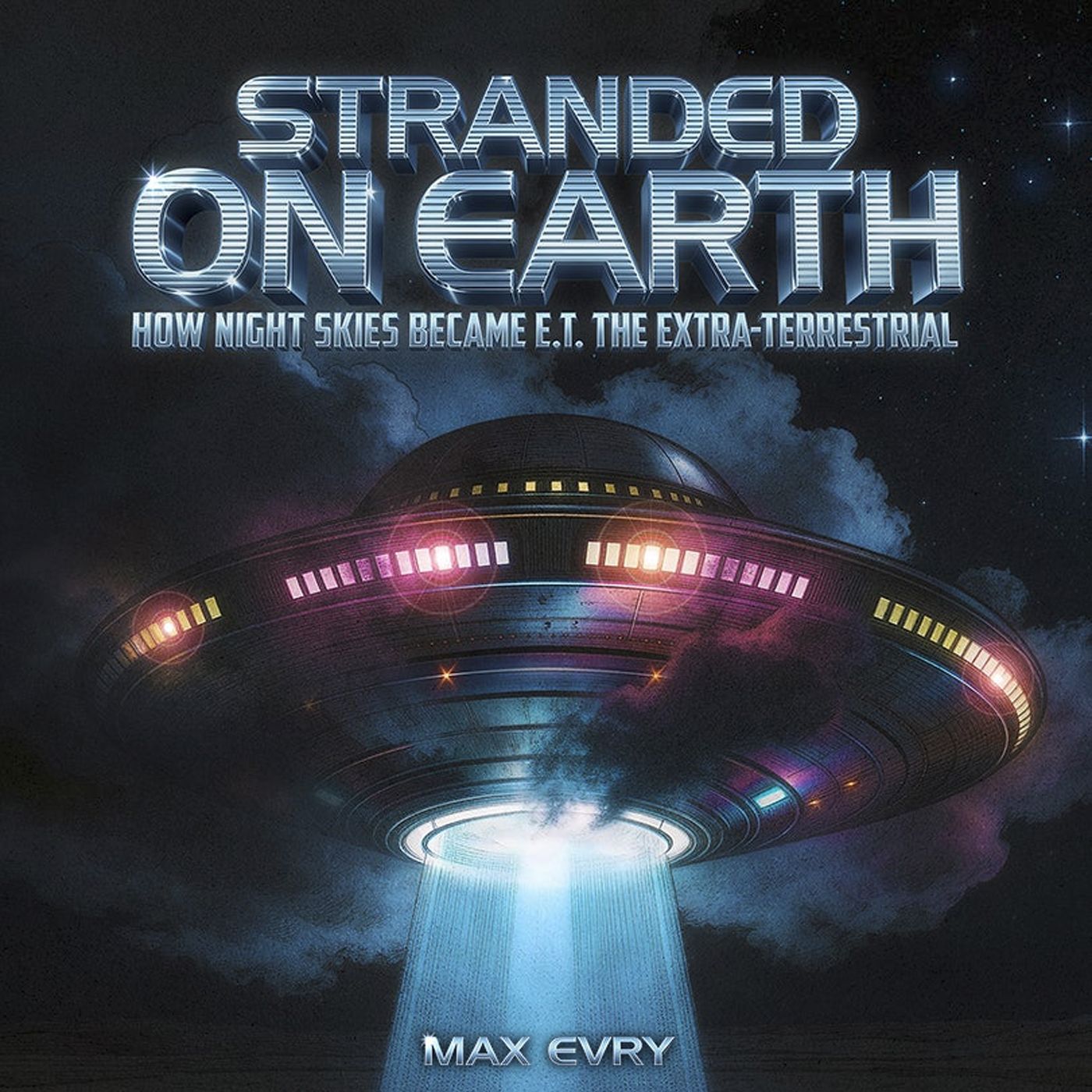
Before E.T. the Extra-Terrestrial (1982) there was Night Skies, a rural alien-horror movie that Steven Spielberg developed, spent roughly $700,000 on, and walked away from. Max Evry, author of A Masterpiece in Disarray: David Lynch's Dune, returns to The Projection Booth to talk about his new book, Stranded on Earth: How Night Skies Became E.T. the Extra-Terrestrial, out October 27 from 1984 Publishing. A new book, a new look at old Spielberg. Mike White and Evry dig into: Why Spielberg traded a sinister project for a personal story about a lonely kid and an alien, and how the friendship at the heart of Night Skies became the whole of E.T. The Rick Baker saga: his working aliens, the blowup that sent Spielberg to Carlo Rambaldi, and how much of the creature came from Baker. Ron Cobb, John Sayles, Tobe Hooper and the myths the book corrects. After School, the R-rated middle-school comedy from Bob Gale and Robert Zemeckis. How ideas migrated into Poltergeist (1982) and Gremlins (1984), and whether Night Skies could work after Disclosure Day (2026). If Spielberg never lets a good idea die, what happens when someone writes down where they went? Explore more of our shows at http://weirdingwaymedia.com.

Episode information is provided by the publisher. Listening takes place on the publisher’s service.

Listen at the source ↗

Featured places to meet in Palo Alto, CA

Explore these places and arrange a conversation through ThinkMatch.

City guide for Palo Alto, CA

More from The Projection Booth

The Projection Booth

Special Report: Don Bluth: Somewhere Out There (2025)

37 min

Don Bluth walked out of Disney, his dream job, to save the hand-drawn animation he loved more than anything. Don Bluth: Somewhere Out There (2025), the new documentary from directors Dave LaMattina and Chad N. Walker, lets the animator tell that story himself. Mike talks with both filmmakers ahead of the film's November 20 release on Amazon. LaMattina and Walker met at Blue Sky Studios and made I Am Big Bird: The Caroll Spinney Story (2014) before turning to the man behind The Secret of NIMH (1982), An American Tail (1986), The Land Before Time (1988) and All Dogs Go to Heaven (1989). They recount a first shoot in Arizona where the cameras kept failing, and the Rubbermaid bin in Bluth's house that rescued it: raw film reels of a news piece shot just after Banjo the Woodpile Cat (1979), outtakes and all. That footage set the film's intimate tone and convinced them to drop the talking heads and stay with a single point of view, Bluth's own, as he wrestles with ego and the pull between ar

Discuss this episode

The Projection Booth

Special Report: Platinum Princess: The Story of Seka (2025)

24 min

Seka turned blonde by accident in 1971, and the Platinum Princess of Porn has never been precious about the legend since. A Projection Booth Special Report with the woman who made the scarf, the garter belt and the stockings famous, and who admits she hated every one of them. Seka joins Mike White to talk about her autobiography Inside Seka and the documentary Platinum Princess: The Story of Seka (2025), directed by Tony Waters of MindFlex Films, who shot much of it at her Kansas City home. She looks back on her first big feature, Dracula Sucks (1978), and the best advice John Holmes gave her: never work with anybody you don't want to, and never do anything you don't want to. Unfiltered, funny and fiercely unsentimental about her own story. Explore more of our shows at http://weirdingwaymedia.com.

Discuss this episode

The Projection Booth

Episode 828: Panic in the Streets (1950)

108 min

What if the thing loose in a film noir isn't a femme fatale but pneumonic plague? Noirvember 2026 rolls on with Elia Kazan's Panic in the Streets (1950), shot on location in New Orleans. A murdered man turns up in the harbor carrying the disease, and Public Health Service doctor Clinton Road (Richard Widmark) has 48 hours, and one skeptical police captain (Paul Douglas), to find the killers before they spread it. Emily Intravia and Maurice Bursztynski join Mike to argue over whether a daylight procedural with a happy ending counts as noir, and to marvel at Jack Palance, quietly menacing in his first film, alongside Zero Mostel. They dig into Kazan's layered staging, the Oscar-winning story by Edna and Edward Anhalt, the blacklist that soon swallowed Mostel, and Kazan's decision to name names. After six years of pandemic living, the men who balk at the needle, the jailed reporter and the film's uneasy picture of immigrants hit differently. Who decides what the public can handle? Explore

Discuss this episode

Community Poll

Health systems should prioritize the most urgent needs when capacity is limited.

Share your view, then see how readers voted. No sign-in required. This poll is shared across stories.

Do you agree or disagree?

Choose one answer

Common Quandary

A Common Quandary to discuss

Another conversation to explore, separate from this news story.

A $300 package lands at your door by mistake. Do you keep it?

A package containing expensive headphones arrives with your address but another person's name. The retailer says it has already replaced the order and does not ask you to return it.

If no one appears to lose, what still makes keeping it right or wrong?

Explore this quandary