English-language podcasts

The Projection Booth

Special Report: You Can Go Home Again (2026)

30 min

Listen through the publisher, then discuss the episode here or arrange an in-person Roundtable. Your city determines where to meet.

Roundtables are designed for groups of four, with a shared subject and room for everyone to speak. Come for discussion, with no dating expectation.

You Can Go Home Again (2026), a new documentary directed by Muta'Ali and premiering November 27 on BET, follows Queen Latifah back to her old school and her old neighborhood, where she is now investing in affordable housing. Cinematographer Axel Baumann shot it, and he tells Mike how. Baumann first worked with Latifah in the early 1990s as a 21-year-old film loader on one of her music videos, filling Super 16 magazines. For the documentary he put the camera on a gimbal to match the way she moves and the rhythm of her music, lit the interviews for glamour through filtered Canon cine primes, and sent up a drone to show Newark in one place and the city far off in another. The story motivates the shot, he says, or it is only a cool shot. The conversation runs back through his apprenticeship on the New York independent scene of the 1990s, where he assisted on Johnny Suede (1991) and on Living in Oblivion (1995), the comedy he says grew out of that shoot. He makes the case for a camera with some weight on the shoulder, explains how Canon's lighter RAW format made shooting raw practical for documentaries, and recalls six months aboard the USS Nimitz and nights on a rusty boat carrying patients across Lake Tanganyika for surgery. After three decades he still walks onto a set feeling as if it's his first day, and he has decided that's a good thing. Explore more of our shows at http://weirdingwaymedia.com.

Episode information is provided by the publisher. Listening takes place on the publisher’s service.

Listen at the source ↗

Featured places to meet in Palo Alto, CA

Explore these places and arrange a conversation through ThinkMatch.

City guide for Palo Alto, CA

More from The Projection Booth

The Projection Booth

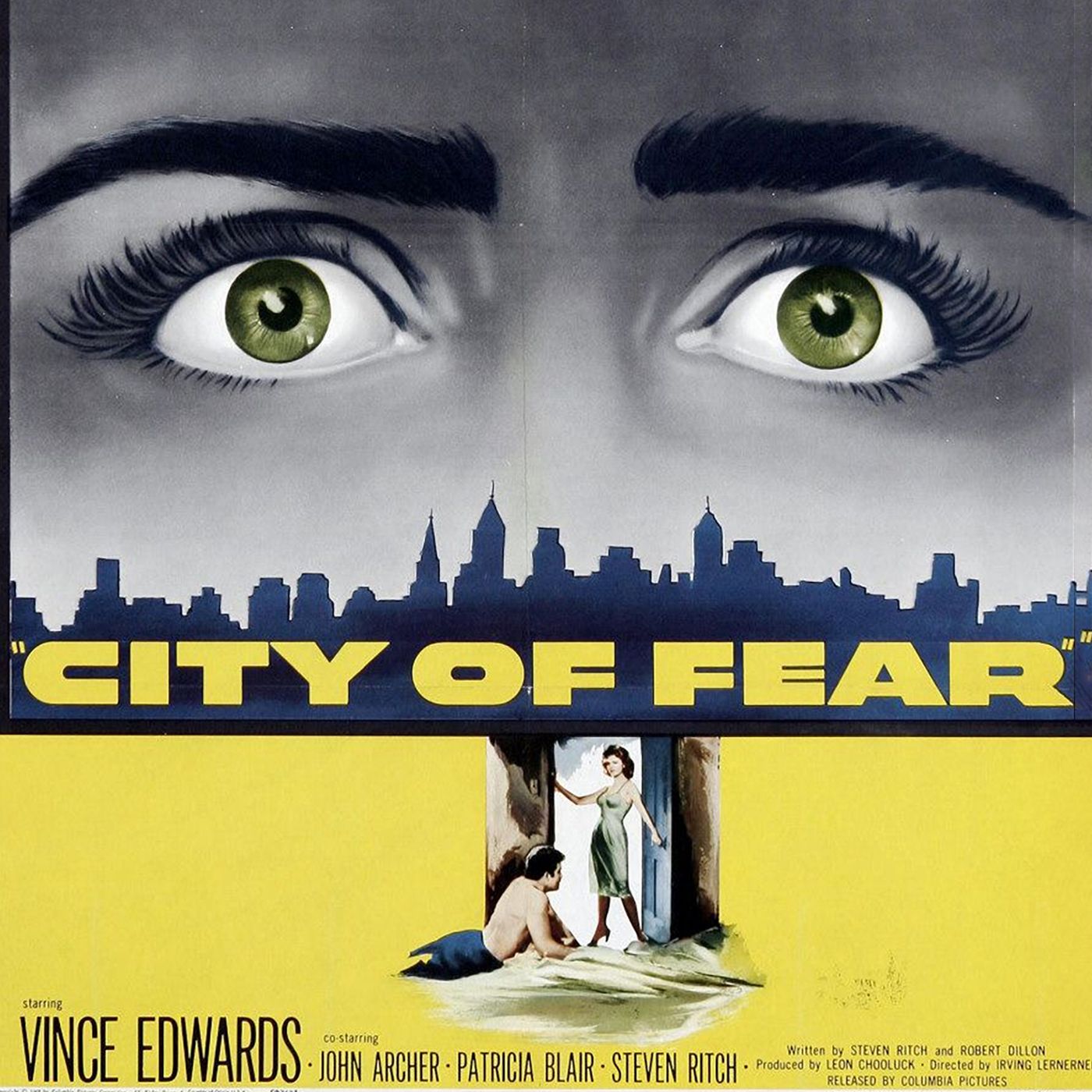
Episode 830: City of Fear (1959)

58 min

A million dollars in heroin turns out to be a canister of Cobalt-60, and the man hugging it to his chest is the last to know. Noirvember 2026 closes with Irving Lerner's City of Fear (1959), a low-budget Columbia programmer in which San Quentin escapee Vince Ryker (Vince Edwards) carries his prize through Los Angeles while the police argue over whether to tell the public. El Goro and Philip Marinello join Mike to test how far noir stretches into atomic-age dread. They set the film beside Panic in the Streets (1950), Kiss Me Deadly (1955), Pickup on South Street (1953) and Lerner and Edwards's Murder by Contract (1958). Lucien Ballard's car photography and an early Jerry Goldsmith score earn their praise; the interchangeable cops do not. Sherwood Price's gum-chewing lowlife and a pair of alligator shoes steal the picture, and one throwaway line about radiation tests on prisoners points to the better movie hiding inside this one. Explore more of our shows at http://weirdingwaymedia.com.

Discuss this episode

The Projection Booth

Special Report: John Skipp on The Great Divide (2024)

73 min

Sarah Brody Webb lent her house to a film shoot on one condition: no horror movie. So John Skipp, the splatterpunk pioneer behind The Light at the End, made a black comedy. The Great Divide (2024) gathers a rich family and its hangers-on to carve up a dead matriarch's billion-dollar fortune. It is a new, homegrown Portland indie: Skipp wrote a role for each classmate at Kristina Haddad's Actors Lab, wrote the script in 13 days, shot it in seven, then cut and scored it. Skipp walks Mike through the road there: hand-delivering a story to T.E.D. Klein at Twilight Zone Magazine, a roller-skating Craig Spector couriering their vampire novel to Bantam, the Fright Night (1985) novelization, and the firing from A Nightmare on Elm Street 5: The Dream Child (1989). He defines splatterpunk as a revolt against tidy horror, born of a childhood in Argentina and an acid flashback at Night of the Living Dead (1968), and recalls the bath that turned Misty Beethoven: The Musical! (2004) into a musical.

Discuss this episode

The Projection Booth

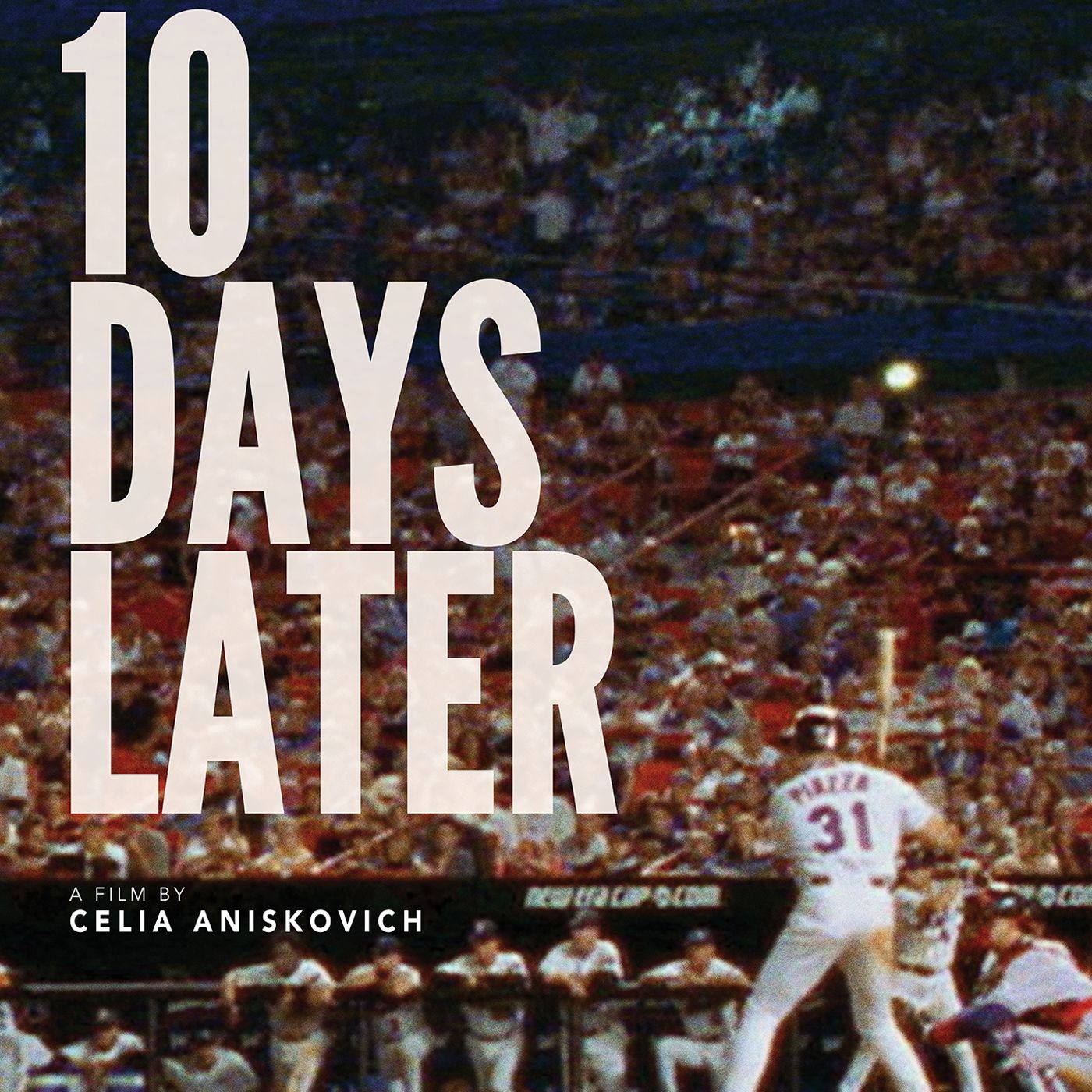
Special Report: 10 Days Later (2026)

34 min

Mike Piazza's home run in the first New York ballgame after 9/11 is the subject of 10 Days Later (2026), a short documentary from director Celia Aniskovich. She and director of photography Megan Stacey join Mike for this Special Report. Aniskovich was in fourth grade in 2001, a Mets fan with a life-size cardboard Piazza in her bedroom, and her father used that game to help her put the pieces back together. She calls this the film she has always wanted to make. A former NBC page, she left the newsroom for documentary. Stacey started with stop-motion movies in high school and went on to film school at Loyola Marymount. They discuss shooting at Citi Field in two days with a Canon C500 Mark II and a C70, and how Field of Dreams (1989) shaped the look. Aniskovich tells how Canon came aboard after she ran into a man at Sundance whom she had sat beside at the Mets' 2015 playoff games, how Major League Baseball opened its archive, and why every second of archival footage in the film comes from

Discuss this episode

Community Poll

Mental-health support should be available before a person reaches a crisis.

Share your view, then see how readers voted. No sign-in required. This poll is shared across stories.

Do you agree or disagree?

Choose one answer

Common Quandary

A Common Quandary to discuss

Another conversation to explore, separate from this news story.

Your teenager locks you out of their phone. When is it okay to look?

Your usually outgoing sixteen-year-old has withdrawn and stopped seeing friends. They insist they are fine and refuse to talk. You know their phone passcode and could read their messages without being discovered.

How serious must a fear be before protection outranks privacy?

Explore this quandary