Listen through the publisher, then discuss the episode here or arrange an in-person Roundtable. Your city determines where to meet.
Roundtables are designed for groups of four, with a shared subject and room for everyone to speak. Come for discussion, with no dating expectation.
Merriam-Webster's Word of the Day for November 17, 2026 is: stolid • \STAH-lid\ • adjective Stolid describes someone or something that has or expresses little or no emotion. // The detective presented the facts of the case with stolid indifference. See the entry > (https://www.merriam-webster.com/dictionary/stolid) Examples: "Even the most stolid of personalities can get dragged into drama, breaking one of the biggest rules in journalism: never become the story." — Katie Rosseinsky, The Independent (United Kingdom), 15 Apr. 2026 Did you know? Today, a person described as stolid may simply be someone who doesn't wear their feelings on their sleeve, who appears unemotional or uninterested in what is happening around them. Its use is usually descriptive, rather than disparaging. Once upon a time, however, someone calling you stolid would not be doing you a solid. Stolid comes from the Latin adjective stolidus, meaning "dull" or "stupid." It is also distantly related to the word stultify (https://www.merriam-webster.com/dictionary/stultify), meaning "to cause to appear or be stupid, foolish, or absurdly illogical." The earliest examples of usage for stolid, which date back to the 17th century, indicate that it too was originally associated with a lack of smarts; it was used to describe people considered foolish for their relative impassivity. By the 1800s, however, stolid was frequently appearing without such negative connotations, and it continues to be free of such overtones today.
Episode information is provided by the publisher. Listening takes place on the publisher’s service.
To check the transcript: https://www.buzzsprout.com/2379282 Imagine someone who has lived abroad for many years. One evening, they're talking to a friend about their hometown. They mention the streets they used to walk down, the familiar voices, and the little things they never thought they'd miss. Their friend asks: “Why do you get so emotional whenever you talk about your hometown? Do you want to move back?” They reply: “It's not that simple. It goes deeper than that. I miss a version of my life that doesn't exist there anymore.” Hello everyone, and welcome to Daily English. Today's expression is “It goes deeper than that.” We use this expression when something is more complicated, meaningful, or emotionally significant than it first appears. In other words, there's something beneath the surface that people might not immediately recognize. In our opening example, the person isn't necessarily longing to return to their hometown. What they miss might be their childhood, the people they
Today, Mel is doing something she's never done before on The Mel Robbins Podcast. She's bringing members of her team into the studio for live coaching with world-renowned communications expert Vinh Giang. Vinh is known for teaching millions of people online how to stop sounding insecure, speak more clearly, and get people to listen when you talk. And when you hear him coaching today, it will be like he’s coaching you. One person freezes when they're put on the spot. Another can't stop interrupting people. Someone else has great ideas but stays quiet because they're afraid of being judged. Does any of that sound familiar? And Vinh isn't just giving advice. He's coaching real people through practical exercises, right there in the studio, so you can hear the difference and start making those same changes in your own life. As Mel says, put yourself in their shoes. As Vinh works with each person, you'll recognize things you struggle with, too. You'll learn: -What to do when your mind goes b
I've watched a lot of capable people over the years. People with more talent than they knew what to do with, more drive than most, a willingness to work that would put others to shame. And a strange thing kept happening. The most capable ones, the ones who could do anything, kept ending up buried under everything. Not because they lacked ability. Because they refused to let go of any of it. Uploaded 16-08-26 They told themselves this was strength. But it wasn't only strength. It was also a kind of quiet, slow-motion collapse — and the tragedy is that it looked like the opposite. It looked like competence. It looked like a person holding everything together. And that's exactly why it's so dangerous. Here is the truth: the habit of doing everything yourself is one of the most expensive habits a person can have, and almost nobody counts the cost, because the bill doesn't arrive all at once. It arrives in small quiet installments over years. This seminar walks through four things you must
Master the skills that change lives — enroll in your free human behavior course today: https://nci.university/learn Uploaded 09-01-26 You were never reacting to chaos — you were responding to structure. Outcomes don’t appear suddenly; they’re assembled long before you notice them. Understanding how pressure is built changes how the world feels immediately. All influence follows patterns once you know where to look. Reality doesn’t break — it gets reshaped in layers. Every system depends on predictable human responses. Given the right conditions, behavior becomes almost automatic. Once you see the architecture, panic loses its leverage. Detection beats reaction — every time. Please note that the content provided in this broadcast is for informational and educational purposes only and should not be construed as legal, medical, financial, or professional advice. No material in this communication establishes any form of professional relationship that is privileged or confidential. The insi
In part 2 of this special edition episode, Tony – along with his friend Dr. Peter Diamandis, the Harvard Medical School trained M.D. and executive founder of Singularity University – explore the present and future of COVID-19. Uploaded 11-05-20 Tony and Peter speak with Mei Mei Hu and Lou Reese, Co-CEOs of United Biomedical, a company that is now offering an affordable and accurate diagnostic test for COVID-19 through its subsidiary, COVAXX Their antibody test is different from others, as it can detect not only if you currently have the virus, but also it signals if you’ve ever had the virus, which is crucial in determining the true rate of mortality associated with COVID-19 – and whether people are immune and therefore able to stop isolating, and go back to work. Lou and Mei Mei’s team at COVAXX is also working on a breakthrough alternative option to a traditional vaccine for coronavirus, which you’ll hear discussed in the last half of the episode. COVAXX: https://www.covaxx.com/ View
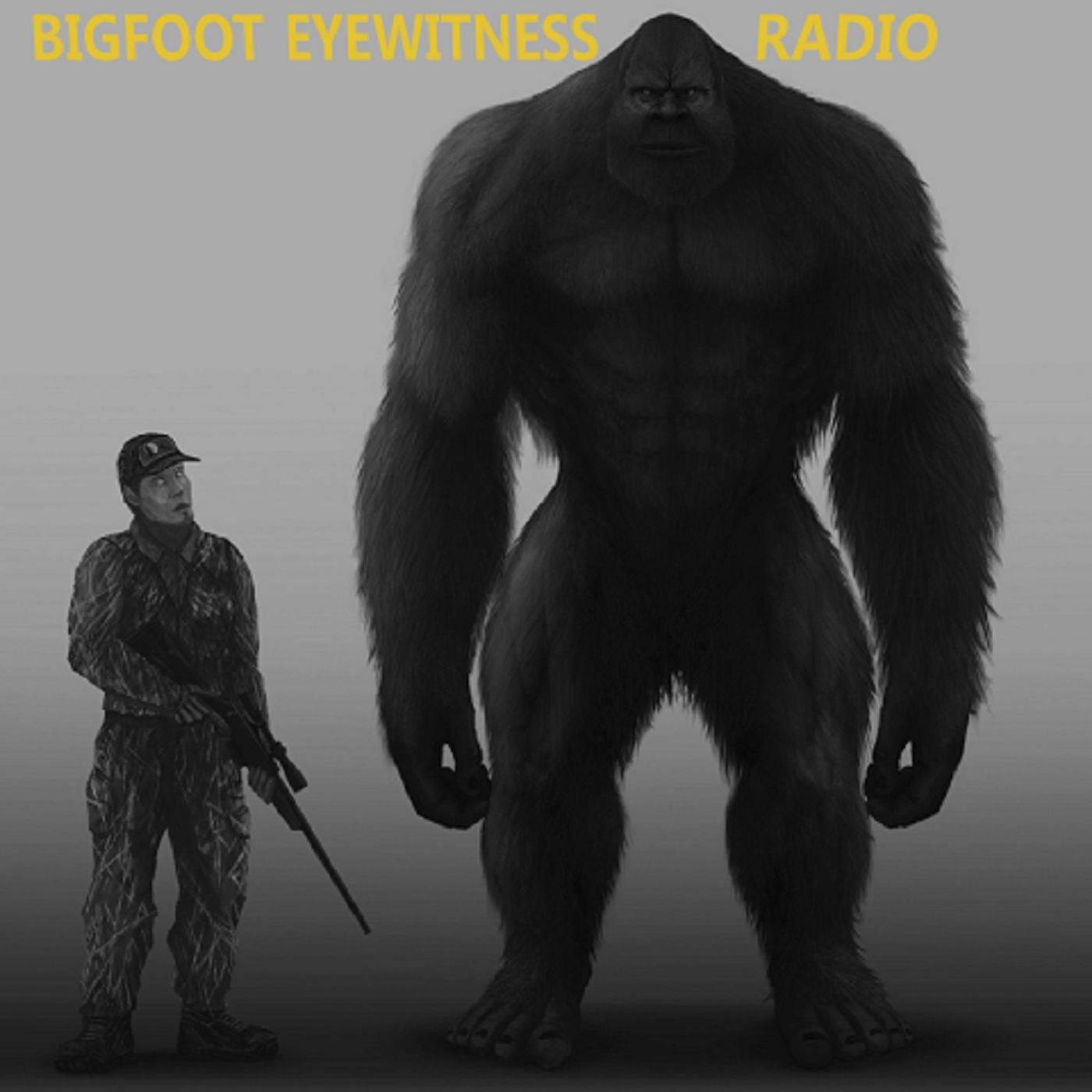
For most of her life, Emily Mayles, tonight's guest, felt right at home in the woods of southeastern Ohio. Whether she was mushroom hunting, digging ginseng, or simply enjoying the outdoors, being surrounded by nature was something she loved. That all changed after a series of terrifying experiences convinced her that something enormous and mysterious was lurking in the forests near her home. Emily's first frightening experience happened in March of 2020, when an unbelievably powerful scream erupted from the woods behind her house. The sound was so terrifying that she found herself practically paralyzed with fear. Years later, she and her husband heard something equally disturbing while standing on their back deck. This time, however, the sounds seemed to be coming from multiple locations. As frightening as those experiences were, neither could have prepared Emily for what she would witness on the Fourth of July, while riding through the Ohio countryside on the back of her husband's mo
Merriam-Webster's Word of the Day for November 21, 2026 is: meet-cute • \MEET-kyoot\ • noun Meet-cute refers to a cute, charming, or amusing first encounter between romantic partners. A meet-cute can be such an encounter as shown in a movie or television show, or one that happens in real life. // Their meet-cute felt as if it came straight out of a romantic comedy. See the entry > (https://www.merriam-webster.com/dictionary/meet-cute) Examples: “Two women, Dylan and Melanie, cross paths on an artificial beach in a near-apocalyptic meet-cute: one has emerged from the underwater pod in which she was raised, the other works at a luxury resort as a bartender… and may also be a robot.” — Natalie Zutter, Literary Hub, 2 Jan. 2026 Did you know? Isn’t it cute how two words can be introduced to each other and become an inseparable pair soon after? Well, that’s exactly what happened when meet and cute got together in the early 1950s. The duo was spotted in The New York Times Book Review in 1952
Merriam-Webster's Word of the Day for November 20, 2026 is: ruthless • \ROOTH-lus\ • adjective Ruthless means "having no pity." It describes people, behaviors, circumstances, etc. regarded as cruel or merciless. // Wolves and other large carnivores are often portrayed (and feared) as ruthless predators even as they play vital roles in their ecosystems. See the entry > (https://www.merriam-webster.com/dictionary/ruthless) Examples: "One of Shakespeare's most powerful and enduring tragedies, 'Macbeth' remains an urgent and gripping story. Ambition and prophecy collide as a fateful prediction drives Macbeth into a ruthless pursuit of power, destroying everything in his path." — The Daily Gazette (Schenectady, New York), 25 Sept. 2026 Did you know? Ruthless can be defined as "without ruth" or "having no ruth." So what, then, is ruth? The noun ruth (https://www.merriam-webster.com/dictionary/ruth), which is now considerably less common than ruthless, means "compassion for the misery of anot
Merriam-Webster's Word of the Day for November 19, 2026 is: upbraid • \up-BRAYD\ • verb To upbraid someone is to speak to them in an angry or critical way in response to something they have done wrong—in other words, to scold them. // The teacher upbraided the class after discovering the chalkboard erasers had been clapped all over the walls. See the entry > (https://www.merriam-webster.com/dictionary/upbraid) Examples: “An industrious ant spends all summer gathering food for the cold months, while a lazy grasshopper dances and sings. Once winter hits, the grasshopper is cold and hungry, and goes begging for food from the ant, who refuses to share any of its bounty, upbraiding the grasshopper for failing to plan.” — David A. Graham, The Atlantic, 17 Apr. 2026 Did you know? First things first: do not confuse upbraid with topknot lest you be upbraided for it. Topknot is a noun referring to a hairstyle, while upbraid is a verb (and an ancient one at that) meaning “to criticize or scold se
Elected representatives should serve people who voted against them as seriously as their supporters.
Share your view, then see how readers voted. No sign-in required. This poll is shared across stories.
Do you agree or disagree?
Common Quandary
A Common Quandary to discuss
Another conversation to explore, separate from this news story.
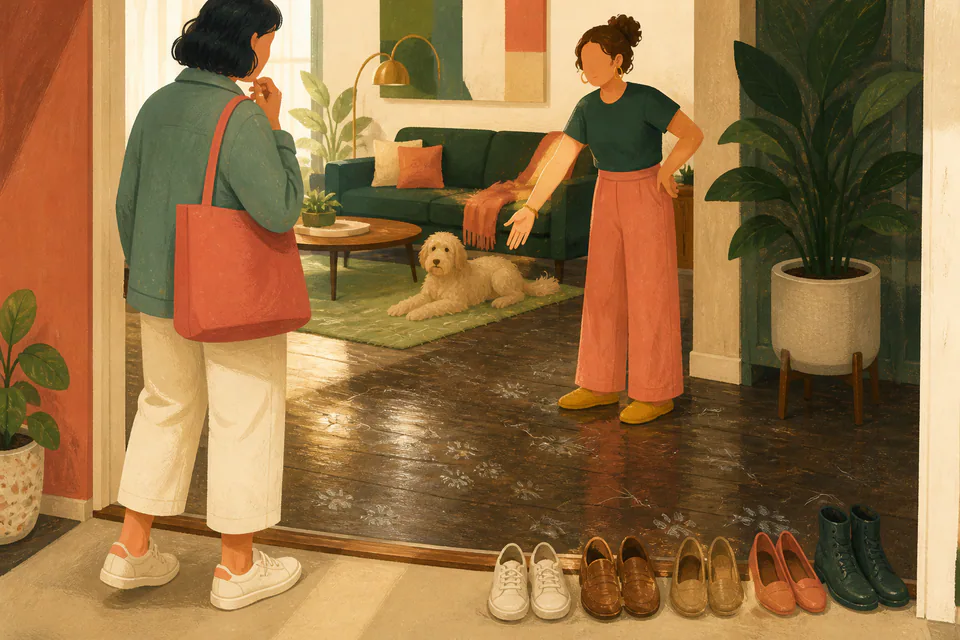
Your host demands shoes off, but their floor is filthy. Must you obey?
A host has a strict shoes-off rule and points to a neat row by the door. Inside, the floor is visibly sticky and covered with pet hair. You are wearing clean shoes, no socks, and would rather not spend the evening barefoot.
When does respect for a host's home yield to a guest's comfort?