Thankful for Mormonism? An Unexpected Ex-Mormon Conversation
84 min
Listen through the publisher, then discuss the episode here or arrange an in-person Roundtable. Your city determines where to meet.
Roundtables are designed for groups of four, with a shared subject and room for everyone to speak. Come for discussion, with no dating expectation.
Can we be grateful for aspects of a religion we no longer believe in? Can we acknowledge institutional dishonesty, religious trauma, and the harm Mormonism has caused while still appreciating some of what we gained from our experiences within it? In this special Thanksgiving edition of Mormonism Live, we explore the more complicated relationship former Mormons can have with their religious past. We’ll discuss ten things ex-Mormons might still be grateful for, including meaningful relationships, opportunities for personal growth, experiences of transcendence, a commitment to service, and the courage we discovered in ourselves when we chose authenticity over belonging. We’ll also explore several important psychological insights: • Why gratitude doesn’t require minimizing harm. • How we can reclaim meaningful experiences without accepting the religious narrative attached to them. • Why growing from adversity doesn’t justify the adversity. • How leaving Mormonism can deepen our empathy for others. • What it means to make peace with our past without excusing the institution. Perhaps healing isn’t about deciding whether Mormonism was entirely good or entirely bad, but developing the emotional maturity to hold both the beauty and the harm of our experiences without denying either. Gratitude is not an acquittal. And nobody owes their trauma a silver lining. Join us for a thoughtful Thanksgiving conversation about gratitude, healing, personal growth, and the good we get to take with us when we leave. Support Mormonism Live: Is there anything from your time in Mormonism that you feel grateful for today? If something comes to mind, share it in the chat or join us on air for a minute: https://streamyard.com/cg63xhgk6c #MormonismLive #ExMormon #Thanksgiving #Gratitude #FaithCrisis #ReligiousTrauma #PostMormon #Deconstruction #PersonalGrowth
Episode information is provided by the publisher. Listening takes place on the publisher’s service.
In 2013, Laurel “Lolly” Shea appeared on Mormon Stories alongside her then-husband, Josh Weed, in an interview that explored their marriage, Josh’s sexuality, and the complicated realities of being a gay man and a straight woman trying to make a marriage work within the LDS Church. More than a decade later, Laurel returns to Mormon Stories to tell her story on her own terms. Growing up in a devout Mormon family, Laurel had an early understanding of the complicated relationship between homosexuality and the Church. Her grandfather came out as gay after decades of marriage and Mormon leadership, and his experience left a lasting impression on her understanding of sexuality, family, and faith. As a teenager, Laurel became close friends with Josh Weed, the son of her bishop. When Josh eventually came out to her as gay, she initially believed that marrying a gay man was something she would never do. But over time, their emotional intimacy, shared faith, family expectations, and deeply ingra
Tonight, join Radio Free Mormon and Rebecca Bibliotheca for a special breaking-news edition of The Mormon Newscast as they break down today’s federal court hearing in the trademark lawsuit between Mormon Stories and The Church of Jesus Christ of Latter-day Saints. The court is hearing arguments on a motion to dismiss, and RFM and Rebecca will walk us through what happened in the courtroom, the arguments made by both sides, and what today’s developments could mean moving forward. • What happened during today’s hearing? • What arguments did each side make? • Could the case be dismissed in whole or in part? • What are the implications for Mormon Stories and John Dehlin? • What could this case mean for other independent Mormon podcasts, content creators, and religious critics? • What happens next? This legal battle raises important questions about trademark law, freedom of expression, and the ability of independent media to use the word “Mormon” when discussing the religion. Join us live f
Join David Bayer's FREE Mindset Month: Quantum entanglement, identity shifting, the pineal gland, the Masonic 33. There is so much out there promising to transform your life that you can spend years learning how to change without ever changing. In this episode, I share what a decade immersed in neuroscience, metaphysics, behavioral psychology, and what actually causes people to change led me to, and it turned out to be much simpler than any of that. Seven behaviors you can start this week that can compress a decade of personal growth into the next 30 days. None of them require you to understand quantum physics or meditate for three hours a day. Start with at least one of them this week and you will feel the difference by the end of the month. You can also get everything from Mindset Month free, which leads into the Changed Mind Masterclass on December 4th and 5th. What We Explored This Episode 00:00 Living the Vision You Desire 03:51 Powerful vs. Primal States of Being 08:41 Why Primal
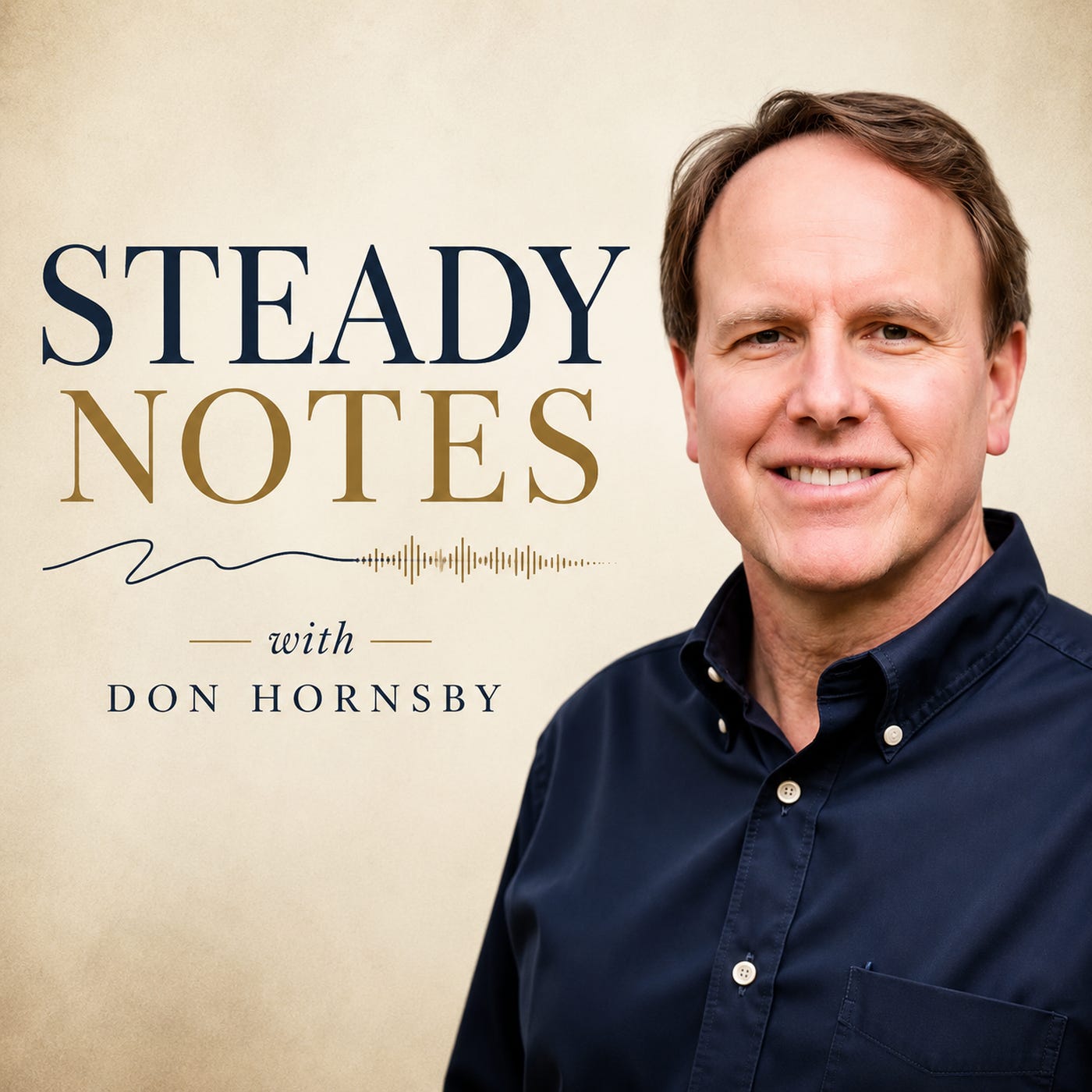
What does running sixty miles in November have to do with gratitude, men’s mental health, and the simple wonder of being alive? Perhaps more than you might think. In this Thanksgiving episode of Steady Notes, Don Hornsby reflects on completing his Movember running goal at age 63, the quiet struggles many men carry, and the unexpected moments of reflection found along the way. From rain-soaked sidewalks in Salem, Oregon, to the realization that some of life’s greatest gifts are not things we’ve earned, this is a personal reflection on resilience, compassion, and gratitude. Sometimes the most meaningful part of reaching a goal isn’t the accomplishment itself, but recognizing what made it possible. An invitation to slow down, reach out to someone who may be struggling, and appreciate the simple wonder of being alive. Support Movember Throughout November, I’ve been running to raise awareness of men’s mental health, suicide prevention, and other men’s health issues. If you’d like to learn m
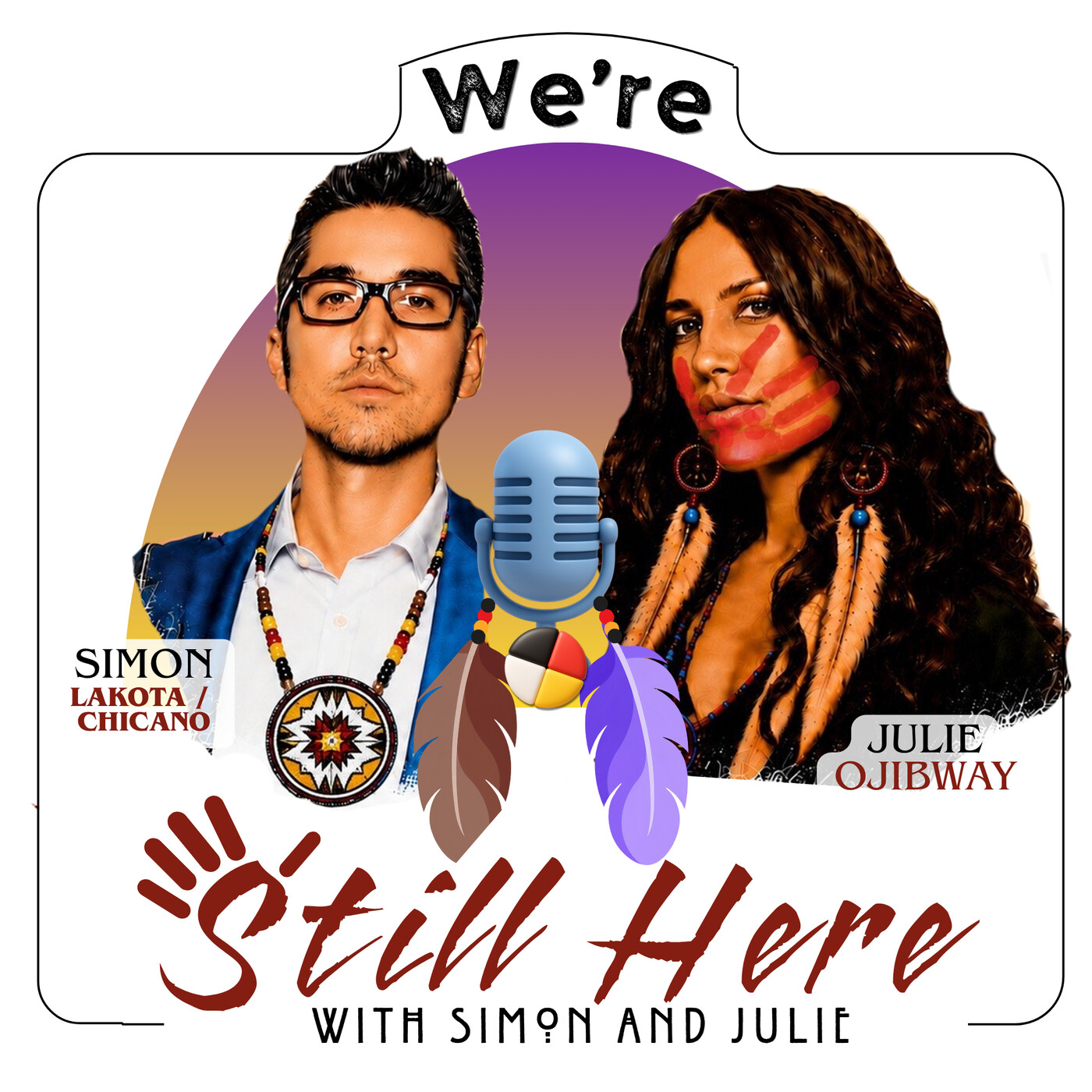
Thanksgiving is often presented as a simple story of Pilgrims and Native people sharing a meal. But what gets left out—and who benefits from that version? Lakota Chicano journalist Simon Moya-Smith and Ojibwe educator Julie Francella discuss how we should to challenge the familiar holiday narrative and share the histories, traditions, and lived experiences it obscures. They discuss the Wampanoag people’s diplomacy and the realities surrounding the 1621 gathering, the origins of the National Day of Mourning, and how Manifest Destiny helped turn a complicated history into a comforting national myth. Julie describes Indigenous gratitude as an everyday practice rooted in reciprocity with the land, water, animals, and community. Simon speaks about resilience, cultural survival, stereotypes, and why Indigenous nations should never be treated as a monolith. The conversation also explores what it means to gather with family while acknowledging painful history, why Indigenous communities contin
Read: Psalm 100; Philippians 4:6-7 (https://www.biblegateway.com/passage/?search=Psalm+100%3B+Philippians+4%3A6-7) Aunt Diana finished reading and closed her Bible. “Now, let’s pray and take our needs before Jesus.” “I don’t want to,” Anna said, crossing her arms. “God never answers my prayers.” Austin gasped, looking wide-eyed at his big sister and then his aunt. Aunt Diana looked tenderly at her niece. “I’m sorry to hear that, Anna. Have you tried being thankful when you pray?” Anna shrugged. “Let’s bow our heads anyway and I’ll pray,” said Aunt Diana. After she prayed, Aunt Diana stood up. “Put on your tennis shoes. We’re going on a nature hike!” “Yeah!” Austin jumped up from his chair. When they were on the trail, Austin pointed to something hanging from Aunt Diana’s neck. “What’s that?” “These are binoculars,” Aunt Diana replied. “They help you see what you might miss otherwise.” She held them up to her eyes. “Look, there’s a woodpecker in the oak tree.” “Let me see,” said Austin.
RFM and Kolby Reddish sit down to go over the filings so far in the case of the LDS Church v. John Dehlin. The Mormon Church is going after John Dehlin claiming trademark infringement. But do they have a case? RFM and Kolby combine their decades of legal experience to give you the best answers! [RFM 464] Help support Radio Free Mormon in making informative entertaining content that shines a light on truth and leads with transparency. DONATE VIA DONORBOX! https://donorbox.org/radio-free-mormon Join our Mailing List – subscribepage.io/MormonDiscussion Instagram: /https://www.instagram.com/mormondiscussion/ TikTok: @mormondiscussion https://www.tiktok.com/@mormondiscussion Mormon Discussion Merch store https://www.exmoshirts.com/collections/mormondiscussions Mormon Discussions Website – https://mormondiscussions.org/ Contact RFM, and the Mormon Discussions Team: [email protected]
I had a faith crisis in my mid-twenties. A big faith crisis. It involved a salamander and it involved a letter. It made me question everything I thought I knew about Joseph Smith, the book he produced, and the religion he founded. The LDS religion. MY religion! And in that time of despair, I clung to the most significant single evidence that the Book of Mormon is ancient, and therefore authentic, and therefore true. I clung to the presence of “chiasmus” in the Book of Mormon; that incredible ancient Hebrew literary form that shows up in such abundance in the Nephite record. But had I been told everything there was to tell about chiasmus? Or had information been withheld from me to make “chiasmus” look like a much more impressive evidence for the Book of Mormon? Was it a solid evidence, or was it fool’s gold? And if I had known it was fool’s gold in my twenties, would I have clung to it as such strong evidence for the Book of Mormon? And if I had not clung to “chiasmus,” as proof of the
Rummaging through some old podcasts I found this absolute gem of an interview with Carol Lynn Pearson which is six-years old and has not been listened to by very many people. There is no doubt Carol Lynn was one-of-a-kind in her role as poet/advocate of Mormonism. And she shines in all her luster in this two-hour interview with RFM! [RFM 474] Thanks so much for watching! Please like, subscribe, and leave a comment! Visit our Channel to find everything Mormonism! or @MormonDiscussion Our mission at Mormon Discussion is to be a beacon of support for those who are questioning the truth claims or renegotiating their relationship with faith. Our podcasts like “Mormonism Live,” “Radio Free Mormon,” and “Mormon Discussion” offer a safe space for Discovery and healing. But we need your help. Your donations power our work – expanding outreach, improving content, and creating new initiatives. Visit https://donorbox.org/umbrella-entity or https://mormondiscussionpodcast.org/please-consider-donati
Experts should explain openly why their recommendations change.
Share your view, then see how readers voted. No sign-in required. This poll is shared across stories.
Do you agree or disagree?
Common Quandary
A Common Quandary to discuss
Another conversation to explore, separate from this news story.
A disgraced billionaire's name is on the beloved campus library. Does it come down?
A major donor funded a beloved public building decades ago. New evidence shows they also caused serious harm that was legal and accepted by many peers at the time. Removing the name may jeopardize future donations.
What does an institution owe the truth when its history funded the present?