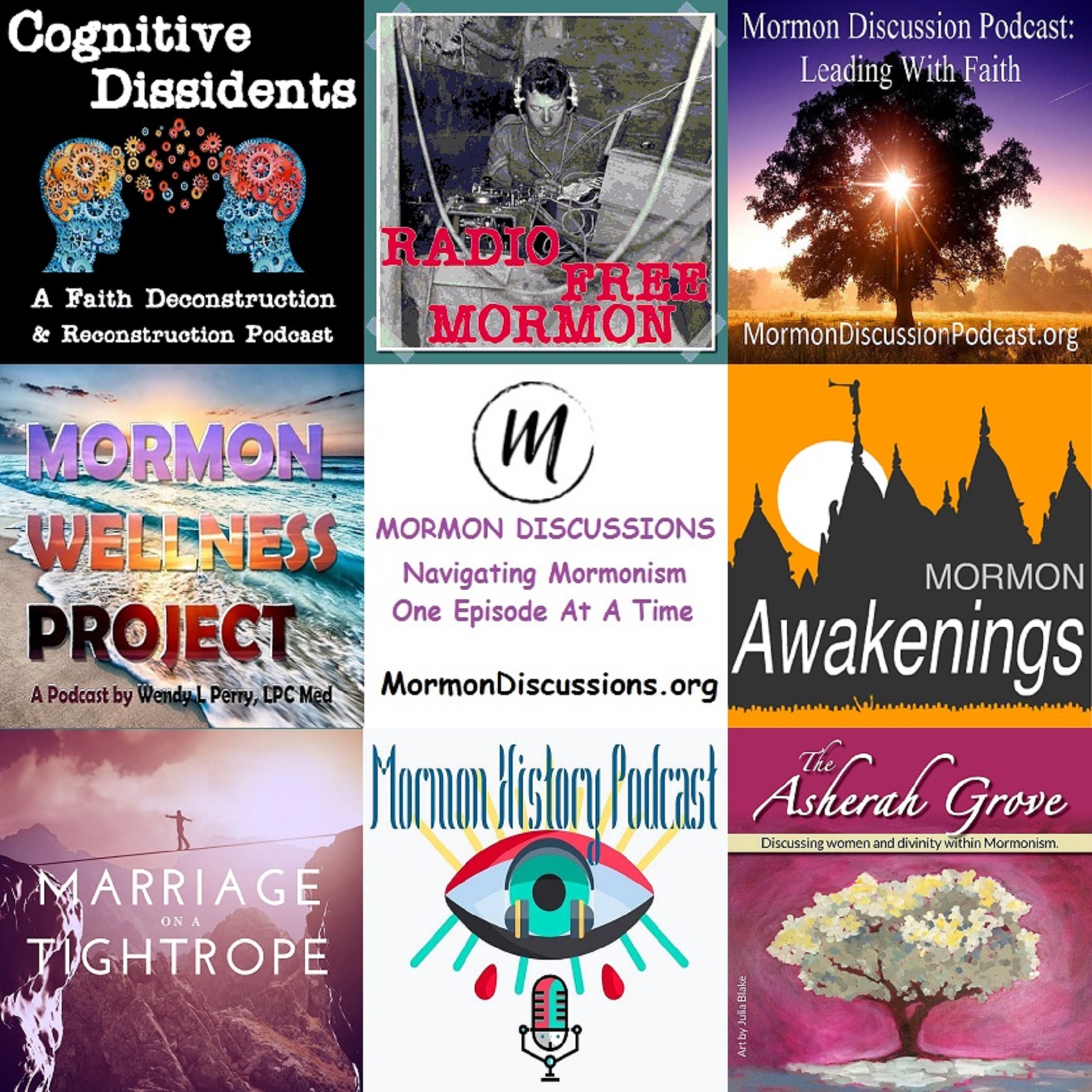
Listen through the publisher, then discuss the episode here or arrange an in-person Roundtable. Your city determines where to meet.
Roundtables are designed for groups of four, with a shared subject and room for everyone to speak. Come for discussion, with no dating expectation.
RFM and Kolby Reddish sit down to go over the filings so far in the case of the LDS Church v. John Dehlin. The Mormon Church is going after John Dehlin claiming trademark infringement. But do they have a case? RFM and Kolby combine their decades of legal experience to give you the best answers! [RFM 464] Help support Radio Free Mormon in making informative entertaining content that shines a light on truth and leads with transparency. DONATE VIA DONORBOX! https://donorbox.org/radio-free-mormon Join our Mailing List – subscribepage.io/MormonDiscussion Instagram: /https://www.instagram.com/mormondiscussion/ TikTok: @mormondiscussion https://www.tiktok.com/@mormondiscussion Mormon Discussion Merch store https://www.exmoshirts.com/collections/mormondiscussions Mormon Discussions Website – https://mormondiscussions.org/ Contact RFM, and the Mormon Discussions Team: [email protected]
Episode information is provided by the publisher. Listening takes place on the publisher’s service.
Tonight, join Radio Free Mormon and Rebecca Bibliotheca for a special breaking-news edition of The Mormon Newscast as they break down today’s federal court hearing in the trademark lawsuit between Mormon Stories and The Church of Jesus Christ of Latter-day Saints. The court is hearing arguments on a motion to dismiss, and RFM and Rebecca will walk us through what happened in the courtroom, the arguments made by both sides, and what today’s developments could mean moving forward. • What happened during today’s hearing? • What arguments did each side make? • Could the case be dismissed in whole or in part? • What are the implications for Mormon Stories and John Dehlin? • What could this case mean for other independent Mormon podcasts, content creators, and religious critics? • What happens next? This legal battle raises important questions about trademark law, freedom of expression, and the ability of independent media to use the word “Mormon” when discussing the religion. Join us live f
When Turning the Other Cheek Hurts (Luke 6:29-31) | Daily Devotional and Bible Study What does it mean to turn the other cheek? In Luke 6:29-31 Jesus describes defiance without violence, not staying within reach of someone who keeps swinging. In today's Bible study we look at the three examples Jesus gives right after "love your enemies": the slap on the cheek, the stolen cloak, and giving without demanding it back. We step into an honor and shame culture to see why a backhanded slap cost so much, why Luke pictures a mugging and not a lawsuit, and why handing over your tunic leaves the thief ashamed. If this verse has ever been handed to you to keep you quiet, this episode is for you. Join me on an immersive Bible Study Experience. Learn more at BibleStudyLive.org (https://biblestudylive.org/) Have a question about the series or a prayer request? Ad-free episodes and the full library of past series: Patreon (https://www.patreon.com/c/HearingJesus) Questions we answer today What does it
@rigelwindsongthurston works for the @DevelopmentalPhilosophy and hosted this conversation for their channel. https://youtu.be/ATdH0YEQBys?si=Fam_d-GJRpF0NmHW Minnestuary: Come in from the cold: https://estuarymn.org/ TLC Search tool. https://thislittlecorner.net The Flotilla List: https://thislittlecorner.net/channels My Substack https://paulvanderklay.substack.com/ Bridges of meaning https://discord.gg/UKg8k93c Estuary Hub Link https://www.estuaryhub.com/ This is is one (free to you) way to support my videos. Blockchain backup on Lbry https://odysee.com/@paulvanderklay To support Paul's work by supporting his church give here. https://t
Join David Bayer's FREE Mindset Month: Quantum entanglement, identity shifting, the pineal gland, the Masonic 33. There is so much out there promising to transform your life that you can spend years learning how to change without ever changing. In this episode, I share what a decade immersed in neuroscience, metaphysics, behavioral psychology, and what actually causes people to change led me to, and it turned out to be much simpler than any of that. Seven behaviors you can start this week that can compress a decade of personal growth into the next 30 days. None of them require you to understand quantum physics or meditate for three hours a day. Start with at least one of them this week and you will feel the difference by the end of the month. You can also get everything from Mindset Month free, which leads into the Changed Mind Masterclass on December 4th and 5th. What We Explored This Episode 00:00 Living the Vision You Desire 03:51 Powerful vs. Primal States of Being 08:41 Why Primal
In 2013, Laurel “Lolly” Shea appeared on Mormon Stories alongside her then-husband, Josh Weed, in an interview that explored their marriage, Josh’s sexuality, and the complicated realities of being a gay man and a straight woman trying to make a marriage work within the LDS Church. More than a decade later, Laurel returns to Mormon Stories to tell her story on her own terms. Growing up in a devout Mormon family, Laurel had an early understanding of the complicated relationship between homosexuality and the Church. Her grandfather came out as gay after decades of marriage and Mormon leadership, and his experience left a lasting impression on her understanding of sexuality, family, and faith. As a teenager, Laurel became close friends with Josh Weed, the son of her bishop. When Josh eventually came out to her as gay, she initially believed that marrying a gay man was something she would never do. But over time, their emotional intimacy, shared faith, family expectations, and deeply ingra
How often do we ask Jesus to bless our plans instead of surrendering to his? What did a mother's misguided request reveal about the disciples's understanding of God's kingdom? And what does it look like to pursue God's mission his way? In today's episode, Jensen explores Matthew 20:20–34 and shows us why following Jesus means surrendering our own motives and embracing his mission of serving others. Want to become a more consistent Bible reader? Read the Bible with us! We're almost done exploring the Gospels—Matthew, Mark, Luke, and John—but it's never too late to jump in! Your support makes TMBT possible. Ten Minute Bible Talks is a crowd-funded project. Join the TMBTeam to reach more people with the Bible. Give now (https://info.tenminutebibletalks.com/support). Like this content? We'd love to hear from you! Passage: Matthew 20:20-34 (https://www.biblegateway.com/passage/?search=Matthew+20%3A20-34&version=NIV)
I had a faith crisis in my mid-twenties. A big faith crisis. It involved a salamander and it involved a letter. It made me question everything I thought I knew about Joseph Smith, the book he produced, and the religion he founded. The LDS religion. MY religion! And in that time of despair, I clung to the most significant single evidence that the Book of Mormon is ancient, and therefore authentic, and therefore true. I clung to the presence of “chiasmus” in the Book of Mormon; that incredible ancient Hebrew literary form that shows up in such abundance in the Nephite record. But had I been told everything there was to tell about chiasmus? Or had information been withheld from me to make “chiasmus” look like a much more impressive evidence for the Book of Mormon? Was it a solid evidence, or was it fool’s gold? And if I had known it was fool’s gold in my twenties, would I have clung to it as such strong evidence for the Book of Mormon? And if I had not clung to “chiasmus,” as proof of the
Rummaging through some old podcasts I found this absolute gem of an interview with Carol Lynn Pearson which is six-years old and has not been listened to by very many people. There is no doubt Carol Lynn was one-of-a-kind in her role as poet/advocate of Mormonism. And she shines in all her luster in this two-hour interview with RFM! [RFM 474] Thanks so much for watching! Please like, subscribe, and leave a comment! Visit our Channel to find everything Mormonism! or @MormonDiscussion Our mission at Mormon Discussion is to be a beacon of support for those who are questioning the truth claims or renegotiating their relationship with faith. Our podcasts like “Mormonism Live,” “Radio Free Mormon,” and “Mormon Discussion” offer a safe space for Discovery and healing. But we need your help. Your donations power our work – expanding outreach, improving content, and creating new initiatives. Visit https://donorbox.org/umbrella-entity or https://mormondiscussionpodcast.org/please-consider-donati
Can we be grateful for aspects of a religion we no longer believe in? Can we acknowledge institutional dishonesty, religious trauma, and the harm Mormonism has caused while still appreciating some of what we gained from our experiences within it? In this special Thanksgiving edition of Mormonism Live, we explore the more complicated relationship former Mormons can have with their religious past. We’ll discuss ten things ex-Mormons might still be grateful for, including meaningful relationships, opportunities for personal growth, experiences of transcendence, a commitment to service, and the courage we discovered in ourselves when we chose authenticity over belonging. We’ll also explore several important psychological insights: • Why gratitude doesn’t require minimizing harm. • How we can reclaim meaningful experiences without accepting the religious narrative attached to them. • Why growing from adversity doesn’t justify the adversity. • How leaving Mormonism can deepen our empathy for
Reports of research should distinguish clearly between association and proven causation.
Share your view, then see how readers voted. No sign-in required. This poll is shared across stories.
Do you agree or disagree?
Common Quandary
A Common Quandary to discuss
Another conversation to explore, separate from this news story.
You have outgrown a lonely friend. Do you keep inviting them anyway?
An old friend keeps asking to join your newer social circle. They have done nothing wrong, but you no longer enjoy spending time together and suspect they have few other close relationships.
Can compassion require maintaining a friendship you no longer choose?