English-language podcasts

CrashCourse

The 1960s in America: Crash Course US History #40

22 min

Listen through the publisher, then discuss the episode here or arrange an in-person Roundtable. Your city determines where to meet.

Roundtables are designed for groups of four, with a shared subject and room for everyone to speak. Come for discussion, with no dating expectation.

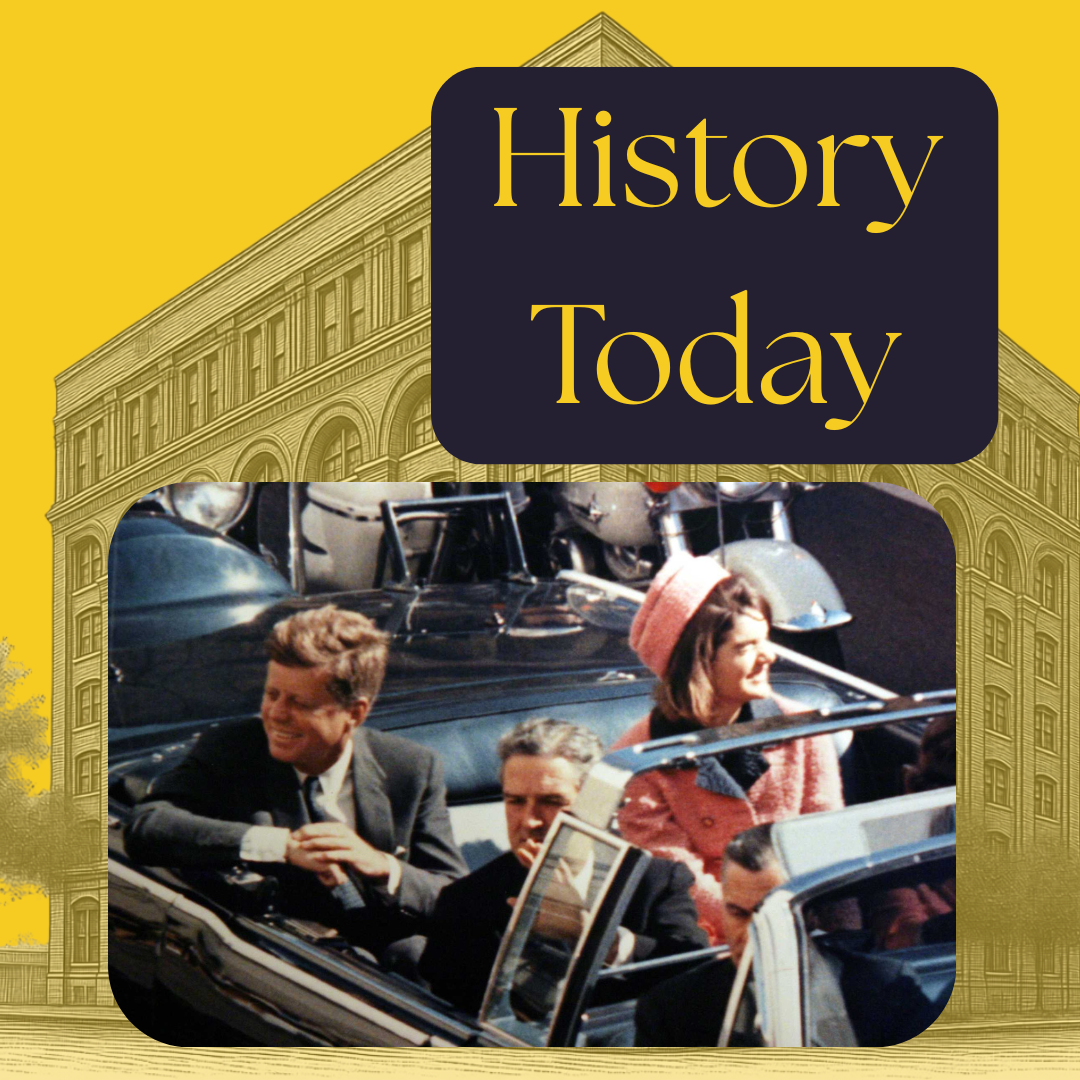
In which John Green teaches you about a time of relative tumult in the United States, the 1960s. America was changing rapidly in the 1960s, and rights movements were at the forefront of those changes. Civil Rights were dominant, but the 60s also saw growth in the Women's Movement, the LGBT Rights Movement, the Latino Rights Movement, and the American Indian Movement. Also, Americans began to pay a bit more attention to the environment. All this change happened against the backdrop of the Cold War and the Rise of Conservatism. It was just wild. John will teach you about sit-ins, Freedom Rides, The March on Washington, MLK, JFK, LBJ, and NOW. Man, that is a lot of initialisms. And one acronym. Hey teachers and students - Check out CommonLit's free collection of reading passages and curriculum resources to learn more about the events of this episode. Civil Rights stayed strong throughout the 1960s, beginning with the peaceful sit-in movement in 1960 in the South: https://www.commonlit.org/texts/the-sit-in-movement The Civil Rights Movement reached a high point when Martin Luther King Jr. delivered his 1963 “I Have a Dream” Speech at the March on Washington: https://www.commonlit.org/texts/i-have-a-dream After President Kennedy's assassination, President Johnson decided to promote Civil Rights as part of his Great Society program: https://www.commonlit.org/texts/lyndon-baines-johnson-and-the-great-society After Dr. Martin Luther King, Jr. was assassinated in 1968, the growing black power movement gained even more popularity: https://www.commonlit.org/texts/empowering-the-black-power-movement Learn more about the Civil Rights Movement in these episodes of Crash Course Black American History: The Montgomery Bus Boycott (35): https://youtu.be/ylOpide9dus Martin Luther King, Jr. (36): https://youtu.be/BmeUT7zH62E Student Civil Rights Activism (37): https://youtu.be/F624q1jBd0Y Malcolm X and the Rise of Black Power (38): https://youtu.be/8woU9Rq0cPI The Black Panther Party (39): https://youtu.be/ao0Jozn_7HM -- Chapters: Introduction: The 1960s 00:00 The Civil Rights Movement 0:44 Martin Luther King, Jr. 2:07 JFK and the Civil Rights Movement 3:17 LBJ, the Civil Rights Act, and the Great Society 4:05 Inequality in Urban America 6:26 Malcolm X, Black Power, and the Black Panther Party 7:13 Student Activism and Other Civil Rights Movements of the 1960s 8:05 Mystery Document 8:59 The Environmental Movement 9:48 The American Feminist Movement 10:03 The Supreme Court During the Warren Era 11:11 1968 was kind of a big year 12:28 Credits 14:26 -- Crash Course is on Patreon! Want to find Crash Course elsewhere on the internet? Facebook - http://www.facebook.com/YouTubeCrashCourse Twitter - http://www.twitter.com/TheCrashCourse Instagram - https://www.instagram.com/thecrashcourse/ CC Kids: http://www.youtube.com/crashcoursekids

Episode information is provided by the publisher. Listening takes place on the publisher’s service.

Listen at the source ↗

Featured places to meet in Palo Alto, CA

Explore these places and arrange a conversation through ThinkMatch.

City guide for Palo Alto, CA

More from CrashCourse

CrashCourse

Dark Energy, Cosmology part 2: Crash Course Astronomy #43

18 min

The majority of the universe is made up of a currently mysterious entity that pervades space: dark energy. We don’t know exactly what it is, but we do know that dark energy accelerates the expansion of space. We think this means the Universe will expand forever, even as our view of it shrinks while space expands faster all the time. Check out the Crash Course Astronomy solar system poster here: http://store.dftba.com/products/crashcourse-astronomy-poster If you want to learn more about the creation and death of the universe, watch Crash Course Big History here: https://youtube.com/playlist?list=PL8dPuuaLjXtMczXZUmjb3mZSU1Roxnrey -- Chapters: Introduction: The Expanding Universe 00:00 The Expansion of Space is Accelerating 2:17 What is Dark Energy? 4:19 Will the Universe Expand Forever? The Geometry of the Universe 5:20 The Cosmic Horizon of the Observable Universe 6:50 Review 10:20 -- GEOMETRY OF THE UNIVERSE RESOURCES Geometry: Expanding faster than light: General expansion: -- PBS Di

Discuss this episode

CrashCourse

Diazonium Salts and Nucleophilic Aromatic Substitution: Crash Course Organic Chemistry #47

20 min

Have you ever wondered where cured meats like salami or pepperoni get their bright red color? Of course its from organic chemistry! A chemical called nitric acid gives them that bright color, while also increasing their shelf. It's also involved in some other interesting reactions. In this episode of Crash Course Organic Chemistry we'll see how nitrous acid reacts with primary amines to form diazonium salts, we'll learn about alkyldiazonium salts and aryldiazonium salts, and see what conditions are necessary for nucleophilic aromatic substitutions. Series Sources: Brown, W. H., Iverson, B. L., Ansyln, E. V., Foote, C., Organic Chemistry; 8th ed.; Cengage Learning, Boston, 2018. Bruice, P. Y., Organic Chemistry, 7th ed.; Pearson Education, Inc., United States, 2014. Clayden, J., Greeves, N., Warren., S., Organic Chemistry, 2nd ed.; Oxford University Press, New York, 2012. Jones Jr., M.; Fleming, S. A., Organic Chemistry, 5th ed.; W. W. Norton & Company, New York, 2014. Klein., D., Organ

Discuss this episode

CrashCourse

Alkene Addition Reactions: Crash Course Organic Chemistry #16

19 min

Like a trendy dance, a fighting combo, or a secret handshake, organic reactions can be broken down into simpler steps. In this episode of Crash Course Organic Chemistry, we’ll specifically be looking at alkene addition reactions, and with each new reaction ask ourselves three questions to help us puzzle through the mechanism and understand what’s going on. Episode Sources: Le Couteur, P, Burreson, J. Napoleon’s Buttons: 17 molecules that changed history., Penguin, New York, 2004, Chapter 1. Whipps, H., “How the Spice Trade Changed the World,” https://www.livescience.com/7495-spice-trade-changed-world.html Last accessed, 3/28/2020. Henriques, Martha, “How spices changed the ancient world,” http://www.bbc.com/future/bespoke/made-on-earth/the-flavours-that-shaped-the-world/ Last accessed, 3/28/2020. Hashimoto, K., Yaoi, T., Koshiba, H., Yoshida, T., Maoka, T., Fujiwara, Y., Yaamoto, Y, Mori, K., “Photochemical Isomerization of Piperine, a Pungent Constituent of Pepper”, Food Sci. Technol.

Discuss this episode

Community Poll

Residents' quality of life can justify caps on tourism even when businesses lose income.

Share your view, then see how readers voted. No sign-in required. This poll is shared across stories.

Do you agree or disagree?

Choose one answer

Common Quandary

A Common Quandary to discuss

Another conversation to explore, separate from this news story.

A better public school is one borrowed address away. Would you use it?

Your child is struggling at the assigned school. A grandparent lives inside the boundary of a much stronger public school and offers to let you use their address. The desired school has limited places and verifies residency unevenly.

Can a parent's duty justify taking an opportunity allocated by an unfair boundary?

Explore this quandary