The 80-Acre Experiment That Could Change Your Farm's Profitability
Listen through the publisher, then discuss the episode here or arrange an in-person Roundtable. Your city determines where to meet.
Roundtables are designed for groups of four, with a shared subject and room for everyone to speak. Come for discussion, with no dating expectation.
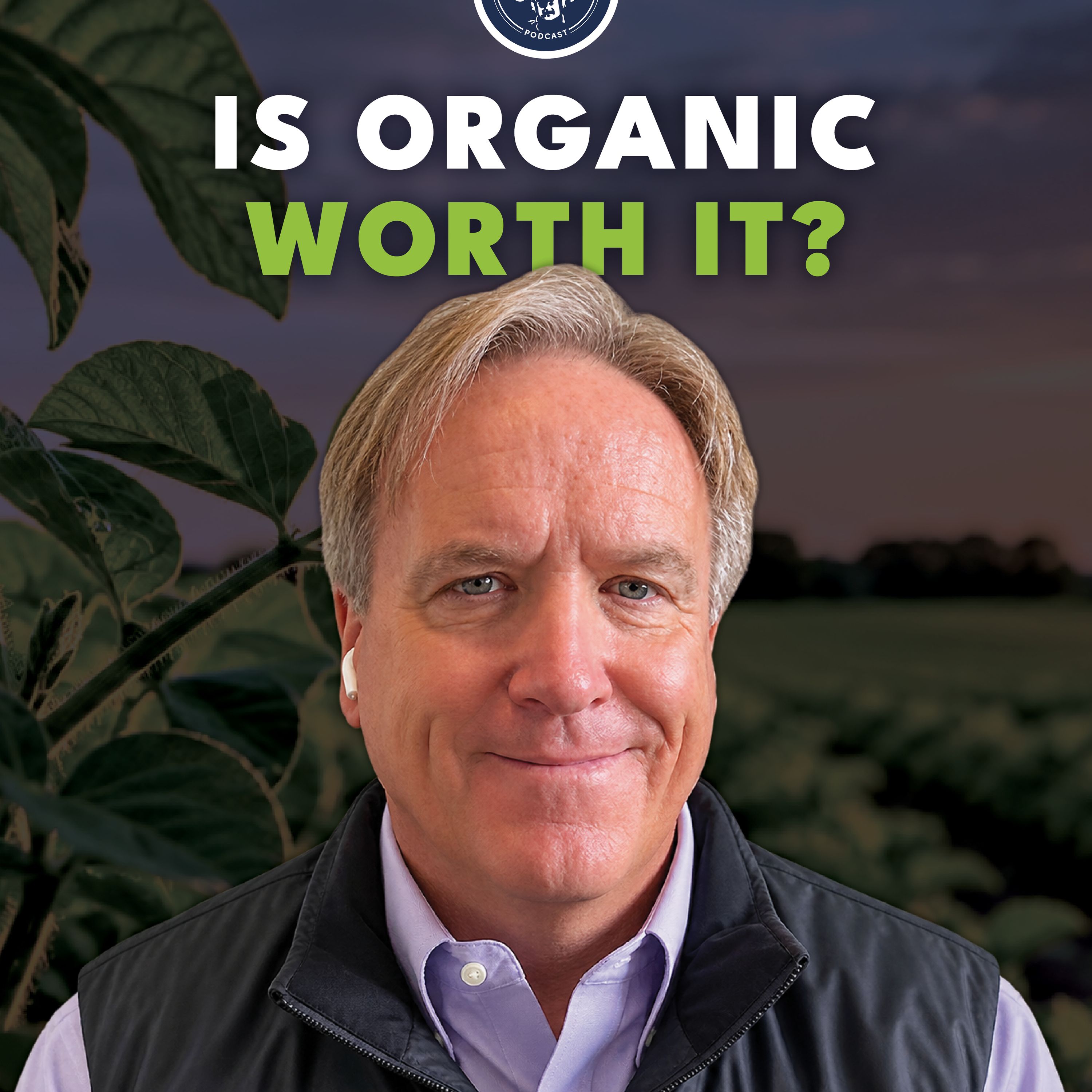
Could organic production be the next opportunity to improve your farm's profitability? Greg Schreiner, co-founder of Quick Organics, returns to Farm4Profit to explain why more conventional farmers should at least consider the economics of organic production. Drawing on 12 years of personal organic farming experience, Greg describes how frustrating and time-consuming USDA organic certification paperwork can be. Quick Organics was created to simplify that process through digital recordkeeping, streamlined organic system plans, and easier documentation of planting, tillage, cultivation, inputs, and harvest activities. Greg also shares a major company milestone: helping develop a Common Organic System Plan, which he says received USDA approval in May after approximately five years of work. Rather than suggesting that every farmer immediately convert an entire operation, Greg recommends starting with a manageable number of acres, whether that's 80, 160, or 240. He believes organic production could help conventional farmers diversify their income and capitalize on changing consumer preferences. Greg points to the growing purchasing influence of Generation Z and its interest in organic products as a reason to pay attention to future demand. He also emphasizes that organic opportunities extend well beyond fruits and vegetables. Farmers can explore organic corn, white corn, blue corn, soybeans, wheat, sorghum, alfalfa, and specialty beans. In particular, Greg sees organic alfalfa as an attractive transition crop because of its potential fit within existing agricultural infrastructure and markets. The conversation explores one of the biggest barriers to organic production: the transition period. Greg explains that Quick Organics helps farmers develop a timeline that could allow a crop harvested in 2029 to qualify for organic pricing if prohibited inputs were discontinued at the appropriate point in 2026. That means farmers may face roughly two crop years receiving conventional prices while following organic production requirements. He also addresses the practical challenges of sourcing manure, finding appropriate equipment, locating buyers, and maintaining separation between conventional and organic grain. Quick Organics is developing a supplier and market network to help farmers navigate these challenges, while Greg notes that cleaning equipment, maintaining records, and documenting transportation are important parts of protecting organic integrity. Actual eligibility depends on certification requirements and the documented timing of prohibited substance applications. One of the most interesting developments is Quick Organics' new online profitability calculator, designed to help farmers compare conventional and organic production scenarios. Greg uses the example of a 1,500-acre farm that converts 500 acres to organic while maintaining 1,000 conventional acres. He cites illustrative organic prices of approximately $14 per bushel for corn, $24 for soybeans, and $16 for wheat, demonstrating how premium markets could change an operation's gross revenue potential. The calculator allows farmers to explore different acreage allocations and crop prices. However, the hosts and Greg acknowledge that the decision requires more than looking at higher selling prices; producers also need to evaluate transition costs, yields, labor, equipment, certification, and access to reliable markets. The episode wraps up with a discussion about government programs and financial assistance available to organic and transitioning farmers. Greg highlights organic certification cost-share opportunities and discusses conservation programs through USDA NRCS, including EQIP and emerging regenerative agriculture initiatives. Quick Organics is working to incorporate information about funding opportunities and applications directly into its platform, potentially reducing the administrative burden on producers. Greg believes many farmers are overlooking programs that could help offset the cost of changing practices, although actual assistance varies by program, location, eligibility, and available funding. The takeaway: Organic farming doesn't have to be an all-or-nothing decision. For conventional farmers willing to investigate new markets, experiment with a portion of their acres, and carefully evaluate the economics, organic production may offer another path toward long-term profitability. Explore the transition tools and profitability calculator at QuickOrganics.com (https://quickorganics.com/) Want Farm4Profit Merch? Custom order your favorite items today! Website: www.Farm4Profit.com (http://www.farm4profit.com/) Email address: [email protected] Call/Text: 515.207.9640 Farm4Profit Media is not a financial, legal, or tax advisor. Hosted by Simplecast, an AdsWizz company.
Episode information is provided by the publisher. Listening takes place on the publisher’s service.
Listen at the source ↗