Listen through the publisher, then discuss the episode here or arrange an in-person Roundtable. Your city determines where to meet.
Roundtables are designed for groups of four, with a shared subject and room for everyone to speak. Come for discussion, with no dating expectation.
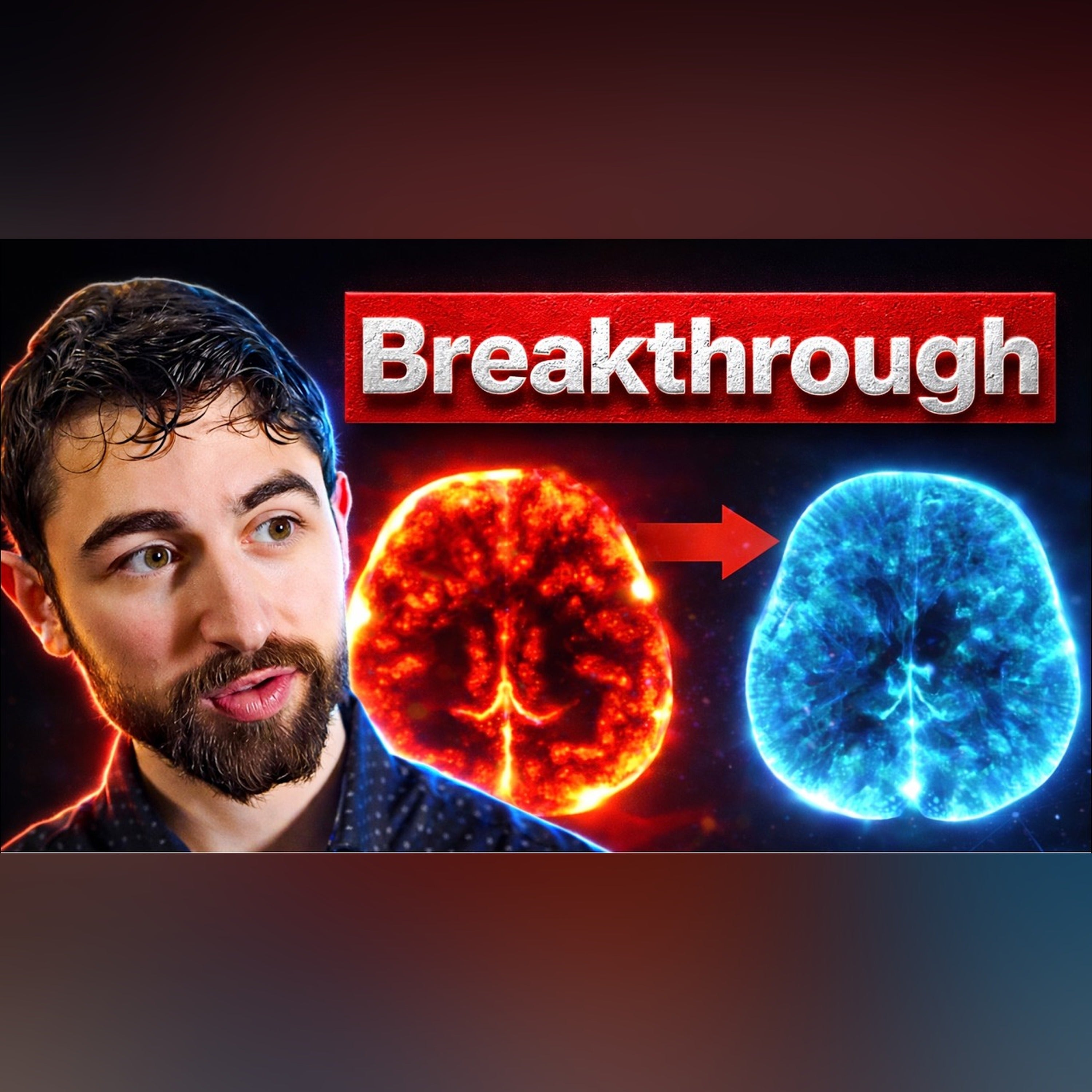
My guest today is Karl Herrup, Professor of Neurobiology at University of Pittsburgh School of Medicine, and a key investigator in its Alzheimer’s Disease Research Centre. His book on Alzheimer’s ‘How Not To Study A Disease’, published in 2021, laid bare the facts about amyloid. Now, 5 years on, in the third generation of anti-amyloid treatments - which do successfully lower the burden of amyloid in the brain but don’t produce meaningful benefits with substantial risk. Is the amyloid obsession a dead end, what has been learnt and where should we be looking to prevent Alzheimer’s? Find out more about Alzheimer's prevention with my book Upgrade Your Brain (https://www.holfordnutrition.com/product/uyb-book/).
Episode information is provided by the publisher. Listening takes place on the publisher’s service.
For all the references, added nuanced, and early access to breakdowns like these, see the StayCurious Metabolism Letter: https://staycuriousmetabolism.substack.com/p/never-get-alzheimers-disease-the?r=40ekz2 Other Referenced Content Omega-3 Video: https://youtu.be/B-kEn0FukXM If you want to try the Lyso-DHA omega supplement I use, Accentrate Omega Max, here’s the https://www.fenixhealthscience.com/staycurious Lithium Video: https://youtu.be/Hcz0Eyp1LE4 Alzheimer’s Unfolded Video (throw back!): https://youtu.be/oRaNzfHF_do Aging Spikes, Interview with Stanford’s Professor Michael Snyder: https://youtu.be/kMpGkg4zMOU Alzheimer’s disease is usually framed as a problem of amyloid plaques and tau tangles. But a growing body of research suggests a deeper, upstream issue: loss of brain energy metabolism—and declining NAD+ (nicotinamide adenine dinucleotide). In this video, we walk through new experimental and human data showing how reduced NAD+ impairs mitochondrial health and brain function—
This week Kiley and I discuss Carb Cycling while Pregnant. Is it safe to Carb Cycle and break Ketosis during Pregnancy? I also talk about my experience at a conferences were I learned about Carb Cycling and explain the interesting research done on Carb Cycling. I also talk about Ketones for Brain development and more specifically, Ketones for Brain development as an Infant. It’s incredible to know how much significance Ketones for Brain development has as an Infant. Thanks for tuning into my channel. Find more stories and information at my website: www.BozMD.com BOOK-LINK - ANYWAY YOU CAN. AUDIBLE: https://adbl.co/2SLLfS1 PAPERBACK= (Affilate link) https://amzn.to/2Cq1IVC The two most common questions I get ... 1) "Doc, what BLOOD METER do you recommend?" ANSWER: FORACARE: http://bit.ly/2QKGmKG For years my diabetics told me this system was great. I tried several others before I bought this one. I can't count the number of times I have tested my blood only to get an ERROR message from
Glycine is an amino acid that helps build collagen and is involved in regulating inflammation, and researchers are exploring its role in healthy aging, yet your body may produce less of it as you get older Modern diets often lack glycine-rich connective tissues, such as bones, tendons and cartilage, making grass fed beef bone broth, gelatin and collagen-rich cuts of meat valuable additions to your meals Animal studies described by biochemist Joel Brind, Ph.D., found that glycine supplementation extended lifespan in rats and mice by approximately 10% to 15%, although researchers have yet to establish whether it produces similar benefits in humans In a small, three-month placebo-controlled trial of 74 adults with Type 2 diabetes, those given glycine had significantly lower HbA1c and reduced inflammatory markers compared with placebo, although larger studies are needed Research suggests glycine may help your body release heat and lower its core temperature before sleep, while collagen-ric
Big News! Clicking Here (https://meditationsounds.supercast.com/) Email List (https://bit.ly/3T010m4) Brown Noise for Studying | ADHD Focus Aid | Soft Brown Noise for Deep Sleep is a powerful sound tool designed to help you stay focused, calm, and rested. Whether you’re working through academic tasks, managing ADHD, or trying to fall asleep faster, this deep and soft brown noise creates a stable sound environment that promotes mental clarity and relaxation. Unlike white noise, brown noise has a lower, deeper tone that’s easier on the ears—perfect for extended listening during study sessions, mindfulness practices, or nighttime rest. Press play and experience the grounding effect of true brown noise. #BrownNoise #BrownNoiseForStudying #BrownNoiseADHD #BrownNoiseForSleeping #SoftBrownNoise #FocusAid #SleepSoundscape #ADHDFocusSound #StudyWithBrownNoise #DeepSleepAudio brown noise for studying, brown noise ADHD, soft brown noise for sleep, academic brown noise, brown noise deep focus, bro
Today, I’m honored to connect with Dr. Troy Badger. He is a board-certified cardiologist and interventionalist and the founder of Cardiostrong, a concierge preventive cardiology clinic in Provo, Utah, focused on reducing cardiovascular risk, optimizing metabolic health, and improving strength and cardiorespiratory fitness for executives and athletes. In today’s conversation, we discuss Dr. Badger’s gender- and age-specific approach to heart health, including treatment differences for men and women, and diagnoses such as INOCA, SCAD, vasospastic disease, and Takotsubo. We examine emotions and their influence on heart health, coronary ischemia and cardiomyopathies, labs and diagnostics, how Dr. Badger assesses risk in his patients, and the differences between a CAC and a CCTA. Dr. Badger also shares the labs he finds essential for all patients and discusses the role of VO2 Max, cardiovascular training, and lifestyle—specifically nutrition, the use of GLP-1 drugs, and a multidisciplinary
Rob reveals his secrets to keeping things hot in the bedroom throughout his marriage and well after menopause and he called in to talk all about it. Tune in to hear all the details including how things changed in their bedroom once his wife finally spoke up about her not having orgasms, what he learned about pleasing her and how he went on a mission to figure her out, the books he read that completely changed the game, how their sex life changed when she went through menopause, all the things he tried to make sex more pleasurable again for her, how he came up with a unique way to apply lubricant that helped prevent pain and tearing, how his wife had a prolapsed cervix and the surgery she had to correct it, how and why she became way to tight afterwards, what he introduced in the bedroom that completely loosened her up and allowed her to start having sex again, why she refused to go on HRT and the over-the-counter products he found for her that helped with vaginal dryness and tearing, h
Established legal precedents should change when strong reasons outweigh the value of consistency.
Share your view, then see how readers voted. No sign-in required. This poll is shared across stories.
Do you agree or disagree?
Common Quandary
A Common Quandary to discuss
Another conversation to explore, separate from this news story.
The restaurant gives free birthday cake. Is moving your birthday by a week close enough?
A restaurant offers a spectacular free dessert on birthdays. Your birthday was last week, but nobody took you out then. When the server asks whether anyone is celebrating, your friends point at you and wait for your answer.
How much flexibility can a harmless celebration tolerate before it becomes a lie?