The Art of Aging: How Stress Really Affects Your Body
61 min
Listen through the publisher, then discuss the episode here or arrange an in-person Roundtable. Your city determines where to meet.
Roundtables are designed for groups of four, with a shared subject and room for everyone to speak. Come for discussion, with no dating expectation.
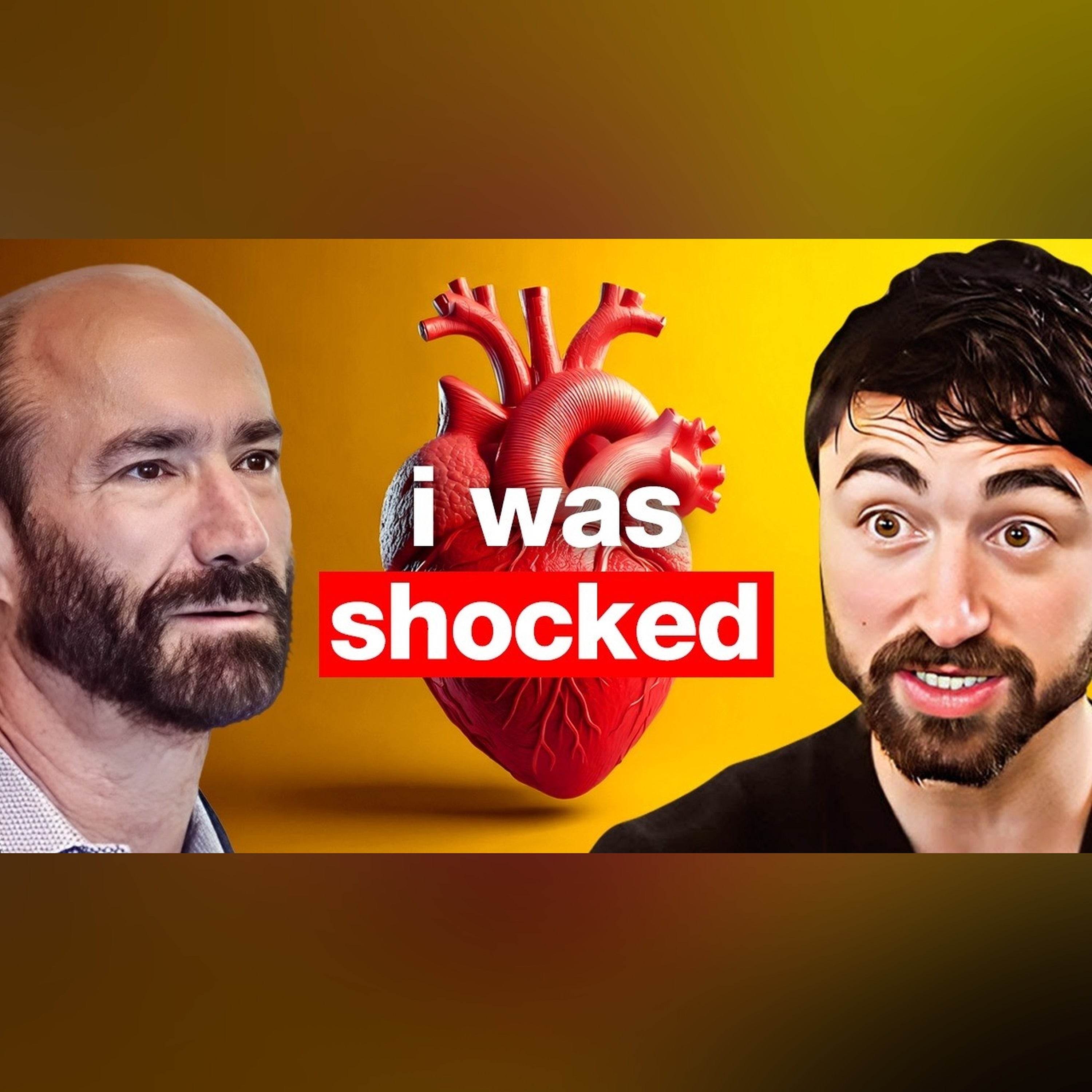
Can stress really make you sick? We often think of our mental and physical health as two separate things, but science now shows they’re deeply connected. I sat down with cardiologist Dr. Tara Narula to talk about how stress affects our bodies as we age, from our heart to our immune system to our brain, and why women may be especially vulnerable. Dr. Narula shares what actually helps: sleep, movement, connection, and building the kind of resilience that carries us through life’s hardest moments. Dr. Tara Narula is a cardiologist at Lenox Hill Hospital, chief medical correspondent for ABC News, and author of The Healing Power of Resilience. This episode is part of The Art of Aging, my series on living longer and better, in partnership with Northwell’s Katz Institute for Women’s Health. Hosted on Acast.
Episode information is provided by the publisher. Listening takes place on the publisher’s service.
Why is the manosphere so appealing to young men? What does it actually mean to be a good man? To join our journaling club, with 10,600 + others, subscribe to my imperfect email - https://www.theimperfects.com.au/sign-up-to-our-newsletter/ Journalist Marc Fennell joins us in the studio to talk about the manosphere: what is it? what are its consequences? and how can we talk to our kids about it? Marc explores with Hugh, Ryan and Josh why the manosphere is so appealing to young men, especially those who think they have little value to offer, and Josh questions what his reaction would have been, if he had of been exposed to the manosphere at a vulnerable time. We look at ‘toxic masculinity,’ and the impact of being right versus making change, and in a moment of vulnerability, Marc discusses the importance of self reflection of your own behaviour. Chapters: Chapters 00:00:00 – Marc Fennell on the Manosphere [TRAILER] 00:01:01 – Ryan’s doppelganger (and media buff etc) 00:04:24 – The State o
Get the 200+ Page Optimal Living Daily Workbook (PDF) - Free. Want to turn today's episode into an actionable plan? Episode 4233: Kate Galliett explains three reasons we make health, fitness and life harder than they need to be: ignoring how the body works as a connected system, trusting only extreme intensity, and leaking the energy that fuels motivation and discipline. She makes the case that appropriate effort, not maximum effort, is the only sustainable path to lasting results. Read along with the original article(s) here: https://fitforreallife.substack.com/p/why-you-make-everything-harder-than Quotes to ponder: "The better way is to give appropriate effort and get appropriate results. This is the only sustainable way." "If you try and live at the extremes, you will constantly ping-pong back and forth from one extreme to the other." "Just imagine - you might not actually lack discipline after all, you just might be leaking energy that feeds your ability to be disciplined." We spen
For written details on this paper, see the StayCurious Metabolism Newsletter: https://staycuriousmetabolism.substack.com/p/the-art-of-a-heartbeat-one-of-the?r=40ekz2 Snyder Interview 1: https://youtu.be/mCrc4gfbK2o Snyder Interview 2: https://youtu.be/kMpGkg4zMOU Snyder Interview 3: This one! Snyder Interview 4: Coming Soon… Leptin Resistance Letter: https://staycuriousmetabolism.substack.com/p/obesitys-secret-letters-the-hidden?r=40ekz2 Gift Guide: https://staycuriousmetabolism.substack.com/p/saint-dr-nicks-holiday-gift-guide?r=40ekz2 This conversation with Stanford’s Professor Michael Snyder breaks down one of the most important exercise studies ever published — a deep, molecular look at what really happens inside your body when you work out. We explore how thousands of molecules shift in real time, why inflammation during exercise is actually a good thing, how omega-3 signaling, mitochondrial remodeling, nitric oxide pathways, and metabolic flexibility all come together in a coordin
Glycine is an amino acid that helps build collagen and is involved in regulating inflammation, and researchers are exploring its role in healthy aging, yet your body may produce less of it as you get older Modern diets often lack glycine-rich connective tissues, such as bones, tendons and cartilage, making grass fed beef bone broth, gelatin and collagen-rich cuts of meat valuable additions to your meals Animal studies described by biochemist Joel Brind, Ph.D., found that glycine supplementation extended lifespan in rats and mice by approximately 10% to 15%, although researchers have yet to establish whether it produces similar benefits in humans In a small, three-month placebo-controlled trial of 74 adults with Type 2 diabetes, those given glycine had significantly lower HbA1c and reduced inflammatory markers compared with placebo, although larger studies are needed Research suggests glycine may help your body release heat and lower its core temperature before sleep, while collagen-ric
Does your relationship feel like home, or does it feel like standing on the edge of something you might lose? In Part 3 of our Relationship Anxiety series, clinical hypnotherapist and former paramedic Martin Hewlett guides you through the process of teaching your nervous system that love doesn't have to hurt to be real. We explore the physical manifestations of anxiety—the tight chest, the 2:00 AM racing mind, and the "stomach drop" when a text takes too long—and provide the tools to "turn down the alarm" of your internal survival response. If you are ready to stop "cherry-picking" evidence of disaster and start building a foundation of trust, this session is for you. In This Episode, We Cover: The Science of Safety: Understanding how your nervous system confuses love with danger. Guided Visualization: A journey into your own "safe room" where you are already enough. Rewiring the Brain: Moving from worst-case disaster reels to the reality of small, daily kindnesses. Breaking the Cycle:
Let go of negative thoughts, release limiting beliefs, and drift into peaceful sleep with this gentle guided sleep hypnosis for positive thinking, self confidence, and inner peace. If you've been struggling with self doubt, harsh self criticism, or the feeling that you're never good enough, this soothing bedtime journey invites you to replace those familiar thoughts with kinder, more supportive beliefs. As you settle into deep relaxation, a slow and peaceful induction helps your body soften and your mind become quiet. You'll imagine stepping into an old wood-panelled lift that gently carries you down ten floors, allowing you to relax more deeply with every level. At the bottom, you'll discover a beautiful inner library filled with the stories you've told yourself throughout your life. Here, old beliefs such as "I am not enough" and "I always fail" can be gently put away, making room for new, encouraging thoughts: • I am learning and growing every day. • I can handle things one step at
Rachel Maddow joins Katie Couric for a wide-ranging conversation about Donald Trump, the future of MAGA, and what the stunning results of the 2026 midterm elections mean for American democracy. After Democrats' sweeping victories, is Trump's grip on the Republican Party finally weakening? Can the GOP survive without him? And will Democrats hold the Trump administration accountable? Maddow breaks down the election results, why she believes corruption played a major role in voters' rejection of Trump, and what comes next for Republicans and Democrats. She also weighs in on the possibility of Pete Hegseth's impeachment, Stephen Miller's growing power in the White House, and whether Trump's Justice Department can be rebuilt. Plus, Maddow discusses her new book, Department of Fate: The Promise, the Power and the Collapse of America's Most Consequential Institution, and explains why she believes the future of the Department of Justice is inseparable from the future of American democracy. Hos
My girlfriends and I have a plan: When we’re 85, we’re all moving into one big house together, somewhere warm, of course. Our own modern-day Golden Girls. (I’ll be Sophia.) But it turns out there’s real science behind that plan. Research shows friendships and social connection are just as important to healthy aging as diet, exercise and sleep. So why does making friends get so much harder as we get older? For the latest episode of The Art of Aging, I sat down with Priya Parker, author of The Art of Gathering and The Art of Fighting, to talk about how to build community when kids grow up, friends move away, and our social circles start to shrink. In partnership with Pantene and Olay. Hosted on Acast.
The 2026 midterms delivered an extraordinary night for Democrats, who won control of both houses of Congress and flipped key races in states like Texas, Kansas, and South Carolina. But was this a vote of confidence in Democrats, or a resounding rejection of Trump? After nearly five hours of live election coverage from the University of Virginia's Center for Politics, Katie reunites with veteran journalist Jim Acosta and political analyst Larry Sabato to unpack the results, the biggest surprises, and what comes next. They discuss the shifting political map, what drove voters to the polls, whether moderates or progressives have the upper hand in the Democratic Party, and how Democrats should wield their newfound power in Congress. Plus, they explore what Trump might be thinking after such a devastating defeat, whether JD Vance is distancing himself from the president, and what the results mean for the race to the White House in 2028. The votes are in, but the political fallout is only be
Public officials should meet ethical standards higher than the minimum required by law.
Share your view, then see how readers voted. No sign-in required. This poll is shared across stories.
Do you agree or disagree?
Common Quandary
A Common Quandary to discuss
Another conversation to explore, separate from this news story.
A better public school is one borrowed address away. Would you use it?
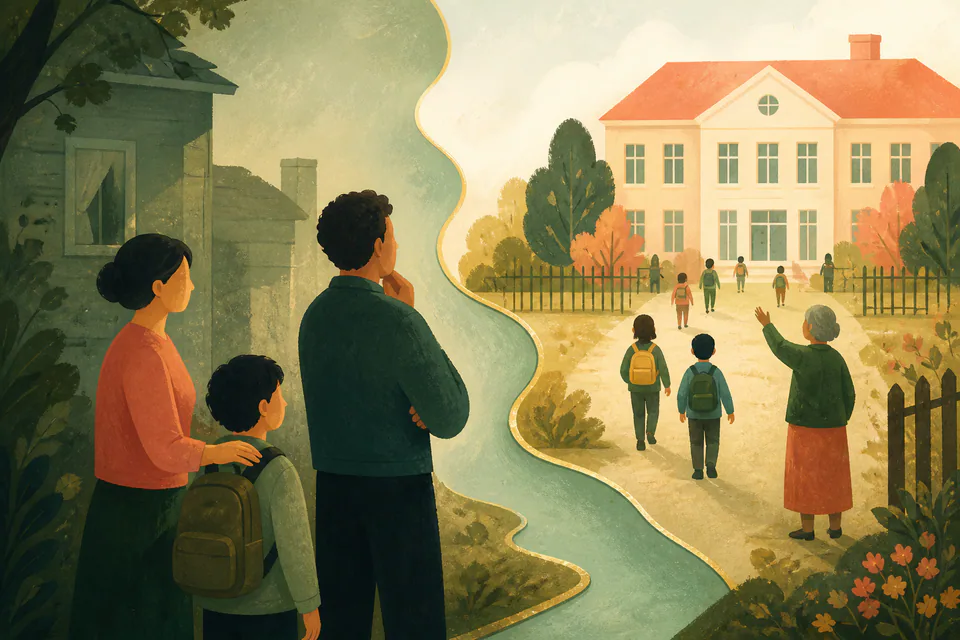
Your child is struggling at the assigned school. A grandparent lives inside the boundary of a much stronger public school and offers to let you use their address. The desired school has limited places and verifies residency unevenly.
Can a parent's duty justify taking an opportunity allocated by an unfair boundary?