Listen through the publisher, then discuss the episode here or arrange an in-person Roundtable. Your city determines where to meet.
Roundtables are designed for groups of four, with a shared subject and room for everyone to speak. Come for discussion, with no dating expectation.
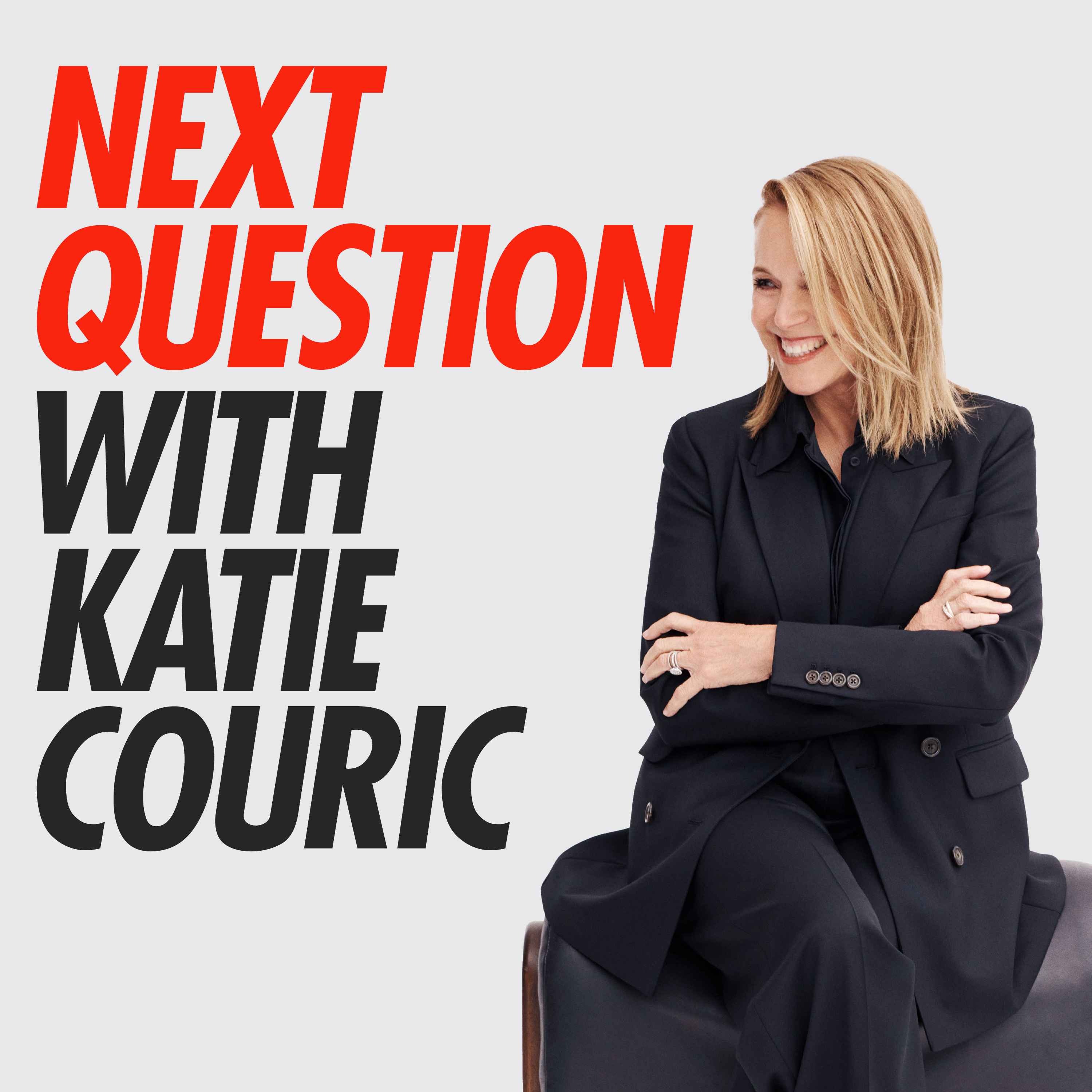
My girlfriends and I have a plan: When we’re 85, we’re all moving into one big house together, somewhere warm, of course. Our own modern-day Golden Girls. (I’ll be Sophia.) But it turns out there’s real science behind that plan. Research shows friendships and social connection are just as important to healthy aging as diet, exercise and sleep. So why does making friends get so much harder as we get older? For the latest episode of The Art of Aging, I sat down with Priya Parker, author of The Art of Gathering and The Art of Fighting, to talk about how to build community when kids grow up, friends move away, and our social circles start to shrink. In partnership with Pantene and Olay. Hosted on Acast.
Episode information is provided by the publisher. Listening takes place on the publisher’s service.
If you'd ever like to go deeper with me, join our globally bestselling science newsletter, StayCurious Metabolism: https://staycuriousmetabolism.substack.com (https://staycuriousmetabolism.substack.com/) NOHO Labs: My Peptide and Longevity Clinicians If you're looking for comprehensive support with peptides, I've spent a lot of time searching and vetting providers, and I'm happy to recommend the thoughtful clinicians at NOHO Labs, which is the service my family and I use. Link: https://noholabs.com/nick/ We negotiated the best arrangement we could for the StayCurious community, including concierge care, personalized peptide protocols, prescriptions when appropriate, and ongoing individualized oversight. Of course, you know I'm a big believer in N = 1 experimentation, but it's important to do that safely. These are clinicians who can provide thoughtful, individualized guidance, and I've been consistently impressed by their expertise, curiosity, and commitment to lifelong learning. If yo
This is a PREVIEW of the upcoming episode of Change Agents. The full episode drops tomorrow at 5pm EST Uploaded 18-06-26 On this week's episode of Change Agents, Andy travels to Chase Hughes' new studio to break down how human behavior is manipulated at scale, from bot farms manufacturing fake consensus to the psychological framework Chase calls WOUND that explains why outrage, fear, and loneliness keep us glued to our phones. They dig into why Chase believes the algorithm is less a sinister mastermind and more an engine optimized purely for ad revenue, how think tanks may shape policy more than most people realize, and why Walter Cronkite and Julia Child both have far stranger backstories than anyone learned in school. Andy also gets a tour of Chase's new independent news studio, Station One, built to show audiences the psyops behind the headlines rather than just the headlines themselves. Change Agents is an IRONCLAD Original Firecracker Farm Norwood Sawmills: Learn more about Norwoo
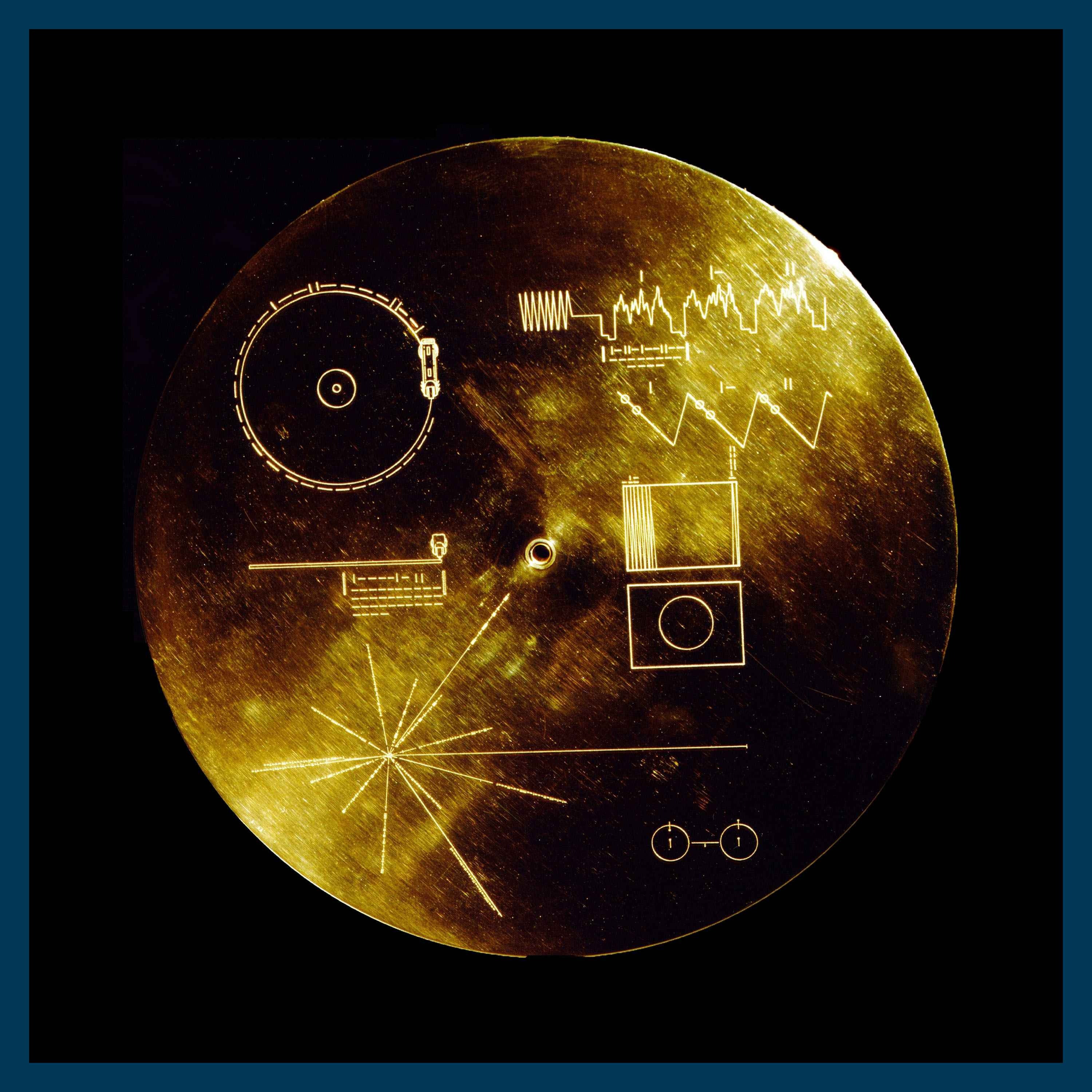
This week, Voyager 1 reached one light day away from earth - the farthest any man-made object has ever been. For fifty years, it as well as its sister probe Voyager 2, have been sending information back to earth. Now, they’re off to interstellar space, carrying two golden records designed to introduce humanity to whatever life form may be out there. So what’s on those discs? And what does the project tell us about what it means to be human? Guests: Rhys Blakely, science editor, The Times Tim Ferris, author and producer of the Voyager Golden Record Host: Manveen Rana Producer: Olivia Case We want to hear from you - email: [email protected] Read more: Voyager - humanity’s most distant message (https://www.thetimes.com/uk/science/article/nasa-golden-record-sounds-voyager-humanity-bksl2n0ck?eafs_enabled=false) Further listening: Has space become the final frontier for war? (https://pod.link/1501716010/episode/NmFhYzMzNzM4ZGUzYjQzYjZhOTk4ZGJj) Clips: NASA Voyager Golden Record / Carl Sa
This week on The Necessary Conversation, it's Chad, Haley, and Mary Lou. Bob is still recovering but sent in a video message about Trump calling Putin his friend that we watch together. 🇷🇺 Trump held the first-ever three-way talks with Putin and Xi, called it a "12 out of 10," and produced nothing. Then at a press conference he called Putin his friend — and when asked if Putin is a friend to America, the president of the United States said, "I can't speak to America." That same day, Trump's friend Putin launched massive strikes into Ukraine, hit Poland with two missiles — an act of war against a NATO ally — then struck near a Ukrainian restaurant and drone-bombed the first responders, killing a 7-year-old child and a 20-year-old paramedic. We watch Bob's video and ask Mary Lou: is Russia our friend? 🇨🇳 The House Foreign Affairs Committee revealed Trump's Commerce Department approved nearly 880,000 advanced AI chips for Chinese military-linked companies including Alibaba, Tencent, a
A wave of major technology outages is raising troubling questions about America's cybersecurity, aging infrastructure, and readiness for a new era of artificial intelligence. Are these isolated technical failures, or warning signs of a much larger national security problem? John Solomon and Amanda Head welcome Ohio Congressman and former Army Ranger Warren Davidson, who discusses recent disruptions involving the FAA, Microsoft, and other critical systems. Davidson calls for greater transparency from government agencies and technology companies, questions whether America's infrastructure is adequately protected against emerging cyber threats, and examines how artificial intelligence could be used both to strengthen defenses and exploit vulnerabilities. The conversation also turns to immigration and national security, with Davidson raising concerns about individuals who entered the country illegally, potential gaps in government screening systems, and the surveillance powers used to moni
Does your relationship feel like home, or does it feel like standing on the edge of something you might lose? In Part 3 of our Relationship Anxiety series, clinical hypnotherapist and former paramedic Martin Hewlett guides you through the process of teaching your nervous system that love doesn't have to hurt to be real. We explore the physical manifestations of anxiety—the tight chest, the 2:00 AM racing mind, and the "stomach drop" when a text takes too long—and provide the tools to "turn down the alarm" of your internal survival response. If you are ready to stop "cherry-picking" evidence of disaster and start building a foundation of trust, this session is for you. In This Episode, We Cover: The Science of Safety: Understanding how your nervous system confuses love with danger. Guided Visualization: A journey into your own "safe room" where you are already enough. Rewiring the Brain: Moving from worst-case disaster reels to the reality of small, daily kindnesses. Breaking the Cycle:
Can stress really make you sick? We often think of our mental and physical health as two separate things, but science now shows they’re deeply connected. I sat down with cardiologist Dr. Tara Narula to talk about how stress affects our bodies as we age, from our heart to our immune system to our brain, and why women may be especially vulnerable. Dr. Narula shares what actually helps: sleep, movement, connection, and building the kind of resilience that carries us through life’s hardest moments. Dr. Tara Narula is a cardiologist at Lenox Hill Hospital, chief medical correspondent for ABC News, and author of The Healing Power of Resilience. This episode is part of The Art of Aging, my series on living longer and better, in partnership with Northwell’s Katz Institute for Women’s Health. Hosted on Acast.
Rachel Maddow joins Katie Couric for a wide-ranging conversation about Donald Trump, the future of MAGA, and what the stunning results of the 2026 midterm elections mean for American democracy. After Democrats' sweeping victories, is Trump's grip on the Republican Party finally weakening? Can the GOP survive without him? And will Democrats hold the Trump administration accountable? Maddow breaks down the election results, why she believes corruption played a major role in voters' rejection of Trump, and what comes next for Republicans and Democrats. She also weighs in on the possibility of Pete Hegseth's impeachment, Stephen Miller's growing power in the White House, and whether Trump's Justice Department can be rebuilt. Plus, Maddow discusses her new book, Department of Fate: The Promise, the Power and the Collapse of America's Most Consequential Institution, and explains why she believes the future of the Department of Justice is inseparable from the future of American democracy. Hos
The 2026 midterms delivered an extraordinary night for Democrats, who won control of both houses of Congress and flipped key races in states like Texas, Kansas, and South Carolina. But was this a vote of confidence in Democrats, or a resounding rejection of Trump? After nearly five hours of live election coverage from the University of Virginia's Center for Politics, Katie reunites with veteran journalist Jim Acosta and political analyst Larry Sabato to unpack the results, the biggest surprises, and what comes next. They discuss the shifting political map, what drove voters to the polls, whether moderates or progressives have the upper hand in the Democratic Party, and how Democrats should wield their newfound power in Congress. Plus, they explore what Trump might be thinking after such a devastating defeat, whether JD Vance is distancing himself from the president, and what the results mean for the race to the White House in 2028. The votes are in, but the political fallout is only be
Supporters should be consulted before major changes in their club's ownership or location.
Share your view, then see how readers voted. No sign-in required. This poll is shared across stories.
Do you agree or disagree?
Common Quandary
A Common Quandary to discuss
Another conversation to explore, separate from this news story.
Your friend is forty minutes late. Can the restaurant give away their chair?
A busy restaurant seats your group only after everyone arrives. One friend is forty minutes late and keeps texting that they are almost there. A couple waiting nearby could use the empty place, and the server asks your group to order without them.
How long should one person's delay control everyone else's evening?