English-language podcasts

PRETEND

The Babalawo - Secrets of Santeria Revisited

48 min

Listen through the publisher, then discuss the episode here or arrange an in-person Roundtable. Your city determines where to meet.

Roundtables are designed for groups of four, with a shared subject and room for everyone to speak. Come for discussion, with no dating expectation.

Growing up Catholic in Miami, I heard all kinds of stories about Santeria. People talked about dead chickens on doorsteps, curses, and spirits taking over people’s bodies. Even the people who didn’t practice it all said the same thing: “I don’t believe in Santeria, but I respect it.” That’s enough to terrify a little Cuban kid, and honestly, it still scares me. So I went back to my hometown to face that fear. My mom is a lifelong Catholic who has quietly started visiting a babalawo (or babalao, as we say in Miami), and she takes me to meet Fernando, the Santeria priest who told her things she swears he had no way of knowing. Santeria, also known as Lucumí or Regla de Ocha, is an Afro-Cuban religion with roots in West Africa’s Yoruba culture. Fernando explains how enslaved people in Cuba kept their orishas alive behind the faces of Catholic saints. Then he takes me to a botanica hidden in a residential neighborhood, where the animals for sacrifice wait in their cages. I also sit down with Cynthia Duncan, Ph.D., a scholar of Cuban culture who is also an initiated priestess. She explains what the orishas are, why the rituals are secret on purpose, what really happens during an animal sacrifice, and whether Santeria can ever be used to hurt someone. This episode first aired back when the show was called Pretend Radio. College professors still play it in their classrooms, and it’s still one of the most personal stories I’ve ever told. About our guest: Cynthia Duncan, Ph.D., is Professor Emeritus of Hispanic Studies at the University of Washington Tacoma. She has spent more than 35 years studying Latin American literature, film and culture, with a focus on Mexico and the Hispanic Caribbean. She wrote Unraveling the Unreal: Fantastic Fictions in Latin America (Temple University Press, 2010). She is an initiated priestess of Ochún and part of the religious community in Palmira, Cuba, and the city of Cienfuegos named her a Distinguished Daughter in 2005. Get early access and bonus content: PRETEND+ on Apple Podcasts: https://podcasts.apple.com/us/channel/pretend/id6443456985 Written and Produced by Javier Leiva Music by Joe Basile | thechicken.net © 2026 Creative Babble LLC

Episode information is provided by the publisher. Listening takes place on the publisher’s service.

Listen at the source ↗

Featured places to meet in Palo Alto, CA

Explore these places and arrange a conversation through ThinkMatch.

City guide for Palo Alto, CA

More from PRETEND

PRETEND

Who’s Afraid of LaDonna Humphrey Part 19: Yes Way, José

49 min

I had no plans to come back to this series. Then my name started popping up everywhere. It showed up in subreddits, a podcast, a Substack, and even in an AI country album released on my birthday. Most of it traces back to LaDonna Humphrey's biggest cheerleader, David McClam. At first, I treated it like a joke. I asked my Patreon supporters, AKA PRETENDAMENTALISTS, to join me in the fun. But it wasn't all laughs. It turns out there are some serious accusations about McClam worth talking about. Two of his adult sons reached out to me. In this episode, they share what they say it was like growing up with him, and I walk through what the public records show, including his 2010 arrest. I reached out to David McClam for a response. He denied the allegations and wrote, "No one in this house has been abused." He also promised revenge against his sons. In his reply to me, he wrote that if this episode aired, he would release CPS and school records and that it would end his son's career. Then he

Discuss this episode

PRETEND

The Hypnotist, Part 1 (Revisited)

52 min

When I was eight months old, I pulled a rice cooker full of boiling water and oil off the kitchen counter, and it spilled down the left side of my body. I still have the third-degree burn scars, but I have no memory of it happening. So I booked a session with a hypnotherapist in Raleigh to see if regressive hypnosis could take me back to that kitchen. Before I go under, I try to answer a question: what is hypnosis, really? Listeners tell me how it helped them quit smoking, switch careers, and get through childbirth without an epidural. A hypnotist tells me what she believes the mind can heal. This is Part 1 of a four-part series. Keep listening on Spotify: Part 2: https://open.spotify.com/episode/1yPCr0SVefi5vT1BDGYakK Part 3: https://open.spotify.com/episode/4UquzkRVaDn1k4FOTn9Pwe Part 4: https://open.spotify.com/episode/5Ecb3wRhrS1WffWu5bpOFD Who’s Afraid of LaDonna Humphrey is back with three new episodes. Part 19 is available on Patreon right now: https://www.patreon.com/pretendrad

Discuss this episode

Community Poll

A company's growth matters less than whether its customers receive better service.

Share your view, then see how readers voted. No sign-in required. This poll is shared across stories.

Do you agree or disagree?

Choose one answer

Common Quandary

A Common Quandary to discuss

Another conversation to explore, separate from this news story.

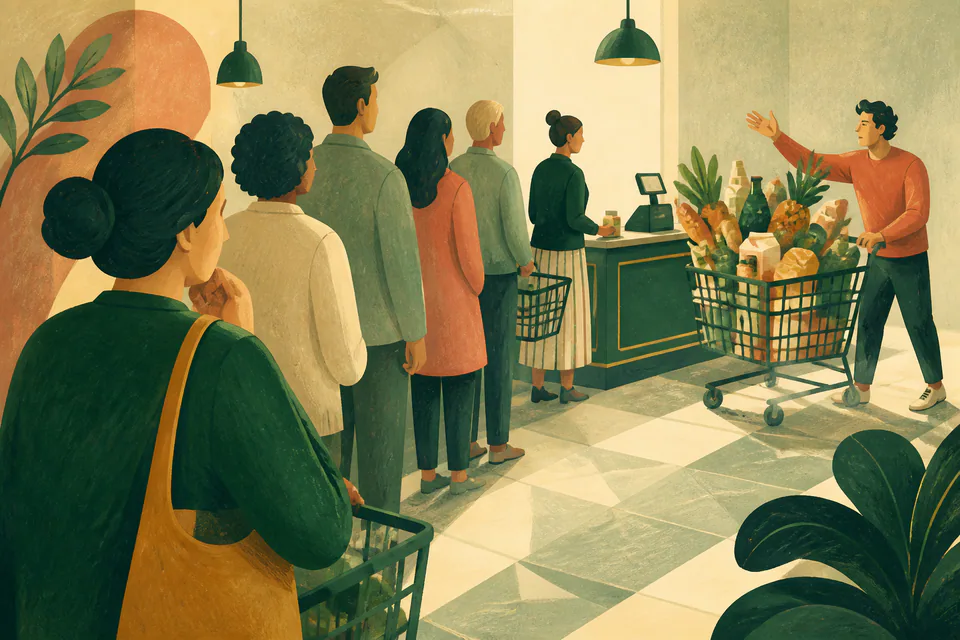
Someone holds a grocery line spot while their partner fills the cart. Is that cutting?

A shopper with one item stands ahead of you in a long checkout line. Just before reaching the register, their partner arrives with a cart packed to the top and joins them. They insist they were shopping together all along.

Can one person reserve a place in line for an unknown amount of work?

Explore this quandary