The Cell Membrane Protocol: What to Eat, Test, and Do to Rebuild Your Cells
31 min
Listen through the publisher, then discuss the episode here or arrange an in-person Roundtable. Your city determines where to meet.
Roundtables are designed for groups of four, with a shared subject and room for everyone to speak. Come for discussion, with no dating expectation.
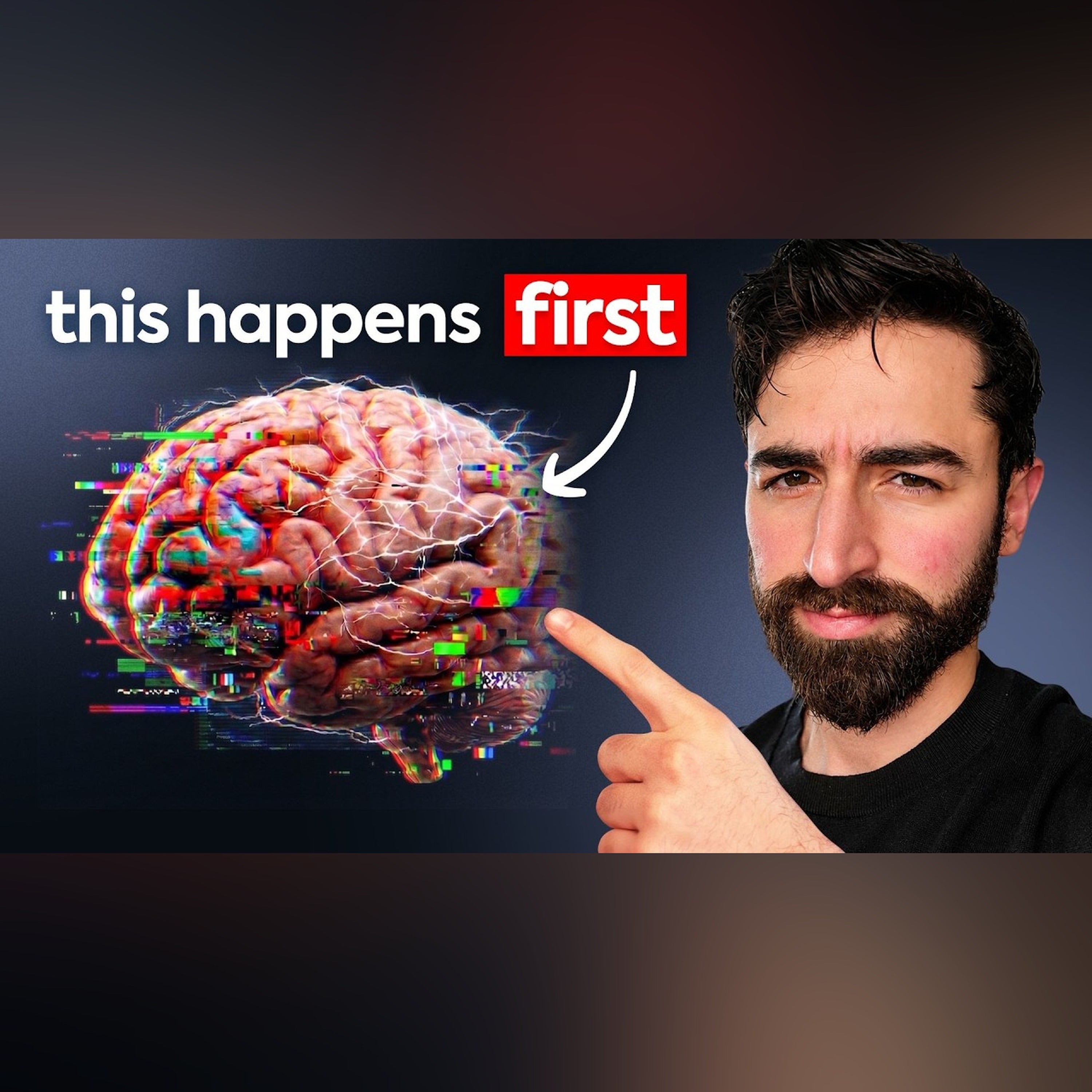
What if one of the most overlooked keys to healthy aging is something you've barely heard of? Every cell in your body is surrounded by a membrane that helps regulate how it communicates, responds to hormones, and functions. But what happens when those membranes become damaged? Here's what we discuss in today's episode: Why your cell membranes may be one of the most overlooked pieces of your health How the fats you eat influence the way your cells function and communicate The connection between cell membrane health, insulin resistance, and metabolic health Why omega-3s are so important for your brain, mood, and healthy aging What's damaging your cell membranes and how to help protect them The blood test that can reveal whether you're getting enough omega-3s Simple dietary and lifestyle changes that can support healthier cells Your health starts at the cellular level, and the fats and nutrients you consume help provide the building blocks your cells need to function properly. Supporting your cell membranes doesn't require a complicated biohacking routine. It starts with the fundamentals: eating nutrient-rich foods, getting enough healthy fats, exercising, sleeping well, and reducing harmful exposures. Resources Mentioned: Listen to our previous Office Hours episode (https://drhyman.com/blogs/content/podcast-ep1189) for a deeper dive into insulin resistance, blood sugar, and metabolic health. Environmental Working Group (EWG): Toxic Chemicals (https://www.ewg.org/areas-focus/toxic-chemicals) Visit functionhealth.com (https://www.functionhealth.com/) for 160+ lab tests at just $365 a year. Have a question you’d love answered on Office Hours? Submit it here (https://docs.google.com/forms/d/e/1FAIpQLSdNF2y4lFWEOMLlzVNlFDpJ4xl7oOpH9NlImMoHr5mHggL_Ww/viewform). 0:00 Membrane Health and Cellular Signals 3:41 What Cell Membranes Actually Do 13:03 Insulin Resistance and Brain Health 19:51 Testing and Rebuilding Membranes
Episode information is provided by the publisher. Listening takes place on the publisher’s service.
Is your body weight stable, but you're still not eating enough to properly fuel your training, recovery, and overall health? Introducing Why Stable Weight Doesn't Always Mean You're Eating Enough from Jeff Hoehn of the Mind Muscle Connection Podcast (https://www.buzzsprout.com/1508401). Just because your weight isn't changing doesn't necessarily mean you're adequately fueled. In this episode, Jeff breaks down why maintaining a stable body weight doesn't always mean you're meeting your body's energy needs, especially if you're training hard, staying lean, or spending long periods dieting. You'll learn: Why stable body weight doesn't automatically mean adequate energy availability Who is most at risk of underfueling, even when their weight isn't changing How high training output, staying too lean, and chronic dieting can contribute to low energy availability The potential signs of underfueling, including changes in performance, recovery, hormones, and menstrual health Why spending too lo
For a written breakdown and early access to content, see the letter: https://staycuriousmetabolism.substack.com/p/omega-3-across-the-lifespan-my-1?r=40ekz2 If you want to try the Lyso-DHA omega supplement I use, Accentrate Omega Max, here’s the https://www.fenixhealthscience.com/staycurious LPC-DHA Video: https://youtu.be/B-kEn0FukXM Lithium Video: https://youtu.be/Hcz0Eyp1LE4 NAD Video: https://youtu.be/-R7sPPQTtco Interview with Bill Harris Part 1: https://youtu.be/rZT4Y6T_0Vc Interview with Bill Harris Part 2: https://youtu.be/fdBToTJ0jqs Omega Quant In this video, I break down the science that matters most if you care about brain health, longevity, and preventing cognitive decline—starting with one molecule that may be more important than anything else: DHA. We’ll walk through how DHA supports your brain structurally, metabolically, and anti-inflammatorily—and why it may be especially critical for people at higher genetic risk. You’ll also learn about one of the earliest changes in
Jennifer is feeling a lot better this week - find out what she did in this week's Keto Consult with Dr Boz and Jennifer Marie. Increasing ketone levels by fasting, an update on Jennifer Marie's menopause symptoms and 3 day sleep protocol results. She even shares some expert #FastingTips! You do not want to miss this week's Keto Consult with Dr. Boz and Jennifer Marie! Learn more about the mental benefits of Keto in my blog: https://bozmd.com/keto-diet-and-brain-health/ Jennifer Marie wrote an article about her role as her husband's caregiver during his sleep 3 day sleep reset protocol -- https://lowcarbinspirations.com/sleep/ Jennifer Marie's Book link: (affiliate link) https://amzn.to/2uuEqt2 Preorder gift: https://lowcarbinspirations.com/preor... JENNIFER MARIE's Recipes: https://lowcarbinspirations.com/ Weekly meal plans: www.mealplanbuddy.com Keto Friendly Recipes Facebook Page: www.facebook.com/ketofriendlyrecipes Low Carb Inspirations Facebook Group: https://www.facebook.com/grou
If you're training hard but feeling wiped, eating a restricted diet for your gut, or just never hungry after a tough workout, you might not be getting the protein you need. This episode breaks down how much you really need and how to get it without upsetting your gut. YOU'LL TAKEAWAY: Macronutrients and calories 101, and how restrictive diets throw off your balance How your body digests protein, and why it matters before workouts The many roles of protein, from enzymes and iron storage to post-workout appetite How much protein you need, plus 3 easy low FODMAP ways to boost it — RESOURCES & LINKS MENTIONED: ⤵️ Want high touch coaching support for IBS & fuelling performance? Apply for coaching. (http://gutfitnutrition.com/apply) Free Training: How to Control IBS So You Can Fuel Your Training Without a Lifelong Low FODMAP Diet (https://gutfitnutrition.com/heal-ibs-training-live) Supporting your immune system when you're sick (Ep. 70) (https://open.spotify.com/episode/5bCto0jWLcbC5hQW4hrH6
A kiss can be wonderful. It can create an instant connection, spark romance, or make you feel closer to someone. But a kiss can also have the opposite effect — and sometimes ruin everything. So what makes kissing so powerful, and why can one kiss make such a difference? There's some fascinating science behind it. https://www.scientificamerican.com/article/why-we-kiss/ We spend an enormous amount of time worrying about what's going to change. What's next? What's coming? How do we prepare? But what if we're paying attention to the wrong things? Some of the most important forces shaping our lives never change, and understanding them may be far more valuable than trying to predict the future — something humans are notoriously bad at. Morgan Housel, partner at The Collaborative Fund and author of Same as Ever: A Guide to What Never Changes (https://amzn.to/3SwWn6u) (https://amzn.to/3SwWn6u)), joins me to explain why the things that stay the same may be the most important things to understan
Glycine is an amino acid that helps build collagen and is involved in regulating inflammation, and researchers are exploring its role in healthy aging, yet your body may produce less of it as you get older Modern diets often lack glycine-rich connective tissues, such as bones, tendons and cartilage, making grass fed beef bone broth, gelatin and collagen-rich cuts of meat valuable additions to your meals Animal studies described by biochemist Joel Brind, Ph.D., found that glycine supplementation extended lifespan in rats and mice by approximately 10% to 15%, although researchers have yet to establish whether it produces similar benefits in humans In a small, three-month placebo-controlled trial of 74 adults with Type 2 diabetes, those given glycine had significantly lower HbA1c and reduced inflammatory markers compared with placebo, although larger studies are needed Research suggests glycine may help your body release heat and lower its core temperature before sleep, while collagen-ric
I’ve lived with back pain since a ruptured disc in my early thirties. More than thirty years later, I’m grateful to be feeling better than I have in decades. I’m excited to be talking with Rachel Zoffness, PhD, a pain psychologist and author of Tell Me Where It Hurts (https://www.zoffness.com/books/tmwihs). We explore how the body, brain, and environment work together to shape what we feel—and how understanding those connections can open up more ways to find relief. Here’s what we get into: Why your MRI may not tell the whole story about your pain How chronic pain can make your nervous system more sensitive over time What stress, mood, and attention have to do with turning your “pain dial” up or down How to identify your personal “pain recipe,” including sleep, movement, and connection What pacing looks like—and how it can help you gradually return to activities you love A big thing I’ve learned from my own recovery is how much it matters to get back to doing what you love. Part of tha
Protein is everywhere right now. From protein-packed snacks to powders and shakes, we're constantly being told to eat more of it. But how much do you actually need? And is more always better? Tooday we are going to cut through the protein hype and break down what really matters for building muscle, supporting your metabolism, and staying strong as you age. Here's what we discuss in today's episode: How much protein you actually need based on your age, weight, and activity level Why protein becomes even more important for maintaining muscle as you age How protein timing and distribution throughout the day affect muscle growth The differences between animal and plant proteins and why protein quality matters The truth about protein powders, bars, and high-protein processed foods Common protein myths, including concerns about kidney health and eating too much protein Getting enough protein isn't just about building bigger muscles. It's about maintaining your strength, protecting your metab
Email Copy: The conversation about ultra-processed food needs to include more than what it does to our weight. We also need to talk about how it may affect our memory, our mood, and the way our children’s brains develop. Because the consequences of what we eat can reach far beyond what we see on the scale. Today on The Dr. Hyman Show, I’m talking with Michael Goran, PhD, a professor of pediatrics and researcher who has spent more than 35 years studying how food shapes our health. We explore what the science tells us and where to start making changes. We discuss: How ultra-processed foods may be affecting your mood and memory, beyond their impact on weight What a study of children’s brain development could mean for the foods we feed our families Why cutting back on sugary drinks is one of the first changes to consider What to know before choosing stevia, monk fruit, or other sweeteners as healthier alternatives Simple ways to eat fewer ultra-processed foods without spending hours in the
Businesses should explain substantial price increases to their customers.
Share your view, then see how readers voted. No sign-in required. This poll is shared across stories.
Do you agree or disagree?
Common Quandary
A Common Quandary to discuss
Another conversation to explore, separate from this news story.
You find a wallet full of cash. Can you take a finder’s fee before returning it?
You find a wallet containing identification and several hundred dollars. Returning it will require a detour and some effort. The owner would probably never know if a small amount were missing.
Can an unrequested good deed entitle someone to compensation?