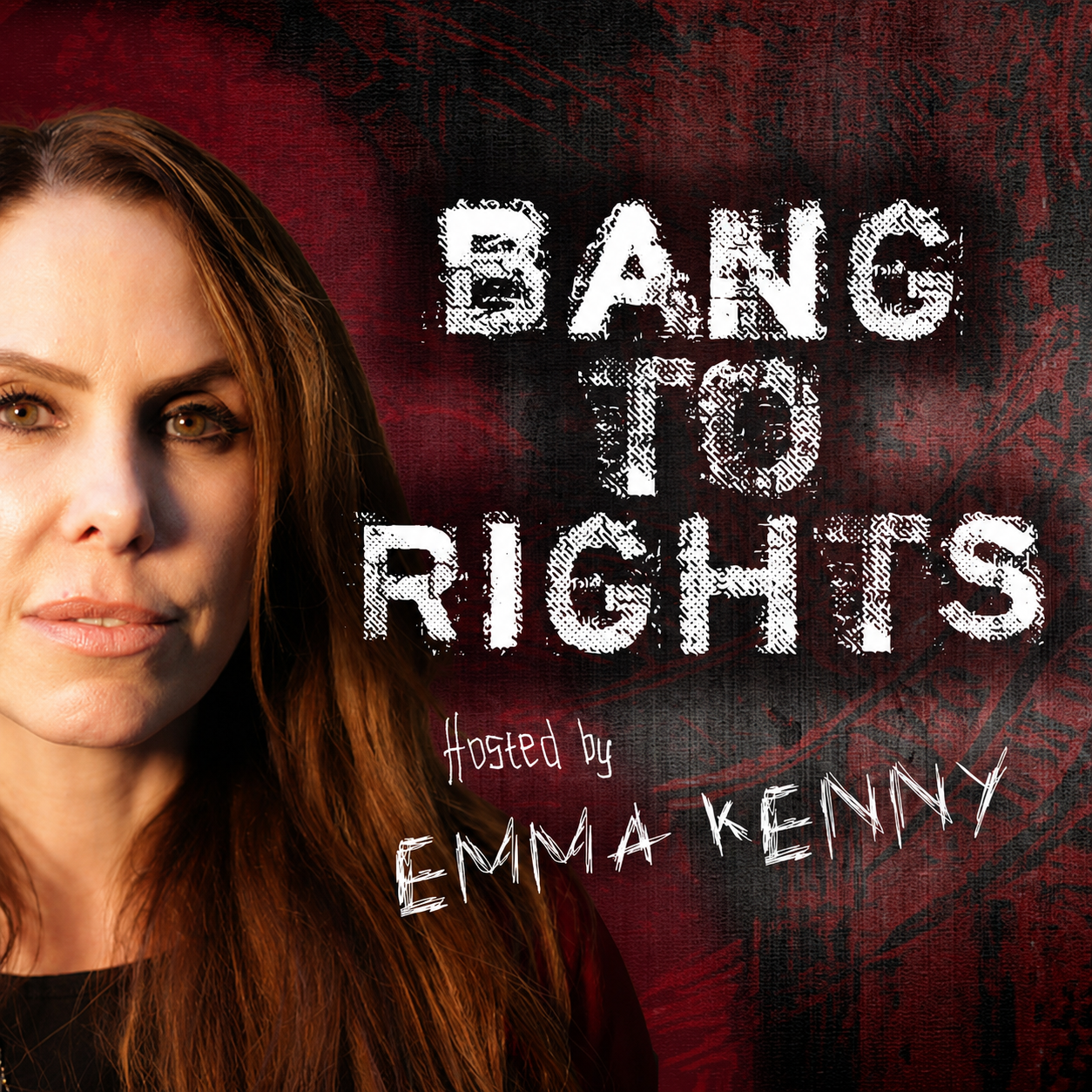
The Dad Who Repeatedly Broke His Newborn Baby's Bones
69 min
Listen through the publisher, then discuss the episode here or arrange an in-person Roundtable. Your city determines where to meet.
Roundtables are designed for groups of four, with a shared subject and room for everyone to speak. Come for discussion, with no dating expectation.
Darcy-Leigh Jefferson was born five weeks early, weighing just four pounds. She was tiny, defenceless and completely dependent on the two people who should have loved and protected her. Instead, her short life was filled with unimaginable cruelty. By the time she died at just five weeks old, she had suffered 47 rib fractures, broken bones in both legs and devastating injuries to her brain. Her father, Sean Jefferson, was responsible for her horrific injuries. But what did her mother know, and why wasn't this little girl protected?
Episode information is provided by the publisher. Listening takes place on the publisher’s service.
Current and former officials say many FBI employees first learned their bureau had been hacked from news reports. The next day, staff got an email reminding them October is cybersecurity awareness month. I ask retired FBI Special Agent Robin Dreeke what finding out that way does to agents' trust in their bosses, and to their willingness to report problems. Hackers stole agents' home addresses and Social Security numbers from the FBI's jobs website, and the FBI says a contractor never installed a security fix that was already out. Weeks later, the FAA grounded every departing flight in the country for more than four hours, and its early findings point to a contractor's new router in Arkansas. Robin, former chief of the FBI's Counterintelligence Behavioral Analysis Program, takes on why equipment the FAA says was due for replacement in 2006 was still running. The FBI also says hackers tied to China's government broke into the Justice, Health and Human Services and Energy departments, sta
In the early 1900s, children's worst nightmares became reality when Albert Fish stalked New York as a real-life boogeyman who tortured, murdered, and cannibalized his young victims over a decade-long reign of terror. READ or DOWNLOAD the full transcript of this episode: https://weirddarkness.tiny.us/2p984xdu FEATURED STORIES IN THIS EPISODE: Edgar Allan Poe’s “The Raven” *** A UK woman sees a little sailor boy… a dead one. *** A 15-foot high B-25 bomber goes missing – in just 20 feet of water. *** A woman wakes up twice in the middle of her own surgery… but that’s not the scariest part. *** A rocking chair mysteriously moves itself to a completely different room. *** Two Romanian climbers found a strange yellowish object and as soon as they touched it something unexplained happened. *** Is teleportation impossible – tell that to Major Tudor Wellesley Pole. *** A new member joins a new age group – and she creeps everyone out. But they soon realize the feeling is warranted. *** September
Within days of being sentenced, Russell Brand's wife posted a video claiming his innocence - and Andy broke the story that prison bosses are now considering banning the pair from communicating at all. In this Q&A episode, Andy reveals what his sources inside the prison system are saying about the Ministry of Justice's urgent investigation. He and Neil discuss which prison rules Brand has breached and why it isn't a criminal offence. They also tackle the question thousands of people are asking: why is a man sentenced to 10 years and six months for rape in a Category C prison one week into his sentence? Neil explains what prison categories actually measure - and why the judge's own sentencing remarks made the move hard to avoid. Plus they discuss the allegations against David Walliams in The Guardian and ITV's investigation, which he denies. Can police pursue a case without an alleged victim formally coming forward? Make sure you subscribe so you never miss an episode. You can subscribe
Content warning: false reporting, extortion, homophobia, serial predation, animal cruelty, litigation abuse, sexual abuse, childhood sexual abuse, pedophilia, intrafamilial sexual abuse, and murder. Josh Chesler is a survivor, entertainment professional, and general contractor from Northern California. Josh’s life started in the most unconventional of ways, when he was born on a boat to his captain father and became part of a burgeoning sect of an already much larger family system. However, his unique upbringing was shrouded in isolation and secrecy; it would take Josh years to learn the whole story about his father’s criminal past and the harm he had caused in the wake of his abuse. And just when Josh had freed himself from his origin family and forged a new, more conventional, calmer home life, he was forced to fight for his family’s sanctity and peace again. The Broken Cycle Media team is immensely grateful that Josh was willing to share his story, advocacy, energy, and warmth with
A six-year-old girl calls 911 with a terrifying message: "My mom isn't waking up." She's sitting in a vehicle on the side of the road, her mother is unresponsive, and she needs help. But there's one major problem. The 911 dispatcher doesn't know where she is. In this powerful story from Episode 677 of Within the Trenches, Arizona 911 dispatcher Anthony shares the moment he found himself trying to locate a frightened six-year-old with limited location information. After the call was transferred to his dispatch center, Anthony didn't have the wireless location data he needed. He attempted to send the child a location-sharing link, but that didn't work either. This is more than a story about emergency technology. It's about the people answering the calls and finding solutions when the answers aren't immediately available. ️ From Within the Trenches, Episode 677
In the fall of 1982, seven people in the Chicago area died after taking Tylenol capsules that had been laced with cyanide. The victims ranged from a 12-year-old girl to a young mother who had just given birth. None of them knew each other, and none of them had any idea what was in the bottles sitting in their medicine cabinets. The killings triggered a nationwide panic, transformed how every over-the-counter medication is packaged, and gave rise to the term "product tampering" as a federal crime. But more than four decades later, no one has ever been charged with the murders. In today's second episode of Conspiracies & the Unknown, Carter Roy revisits one of the most chilling unsolved cases in American history, the suspects who came and went over the years, and the question that still haunts investigators: who walked into those stores, and why did they choose Tylenol? And for more cases just like this one, be sure to check out the Crime House Original, Murder: True Crime Stories. Need
Ryan Waller and his girlfriend Heather Quan were victims of a brutal attack inside their home. Heather was murdered, and Ryan was left fighting for his life. But when police arrived, they made a shocking mistake. What followed was an interrogation that would become almost as disturbing as the crime itself.
Benjamin Day was a 19-year-old forensic science student with a disturbing obsession with the TV serial killer Dexter. But what began as a fascination with fiction was about to become terrifyingly real. After renting a room, covering it in plastic and creating his own makeshift “kill room”, Day lured a woman inside. What followed was a brutal murder — and a bizarre series of mistakes that would quickly expose exactly what he had done.
A tradition can remain authentic while changing with the community that practices it.
Share your view, then see how readers voted. No sign-in required. This poll is shared across stories.
Do you agree or disagree?
Common Quandary
A Common Quandary to discuss
Another conversation to explore, separate from this news story.
Your coworker's religious holiday means you work the unpopular shift again. Is that fair?
A workplace accommodates religious observances by asking other employees to cover unpopular shifts. One coworker objects that nonreligious commitments can be equally meaningful but receive less formal protection.
Does equal respect require treating every kind of commitment identically?